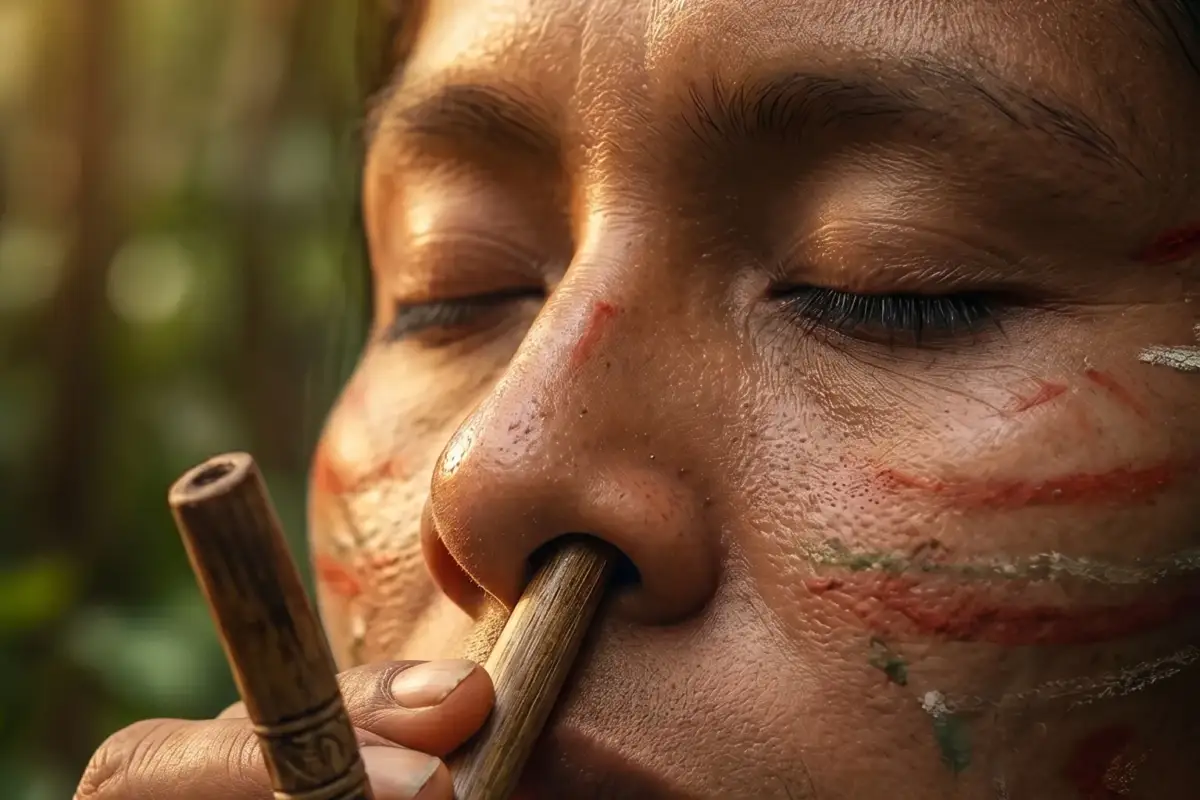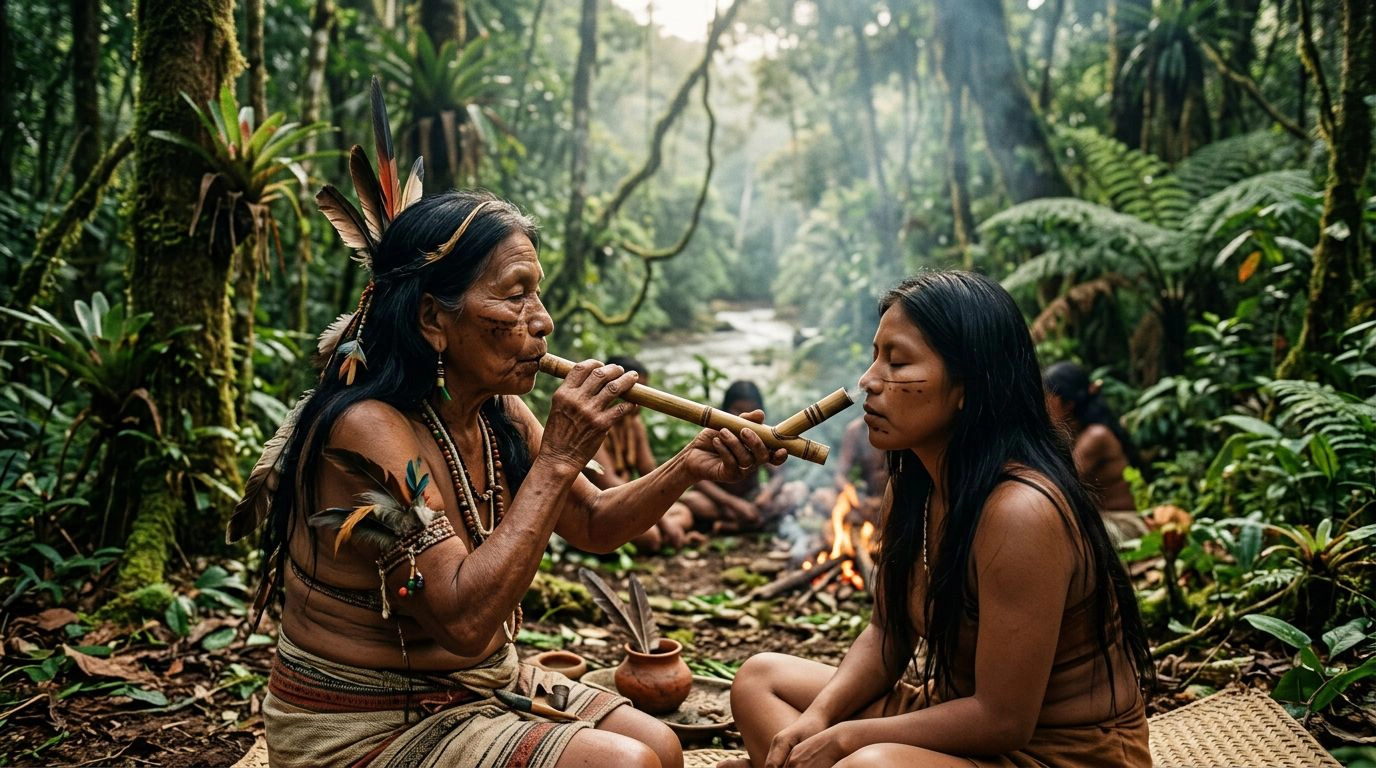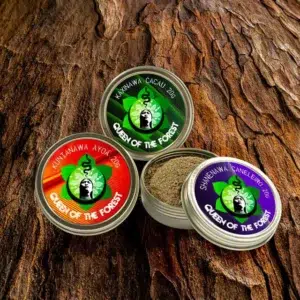

Traditionally made from Nicotiana rustica mapacho tobacco, sacred ashes, and at times other medicinal plants, rapé is served through the nose using a kuripe for self-application or a tepi when applied by another person.
If you have been wondering what rapé is, what it is made of, why it matters in Indigenous traditions, or how to choose the right blend, this guide offers a respectful and practical foundation.
This article is part of our complete rapéh guide, where we explore traditional blends, their benefits, and how to relate to this sacred medicine with respect.
What Is Rapé?
Rapé is a sacred Amazonian snuff made from finely sifted medicinal ingredients, most often including mapacho tobacco and the ashes of healing trees or plants. It has been used for generations in Indigenous cultures for prayer, cleansing, grounding, concentration, and spiritual work.
To outsiders, rapé may seem simple because it is administered through the breath. In truth, it carries a much deeper significance. Breath is sacred. It is the channel of life force, prayer, and presence. When rapé is served, it is traditionally approached with intention, reverence, and stillness rather than as something casual or recreational.
Many people describe this sacred medicine as helping clear mental noise, release dense energy, and bring awareness back into the body. This is one reason it is often seen not merely as a product, but as a teacher.
Although people often search for phrases such as what is hapé, what is rapeh, or what is rapé used for, they are usually referring to the same traditional medicine. The spellings vary, but the essence remains the same: a sacred plant medicine carried through Indigenous wisdom and prayer.
To explore the broader foundation of this topic, you may also want to read the history of rapéh and our page on why people use rapéh.
What Is Rapé Used For? Benefits & Traditional Uses
Rapé is used for a range of spiritual and practical purposes that have been refined across generations of Indigenous practice:
- Grounding and presence: bringing scattered energy back into the body before or after intense experiences
- Energetic cleansing: clearing dense, stagnant, or heavy energy from the mind and field
- Meditation and prayer: quieting mental chatter and deepening inner stillness
- Focus and clarity: interrupting overthinking and sharpening attention
- Ceremony: opening sacred space, setting intention, and supporting plant medicine work
In traditional contexts, rapé is never recreational — each application is an act of intention. For a deeper exploration of each of these effects, see our complete guide to rapéh benefits.
What Is Rapé Made Of?
Authentic rapé is generally made from a combination of mapacho tobacco, sacred ashes, and sometimes additional medicinal plants depending on the lineage, region, and purpose of the blend.
Mapacho (Nicotiana rustica)
Mapacho is a potent Amazonian tobacco with a long-standing traditional role in spiritual and medicinal practices. Unlike commercial tobacco, it is respected as a plant ally associated with grounding, protection, focus, and purification. In many traditions, mapacho is considered a carrier of prayer and intention.
Sacred Ashes
The ashes in rapé often come from medicinal trees such as Tsunu, Murici, Mulateiro, and others. These ashes help shape the character, force, and traditional function of each blend. This is part of why different types of rapé can feel so distinct in their energetic quality.
Additional Medicinal Plants
Some rapé blends also include herbs, barks, seeds, flowers, or other sacred plants that influence the aroma, strength, and spiritual quality of the medicine. This is one reason why each blend has its own identity and why no two authentic batches are ever exactly alike.
To explore traditional varieties, visit our types of rapéh article or browse the Sacred Rapé collection.
The Spiritual Meaning of Rapé
In Indigenous traditions, rapé is not treated as something recreational. It is approached as sacred support for alignment. It may be used to clear heavy energy, strengthen intention, deepen prayer, or reconnect a person with truth and presence.
Many who work with rapé speak of the medicine as helping them return to center. It can bring scattered thoughts into focus, soften emotional congestion, and restore a sense of internal steadiness. In this way, rapé is less about escape and more about direct contact with what is real.
Each application can be understood as a dialogue between the individual, the breath, and the Earth. This is why many people say rapé does not simply give you what you want. It gives you what you need to see, clear, or face.
Rapé doesn’t give you what you want — it gives you what you need.
For deeper reflections around presence and spiritual relationship, see Sacred Pause and The Forest as a Mirror.
Rapé Benefits
People seek out rapé for many reasons, but its benefits are often best understood across several layers at once: mental, physical, energetic, and spiritual.
Mental Clarity
Rapé is often associated with reduced mental fog, interrupted overthinking, and a stronger sense of focus. Many people feel more centered and alert after the first wave of intensity has passed.
Grounding
One of the medicine’s best-known qualities is its grounding effect. It can help bring scattered energy back into the body and support a stronger sense of inner stability.
Energetic Cleansing
Traditional users frequently speak of rapé as a cleansing medicine. It may help clear dense, stagnant, or intrusive energy and restore a sense of alignment.
Spiritual Alignment
Many people turn to rapé before prayer, ceremony, or meditation because it can deepen presence and strengthen intention. Rather than pulling awareness outward, it often invites awareness inward.
For more on this topic, read our dedicated pages on rapéh benefits and why people use rapéh.
Popular Rapé Blends
Each rapé blend carries its own character. Although every authentic batch is living and may vary slightly, some blends are traditionally associated with certain qualities.
Tsunu Rapé
Tsunu is often associated with grounding, mental clarity, and strong alignment. It is one of the foundational blends and often a good starting point for many people.
Jurema Rapé
Jurema is often appreciated for depth, spiritual connection, and inner exploration. It may feel especially aligned for reflective or introspective work.
Cumaru Rapé
Cumaru is commonly linked with warmth, heart opening, and emotional support. Many people are drawn to it during moments of softness and healing.
Jaguar Rapé
Jaguar, also called Onça, is often chosen for protection, presence, and sharp perception. It tends to carry a stronger, more focused character.
White Rose Rapé
White Rose is often felt as gentler and more calming. Many people are drawn to it when seeking a softer and more heart-centered quality.
Explore our full Sacred Rapé collection to discover different traditional blends and their qualities.
Rapé vs. Other Sacred Medicines
Rapé is often spoken about alongside other Amazonian medicines, though its role is distinct. It is especially valued for grounding, clearing, and helping a person arrive more fully in the present moment.
| Medicine | Traditional Role |
|---|---|
| Rapé | Grounding, clearing, alignment |
| Sananga | Vision and energetic cleansing through the eyes |
| Ayahuasca | Deep spiritual journey and insight |
| Kambo | Physical cleansing and purge |
Rapé is often regarded as a medicine of centering and preparation. If you want to explore this theme further, visit rapéh vs other medicines.
Sananga and Rapé
Sananga is often used alongside Rapéh in traditional Amazonian practices. While Rapéh is applied through the nose, Sananga is applied to the eyes and is known for its intensity and clarity.
Learn more about what Sananga is and how it is traditionally used.
Rapé and Meditation
One of the most valued relationships people have with rapé is its connection to meditation. Many practitioners say it helps quiet mental chatter, anchor awareness, and deepen presence. Instead of feeling pulled in many directions, one may feel more gathered and inwardly still.
This does not mean rapé replaces meditation practice. Rather, it is often understood as an ally that can help prepare the inner space. Used with respect, it may support a more direct entry into silence and concentration.
How to Choose the Right Rapé
Choosing the right rapé is not only about logic. It is also about listening. Some people seek grounding. Others seek emotional opening, spiritual depth, energetic cleansing, or sharper focus.
- For grounding: Tsunu
- For emotional support: Cumaru
- For focus and clarity: Paricá
- For deep cleansing: Sacred Ashes
Descriptions help, but intuition matters too. Often the blend that calls to you carries something your system recognizes.
If you are just beginning, start with our guide to the best rapé for beginners and explore foundational blends such as Tsunu Rapé.
Is Rapé Safe?
Rapé is a traditional sacred medicine, but it is also potent and should be approached responsibly. Because it generally contains Nicotiana rustica, caution is wise for those who are sensitive to nicotine or navigating certain health conditions.
Important Considerations
- Rapé commonly contains strong traditional tobacco
- It is generally not recommended during pregnancy
- People with cardiovascular concerns or nicotine sensitivity should use caution
- Beginners are wise to approach this medicine slowly and respectfully
Best Practices
- Approach the medicine in a calm and respectful environment
- Honor the potency of traditional preparations
- Stay hydrated
- Avoid careless or excessive use
- Avoid combining it with alcohol
This article is educational in nature and not medical advice. Anyone with medical concerns should consult a qualified healthcare professional.
For what is normal, the signs you used too much, and who should avoid it, see hapé (rapé) effects and side effects.
Why Rapé Matters in Indigenous Tradition
Rapé is not only a preparation of medicinal plants. In many Indigenous traditions, it is part of a sacred way of relating to prayer, breath, community, and the intelligence of the forest. The medicine is often approached with reverence, clear intention, and respect for the lineage from which it comes.
This matters because rapé is easily misunderstood when removed from its traditional context. To relate to it respectfully is to recognize that it is connected to ancestral knowledge, ceremonial discipline, and generations of guardianship by Indigenous peoples of the Amazon.
For this reason, learning about rapé should include not only what it is or how it feels, but also where it comes from, who has protected its use, and why ethical sourcing and reciprocity matter.
Ethical Sourcing and Indigenous Reciprocity
Rapé comes from Indigenous cultures that have preserved sacred relationships with plants, prayer, land, and spirit for generations. Any respectful relationship with this medicine should include recognition of its roots and support for ethical sourcing.
At Queen of the Forest, we believe these medicines should be carried with gratitude, integrity, and reverence for the people and traditions behind them.
- We work directly with Indigenous tribes
- We support fair trade practices
- We help preserve ancestral traditions
- We contribute to rainforest protection
When you receive rapé, you are not just buying a product. You are participating in a living ecosystem of reciprocity.
Rapé, Hapé, or Rapeh: Why the Spellings Differ
Rapé, hapé, rapéh, and rapeh generally refer to the same sacred Amazonian medicine. The different spellings come from language habits, transliteration, and attempts to reflect pronunciation across regions and languages.
Because people search using all of these spellings, it is helpful to include them naturally on educational pages. The spelling may vary, but the medicine being sought is usually the same.
Frequently Asked Questions About Rapé
What is rapé used for?
Rapé is traditionally associated with grounding, energetic cleansing, prayer, meditation, mental clarity, and spiritual alignment.
What is the difference between rapé and hapé?
Usually there is no difference. They are alternative spellings for the same sacred Amazonian medicine.
Does rapé contain nicotine?
Yes. Authentic rapé generally contains Nicotiana rustica, also known as mapacho.
How do you use rapé?
Rapé is traditionally served through the nose using a kuripe for self-application or a tepi when applied by another person. For broader educational context, see our how to use rapéh guide and how to use kuripe.
What does rapé feel like?
Many people describe it as intense at first, often followed by grounding, clarity, stillness, and a sense of energetic reset.
How do I choose the right rapé blend?
The best blend depends on your intention, your sensitivity, and the qualities of the medicine you feel called to work with.
Where can I explore authentic rapé blends?
You can browse the collection here: Sacred Rapé Collection.