
What to Expect at a Hapé (Rapé) Ceremony

A hapé (rapé) ceremony can be a village gathering in the Amazon, a circle in a retreat centre, or a few people sitting together in a quiet room. The forms differ, but the heart is the same: the medicine is received with intention, in silence, and with gratitude. If you are going to your first ceremony, this guide walks you through what usually happens and what you may feel.
For the origins and meaning of the ceremony in Indigenous tradition, read The Sacred Hapé Ceremony: Tradition, Ritual and Healing.
Before the ceremony
Know who is serving. A good facilitator will tell you which blend they are serving, where it comes from, and how the ceremony will unfold. They will also ask about your health. If nobody asks, tell them anyway, especially if you are pregnant, have a heart condition, or take regular medication. Our guide on hapé effects and side effects explains who should not use this medicine.
Come prepared. Many circles ask you to arrive rested, sober and with a light stomach. Wear comfortable clothes, bring water, and give yourself unhurried time after the ceremony.
Bring an intention. It can be simple: grounding, clarity, letting something go, gratitude. You will usually be invited to hold it quietly, or to speak it, before you receive the medicine.
During the ceremony
Opening the space. Ceremonies often begin with a moment of silence, a prayer, a song, or the burning of a sacred plant. This is when the group arrives together and the intention is set.
Receiving the medicine. In most circles, hapé is served with a tepi, a longer pipe through which the facilitator gently blows the medicine into each nostril, one side and then the other. In some circles each person uses their own kuripe instead. When you receive through a tepi:
- sit upright, with your mouth slightly open and breathing gently through it
- hold still and do not inhale sharply through the nose
- it is fine to ask for a small amount, or to pause between the two sides
If the difference between the two tools is new to you, see kuripe vs tepi.
The first minutes. The sensation is strong and immediate: pressure in the head, tears, warmth, a running nose. Keep your eyes closed, breathe slowly, and let it move through you. Some people feel emotion rise. Some feel nauseous, and circles often keep tissues and a small bowl nearby for this reason. Nothing needs to be held back.
Silence. After receiving, the circle usually sits in stillness for ten to twenty minutes while the intensity settles into calm and presence. There may be songs, prayers or quiet music. This is the heart of the ceremony. There is nothing to do except be present.
Hapé with other medicines. In some traditions hapé is received before or after sananga, the Amazonian eye medicine, or during longer ceremonies with other plant medicines, to ground and centre the participants. Our sananga guide explains how the two are often paired.
Closing. The ceremony usually ends with gratitude: to the medicine, to the peoples who prepared it, and to the forest it comes from.
After the ceremony: aftercare and integration
- Take your time. Stay seated until you feel steady. Stand up slowly.
- Drink water and rest. Avoid driving or busy activity right away.
- Stay with what came. Many people write a few lines about their intention, what they felt, and anything that became clear. Integration is where the ceremony continues.
- Be gentle with yourself. If the experience was strong, or brought up emotion, let it settle before you judge it. If anything stays with you in a difficult way, talk to the facilitator or to someone you trust.
How to recognise a circle that holds the medicine well
- the facilitator explains the blend and its origin, and asks about your health
- you are told you may take a small amount, pause, or not receive at all
- nobody is pushed or rushed, and silence is respected
- the medicine is honoured as Indigenous medicine, with respect and reciprocity for the peoples who carry it
- the space is calm, clean and unhurried
Can I hold a hapé ceremony alone?
Yes. Many people keep a simple personal ceremony at home with a kuripe: a quiet space, an intention, the medicine, silence and gratitude. Our how to use hapé guide walks you through it step by step, and nighttime hapé describes an evening practice.
Frequently asked questions
What happens in a hapé ceremony? The space is opened with silence or prayer, intentions are set, the medicine is received through a tepi or kuripe, the circle sits in silence while the effects settle, and the ceremony closes with gratitude.
How long does a hapé ceremony last? The medicine itself is felt most strongly for a few minutes, with ten to twenty minutes of silence afterwards. The whole ceremony, with opening, songs and closing, often lasts about an hour, sometimes longer.
Does it hurt to receive hapé? It is intense rather than painful for most people: a sharp, strong sensation in the nose and head that passes within minutes.
Can I say no or ask for less? Yes. A good facilitator will always respect that.
What should I do after a hapé ceremony? Sit until you feel steady, drink water, rest, and give yourself quiet time to integrate what you felt.
Receiving the medicine with respect
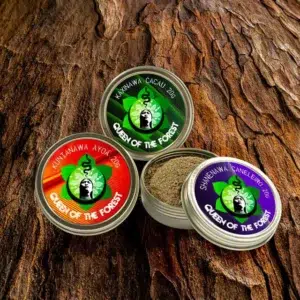
A hapé ceremony is simple, and that simplicity is its strength: intention, the medicine, silence and gratitude. Whether you sit in a circle or alone at home, the way you receive it matters as much as the blend. When you feel ready, explore our Sacred Rapé (Hapé) blends and handmade tepi pipes.
Continue exploring
All stories
The medicines of the forest