The History of Rapé: Ancient Origins, Indigenous Wisdom, and the Journey of a Sacred Forest Medicine
To understand the history of rapéh, we need to begin with a simple truth: this medicine did not emerge from modern wellness culture, nor from casual experimentation, nor from the recent global fascination with plant medicines. Rapéh was born in the intimacy of the forest, in a world where plants were not viewed merely as raw materials, but as living intelligences, allies, and teachers.
Known today through different spellings such as rapéh, rapé, and rapeh, this sacred snuff carries a lineage that reaches into ancient indigenous lifeways of South America, especially the Amazon basin. It belongs to traditions in which healing, prayer, nature, community, and spiritual perception were never separated. To speak about the history of rapéh is not only to discuss a preparation made from tobacco and ashes. It is to speak about cosmology, relationship, memory, and continuity.
In the modern world, many people encounter rapéh as a powerful tool for grounding, clearing, focus, prayer, or ceremony. Yet behind that moment of application is a much larger story—one shaped by ancestral knowledge, forest cultures, colonization, misunderstanding, adaptation, and, more recently, a global revival of interest in indigenous medicines. The story of rapéh is both ancient and ongoing.
What Is Rapé in Its Traditional Sense?
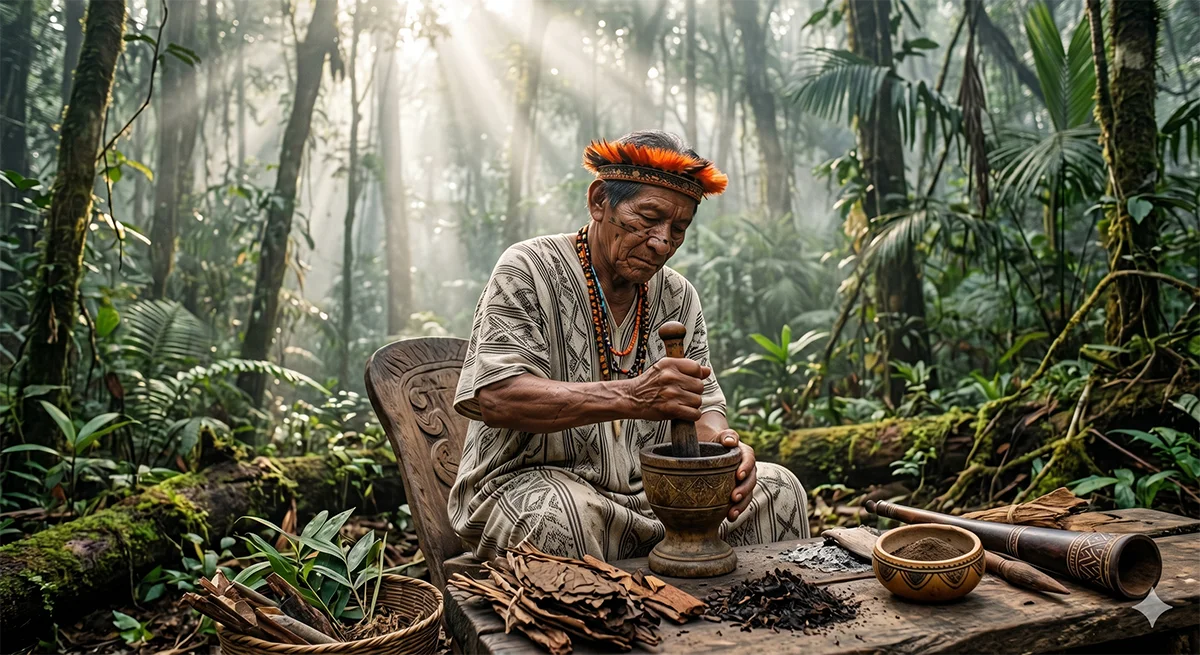
Rapéh is a finely powdered sacred snuff traditionally prepared from Nicotiana rustica, often called mapacho or sacred jungle tobacco, combined with the ashes of medicinal, symbolic, or spiritually significant plants and trees. Different peoples prepare distinct blends according to their own teachings, lineages, territories, and ceremonial purposes. This means rapéh is not one single recipe, and never was. It is a broad family of sacred preparations shaped by local knowledge.
In indigenous contexts, rapéh has not historically been approached as a recreational stimulant. Its traditional role is more serious, more intentional, and more relational. It may be used to center the mind, sharpen perception, clear stagnant energies, strengthen prayer, support healing work, prepare for hunting or ceremony, restore focus, or align the individual with community and spirit.
Ancient Roots: Tobacco Before the Modern World
The history of rapéh cannot be separated from the history of sacred tobacco in the Americas. Long before tobacco became commercialized on a global scale, it held profound spiritual, medicinal, and social importance among indigenous peoples across the continent. In many cultures, tobacco was understood as a plant of power—one capable of carrying prayers, cleansing energies, sealing intentions, opening spiritual channels, and mediating communication between visible and invisible worlds.
Archaeological and historical evidence suggests that tobacco has been cultivated, prepared, and ritualized in the Americas for thousands of years. It appeared in different forms: smoked, chewed, burned as an offering, drunk in liquid preparations, and inhaled as snuff. What emerged in the Amazon was a particularly refined ceremonial preparation rooted in forest knowledge and direct relationship with the spirit of plants.
The Amazon as a Cradle of Sacred Plant Knowledge
The Amazon rainforest is not merely the setting of rapéh’s history. It is one of its great creators. For countless generations, forest peoples developed sophisticated systems of knowledge rooted in direct contact with plants, rivers, animals, cycles, dreams, and spiritual experience. Within this world, rapéh emerged as part of a larger medicinal and ceremonial ecology.
The ashes used in traditional rapéh blends are not random ingredients. In many traditions, they are selected because of the energetic, symbolic, medicinal, or spiritual qualities associated with specific trees and plants. This reflects a worldview in which healing is relational and plants are approached as living presences rather than passive materials.
Rapé Among Indigenous Peoples
Today, many of the rapéh traditions known outside the forest are associated with indigenous peoples such as the Yawanawá, Katukina, Huni Kuin, Nukini, Kuntanawa, Apurinã, Shawãdawa, and others. Each people carries its own language, ceremonial context, botanical knowledge, and relationship to the medicine.
Many of the traditional blends used by these tribes, such as those prepared with Tsunu, Cumaru, or sacred ashes, are still crafted today following ancestral methods and are now available through ethical sources that maintain direct relationships with indigenous communities.
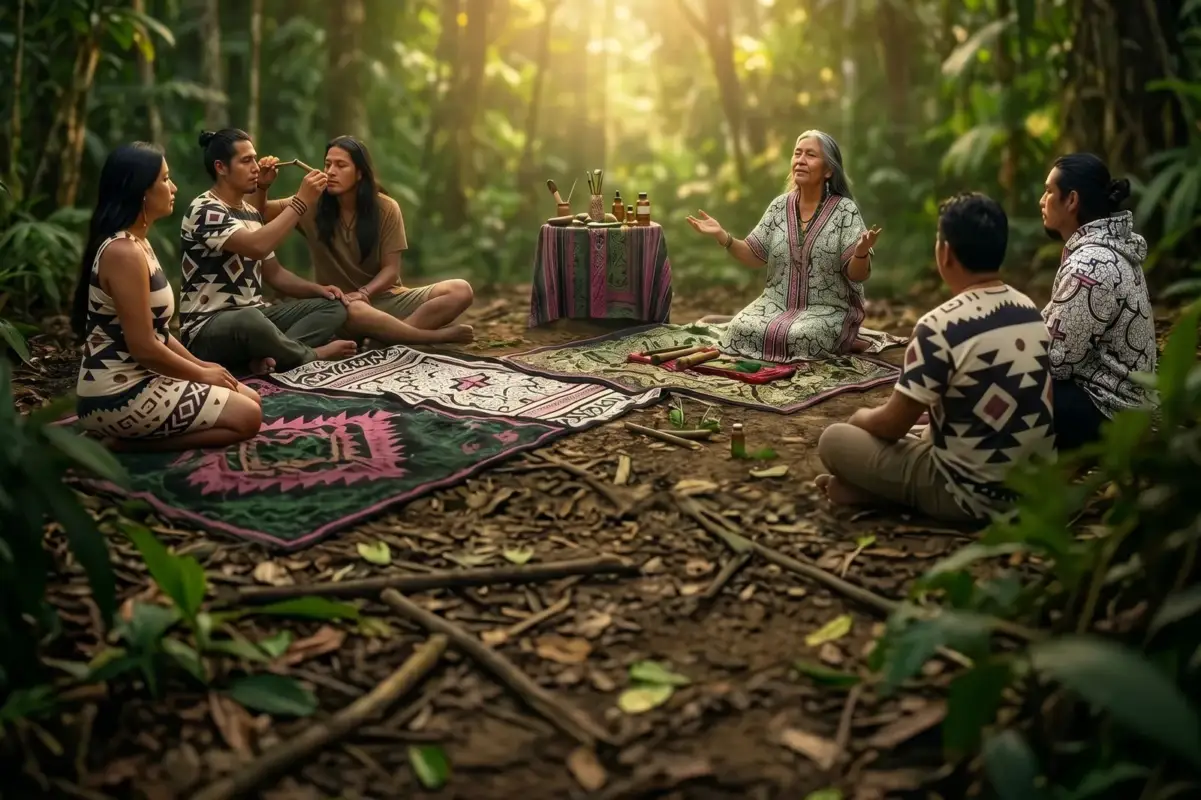
In some communities, rapéh is woven into daily life. In others, it is more concentrated in ritual, healing, or prayerful contexts. It may be used before ceremonies, before important work, after emotional heaviness, or as a medicine of focus and energetic clearing.
How Rapéh Is Traditionally Applied
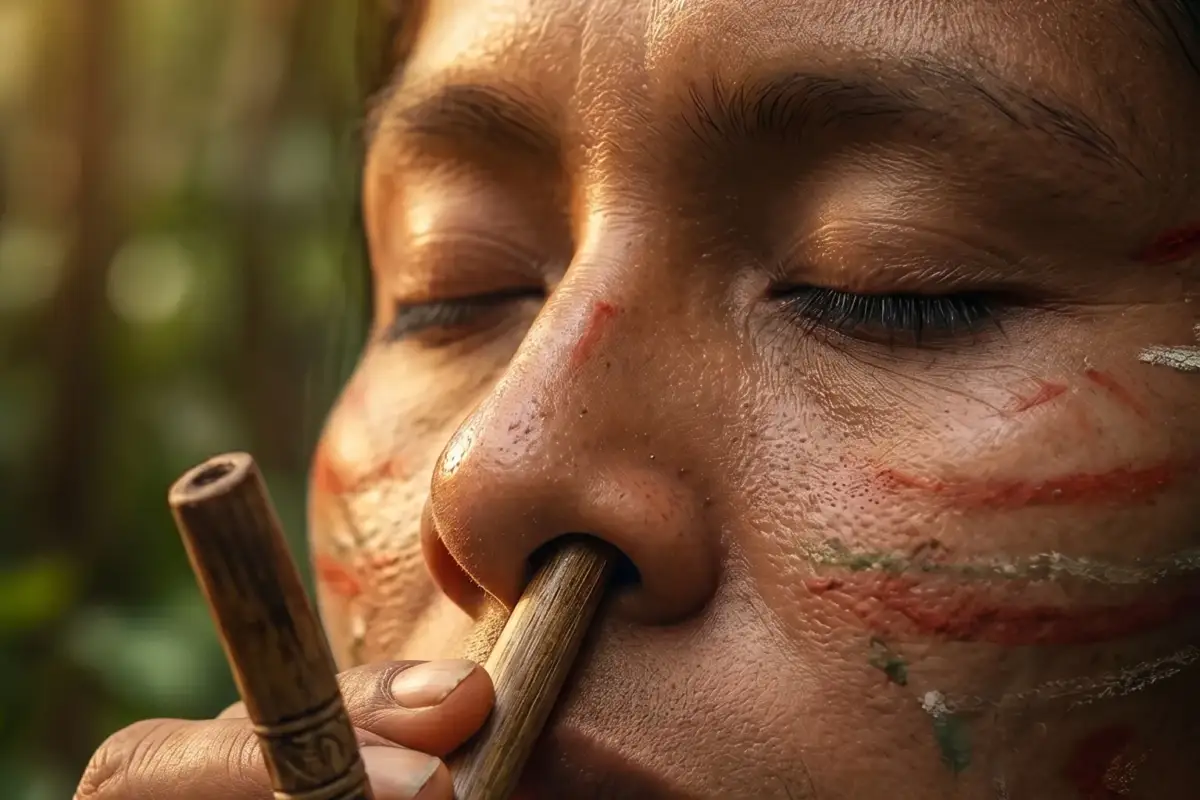
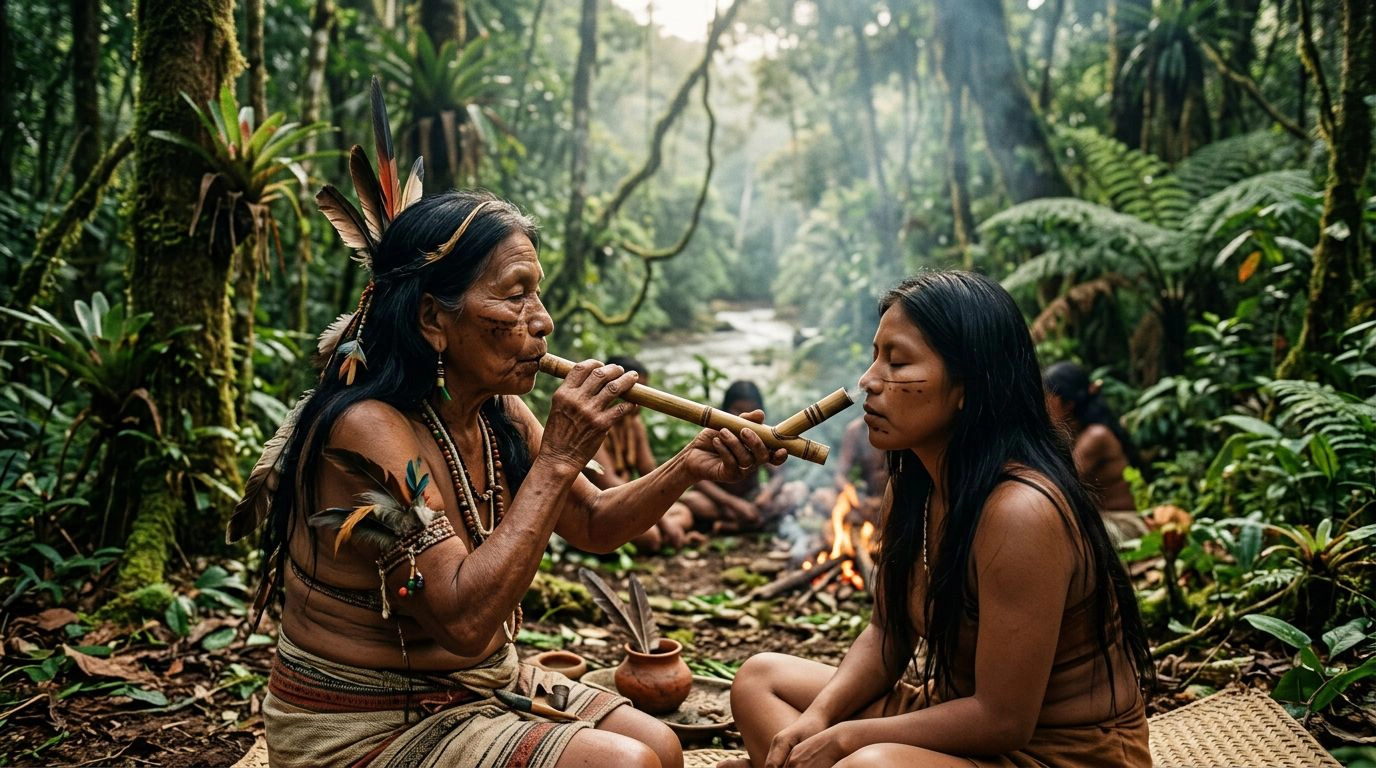
Rapéh is commonly applied through a kuripe, a self-applicator used by the individual, or through a tepi, a pipe used when one person serves another. These methods of application are not secondary details. They are part of the medicine’s ritual form and help preserve the intentional nature of its use.
The Role of Ritual, Prayer, and Intention
One of the deepest misunderstandings in the modern spread of rapéh is the idea that its effect can be explained only by ingredients. In traditional contexts, the medicine is also shaped by prayer, discipline, preparation, and state of consciousness. The person who prepares it may pray, sing, or work in silence with clear intention. The person who receives it may enter with reverence, asking for clarity, cleansing, strength, or realignment.
From Sacred Use to Colonial Distortion
When Europeans arrived in the Americas, they encountered tobacco in many forms and quickly recognized its economic and social potential. Over time, tobacco was extracted from its sacred contexts and incorporated into colonial systems of trade, pleasure, and status. This transformation changed how tobacco would be seen around the world.
One of the results was the rise of snuff in Europe, where powdered tobacco became fashionable among elites. Yet this European snuff culture, although historically connected to indigenous precedents, moved in a very different direction—more secular, more perfumed, more commercial, and often cut off from the spiritual and relational meanings that shaped rapéh in the forest.
How Tobacco Reached Europe
As colonial trade expanded, tobacco entered European life in multiple forms. It was celebrated, taxed, traded, and ritualized in new social settings. What had once been held within systems of indigenous knowledge became increasingly absorbed into imperial economies and elite consumption patterns.
The Difference Between Rapéh and European Snuff
This distinction is essential. Rapéh is not simply “snuff” in the generic historical European sense. While both involve powdered tobacco used nasally, rapéh belongs to an indigenous ceremonial lineage that includes sacred intention, specific ash preparations, and relationships with plant spirits, ancestors, and prayer. European snuff evolved as a separate social custom, often divorced from those meanings.
Rapé, Rapéh, or Rapeh? Understanding the Different Spellings
The variety of spellings reflects the crossing of languages, cultures, and digital habits. In Portuguese, rapé is the standard written form. In English-speaking ceremonial communities, rapeh and rapéh are often used to distinguish Amazonian sacred medicine from generic or commercial snuff. All of these spellings point to overlapping realities, though the modern spiritual marketplace has helped make “rapeh” one of the most recognizable English-language versions.
For SEO, that means it is wise to choose one main spelling for the page while naturally incorporating the others in the article. This helps the content reach people who search in different ways without sounding artificial.
The Twentieth Century and the Survival of Tradition
For much of the twentieth century, rapéh remained relatively unknown outside indigenous territories, localized ceremonial circles, and certain anthropological studies. Its continuity depended largely on the peoples who preserved it through difficult periods marked by land loss, cultural pressure, missionary influence, and economic disruption.
That survival should never be taken for granted. Rapéh exists today in part because indigenous communities protected not only the external form of the medicine, but also the deeper web of teachings, stories, prayers, and practices around it.
The Modern Revival of Rapé
In recent decades, rapéh has entered a new phase of visibility. As more people around the world have become interested in plant medicines, indigenous traditions, and practices of spiritual grounding, rapéh has traveled far beyond the forest. It is now encountered in ceremonies, healing spaces, educational platforms, and medicine communities around the world.
This revival has opened the door to cultural appreciation, learning, and support—but it has also brought risks. Like many sacred traditions, rapéh can be misunderstood, imitated superficially, over-commercialized, or separated from the communities that gave it life. That tension is now part of its modern story.
Experience Authentic Rapéh from the Source
Today, the revival of rapéh allows people around the world to reconnect with this sacred tradition. If you feel called to explore this medicine, it is essential to choose blends that are ethically sourced and prepared in alignment with indigenous traditions.
At Queen of the Forest, we work directly with tribes of the Amazon to offer authentic, high-quality rapéh blends prepared with care, intention, and respect.
Why Ethical Sourcing Matters
Any honest discussion of the history of rapéh must include the question of relationship. This medicine comes from peoples whose knowledge has too often been extracted without fair recognition or support. To honor rapéh today means more than using it. It means asking where it comes from, who made it, how it was prepared, and whether the exchange supports living indigenous continuity.
Ethical sourcing helps preserve the dignity of the medicine. It helps keep the story connected to the people who carried it through generations. It also protects modern users from reducing rapéh to a trend or novelty disconnected from its roots.
Why the History of Rapé Still Matters Today
The history of rapéh matters because it changes how the medicine is approached in the present. Without historical and cultural context, rapéh can be mistaken for just another wellness product. With context, it becomes possible to encounter it as a living expression of forest knowledge, resilience, and sacred relationship.
For many people, this awareness brings a different quality of respect. It creates gratitude where there may have been only curiosity. It creates reverence where there may have been casualness. And it reminds us that some medicines ask not just to be used, but to be understood.
Conclusion: A Living Tradition of the Forest
The history of rapéh is the history of sacred tobacco, indigenous memory, forest intelligence, and cultural survival. It begins in ancient relationships between people and plants. It continues through the ceremonial life of Amazonian peoples. It passes through the distortions of colonization and enters the modern world carrying both gift and responsibility.
Whether written as rapé, rapeh, or rapéh, the essence remains the same: this is a medicine born from relationship, intention, and prayer. It is not a relic of the past, but a living tradition. And when approached with humility and respect, it still carries the power to bring people back into clarity, presence, and deeper connection with the wisdom of the forest.