On the Edge of the Irreversible: Brazil’s Environment Minister Warns of the Amazon’s Tipping Point
A heartfelt call to the world as the Amazon nears collapse and the sacred responsibility we all share in protecting what remains
The Amazon is not merely a forest. It is a breath. A rhythm. A memory older than empires, deeper than roots, and more mysterious than any map can chart. It is the green pulse of the Earth, and today, it trembles under the weight of a planet in crisis.
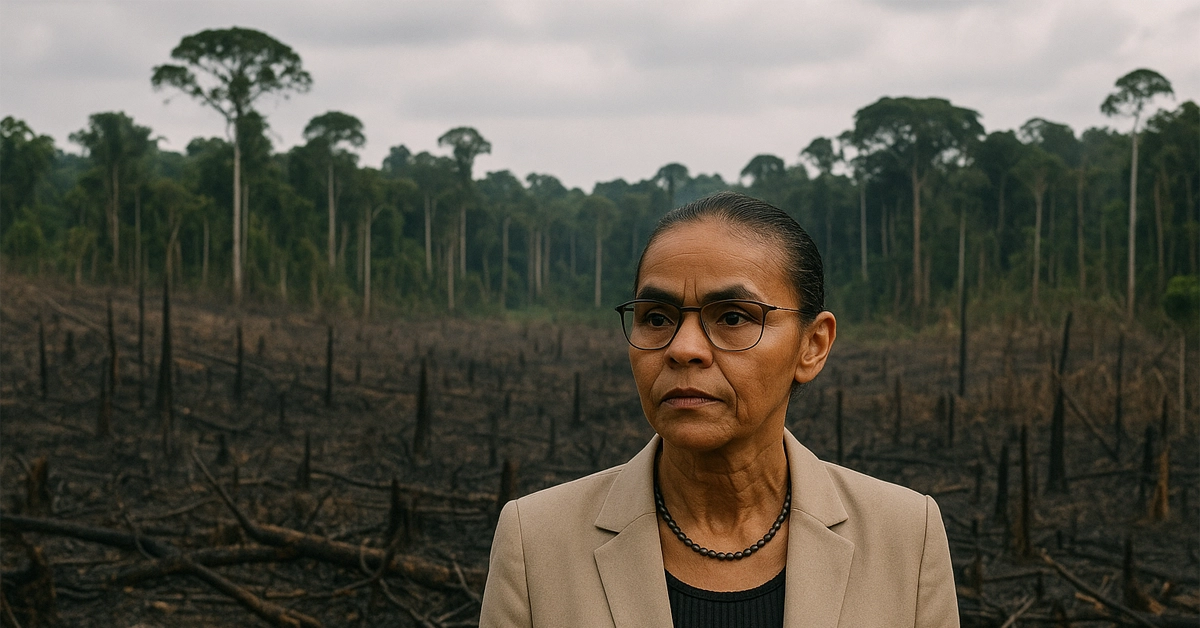
Marina Silva — Brazil’s Environment and Climate Minister, a woman who carries the forest not only in her past but in her voice — has once again sounded the alarm. With clarity and grace, she warned the world: the Amazon is approaching a tipping point. A moment from which it may not return. A moment where destruction surpasses restoration, and the forest begins to unravel — not by axe alone, but by a thousand subtle wounds.
This tipping point is not an abstraction. It is a known threshold in climate science. Researchers estimate that when deforestation reaches 20% to 25% of the original forest, the Amazon’s delicate rain cycle collapses. The trees no longer summon rain from the skies. The soil dries. Fires multiply. And the forest, once vibrant and self-sustaining, begins to shift into dry savanna. Not only is biodiversity lost, but the lungs of the Earth begin to wheeze.
Today, that number stands alarmingly close. Around 17% of the original Amazon has already been lost. And the pace continues, driven by illegal logging, cattle ranching, extractive industries, and infrastructure projects — some ironically justified as preparations for climate conferences.
In an interview with Time magazine, Marina Silva did not mince words. She spoke not only as a politician but as a guardian of memory — raised in the depths of the forest, once allied with Chico Mendes in the defense of rubber tappers and Indigenous communities. She is no stranger to this struggle. And now, from within the heart of Brazil’s government, she is attempting to steer a ship whose course has long been distorted by greed.
Silva announced a $2 billion reforestation initiative — one of the largest in the country’s history. The plan aims to restore degraded lands, incentivize sustainable agroforestry, and strengthen local communities as stewards of the land. Alongside this, Brazil is moving toward the creation of a carbon pricing system, making polluters pay and channeling funds back into the ecosystems they threaten.
But these solutions, while bold and necessary, cannot work in isolation. Silva made it clear: no single country can save the Amazon. This is a global forest. Its clouds touch the Andes, its rivers shape the continent, and its climate regulation influences rainfall patterns as far as the U.S. Midwest and Africa’s Sahel. We are all breathing the gift of the Amazon — and therefore, we all share in its fate.
That is why the Minister is calling for global solidarity. Real cooperation. Not just promises on stages, but action: financial support from industrialized nations, technological partnerships, and a rethinking of economic systems that reward destruction and punish preservation.
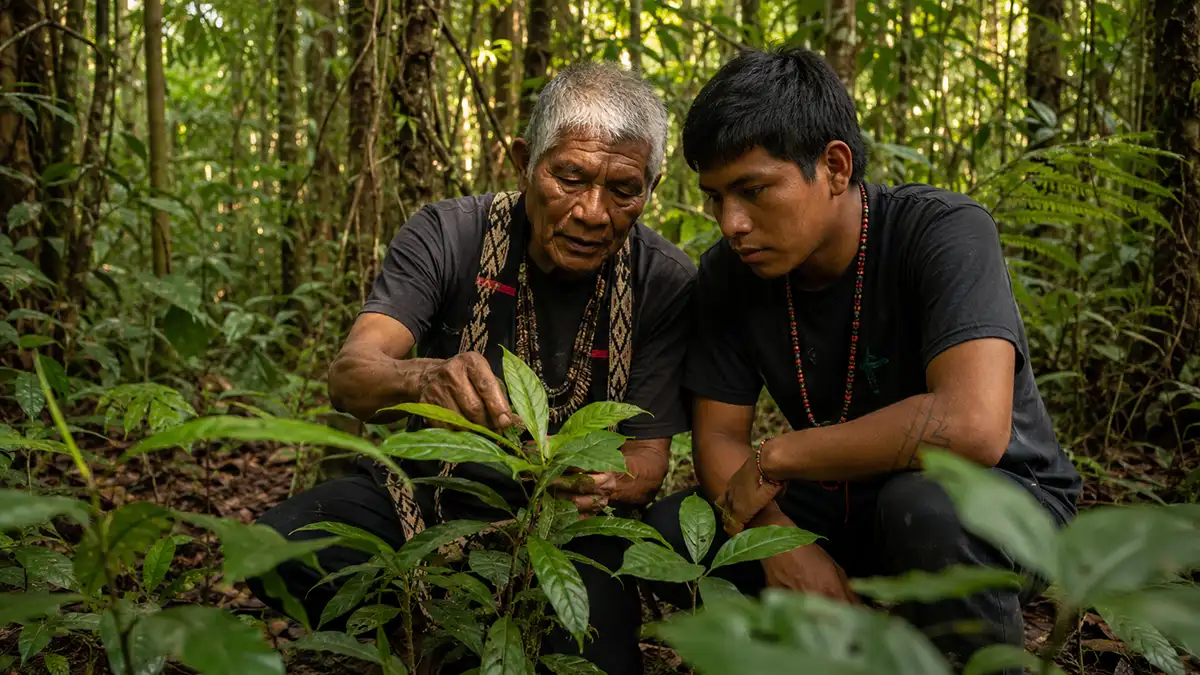
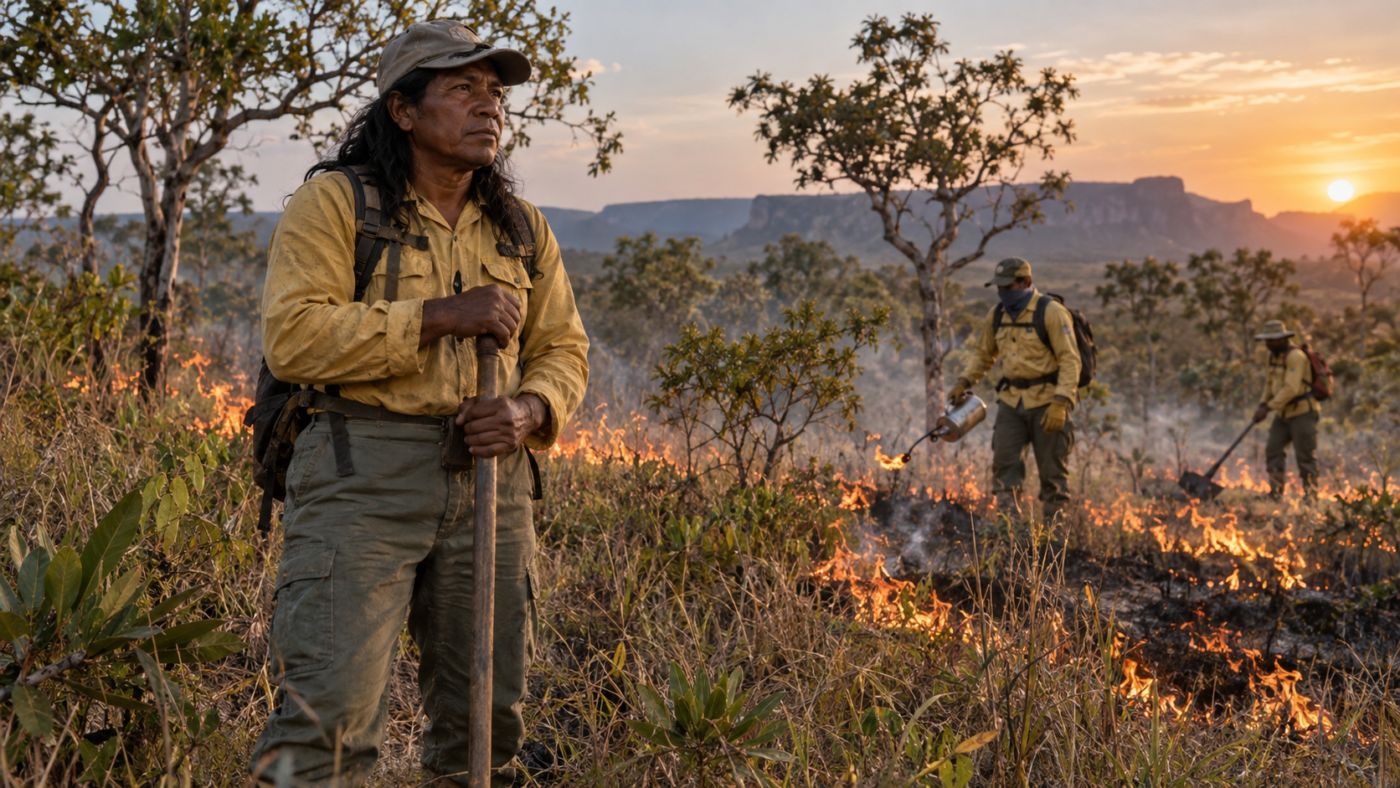
At the heart of this conversation is a deeper truth — that the guardians of the Amazon are not governments, but its Indigenous peoples. Across the nine countries that share the rainforest, Indigenous nations continue to defend their ancestral lands against invasion, degradation, and silence. Their territories remain the most intact, the most biodiverse, and the most aligned with the balance of the forest. Not by coincidence, but because they never forgot what modern society keeps trying to remember: that the Earth is alive, and we belong to her.
Silva emphasized that protecting Indigenous rights is not just a moral obligation — it is a strategic necessity. Without them, the forest falls faster.
As she spoke, data continued to pour in. More than 100,000 fires were recorded across the Amazon in the first nine months of 2024. Droughts — unprecedented in scope — shriveled the great rivers, stranded boats, and suffocated thousands of fish. In some areas, the water became so warm that it cooked aquatic life alive. This is no longer the slow creep of climate change — it is the quickening unraveling of a planetary lifeline.
And yet, in the midst of this urgency, there remains a sliver of hope — rooted not in naivety, but in courage.
Hope lives in every seed planted back into the soil.
In every voice that rises to defend the forest.
In every purchase that honors the sacred, not the extractive.
In every ceremony, prayer, and action that remembers that we are not separate from the Earth — we are her children.
What can we do, from our homes, our cities, our screens? More than we think.
We can consume with awareness — avoiding products tied to deforestation.
We can amplify Indigenous voices, support their economies, and protect their lands.
We can educate ourselves and others, refusing to look away from uncomfortable truths.
We can vote, protest, donate, create, and connect — weaving a web of care that stretches far beyond the Amazon.
At Queen of the Forest, this is more than a message — it’s a mission.
Every sacred medicine we offer carries the spirit of the forest. Every blend is a story of partnership, respect, and reciprocity. And every person who walks this path with us becomes part of something greater: a movement to remember the sacred and defend what remains.
Marina Silva’s warning is not the end of the story — unless we let it be.
It is a chapter of reckoning.
A call for healing.
A whisper from the trees, asking us to return — not to the past, but to the wisdom we left behind.
The forest is still alive.
But she is tired.
Let us not wait until she falls silent to realize what she meant to us.
Continue exploring
All stories
The medicines of the forest