Beyond the Green Frontier: Brazil’s Role in the New Regenerative Economy

From carbon markets to reforestation, how the country can become a global reference for planetary healing.
In a world teetering between collapse and awakening, one vast, vibrant land holds the keys to more than just survival — it holds the blueprint for regeneration. That land is Brazil. And its heartbeat is the Amazon.
As global systems falter under the weight of extraction, inequality, and ecological exhaustion, a new economic model is beginning to emerge — not from the boardrooms of skyscrapers, but from the roots of ancient forests, the visions of Indigenous leaders, and the urgency of a planet on fire. It is called the regenerative economy.
Unlike extractive systems that take without replenishing, the regenerative economy is rooted in reciprocity. It asks not only how much profit we can make, but how much life we can restore. And Brazil, with its immense biodiversity, cultural wealth, and emerging green policies, stands poised to lead the way — if it chooses to.
The End of the Extractive Era
For centuries, Brazil has been both blessed and burdened by its natural abundance. From the sugarcane plantations of the colonial period to the mining and cattle industries of today, the country’s economy has long depended on extracting value from the land, often at great environmental and social cost.
The Amazon Rainforest, the world’s largest tropical forest, has been relentlessly exploited — cleared for soy monocultures, carved by illegal logging roads, and burned to make way for pasture. According to Brazil’s National Institute for Space Research (INPE), over 17% of the original Amazon forest has been lost. This destruction pushes the biome dangerously close to a tipping point, beyond which the forest may no longer sustain itself.
But something is shifting. And fast.
Enter the Regenerative Model
Regenerative economics goes beyond sustainability. Sustainability seeks to minimize harm; regeneration seeks to heal. It’s about systems that revive soil, purify water, sequester carbon, empower communities, and preserve biodiversity — not as side benefits, but as core business outcomes.
Brazil has the potential to be the world’s largest test case for this new model. Why?
Because no other nation possesses:
- Such vast areas of tropical forests, rivers, and natural carbon sinks.
- A population with deep ancestral ties to the land and rich traditional ecological knowledge.
- A government — at least in its current phase — that is once again open to climate leadership.
President Lula da Silva and Environment Minister Marina Silva have signaled a renewed commitment to protecting nature. But for Brazil to step into the role of planetary healer, more than policy is required. What’s needed is a collective transformation of values, markets, and vision.
Brazil’s Reforestation Revolution
One of the most promising initiatives is the recently announced $2 billion reforestation plan spearheaded by Marina Silva. This massive effort aims to restore degraded lands, especially in the Amazon and Cerrado biomes, using native species and agroforestry systems. The project is not just about planting trees — it’s about restoring living ecosystems.
These efforts align with Brazil’s target to achieve zero illegal deforestation by 2030 and reforest 12 million hectares of native vegetation, in line with the Paris Agreement.
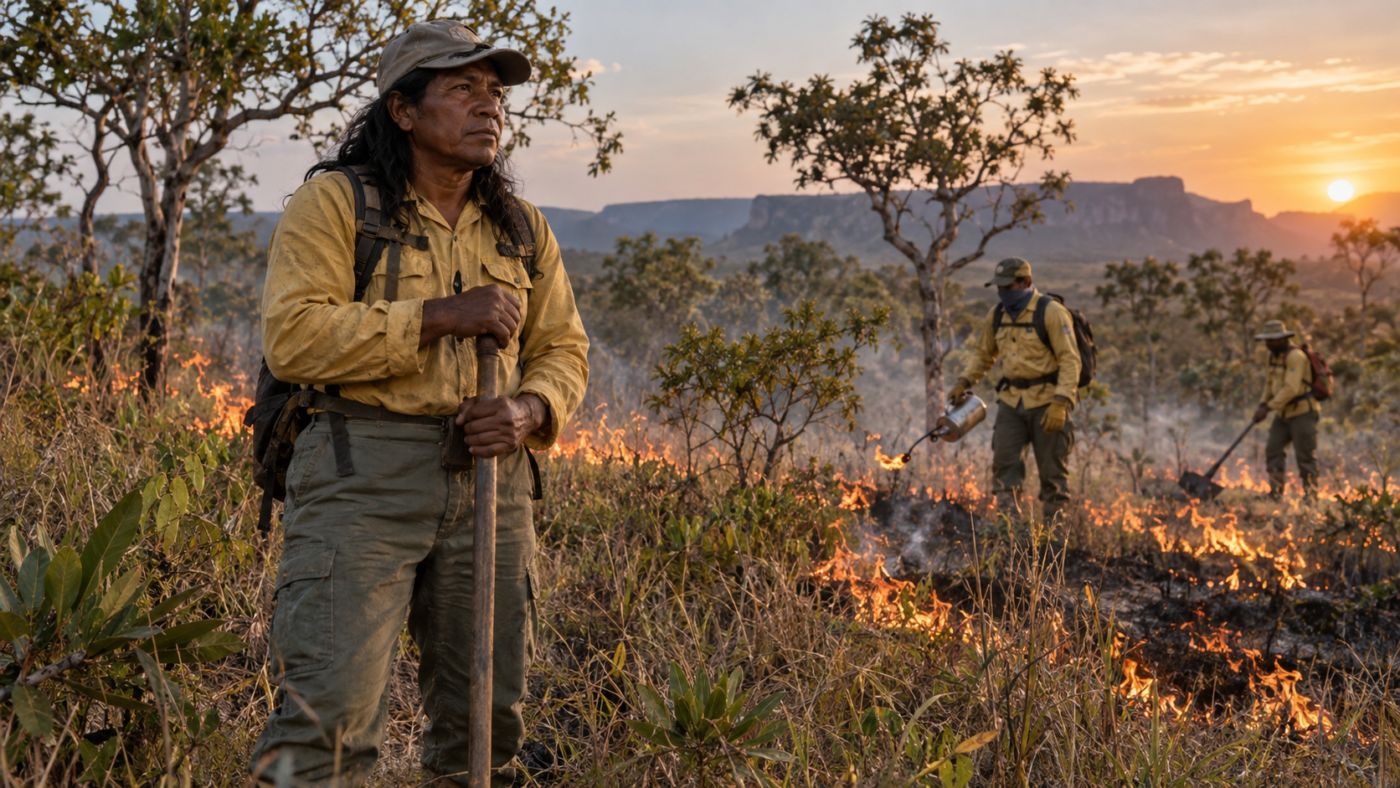
What makes this plan stand out is its inclusion of Indigenous and traditional communities as key players. By offering incentives, training, and legal support, Brazil seeks to transition from monoculture destruction to forest economies that are biodiverse, just, and locally led.
The Rise of Carbon Markets
Another crucial piece of Brazil’s regenerative puzzle is the emerging carbon market. Unlike the voluntary offset schemes of the past, Brazil is developing a regulated national carbon market — a mechanism that allows companies to purchase “carbon credits” generated by emission-reducing activities like forest conservation or renewable energy projects.
This market could inject billions into forest protection, if done right.
But there are challenges. Critics warn of “greenwashing” — when companies use carbon credits as an excuse to continue polluting. For the system to work, it must ensure that the projects are real, additional, verifiable, and community-beneficial.
Brazil’s government has acknowledged this and is working with NGOs, Indigenous organizations, and international regulators to build one of the most transparent carbon markets in the world. If successful, it could become a global model.
Indigenous Leadership in the Green Economy
Perhaps the most essential — and often overlooked — part of this transformation is the leadership of Indigenous peoples.
Studies show that Indigenous-managed lands have the lowest deforestation rates. These communities have lived in harmony with the land for millennia, practicing sophisticated ecological management systems that the modern world is only beginning to understand.
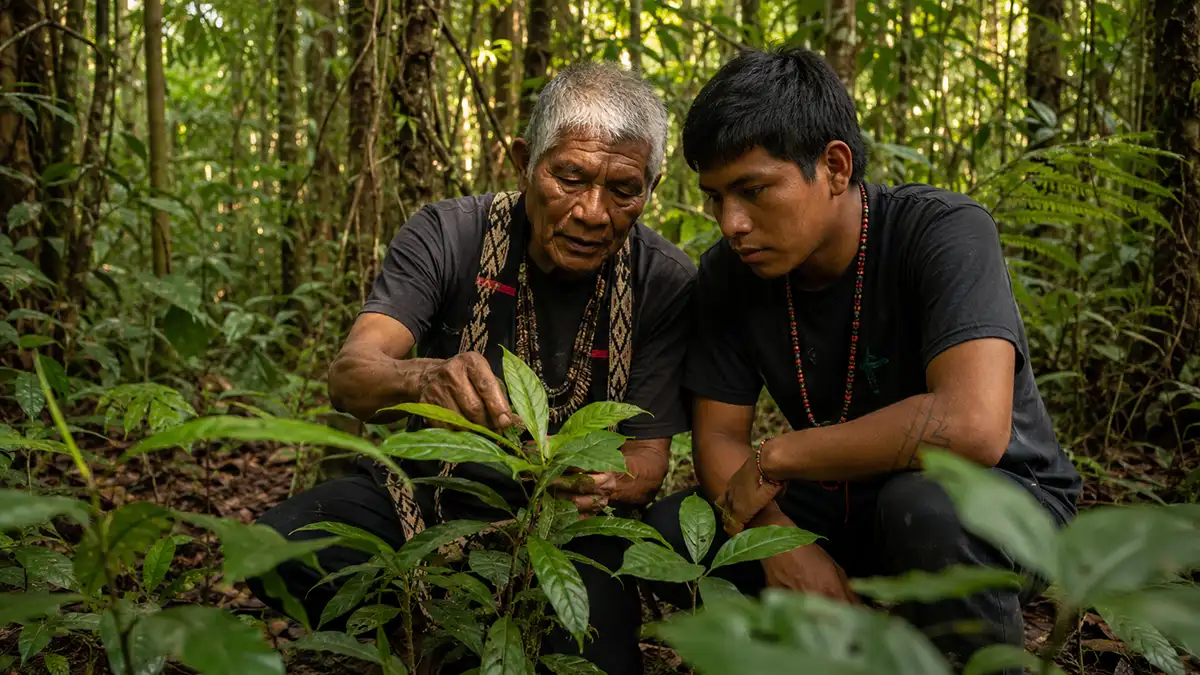
In Brazil, there is a growing movement to center Indigenous wisdom in climate solutions. From sustainable Rapéh and Sananga cultivation to forest medicines, crafts, and spiritual tourism, many tribes are building regenerative micro-economies that heal people and ecosystems at the same time.
The success of these models depends on respect, partnership, and sovereignty. As such, policies that guarantee land rights, education, and economic access for Indigenous nations are not charity — they are the foundation of any lasting regenerative economy.
Conscious Consumers: The Global Role
No economy regenerates without demand. And that’s where you and I come in.
Conscious consumption is no longer a trend — it is a planetary imperative. Every purchase is a vote. Every dollar spent on ethically sourced products, every item chosen for its impact rather than its price, shifts the market.
When consumers choose:
- Forest-sourced goods from certified Indigenous cooperatives,
- Recycled or biodegradable packaging,
- Food and medicine grown with regenerative practices,
they create a pull that encourages companies and governments to follow.
Brazilian brands like Queen of the Forest are leading by example — offering sacred products that support forest families, honor traditional knowledge, and protect biodiversity. This is not just commerce. It is ceremony. It is activism in disguise.
Metrics that Matter
Let’s move from theory to impact. Here are a few emerging metrics in the regenerative economy Brazil is beginning to embrace:
- Biocapacity restoration per hectare: Measures how much ecosystem function is restored through reforestation.
- Carbon sequestration per project: Tracks how much carbon is actually being captured.
- Community benefit ratio: How much revenue goes directly to local and Indigenous stakeholders.
- Biodiversity index: Evaluates not just quantity of forest restored, but quality and variety of species.
These metrics reflect a shift in mindset — from short-term profit to long-term planetary health.
Obstacles to Transformation
Of course, this path is not free of obstacles. Brazil still faces:
- Powerful agribusiness lobbies resistant to change.
- Illegal mining and logging operations with ties to organized crime.
- Infrastructure projects that prioritize economic speed over ecological wisdom.
- A global system that rewards extraction and penalizes protection.
Yet even in the face of these challenges, momentum is building.
Civil society is more engaged. Youth movements are rising. Conscious entrepreneurs are multiplying. And perhaps most importantly, the Earth itself is speaking — through floods, fires, droughts, and dreams.
The question is not whether Brazil can lead the regenerative revolution.
The question is: Will we listen in time?
A Vision for the Future
Imagine a Brazil where the Amazon is no longer under siege, but thriving. Where forest protectors are honored as national heroes. Where regenerative agriculture feeds millions without poisoning the land. Where the economy is not measured by GDP alone, but by the health of rivers, the vitality of soils, and the well-being of communities.
In this vision, Brazil is not just the “country of the future.”
It is the country that remembers the past, listens to the land, and chooses to heal instead of exploit.
This is the invitation. Not only to Brazil, but to all of us.
To stop asking what the Earth can give us, and start asking what we can give back.
To recognize that the path forward is not paved in gold, but in green — living, breathing, sacred green.
And to understand, finally, that regeneration is not a strategy. It is a way of being.
Continue exploring
All stories
The medicines of the forest