How to Choose Hapé Responsibly: Blends, Traditions and Safety
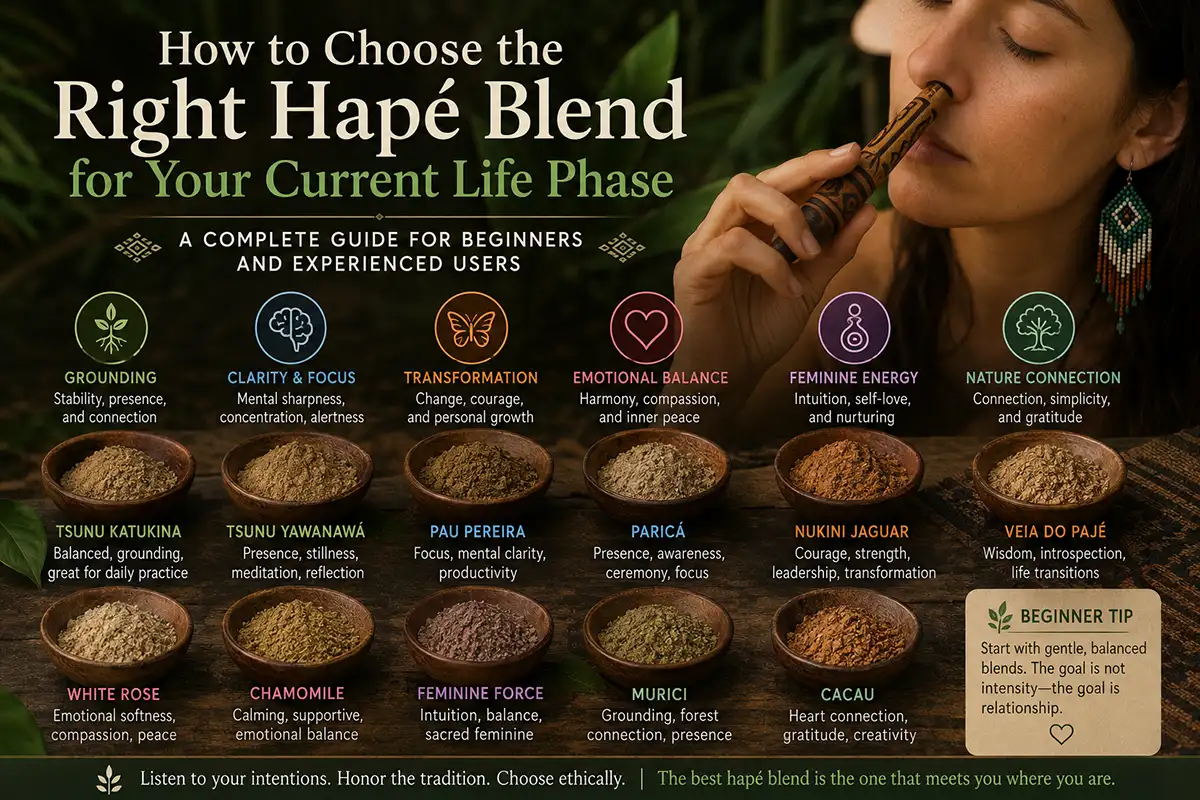
Learning how to choose hapé responsibly begins with understanding that different blends are not interchangeable products with guaranteed effects. Their names may refer to an Indigenous people, a plant, a type of ash, a regional tradition, a producer, or a contemporary recipe. Composition, strength, preparation, and cultural context can vary significantly.
People encountering Amazonian hapé for the first time often ask a simple question: “Which blend should I choose?” Yet a responsible answer should not begin with a promise that one blend will create focus, emotional healing, courage, or another predictable outcome.
A better starting point is to examine:
- Who prepared the blend
- Where it came from
- What ingredients are disclosed
- Whether it contains tobacco and nicotine
- How the producer describes its traditional context
- Whether the seller provides clear safety information
- Whether the sourcing respects Indigenous communities
This guide explains how to choose hapé through education, transparency, cultural respect, and harm awareness. It is intended only for adults who are legally permitted to purchase tobacco products in their location.
Important: Hapé commonly contains tobacco and nicotine. Nicotine is addictive, and inhaled or insufflated tobacco products can carry health risks. Hapé should not be treated as a medical product or as a substitute for professional healthcare.
What Is Hapé?
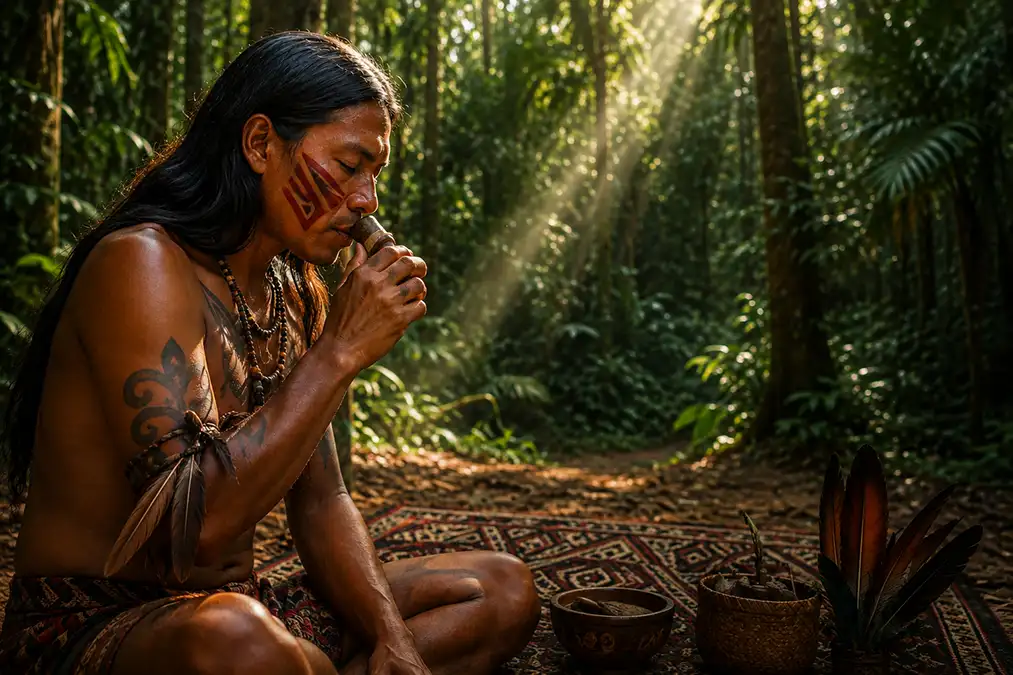
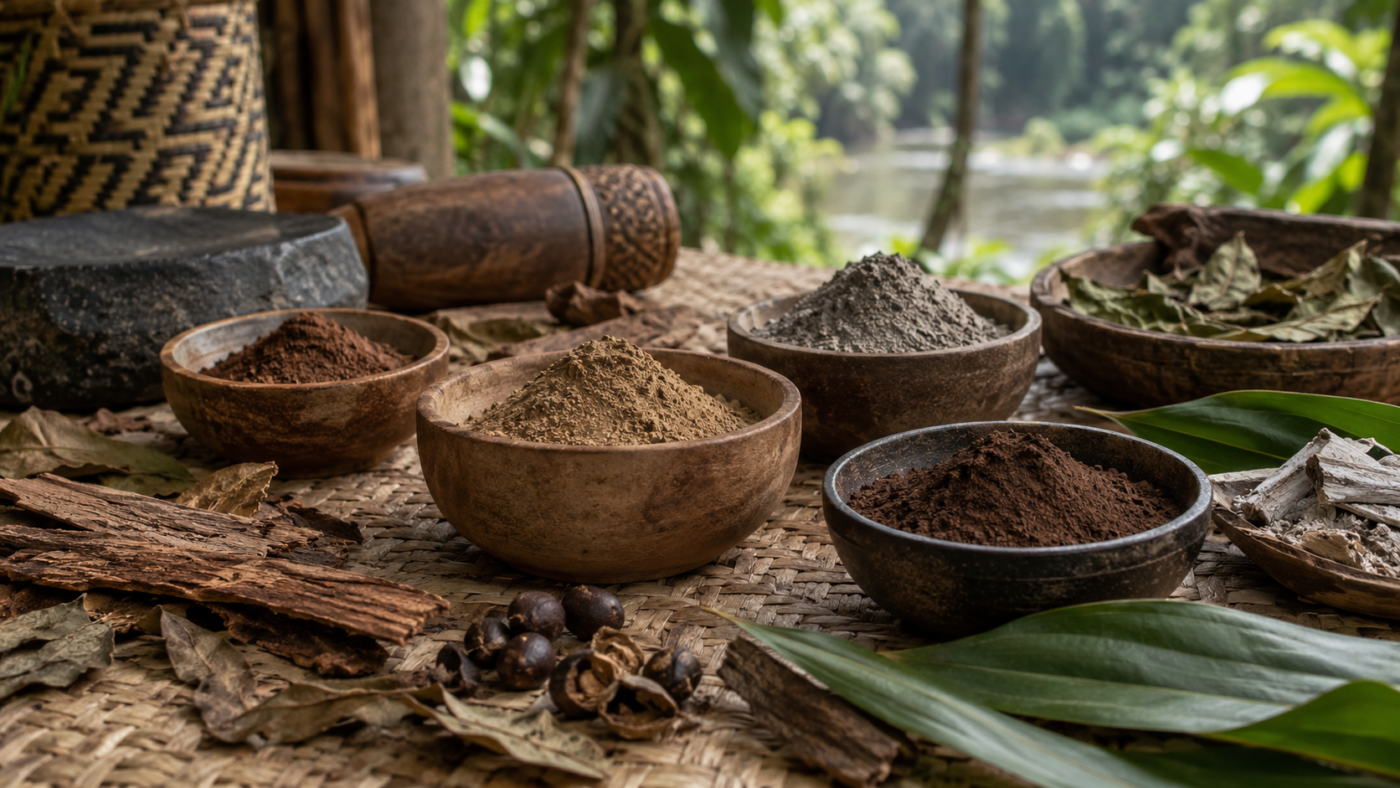
Hapé, also commonly written as rapé, is a traditional Amazonian preparation generally made from finely powdered botanical materials. Many preparations contain tobacco combined with alkaline plant ashes, although ingredients and methods differ among makers and communities.
The term can refer to a broad family of preparations rather than one standardized formula. Two products carrying similar names may differ in tobacco variety, ash, plant material, preparation method, freshness, moisture, grind, and concentration.
For this reason, understanding how to choose hapé requires more than looking at a product name or selecting the blend described as strongest.
Readers seeking broader background should begin with our educational guide, What Is Rapé or Hapé?.
Why Choosing the Right Hapé Requires Care
Hapé is sometimes marketed online with highly specific descriptions such as grounding, energizing, heart-opening, mentally clarifying, or emotionally cleansing. These descriptions may reflect traditional associations, customer impressions, marketing language, or the experience of an individual producer.
They should not be interpreted as guaranteed medical or psychological outcomes.
A person’s experience can be influenced by many factors, including:
- The actual ingredients
- The amount of nicotine present
- Individual nicotine tolerance
- Health conditions
- Medication use
- Preparation and storage
- The surrounding environment
- Personal expectations
The responsible question is therefore not simply, “Which blend produces the effect I want?”
It is:
“Do I have enough reliable information to make an informed adult decision about this preparation?”
How to Choose Hapé by Checking the Ingredients
The first practical step in learning how to choose hapé is checking whether the seller clearly identifies the ingredients.
A trustworthy product description should state, whenever the information is available:
- Whether the blend contains tobacco
- The tobacco species or regional name
- The type of plant ash used
- Any additional botanical ingredients
- The community, lineage, or producer associated with it
- Whether the formula is traditional, adapted, or contemporary
Descriptions should not hide tobacco behind vague expressions such as “sacred forest powder” or “herbal ceremonial blend.” Consumers should be able to understand whether nicotine is present before making a decision.
If a seller cannot or will not explain the basic composition, that is a reason for caution.
Does All Hapé Contain Tobacco?
Many traditional and commercially available hapé preparations contain tobacco. Some products are described as tobacco-free, but this should be confirmed through explicit ingredient information rather than assumed from the name.
Terms such as herbal, feminine, floral, forest, calming, or ceremonial do not necessarily mean that a blend is free from tobacco or nicotine.
When comparing products, look for a direct statement such as:
- Contains tobacco
- Contains nicotine
- Tobacco-free formulation
- Full ingredient list available
A responsible guide about how to choose hapé must place ingredient transparency above poetic product descriptions.
Understanding Traditional Blend Names
Hapé names can communicate different types of information. A name might identify:
- An Indigenous people or community
- A tree whose ash is used
- An additional botanical ingredient
- A symbolic quality
- A producer’s proprietary recipe
For example, Tsunu, Murici, Pau Pereira, Paricá, Cacau, Jaguar, White Rose, and Feminine Force do not all follow the same naming logic.
A botanical name may refer to an ash or plant ingredient. A community name may indicate origin or association. A symbolic name may communicate the character the maker attributes to the preparation.
Consumers should not assume that every product carrying an Indigenous name was made by, sourced from, or authorized by that community.
How to Evaluate Indigenous Origin Claims
Ethical sourcing is central to understanding how to choose hapé. Indigenous names and imagery should not be used merely as marketing devices.
Before purchasing, consider whether the seller explains:
- Who made the preparation
- Which community or family is connected to it
- How the commercial relationship was established
- Whether producers are paid fairly
- Whether cultural information is presented respectfully
- Whether sacred patterns, names, and identities are used with permission
Not every traditional producer will provide public details about private ceremonial knowledge. Responsible sourcing does not require exposing secrets. It does, however, require honesty about origin and commercial relationships.
Our Indigenous Wisdom section explores the importance of approaching traditional knowledge with humility rather than treating it as a trend.
Traditional Associations Are Not Medical Claims
Product pages often describe blends through traditional associations such as grounding, strength, clarity, introspection, balance, or connection with the forest.
These descriptions can help communicate cultural context, but they must be presented carefully.
A traditional association is not the same as scientific evidence that a product diagnoses, treats, prevents, or cures a condition. A customer’s personal experience is also not proof that another person will experience the same result.
Responsible descriptions should use language such as:
- Traditionally associated with
- Described by the producer as
- Used in some ceremonial contexts for
- Some adult users describe
They should avoid guarantees such as:
- Treats anxiety
- Cures depression
- Eliminates pain
- Improves attention disorders
- Detoxifies the body
How to Choose Hapé by Intensity
Intensity is one of the most frequently used categories in hapé product descriptions. However, it is not universally standardized.
A seller may describe a product as gentle, balanced, strong, or very strong, but these labels usually reflect internal comparison within that seller’s collection.
They do not provide an exact measure of:
- Nicotine concentration
- Tobacco potency
- Alkalinity
- Individual physiological response
A product called gentle may still contain tobacco and nicotine. A blend called strong may differ significantly between batches or producers.
When learning how to choose hapé, treat intensity descriptions as approximate catalog guidance rather than objective safety measurements.
Why “Strongest” Is Usually the Wrong Criterion
Seeking the strongest blend can encourage an unsafe relationship with a tobacco product. Greater intensity does not automatically mean greater authenticity, spiritual depth, quality, or cultural value.
Strength may simply reflect:
- A more concentrated tobacco
- A different ash ratio
- Greater alkalinity
- A finer grind
- Individual sensitivity
Choosing solely by perceived strength can also obscure more meaningful questions about ingredients, origin, freshness, and ethical sourcing.
Traditional respect should not be confused with chasing intensity.
Comparing Common Hapé Categories
The following categories can help readers understand how products are commonly organized. They do not predict an individual outcome or recommend consumption.
Tsunu Blends
Tsunu is one of the most widely recognized names in hapé catalogs. Depending on the preparation, the term may refer to the ash used or to a traditional recipe associated with a particular producer or community.
Products such as Tsunu Katukina, Tsunu Yawanawá, and Tsunu Huni Kuin should not be assumed to be identical. Their composition and preparation may differ.
Compare the producer, disclosed ingredients, origin, and batch description rather than selecting solely by the word Tsunu.
Murici Blends
Murici preparations are often described through themes of simplicity, forest connection, or balance. However, these are traditional or commercial descriptions rather than standardized pharmacological categories.
Check whether Murici refers to the ash, an additional botanical ingredient, or the name of the full recipe.
Pau Pereira Blends
Pau Pereira products are frequently presented as direct or intense preparations. The precise formula can vary, and the name alone does not reveal nicotine concentration or all ingredients.
Adults comparing these blends should prioritize a clear origin statement and complete labeling.
Paricá Blends
The word Paricá has complex botanical and cultural associations in South America. Sellers should clearly explain what the name means within a particular product and avoid creating confusion between distinct traditional preparations.
A product name should never replace an ingredient list.
Jaguar Blends
Jaguar-themed blends are often described symbolically through courage, confidence, strength, or protection. These themes reflect the importance of the jaguar in Amazonian cultures, but formulas using the name can differ between producers.
Buyers should determine whether Jaguar is a community recipe, a symbolic commercial name, or both.
Floral and Heart-Centered Blends
Names such as White Rose, Chamomile, Cacau, and Feminine Force are frequently presented with language related to gentleness, receptivity, emotional reflection, or the heart.
These names do not necessarily mean the product is mild, nicotine-free, medically calming, or appropriate for every person.
The tobacco content and full ingredient list still matter.
How to Choose Hapé as a First-Time Researcher
For someone researching hapé for the first time, the most responsible approach is not to begin with a list of products to consume.
Begin with education.
- Learn what hapé is and how the term is used.
- Confirm whether the preparation contains tobacco or nicotine.
- Read the complete ingredient information.
- Investigate the producer and cultural origin.
- Review health warnings and legal age requirements.
- Avoid descriptions that make medical promises.
- Do not equate stronger products with better products.
Our complete introduction to Rapé and Hapé provides additional cultural and historical context.
Questions to Ask Before Choosing a Blend
A careful buyer should be able to answer the following questions:
- Does this preparation contain tobacco?
- Does it contain nicotine?
- What ash or botanical materials are listed?
- Who prepared it?
- Where was it produced?
- Is its Indigenous association clearly explained?
- Is the product fresh and properly stored?
- Does the seller provide batch or sourcing information?
- Are health warnings visible?
- Are the traditional descriptions separated from medical claims?
If the answers are vague, contradictory, or unavailable, consider choosing a more transparent source instead.
Freshness, Storage and Product Quality
Hapé is a botanical preparation, and its condition can be affected by humidity, heat, contamination, and poor storage.
A responsible seller should package the product in a clean, secure container and provide storage guidance.
Quality concerns can include:
- Unexpected moisture
- Visible contamination
- Unusual odors
- Damaged packaging
- Missing labels
- Unclear batch identity
Do not use a product that appears contaminated, improperly stored, or incorrectly labeled.
Why Batch Differences Matter
Traditional botanical products may vary between batches. Plants grow under changing conditions, and handmade preparation does not always produce identical results.
Variation can be influenced by:
- Plant age
- Harvest season
- Soil and climate
- Tobacco variety
- Ash preparation
- Grinding technique
- Moisture content
- Storage duration
Therefore, a previous experience with a product name does not guarantee that a future batch will be identical.
This is another reason why learning how to choose hapé should involve current batch information rather than relying only on reputation.
Health and Safety Considerations
Many hapé preparations contain nicotine, which is addictive. Nicotine can affect heart rate, blood pressure, the nervous system, and the development of dependence.
People with health conditions, people taking medication, and anyone uncertain about nicotine exposure should consult a qualified healthcare professional rather than relying on a seller’s product description.
Extra caution is particularly important for:
- Minors
- Pregnant or breastfeeding people
- People with cardiovascular concerns
- People with respiratory or nasal conditions
- People sensitive to nicotine
- People with a history of tobacco dependence
This educational article does not provide medical advice and does not recommend using tobacco products.
Hapé Should Not Replace Mental Healthcare
Descriptions involving emotional balance, sadness, trauma, clarity, or personal transformation must be handled responsibly.
A tobacco-based preparation should not replace counseling, medical care, crisis support, or evidence-based mental healthcare.
People experiencing persistent emotional distress should seek help from a qualified professional or a trusted adult rather than trying to treat themselves with a traditional product.
Traditional cultural meaning can be respected without turning hapé into a cure-all.
Respecting Indigenous Traditions
Every responsible discussion about how to choose hapé should acknowledge the Indigenous peoples who have maintained these traditions across generations.
The knowledge did not emerge from online marketing. It developed through relationships with plants, land, community, ceremony, ancestry, and the forest.
Respect involves more than repeating tribal names. It includes:
- Accurate attribution
- Fair compensation
- Long-term relationships
- Consent regarding cultural representation
- Avoiding invented stories
- Protecting sacred or private knowledge
- Supporting Indigenous autonomy
Discover more perspectives in our articles about Amazonian traditions and Indigenous knowledge.
Ethical Sourcing Versus Cultural Marketing
A website may display forest imagery, Indigenous-inspired patterns, and spiritual language without maintaining meaningful relationships with the communities represented.
Ethical sourcing should be demonstrated through concrete practices rather than visual aesthetics alone.
Signs of greater transparency may include:
- Naming the producer when permission is given
- Explaining the commercial relationship
- Providing origin information
- Avoiding false exclusivity claims
- Paying agreed and fair prices
- Supporting community priorities
Consumers can influence the market by asking these questions before purchasing.
How to Read a Hapé Product Description
A useful product description should separate facts from interpretations.
Factual Information
- Ingredients
- Producer or source
- Region
- Net weight
- Tobacco disclosure
- Storage guidance
- Age restriction
Traditional Context
- Community association
- Historical or ceremonial context
- Traditional symbolism
- Information supplied by the producer
Subjective Descriptions
- Strong
- Gentle
- Grounding
- Focused
- Heart-centered
- Reflective
Subjective descriptions should be clearly presented as traditional associations or reported impressions, not objective promises.
Common Mistakes When Choosing Hapé
Choosing Only by Strength
High intensity does not prove quality, authenticity, or suitability.
Assuming Floral Means Tobacco-Free
A floral or gentle name may still describe a nicotine-containing preparation.
Ignoring the Producer
The same blend name may represent very different formulas from different makers.
Expecting a Guaranteed Emotional Result
Traditional associations are not predictable medical effects.
Buying Without an Ingredient List
Consumers should know whether tobacco, ash, or additional plants are present.
Treating Indigenous Identity as Branding
Community names should be connected to real provenance and respectful relationships.
How to Compare Two Hapé Blends
When comparing two products, use a structured evaluation rather than relying on poetic language.
| Criterion | Blend A | Blend B |
|---|---|---|
| Tobacco disclosed | Confirm | Confirm |
| Full ingredients | Review | Review |
| Producer identified | Check source | Check source |
| Community association | Verify context | Verify context |
| Intensity description | Subjective | Subjective |
| Batch freshness | Check date | Check date |
| Safety information | Must be visible | Must be visible |
This method places transparency and responsibility above marketing language.
Can an Online Quiz Choose a Hapé Blend for You?
An online quiz may help organize product information, but it cannot assess medical suitability or predict how someone will respond to nicotine.
A responsible quiz should:
- Be restricted to adults
- Disclose tobacco and nicotine
- Avoid medical recommendations
- Explain that intensity is subjective
- Offer educational comparisons rather than guarantees
- Direct health questions to qualified professionals
A quiz should never tell someone that a tobacco product will treat anxiety, depression, trauma, attention difficulties, or another health concern.
The Best Choice May Be Not to Use Hapé
Responsible education must acknowledge that choosing not to use a tobacco product is a valid decision.
A person may appreciate Amazonian culture, support Indigenous artisans, study forest traditions, meditate, pray, journal, and connect with nature without consuming hapé.
Respect for a tradition does not require participation in every practice associated with it.
Conclusion: How to Choose Hapé With Respect and Awareness
Understanding how to choose hapé should not be reduced to finding the strongest, rarest, or most fashionable blend.
A responsible decision begins with clear information:
- What does the preparation contain?
- Does it contain tobacco and nicotine?
- Who made it?
- Where did it come from?
- Is its cultural association accurately represented?
- Are traditional descriptions separated from health claims?
- Does the seller provide appropriate warnings?
Different blends may carry distinct names, histories, ingredients, and producer descriptions. None can be guaranteed to create a specific emotional, spiritual, or physical outcome.
The most respectful approach is grounded in education, transparency, adult responsibility, and gratitude toward the Indigenous communities that have preserved these traditions.
The best-informed choice is not automatically the strongest product. It is the decision made with the clearest understanding of origin, composition, cultural context, and risk.
Frequently Asked Questions About How to Choose Hapé
How do I choose a hapé blend?
To understand how to choose hapé, compare the ingredients, tobacco disclosure, producer, regional origin, cultural context, freshness, safety labeling, and ethical sourcing. Do not rely solely on claims about strength or spiritual effects.
Does hapé contain tobacco?
Many hapé preparations contain tobacco and nicotine. Some formulas may be described as tobacco-free, but this should be confirmed through a complete ingredient list.
What is the best hapé for beginners?
There is no universally suitable beginner blend. Products described as gentle may still contain nicotine, and intensity labels are not standardized. Adults researching hapé should begin with ingredient, origin, and safety information rather than a consumption recommendation.
What is the strongest hapé blend?
Strength varies by tobacco, ash ratio, alkalinity, grind, batch, producer, and individual sensitivity. There is no universal strength scale, and stronger does not mean safer, more authentic, or higher quality.
Are Tsunu blends all the same?
No. Tsunu blends can differ by community, producer, tobacco, ash, preparation, and batch. The shared name does not guarantee an identical formula.
Are floral hapé blends tobacco-free?
Not necessarily. Names such as White Rose, Chamomile, or Feminine Force do not confirm that a blend is free from tobacco or nicotine. Check the ingredients.
Can hapé treat anxiety or depression?
Hapé should not be presented as a treatment for anxiety, depression, trauma, or another health condition. People seeking mental healthcare should consult a qualified professional.
How can I verify that hapé is ethically sourced?
Look for clear information about the producer, region, Indigenous association, commercial relationship, and fair compensation. Avoid sellers that use community names without explaining provenance.
Why do different batches feel different?
Botanical ingredients, tobacco potency, ash preparation, humidity, season, grind, and storage can vary between batches. Product names alone do not guarantee identical composition.
Is hapé appropriate for minors?
No. Tobacco and nicotine products are not appropriate for minors and may also be legally restricted to adults depending on the jurisdiction.
Continue exploring
All stories
The medicines of the forest