Why Hapé (Rapé) Blends Feel So Different
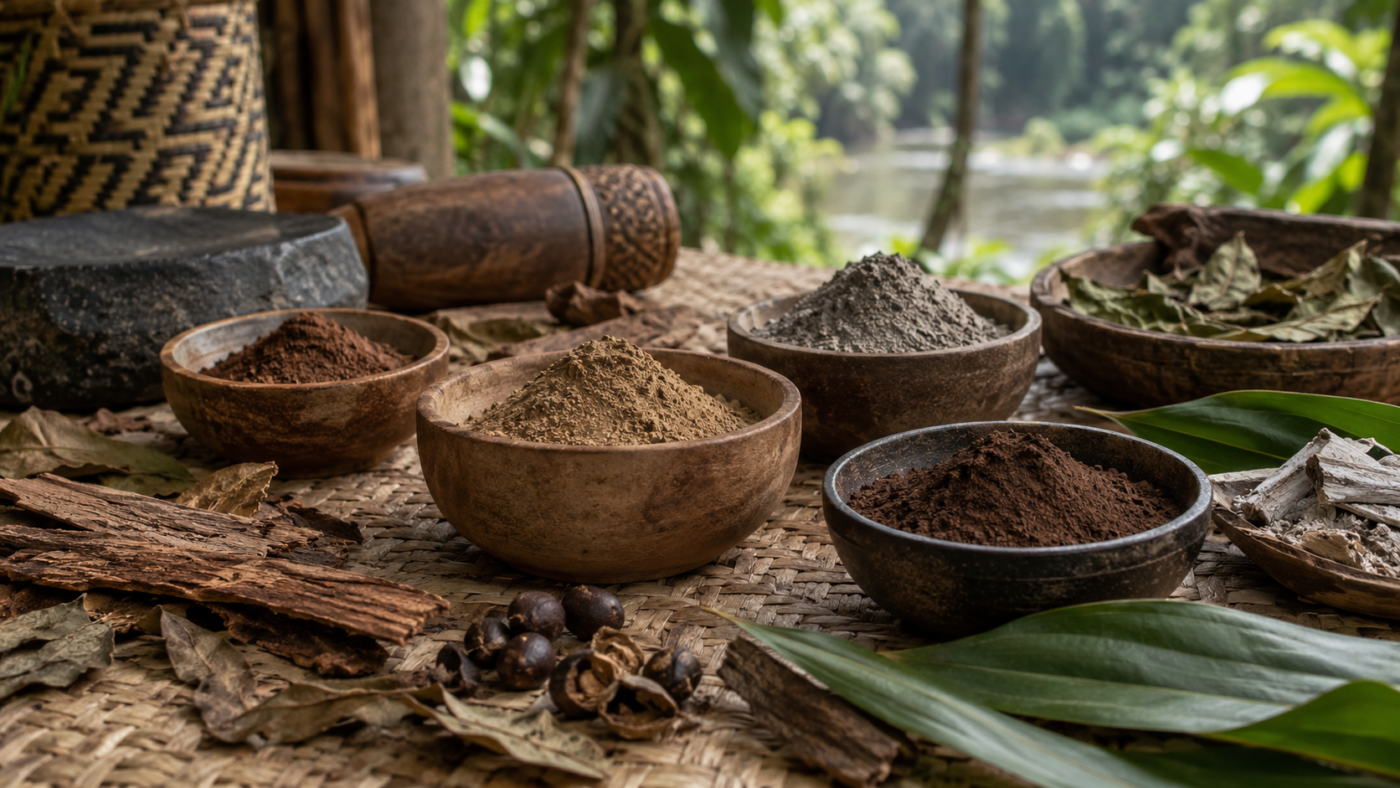
Why do hapé blends feel so different? How plant ashes, texture, moisture, origin and the hands that make each blend shape it.
Why Hapé Blends Can Feel So Different
Two hapé blends can sit side by side and look almost identical.
Both finely ground.
Both prepared within Amazonian traditions.
Both carrying a name that sounds familiar.
Yet the experience each one brings can be very different.
One may be described as sharper.
Another softer.
One may have a distinctly woody aroma.
Another may feel drier, or a little moist.
Colors range from pale beige and gray to deep brown.
Even two batches with the same name may not be perfectly identical.
Why?
Because hapé (rapé) is not a standardized formula.
Each blend is a handmade preparation shaped by many things at once:
- The base plant and how it was grown;
- The proportions of the recipe;
- The plant ash;
- The character of that ash;
- Moisture;
- Grinding;
- Other plant material;
- Storage;
- Age;
- Preparation technique;
- Local tradition.
Understanding these gives a truer picture of hapé than simply sorting blends into “strong” and “weak.”
The reality is far more interesting.
Hapé Is a Family, Not a Single Recipe
One common misunderstanding is that the word hapé (also written rapé or rapeh) names one fixed preparation.
It does not.
It covers a whole family of sacred powders, prepared by different peoples, families and makers across the Amazon.
Laboratory analysis of Brazilian rapé samples has confirmed real variation between them, in moisture, pH and composition.
So when two blends are both called hapé, that tells us less than we might assume.
It is a little like saying:
“Bread.”
Or:
“Tea.”
The word tells you something.
But not nearly enough to know the whole experience.
The Base Plant Carries Its Own Story
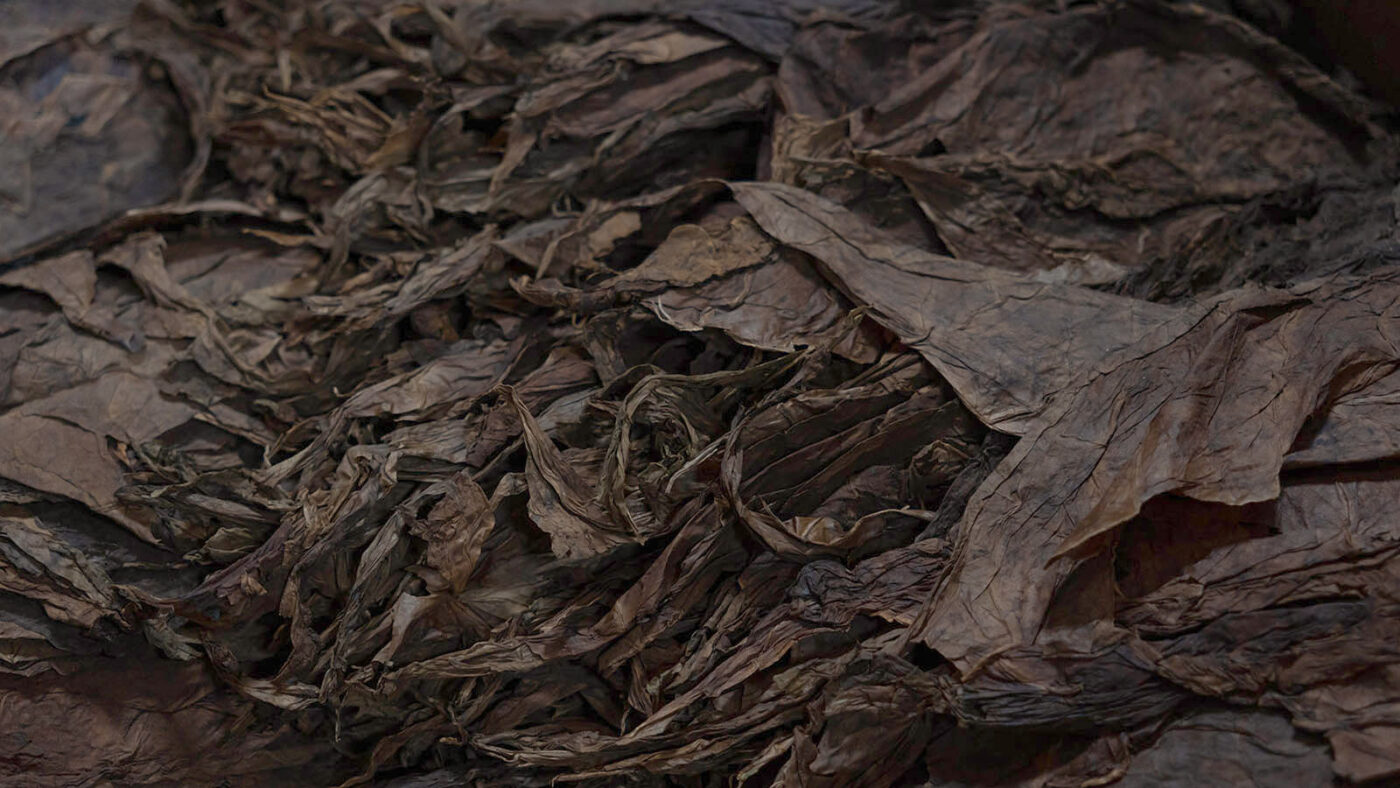
Every blend begins with plant material that was grown, harvested, dried and prepared by someone.
That material can differ in:
- Where it grew;
- Soil and climate;
- When it was harvested;
- How it was dried and cured;
- How long it rested;
- How it was stored.
Even plants of the same species can produce noticeably different material from one season to the next.
Makers work with living ingredients, not laboratory-standard ones.
Variation is built into the medicine.
Proportions Matter Too
Imagine two blends made from similar materials.
One uses more of the base plant.
The other uses more ash or more of an added botanical.
Their character can differ considerably.
But proportions are rarely visible.
Two finely ground powders can share a color while holding very different ratios.
This is one more reason appearance alone cannot tell you how a blend was made.
Ash Is Not a Filler
Plant ash is one of the most fascinating parts of traditional hapé.
To someone new to the craft, ash can look like an inactive ingredient added to stretch the blend.
That misses its role.
Ash from different plants carries different minerals.
Depending on its makeup, it makes the finished blend more alkaline.
And that alkalinity changes how the whole preparation behaves and how it is felt.
For many makers, choosing and preparing the ash is where much of the knowledge lives.
Why pH Shapes the Blend
pH is a measure of how acidic or alkaline something is.
Ash raises the pH of a blend.
Laboratory analysis of rapé samples found that pH varied widely between them, and that blends made with strongly alkaline ashes stood apart from the rest.
So two blends with a similar recipe could still feel different if their ash, and therefore their pH, differs.
That is one reason “what is in it?” is only part of the question.
“How was the ash made?” matters just as much.
Ash From Different Trees Can Differ
There is no single substance called “hapé ash.”
Ash is prepared from many botanical sources.
Different trees gather different minerals.
Where a tree grows affects its chemistry.
How the material is burned affects the ash that remains.
The finished ash may differ in:
- Mineral makeup;
- pH;
- Color;
- Texture;
- Aroma;
- How it meets the rest of the blend.
Knowledge of ash preparation can be very specific to a community, a family or a single maker.
A tree named in one blend is not necessarily used the same way everywhere.
A Blend’s Name Does Not Always Reveal Its Full Recipe
This matters for anyone choosing a blend.
A hapé may carry the name of:
- A tree;
- A plant;
- A people;
- A place;
- A symbolic idea;
- A maker’s own recipe.
The name is not a full ingredient list.
A blend named after a tree may involve ash from that tree.
But recipes vary.
The same name from two makers does not guarantee the same preparation.
Names are cultural and commercial identifiers.
They are not laboratory specifications.
Grinding Changes Texture
One of the first differences people notice between hapé blends is texture.
Some powders are exceptionally fine.
Others have slightly larger particles.
Grinding can influence:
- How the powder moves;
- How it settles;
- How dry it feels;
- How the aroma opens;
- How it feels on application.
A finer powder has more surface area.
But finer does not automatically mean stronger, or better.
Texture is one variable among many.
Handmade Grinding Creates Natural Variation
Traditional preparation is slow, careful work.
Plant material may be:
Dried.
Burned.
Pounded.
Sifted.
Ground again.
Mixed.
Sifted again.
When the process is done by hand, small differences between batches are normal.
This is not a sign of poor craft.
It is what working with natural materials looks like.
Moisture Changes More Than Texture
A very dry powder feels different from one holding a little more moisture.
Moisture can affect:
- Texture;
- Clumping;
- Aroma;
- How long the blend keeps;
- Freshness and cleanliness;
- How it handles.
The 2015 laboratory analysis of Brazilian rapé samples measured moisture precisely because it is one of the ways blends differ.
So storage matters after preparation, not only during it.
Humidity Can Change a Blend After It Is Made
Imagine a carefully prepared powder arriving in a humid room.
Powders absorb moisture from the air.
Opening and closing the container changes its exposure.
Temperature shifts matter.
Time matters.
A blend does not stay exactly the same forever.
This is especially true for medicine that travels from the forest, through shipping, into homes in very different climates.
Keep your hapé sealed, dry and away from heat.
Aroma Is Another Layer
Hapé blends carry very different aromas.
The base plant brings its own.
Ashes and added botanicals bring others.
Preparation and storage shape them too.
Aromas may seem:
Woody.
Earthy.
Smoky.
Sweet.
Herbal.
Resinous.
But aroma is personal.
Two people can smell the same blend and describe it differently.
Color Can Offer Clues, Not Certainty
Hapé comes in many shades.
Cream.
Gray.
Tan.
Red-brown.
Chocolate brown.
Almost black.
Color can reflect differences in:
- The base plant;
- The ash;
- Other botanicals;
- Roasting or burning;
- Moisture;
- Age.
But color is not a strength scale.
A dark blend is not automatically stronger.
A pale blend is not automatically gentler.
Color gives clues.
Not answers.
Why “Strong” Is an Incomplete Description
The most common words used for hapé blends are:
Strong.
Medium.
Gentle.
They are convenient.
But what does “strong” actually mean?
It might describe:
- Physical intensity;
- Sensation in the nose;
- Aroma;
- Emotional response;
- How familiar the person is with hapé;
- Expectation.
These are not the same thing.
A blend can feel sharp on application and settle softly.
Another can feel smooth and still move a person deeply.
One person’s “strong” is another person’s familiar.
Strength words are experience reports, and they stay personal.
Each Person Meets a Blend Differently
Even when two people receive exactly the same blend, their experiences can differ.
Factors include:
- Experience with hapé;
- Individual sensitivity;
- Health and state of the body;
- Sensitivity of the nose;
- Expectations;
- Setting;
- Intention.
This makes one person’s experience an unreliable guide to someone else’s.
Context Shapes Perception
Hapé is often received in prayer, meditation or ceremony.
Context shapes how sensations are understood.
A person sitting in silence with eyes closed notices the body more than someone in the middle of an ordinary day.
Music, prayer, intention and the people present all color the experience.
A blend described as “grounding” is an experience report.
It is not a laboratory measurement.
Both kinds of description are valid.
They answer different questions.
Origin Matters
A blend prepared by one Indigenous people may come from different:
- Plants available;
- Ash traditions;
- Recipes;
- Cultural meanings;
- Environmental conditions;
than a blend prepared elsewhere.
The Amazon is not one tradition.
A Huni Kuin preparation should not be described as the same as a Yawanawá, Nukini, Katukina, Puyanawa or any other people’s preparation.
Specificity matters.
There Is No Single Indigenous Hapé Recipe
The phrase “traditional Indigenous hapé” can suggest one recipe handed down across the whole Amazon.
There is no such universal formula.
Different peoples hold different knowledge.
Even within one people, families and makers keep their own recipes.
Variation is not the exception.
It is the cultural landscape.
A Blend Reflects Its Maker
Think of bread again.
Two bakers can use:
Flour.
Water.
Salt.
Yeast.
And bake very different loaves.
Technique matters.
Timing matters.
Experience matters.
Hapé carries the decisions of the person or family who made it.
How the plants were chosen.
How the ash was prepared.
How finely the powder was worked.
How the proportions were set.
How each batch was judged ready.
The maker matters.
Batch Variation Is Normal, and Transparency Still Matters
Natural variation is no excuse for vagueness.
A responsible maker or seller should try to know:
- Who prepared the blend;
- Its people or place of origin;
- Which key ingredients are known;
- Which ash was used;
- Whether batches differ;
- How it should be stored.
Good sourcing makes those answers possible.
Sacred Is Not the Same as Gentle
A blend can be:
Natural.
Traditional.
Handmade.
Sacred.
And still be a strong preparation that asks for care.
These things do not contradict each other.
Traditions themselves hold boundaries: who serves, when, how often, and in what setting.
Respecting hapé as sacred includes respecting those boundaries.
If you are new, pregnant, taking medication or unsure, speak with an experienced practitioner, and with your doctor, before you begin.
More Intense Does Not Mean More Authentic
A common mistake is to equate intensity with quality.
The strongest-feeling blend is not necessarily:
The most traditional.
The most carefully made.
The most authentic.
The best suited to a particular ceremony.
Intensity can become an obsession.
But craft is broader than intensity.
Origin.
Relationship.
Preparation.
Transparency.
Honest attribution.
All of it matters.
More Ingredients Do Not Make a Better Blend
Long ingredient lists can sound impressive.
But complexity alone does not make quality.
A simple blend made with care inside a living tradition may be more coherent than a commercial mixture with many botanicals.
More is not automatically better.
Ash Names Deserve Care
Descriptions often highlight the tree an ash comes from.
That can be a lovely way to learn.
But botanical names should be accurate.
One common name can refer to several species.
The same tree can be spelled several ways.
And a blend made with a tree’s ash does not automatically carry every property that tree is known for.
Once plant material becomes ash, its nature is profoundly changed.
Burning Transforms the Plant
Ash is not powdered bark.
It is the mineral-rich material left after fire.
Many of the compounds in living plant tissue are transformed or lost in high heat.
So saying:
“Tree X contains compound Y”
does not mean:
“Ash from Tree X contains compound Y in the same way.”
Keeping that distinction clears up a great deal of misinformation about hapé.
Cultural Meaning and Chemistry Can Live Side by Side
A people may associate a tree with a particular quality or spirit.
A laboratory may measure the minerals in its ash.
These views do not cancel each other.
But they should not be confused.
One speaks of meaning.
The other speaks of chemistry.
Good teaching keeps the line between them visible.
Why Two Batches With the Same Name Can Differ
Suppose you love a particular blend one year.
The next year you receive another batch with the same name.
It feels different.
Possible reasons include:
- A new harvest of the base plant;
- Different plant material;
- A new batch of ash;
- Changed proportions;
- Grinding differences;
- Moisture;
- Storage;
- A different maker.
The same name does not promise identical batches.
Artisanal Is Not Industrial
Industrial products are designed to remove variation.
Machines.
Specifications.
Controlled humidity.
Fixed ingredients.
Artisanal medicine keeps a different relationship with its materials.
This does not mean care or cleanliness can be dropped.
It means uniformity is not the goal.
Can You Tell What’s in a Hapé by Feeling It?
Not reliably.
Sensation cannot tell you:
The exact recipe.
The pH.
Which plants were used.
Whether anything unwanted is present.
With time you may recognise patterns.
But familiarity is not laboratory analysis.
Treat confident claims based only on sensation with caution.
Can You Tell Strength by Color?
No reliable color-to-strength scale exists.
Color reflects ingredients and preparation.
It cannot tell you pH, recipe or how a blend will feel.
Does More Ash Mean a Stronger Hapé?
Not necessarily.
Ash raises the pH, and pH shapes how a blend behaves.
But the result depends on:
Which ash.
Which base plant, and how much.
The character of both.
The preparation.
Adding more ash does not create a predictable “strength” scale.
Why Laboratory Testing Can Help
Scientific study of hapé is still limited.
Testing can help show:
- pH;
- Moisture;
- Contaminants;
- Microbiological quality.
Testing does not replace cultural knowledge.
It answers a different question:
What is physically present?
For responsible sharing of this medicine, both provenance and quality can matter.
Craft and Quality Are Not the Same as Potency
When judging a traditional handmade blend, quality includes:
- Traceable origin;
- Good raw materials;
- Careful preparation;
- Accurate botanical knowledge;
- Clean storage;
- Honest cultural attribution;
- Fair pay for the makers;
- Transparency.
Potency is one characteristic.
It is not the definition of quality.
Good Sourcing Turns Variation Into Knowledge
When a supply chain knows the maker, the community and the ingredients, variation becomes meaningful instead of mysterious.
Instead of:
“This batch feels different.”
we can ask:
Was there a new harvest?
Was the ash prepared differently?
Did the maker change?
Was another plant used?
Did shipping expose the blend to humidity?
Traceability turns variation into understanding.
Why Cultural Attribution Matters
A blend associated with an Indigenous people carries more than a product name.
Using a people’s name implies a relationship.
You should be able to ask:
Did this blend really come from members of that people?
Is the name used with their consent?
Do the makers benefit?
Is the story accurate?
A people’s name should never be just branding.
The Better Question Is Not “Which Blend Is Strongest?”
A far more useful question is:
What makes this blend what it is?
Who made it?
Where?
With which plants?
Which ash?
Within which tradition?
What do we actually know about it?
What remains unknown?
That question replaces chasing intensity with learning.
And it honours the fact that hapé is richer than any strength ranking.
Conclusion: Every Hapé Blend Is a Meeting of Many Things
The differences between rapeh blends make sense once we stop imagining them as flavors of one standard product.
Each blend is a meeting of plants and human decisions.
The base plant varies.
Ash varies.
pH varies.
Grinding varies.
Moisture varies.
Storage varies.
Recipes vary.
Makers vary.
Traditions vary.
And the people receiving them vary.
Laboratory analysis confirms that rapé samples can differ considerably in pH, moisture and composition.
Traditional knowledge adds another layer: where a blend comes from, who made it, and what meaning surrounds it.
Neither view is complete alone.
And neither supports the idea that one blend is objectively “better” because it feels stronger.
Intensity is only one experience.
Quality includes relationship.
Craft.
Origin.
Transparency.
Responsibility.
A blend is not just a powder with a name.
It is plants, fire, technique, place and human knowledge meeting in one preparation.
Understanding that changes the question.
Instead of asking:
Which hapé is the strongest?
we can ask:
What makes this hapé different?
That is a much better place to begin.
FAQ
Why do different hapé blends feel different?
Hapé blends differ in their base plant, plant ashes, pH, added botanicals, grinding, moisture, storage and preparation. Each person’s sensitivity, intention and setting also shape the experience.
Is every hapé made from the same plants?
No. Plants, sources and proportions vary between peoples, families and makers. There is no single universal recipe.
What does ash do in hapé?
Plant ash contributes minerals and raises the pH of the blend. That alkalinity changes how the preparation behaves and how it is felt, which is why the choice and preparation of ash is so central to the craft.
Does more ash make hapé stronger?
Not necessarily. The result depends on the ash itself, the base plant, the proportions and the preparation. There is no universal ash-to-strength formula.
Why do hapé blends have different colors?
Color reflects differences in the base plant, ash, added botanicals, processing, moisture and age. Color alone does not tell you how strong a blend is.
Can two batches of the same hapé feel different?
Yes. Natural materials and handmade preparation create batch variation. A new harvest, a new batch of ash, changed proportions, grinding, moisture and storage can all contribute.
Does a finer hapé mean it is stronger?
Not necessarily. Grinding changes texture and surface area, but particle size alone does not decide how a blend will feel.
Can I tell what is in a hapé by how it feels?
No. Sensation cannot reliably tell you a blend’s recipe or pH. Only knowing the maker, or laboratory analysis, can.
Is a handmade, traditional hapé always gentle?
No. Traditional and sacred does not mean mild. Hapé is a strong preparation that traditions surround with care and boundaries. If you are new, pregnant, taking medication or unsure, speak with an experienced practitioner and your doctor first.
Is the strongest hapé the highest-quality blend?
No. Intensity does not establish quality, authenticity or craft. Traceable origin, careful preparation, transparency, honest attribution and fair treatment of the makers are what make a blend good.
Continue exploring
All stories
The medicines of the forest