Forest Communication: How Trees Talk Beneath the Soil and What It Means for Humanity

Forest Communication: How Trees Talk Beneath the Soil
Forest communication describes the remarkable ways trees, plants, fungi, microorganisms, and other living beings exchange resources, chemical signals, and information within a forest ecosystem. Although trees do not speak with voices or words, research increasingly shows that forests are filled with constant interaction — through roots, fungal partnerships, airborne compounds, electrical activity, water, and nutrients.
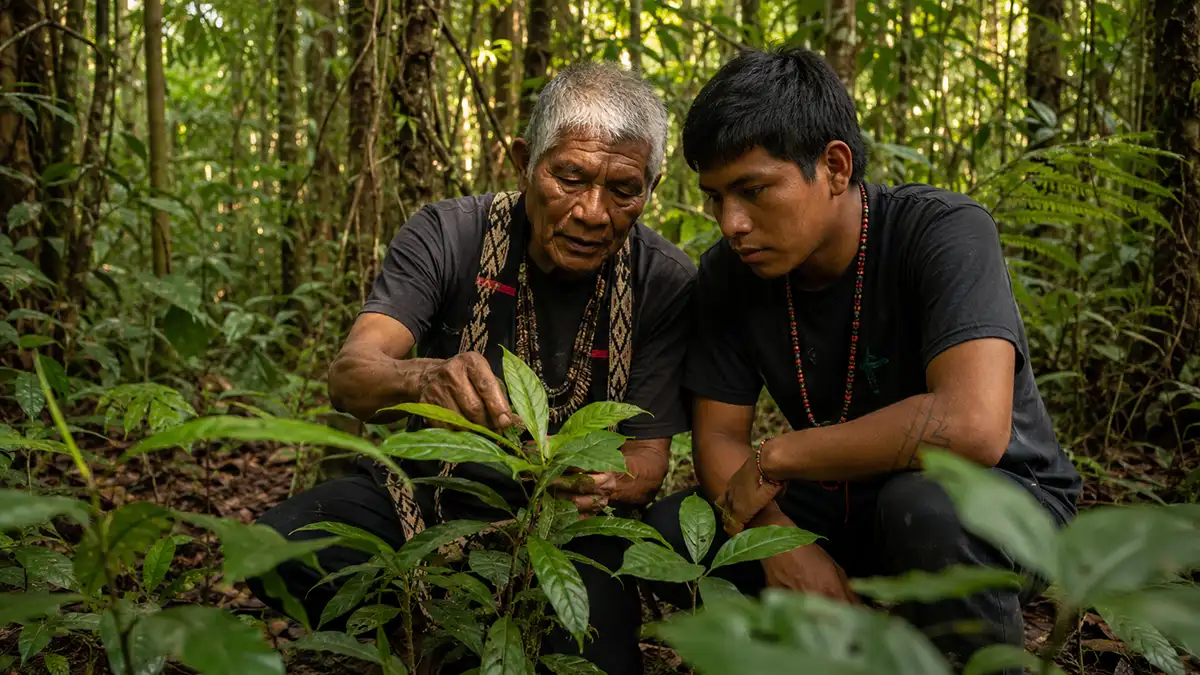
For centuries, Indigenous peoples around the world have described forests as living communities rather than collections of isolated trees. In many traditional worldviews, trees participate in relationships with animals, fungi, rivers, winds, soil, ancestors, and human beings. Life is understood as a web in which every being affects the whole.
Modern ecology does not prove every spiritual interpretation of the forest. However, scientific research has revealed something deeply compatible with this understanding of interdependence: trees are not as isolated as they appear.
They compete, but they also cooperate. They respond to threats, form partnerships, alter their chemistry, exchange resources, and participate in systems that can strengthen the resilience of the wider forest.
The more we learn about forest communication, the less the forest resembles a group of silent individuals and the more it begins to look like a dynamic community of relationships.
What Is Forest Communication?
Forest communication is a broad term used to describe the processes through which trees, plants, fungi, and other organisms respond to one another and exchange resources or signals.
This communication is not language in the human sense. Trees do not form sentences, make plans, or hold conscious conversations as people do. Instead, they interact through biological and chemical mechanisms that allow them to respond to their environment and to the presence of other living beings.
These mechanisms can include:
- Underground fungal networks
- Direct root interactions
- Airborne chemical compounds
- Changes in plant chemistry
- Water and nutrient transfers
- Electrical and hydraulic signals within plants
- Interactions with insects, animals, and microorganisms
Together, these processes form an active ecological system. Trees respond to drought, damage, disease, herbivores, changes in light, the availability of water, and competition from neighboring plants.
The forest is therefore not silent. It is constantly responding.
Do Trees Really Talk to Each Other?
The phrase “trees talk to each other” is useful because it helps people visualize the complexity of forest relationships. Scientifically, however, it is more accurate to say that trees exchange signals and respond to environmental information.
A tree damaged by insects may alter its chemistry. It may also release volatile compounds into the air. Nearby plants exposed to those compounds may change their own chemical defenses.
Roots can also respond to substances released into the soil. Fungal networks may connect the roots of different plants, creating possible pathways for the movement of carbon, nutrients, water, or chemical signals.
These interactions are real, but they should not automatically be interpreted as conscious generosity or intentional conversation. Forest ecosystems contain cooperation, competition, parasitism, mutualism, and many relationships that scientists are still working to understand.
The wonder of forest communication does not depend on treating trees as humans. It lies in recognizing that intelligence in nature can take forms very different from our own.
The Hidden World Beneath Our Feet
When most people walk through a forest, they focus on what can be seen above the ground:
- Tall trunks
- Leaves and branches
- Birds and insects
- Flowers and fruit
- Sunlight passing through the canopy
Yet some of the forest’s most important activity occurs beneath the soil.
Tree roots spread through the earth, searching for water and nutrients. Around them live bacteria, fungi, insects, and countless microscopic organisms. Together, these beings form one of the most complex biological environments on the planet.
Among the most important relationships in this underground world are associations between plant roots and fungi. These partnerships are known as mycorrhizae.
In many mycorrhizal relationships, the plant provides the fungus with sugars created through photosynthesis. In return, fungal threads can help the plant access nutrients and water from a larger area of soil.
This exchange is one of the foundations of forest health. It also provides part of the biological infrastructure through which some forms of forest communication and resource movement may occur.
What Are Mycorrhizal Networks?
Mycorrhizal networks form when fungal threads connect with the roots of one or more plants. These microscopic fungal structures, called hyphae, can spread through the soil far beyond the reach of an individual root system.
Because the same fungal network may associate with multiple plants, researchers have investigated whether these connections can allow substances to move from one plant to another.
Experimental studies have documented transfers of carbon, nutrients, and signals under certain conditions. However, the extent, ecological importance, and interpretation of these transfers can vary depending on the species, environment, fungal partner, and experimental method.
This is important because popular explanations sometimes present underground networks as if every tree in a forest were connected to one cooperative internet. The reality is more complex.
Some plants may benefit from fungal connections. Others may compete for access. Some fungi behave as mutual partners, while others may take more resources than they provide. The network is living, adaptive, and shaped by many forms of relationship.
Understanding that complexity makes forest communication more fascinating, not less.
The Wood Wide Web
One of the best-known ideas associated with forest communication is the “Wood Wide Web.”
This informal phrase compares underground fungal networks to the internet because they may connect many plants across an ecosystem. It has helped introduce millions of people to the hidden relationships beneath forests.
Through mycorrhizal connections, plants may potentially:
- Gain improved access to nutrients
- Exchange carbon under certain conditions
- Receive or transmit chemical signals
- Interact indirectly with neighboring plants
- Respond differently to stress or environmental change
The metaphor is powerful, but it should not be taken too literally. A fungal network is not a digital communication system, and trees are not uploading messages to one another.
Even so, the concept has transformed public understanding of forests. It invites us to see soil not as dead ground, but as a living realm filled with exchange, competition, cooperation, and adaptation.
Readers interested in the symbolic relationship between visible and invisible worlds may also enjoy our exploration of Sun and Moon Spiritual Meaning, which examines how complementary forces shape both nature and human consciousness.
How Trees Send Warning Signals
One of the most fascinating areas of plant research involves defensive signaling.
When insects begin feeding on the leaves of certain plants, the damaged plant may produce defensive chemicals. It may also release volatile organic compounds into the air.
Nearby plants exposed to these compounds can sometimes alter their own chemistry. They may begin producing substances that make their leaves less attractive, harder to digest, or more toxic to particular herbivores.
In some cases, plants also release compounds that attract predators or parasites of the insects attacking them.
This is an extraordinary example of ecological interaction. A plant responds to damage in ways that may affect animals, neighboring plants, and the wider food web.
It is tempting to describe this as a tree warning its neighbors. That metaphor is useful, but the biological reality does not require conscious intention. Natural selection can favor plants that respond effectively to reliable chemical information in their environment.
The result is still remarkable: information about danger can influence responses across a plant community.
Can Trees Communicate Through Their Roots?
Roots are highly responsive structures. They detect moisture, nutrients, obstacles, gravity, microorganisms, and chemical conditions in the surrounding soil.
Plants can also release compounds from their roots. These substances may influence bacteria, fungi, neighboring plants, and organisms that feed on roots.
Direct root contact, changes in soil chemistry, and shared fungal partners may all contribute to interactions below the surface.
Researchers continue to investigate how plants distinguish their own roots from those of neighboring plants, how they respond to relatives or competitors, and how root systems change their growth in crowded environments.
This underground dimension of forest communication reminds us that what appears still above the ground may be extremely active below it.
How Trees Communicate Through the Air
Not all tree communication occurs below the soil. Plants also release airborne chemicals from leaves, bark, flowers, and damaged tissue.
These compounds can serve many ecological functions. They may:
- Attract pollinators
- Repel herbivores
- Attract predators of plant-eating insects
- Signal stress or damage
- Influence nearby plants
- Interact with microorganisms
The scent of a forest is therefore more than a pleasant experience. It is partly the result of an immense chemical environment created by plants and other organisms.
What humans experience as fragrance may also be part of a much larger ecological conversation.
Do Trees Share Nutrients?
Research has found that carbon and nutrients can move between plants under certain circumstances. These transfers may occur through soil processes, root interactions, or shared mycorrhizal fungi.
Seedlings growing in deep shade may receive carbon originating from other plants. Nutrients can also move through fungal networks. However, scientists continue debating how often these transfers occur in natural forests and how important they are for the survival of individual trees.
It is also important to remember that the presence of a transfer does not necessarily mean one tree consciously decided to help another.
Resources may move because of differences in concentration, fungal behavior, environmental conditions, or complex exchanges involving multiple organisms.
Popular descriptions often portray large trees as generous parents feeding the entire forest. This image is emotionally powerful, but the scientific picture is more nuanced.
Forests are shaped by both cooperation and competition.
Mother Trees and Young Seedlings
The term “mother tree” is often used to describe large, mature trees that occupy important positions in forest ecosystems.
Older trees may produce large quantities of seeds, create shade, influence soil conditions, provide habitat, and associate with extensive fungal networks. Their presence can profoundly affect the plants and animals around them.
Research has suggested that resources may sometimes move from established trees toward seedlings through underground networks. Yet the exact ecological meaning of these transfers depends on the forest and the organisms involved.
Regardless of whether every transfer is best described as active support, mature trees are undeniably important. Removing them can alter light, moisture, habitat, soil structure, fungal communities, and the regeneration of the forest.
Conservation therefore requires more than planting new trees. It requires protecting the relationships and ecological history carried by existing forests.
Forest Communication and Ecosystem Resilience
One reason forest communication has attracted so much interest is its possible role in ecosystem resilience.
Forests constantly face pressures such as:
- Drought
- Storm damage
- Insect outbreaks
- Plant disease
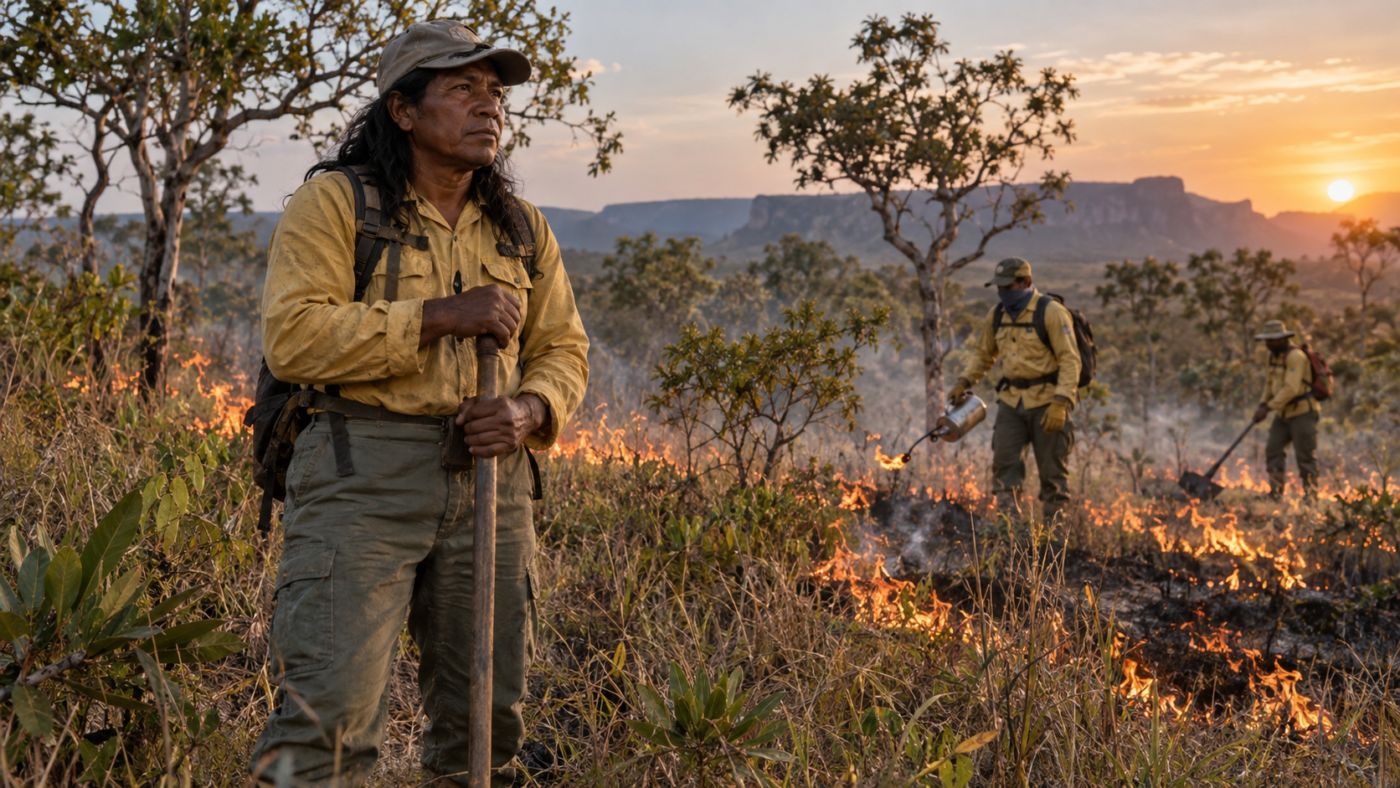
- Wildfire
- Changes in temperature
- Habitat fragmentation
- Loss of biodiversity
A diverse forest contains many overlapping relationships. Different species respond to stress in different ways. Fungi extend access to nutrients. Decomposers recycle organic matter. Animals disperse seeds. Predators regulate populations. Plants alter soil and atmospheric conditions.
The resilience of a forest emerges from these relationships.
A forest is not resilient because every tree is independently strong. It is resilient because the ecosystem contains diversity, redundancy, memory, adaptation, and connection.
Competition Is Also Part of Forest Life
Discussions about forest communication often focus on cooperation. However, competition is equally important.
Trees compete for:
- Sunlight
- Water
- Space
- Nutrients
- Pollinators
- Access to fungal partners
Some plants grow rapidly and shade their neighbors. Others release chemicals that affect surrounding vegetation. Roots may expand into nutrient-rich areas before competitors can reach them.
Forest life is therefore not a simple story in which every organism sacrifices itself for the community. It is a changing balance among cooperation, competition, predation, mutual benefit, and dependence.
This complexity is one of the most important lessons the forest offers humanity. Healthy communities do not require the absence of individual needs. They require systems in which individual life remains connected to the well-being of the whole.
What Indigenous Wisdom Has Long Understood
Long before modern science began studying fungal networks or airborne plant compounds, Indigenous peoples observed forests through generations of direct relationship.
Traditional ecological knowledge is built through close attention to seasons, animal behavior, plant associations, soil, water, weather, medicine, food, ceremony, and collective memory.
Across many Indigenous traditions, forests are understood as communities of beings rather than inventories of natural resources. Plants, animals, rivers, winds, fungi, and people participate in reciprocal relationships.
Modern discoveries about forest communication do not prove every spiritual teaching, and Indigenous knowledge should not be valued only when Western science confirms it.
Instead, these different knowledge systems can offer distinct and complementary perspectives.
Science can examine mechanisms, measure transfers, test hypotheses, and challenge assumptions. Indigenous knowledge can preserve long-term observation, ethical responsibility, cultural meaning, and an understanding of human beings as participants within ecosystems.
Explore more reflections on these relationships in our collection of Indigenous Wisdom.
Forest Communication and Spiritual Meaning
Beyond biology, many people find profound spiritual meaning in forest communication.
The forest becomes a mirror of interconnected life. Every tree is rooted in a place, yet connected with countless beings. What sustains it is partly visible and partly hidden.
This resembles human life.
We are shaped by relationships that cannot always be seen:
- Love
- Trust
- Memory
- Community
- Compassion
- Shared purpose
- Ancestral knowledge
Like fungal threads beneath the soil, these invisible relationships often sustain us during difficult times.
The forest teaches that connection does not erase individuality. Every tree remains itself. Yet no tree exists entirely alone.
This same theme appears in the spiritual symbolism explored in Spirit Animals in Dreams, where animals represent the enduring relationship between human consciousness and the living world.
Lessons Forest Communication Offers Humanity
Modern culture often celebrates independence, competition, and personal achievement. The forest offers a different model.
No tree creates its own soil. No tree produces rain. No tree survives without microorganisms, water, sunlight, atmosphere, and the wider cycles of life.
Likewise, no human being develops entirely alone.
We depend on families, communities, farmers, teachers, workers, ecosystems, previous generations, and people we may never meet.
The study of forest communication offers several lessons for human communities.
Connection Creates Resilience
Networks allow resources and information to move. Human communities also become more resilient when knowledge, care, and assistance are accessible.
Diversity Strengthens the Whole
A forest with many species contains more ways of responding to change. Human communities also benefit from different skills, experiences, cultures, and perspectives.
Invisible Relationships Matter
Trust, care, shared values, and communication may not be physically visible, but they determine whether communities survive pressure.
Competition Must Be Balanced
Competition can encourage growth, but unchecked competition can damage the systems upon which everyone depends.
The Health of the Individual and Community Are Connected
A tree depends on the forest, and the forest depends on individual trees. Human well-being is also inseparable from the health of society and the natural world.
Forest Communication and Human Mental Health
Learning about forest communication can also change the way people experience time in nature.
A forest walk becomes more than exercise. The soil beneath each step contains active biological relationships. The air carries compounds produced by plants. Fallen leaves feed fungi and microorganisms. Bird calls influence other animals. Water moves through roots, soil, and atmosphere.
Recognizing this living complexity can reduce the feeling that nature is merely a background for human activity.
For people who feel isolated, forests can offer a powerful reminder: life is relational. Belonging is not always created through words. Sometimes it begins through presence, attention, and remembering that we remain participants in the living world.
Our article on Meteor Spiritual Meaning explores a similar invitation to recover wonder by reconnecting with the sky and the larger universe.
Forest Communication and Conservation
Understanding forest communication has important implications for conservation.
If a forest were only a collection of trees, conservation might focus mainly on the number of trunks left standing. But a forest is also made of relationships.
It includes:
- Fungal communities
- Soil microorganisms
- Pollinators
- Seed-dispersing animals
- Predators
- Water systems
- Dead wood and decomposers
- Old trees and young seedlings
When forests are cleared or fragmented, these connections can be disrupted. Remaining trees may experience changes in wind, heat, moisture, pollination, animal movement, fungal partners, and access to water.
Planting trees is valuable, but a plantation of one species is not equivalent to an ancient forest. Ecological restoration requires time, diversity, and attention to the relationships that allow ecosystems to function.
Why Old-Growth Forests Matter
Old-growth forests contain biological and ecological relationships built over long periods.
Large trees store carbon, provide nesting sites, shape the canopy, and influence water cycles. Dead trees create habitat and eventually return nutrients to the soil. Established fungal communities connect with roots. Animals remember migration and feeding routes.
When an old forest is destroyed, planting seedlings does not immediately recreate these relationships.
This is why protecting intact forests is essential. Restoration is important, but preservation prevents losses that may take centuries to recover.
The hidden networks involved in forest communication reinforce a central conservation lesson: protecting relationships is as important as protecting individual species.
How Climate Change Affects Forest Networks
Climate change can influence forest communication by altering temperature, rainfall, soil moisture, fire patterns, insect populations, and the distribution of species.
Drought can reduce photosynthesis and change the amount of carbon plants provide to fungal partners. Higher temperatures may alter microbial communities. Severe fires can damage roots and soil networks. Insect outbreaks may spread into regions where trees have limited defenses.
Forests can adapt to many forms of environmental variation, but rapid and repeated pressure may exceed their ability to recover.
Protecting biodiversity, reducing fragmentation, preserving soil health, and limiting global warming can help maintain the ecological relationships upon which forest resilience depends.
Why Forest Communication Matters Today
We live in a time when many people feel disconnected — from nature, from community, and sometimes from themselves.
The study of forest communication offers a powerful reminder that life thrives through relationship.
Forests do not survive because every tree acts alone. They survive because countless organisms respond to one another across multiple scales.
Humanity faces challenges that also require connection:
- Climate change
- Loss of biodiversity
- Social division
- Resource inequality
- Displacement
- Public health crises
These problems cannot be solved by isolated individuals. They require communication, shared knowledge, mutual support, and systems capable of learning.
The forest has been demonstrating this principle for millions of years.
Perhaps it is time we paid closer attention.
How to Experience Forest Communication for Yourself
You do not need specialized scientific equipment to begin noticing forest relationships. A simple walk can become an exercise in ecological attention.
Look Below the Canopy
Notice the soil, fallen branches, mushrooms, roots, insects, and decaying leaves. The forest floor is not waste. It is a place of transformation.
Observe Relationships
Look for birds feeding on fruit, insects visiting flowers, fungi growing on wood, vines climbing trunks, or seedlings emerging beneath mature trees.
Listen to Changes
Pay attention to how sounds change as you move. Birds, insects, wind, and water form overlapping layers of information.
Notice the Air
Observe changes in scent, humidity, and temperature. Plants alter the atmosphere around them.
Walk With Respect
Try experiencing the forest as a community rather than as scenery. You are entering the habitat of countless living beings.
This kind of attention is a bridge between ecology and spirituality. It transforms knowledge into relationship.
The Wisdom Hidden Beneath the Soil
The discovery of forest communication has transformed how many people see the natural world.
Trees are no longer understood only as silent individuals standing side by side. They are participants in ecosystems shaped by chemical signals, roots, fungi, animals, microorganisms, water, light, cooperation, and competition.
Beneath every forest lies a hidden world of relationships.
A living network of exchange.
A reminder that life is far more interconnected than it appears.
Whether approached through ecology, Indigenous wisdom, spirituality, or simple wonder, the lesson remains powerful: nothing exists entirely alone.
Connection creates resilience. Diversity strengthens communities. Relationships sustain life. And some of the most important conversations on Earth happen silently beneath our feet.
Frequently Asked Questions About Forest Communication
What is forest communication?
Forest communication refers to the biological and ecological processes through which trees, plants, fungi, and other organisms exchange signals, resources, and environmental information. These interactions can occur through roots, fungal networks, airborne chemicals, and changes in plant chemistry.
Do trees really communicate with each other?
Trees do not communicate with language or conscious conversation as humans do. However, they can release and respond to chemical signals, interact through roots and fungi, and change their behavior in response to environmental information.
What is the Wood Wide Web?
The Wood Wide Web is an informal name for mycorrhizal fungal networks that connect with plant roots beneath the soil. These networks may allow nutrients, carbon, or signals to move between plants under certain conditions.
Can trees warn one another about danger?
Some trees and plants release airborne compounds when damaged by insects. Nearby plants exposed to these compounds may activate defensive chemical responses. This is often described as a warning, although it does not require conscious intention.
Do trees share nutrients with other trees?
Research has documented transfers of carbon and nutrients between some plants, including transfers associated with fungal networks. Scientists continue studying how common and ecologically significant these exchanges are in natural forests.
What are mycorrhizal networks?
Mycorrhizal networks are created when fungi associate with plant roots. The fungi often receive sugars from plants and help plants access water or nutrients from the soil. A fungal network may associate with more than one plant.
Why is forest communication important?
Forest communication is important because it helps researchers understand how ecosystems respond to stress, distribute resources, interact with other organisms, and recover from environmental change. It also supports better approaches to conservation and ecological restoration.
What can forest communication teach humanity?
Forest communication teaches that resilience depends on relationships, diversity, adaptation, and the movement of information and resources. It reminds us that individual well-being and community health are deeply connected.
How does forest fragmentation affect communication networks?
Forest fragmentation can disrupt roots, fungal communities, animal movement, water cycles, pollination, and other ecological relationships. Protecting connected habitats helps preserve the systems that sustain forest health.
Is forest communication proof that trees are conscious?
Evidence of signaling and resource exchange does not by itself prove that trees possess human-like consciousness. It demonstrates that plants and forest ecosystems are highly responsive, complex, and interconnected biological systems.
Continue exploring
All stories
The medicines of the forest