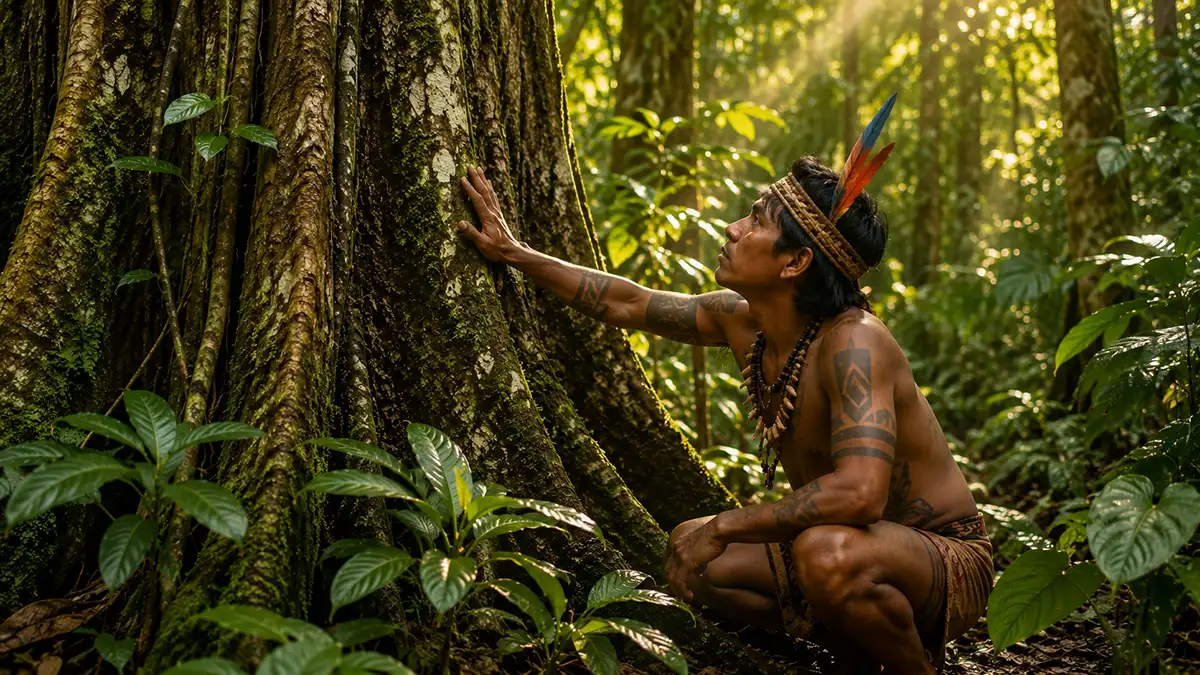
What Is Mulateiro? The Amazonian Tree Known as the Tree of Youth
What is mulateiro, and why has this remarkable Amazonian tree become known as the “Tree of Youth”? Recognized by its tall, straight trunk and smooth bark that continually changes appearance, mulateiro has long been valued in parts of the Amazon for practical, botanical and traditional purposes.
Its scientific name is Calycophyllum spruceanum. In Brazil, it may also be called pau-mulato, pau-mulateiro, mulateiro-da-várzea or escorrega-macaco, depending on the region and local vocabulary.
The tree’s association with youth and renewal comes partly from its extraordinary bark. As the trunk develops, thin outer layers loosen and fall away, revealing a smoother and often lighter or more luminous surface beneath. This natural renewal has made the tree a powerful symbol of regeneration.
Preparations made from mulateiro bark have also appeared in Amazonian traditional medicine and regional cosmetic practices. They have been associated with skin care, cleansing, vitality and other applications. Modern laboratory studies have identified plant compounds and biological activities that may help explain some of this interest.
However, traditional use, laboratory activity and proven medical effectiveness are not the same thing. Human clinical evidence remains limited, and mulateiro should not be presented as a proven treatment for disease or as a substance capable of reversing human aging.
This article explores the botany, history, traditional uses, symbolism and developing science surrounding one of the Amazon’s most visually distinctive trees.
What Is Mulateiro?
Mulateiro is a tropical South American tree belonging to the Rubiaceae family, the same large botanical family that includes coffee and many other economically or culturally important plants.
Its accepted scientific name is:
Calycophyllum spruceanum (Benth.) Hook.f. ex K.Schum.
The tree grows primarily in wet tropical environments and is native to parts of western South America and Brazil. It is especially associated with the Amazon region, where it may occur in floodplain forests as well as other suitable environments.
Mulateiro can become a large forest tree. Its trunk is commonly straight and visually striking, making the species recognizable even among the extraordinary botanical diversity of the rainforest.
What truly distinguishes it is the bark. Rather than remaining rough and deeply fissured like the bark of many mature trees, mulateiro develops a smooth surface that sheds thin layers over time.
Depending on the season, age of the trunk, moisture and stage of renewal, its bark may display shades of:
- Copper;
- Cinnamon;
- Bronze;
- Rose-brown;
- Pale gray;
- Cream;
- Soft greenish tones.
This changing surface gives the tree an almost polished appearance and contributes strongly to its reputation as a symbol of renewal.
Mulateiro, Pau-Mulato and Other Names
Common plant names often change from one region to another. The same name may also be applied to different species, which can create confusion when plants are discussed online or sold commercially.
Names associated with Calycophyllum spruceanum may include:
- Mulateiro;
- Pau-mulato;
- Pau-mulateiro;
- Mulateiro-da-várzea;
- Escorrega-macaco;
- Capirona in parts of Spanish-speaking Amazonia.
The name capirona is particularly common in Peru and other areas of the western Amazon. Regional variations in names reflect the wide geographical range of the species and the many cultures that encounter it.
Because common names can be ambiguous, the scientific name Calycophyllum spruceanum is the most reliable way to identify the species in botanical, scientific and sourcing discussions.
Accurate identification is important whenever a plant is used in cosmetics, traditional preparations, research or commerce. A familiar common name is not enough to guarantee that the correct species has been harvested.
Where Does Mulateiro Grow?
Mulateiro is native to tropical areas of South America. Botanical records place the species across parts of the western Amazon and Brazil, including environments in countries such as Peru, Bolivia, Colombia, Ecuador and Brazil.
In the Brazilian Amazon, the tree is associated with areas of várzea and terra firme, although local occurrence depends on soil, moisture, flood patterns and regional ecology.
Life in Amazonian Floodplains
Várzea forests are seasonally flooded by rivers carrying sediment and nutrients. Plants growing in these environments must adapt to major changes in water level, oxygen availability and soil conditions.
Trees of the floodplain are not simply standing in permanently wet ground. They participate in a dynamic annual cycle shaped by rising rivers, receding water, seed dispersal, fish, birds, insects and human communities.
Mulateiro may also be cultivated or managed for timber, restoration, shade and other practical purposes. Its relatively straight trunk has contributed to interest in its wood, while its distinctive bark makes it attractive in landscaping.
The tree should nevertheless be understood as part of an ecosystem rather than as an isolated source of raw material. Its survival is connected with soil, water, seed dispersers, surrounding vegetation and responsible forest management.
The Mulateiro Tree and Its Remarkable Renewing Bark
The bark of mulateiro is central to both its appearance and its symbolism.
As the trunk grows, the outer bark naturally loosens and separates in thin pieces or irregular patches. Beneath it, the newly exposed surface appears smooth and fresh.
This process can make the trunk look as though it is continually renewing itself. Sunlight reflecting from the smooth bark may give it a luminous copper, silver or bronze appearance.
The renewal is a botanical growth process, not a form of conscious rejuvenation. Still, it offers an unforgettable visual metaphor.
The mulateiro does not remain untouched by time. It grows by releasing what it no longer needs.
This distinction carries a meaningful lesson. Renewal does not necessarily mean returning to an earlier state. In the forest, renewal is part of change, adaptation and continued development.
The falling bark also discourages the accumulation of certain organisms on the surface of the trunk. Researchers continue to examine how the physical and chemical characteristics of tree bark contribute to protection within tropical environments.
Why Is Mulateiro Called the Tree of Youth?
Mulateiro is called the “Tree of Youth” for a combination of botanical, traditional and commercial reasons.
1. The Bark Appears to Renew Itself
The tree regularly sheds thin outer layers and reveals a smooth surface beneath. This visible transformation creates a natural association with regeneration.
2. The Bark Has Been Used in Traditional Skin Practices
Regional and ethnobotanical reports describe the use of mulateiro bark in preparations associated with skin appearance, cleansing, marks, spots and other concerns.
These traditional applications helped create the association between the tree and youthful-looking skin.
3. The Plant Contains Antioxidant Compounds
Laboratory research has identified phenolic compounds and antioxidant activity in mulateiro extracts. Antioxidants are relevant to biological research because oxidative stress is involved in cellular damage and aging processes.
However, finding antioxidant activity in an extract does not prove that a commercial powder, cream or tea reverses skin aging in humans.
4. A Preliminary Study Examined Longevity
One scientific study found that a mulateiro bark extract extended lifespan and increased resistance to certain forms of stress in the laboratory organism Caenorhabditis elegans.
This result helped popularize the phrase “Tree of Youth,” but the organism used in the study is a tiny roundworm. Results from worms cannot be treated as proof that mulateiro extends human life.
5. The Name Is Powerful in Natural-Cosmetic Marketing
“Tree of Youth” is an attractive commercial description. It creates immediate interest and connects the appearance of the tree with the hopes people bring to anti-aging products.
Responsible communication should explain the origin of the name without turning a poetic description into a medical promise.
Traditional Uses of Mulateiro
Ethnobotanical and regional literature describes a range of traditional applications for the bark and other parts of mulateiro.
Reported traditional uses have included preparations associated with:
- Skin care;
- The appearance of skin spots or marks;
- Cleansing of the skin;
- Minor wounds and external discomforts;
- Fungal or microbial concerns;
- Inflammatory complaints;
- Vitality and physical well-being;
- Digestive or metabolic complaints in some regional traditions.
This list should be interpreted as an account of traditional knowledge, not as a list of medically proven treatments.
Traditional preparations may differ considerably. The plant part, age of the tree, drying method, extraction process, concentration and combination with other ingredients can all change the final preparation.
Knowledge may also differ among families, healers, river communities, Indigenous peoples and regional herbal traditions. There is no reason to assume that every community uses mulateiro in the same way.
Traditional Knowledge Is More Than a Recipe
When traditional plant use is reduced to an ingredient and a claimed benefit, much of its context disappears.
Traditional knowledge can include:
- Where the tree grows;
- When material may be collected;
- How much can be removed without damaging the tree;
- Who is responsible for preparation;
- Which uses are considered appropriate;
- Which people should avoid a preparation;
- How the tree is understood within the surrounding ecosystem.
Ethical education recognizes the people and relationships behind botanical knowledge rather than treating the forest as a warehouse of ingredients.
Possible Mulateiro Benefits
Searches for mulateiro benefits often produce long lists of impressive claims. A more accurate approach is to separate possible benefits by level of evidence.
Traditional or Reported Uses
These are uses documented in community practice, regional herbalism or ethnobotanical literature. They may reflect generations of observation but have not necessarily been tested in controlled human studies.
Laboratory Findings
Researchers can expose cells, microorganisms or chemical systems to a plant extract and measure a response. These studies help identify possible mechanisms but do not establish that the same effect will occur safely in the human body.
Animal or Model-Organism Findings
Experiments with animals or model organisms can reveal biological possibilities. They are an important stage of research but cannot replace human clinical trials.
Human Clinical Evidence
This is the level needed to make confident claims about treating, preventing or substantially changing a health condition in people.
For mulateiro, much of the available discussion involves traditional reports, chemical analysis and preliminary laboratory research. Strong human clinical evidence remains limited.
Potential areas of scientific interest include:
- Antioxidant activity;
- Plant phenolic compounds;
- Possible antimicrobial activity;
- Cellular responses to environmental stress;
- Skin-related applications;
- Natural-product development.
The correct conclusion is not that mulateiro has no value. It is that its value should be explored without claiming more than the evidence can support.
What Does Science Say About Mulateiro?
Scientific interest in Calycophyllum spruceanum has focused partly on the chemical compounds found in its bark and their possible biological activities.
Phenolic Compounds
Phenolic compounds are a broad group of plant chemicals. Plants may produce them as part of their responses to sunlight, pathogens, insects and environmental stress.
Some phenolic compounds demonstrate antioxidant activity in laboratory testing. This means they may interact with unstable molecules involved in oxidation under specific experimental conditions.
Antioxidant Activity
Mulateiro extracts have demonstrated antioxidant potential in laboratory research. This finding offers one possible explanation for the plant’s growing use in cosmetic formulations.
The term antioxidant is frequently misunderstood. It does not automatically mean that a product prevents aging, removes wrinkles or protects every cell in the human body.
The practical effect of an antioxidant ingredient depends on:
- The compound involved;
- Its concentration;
- The extraction method;
- Its stability in a formulation;
- Whether it reaches the relevant tissue;
- The amount of exposure;
- Individual sensitivity;
- Evidence from appropriately designed human studies.
Antimicrobial Research
Preliminary studies and traditional reports have encouraged researchers to examine whether mulateiro extracts affect certain microorganisms.
Laboratory antimicrobial activity does not mean that raw bark, powder or homemade preparations can safely treat an infection. The concentrations used in a laboratory may be different from those found in consumer products.
Suspected bacterial, fungal or parasitic infections require appropriate diagnosis. Delaying effective treatment can allow an infection to become more serious.
Research Is Still Developing
Studies of Amazonian plants can help identify promising compounds and preserve knowledge about biodiversity. At the same time, early-stage findings are frequently exaggerated when they reach commercial websites.
Words such as “antioxidant,” “antimicrobial” and “anti-aging” should always be followed by questions:
- Was the study performed in a test tube, an animal or a human?
- Which extract was used?
- What concentration was tested?
- Was the result independently replicated?
- Was safety evaluated?
- Does the commercial product resemble the tested material?
Did Mulateiro Extend Lifespan? The Longevity Study Explained
One of the most frequently cited mulateiro studies investigated an extract of the bark using Caenorhabditis elegans, often shortened to C. elegans.
This is a tiny roundworm widely used in biological research. It has a short lifespan, a well-understood genetic system and biological pathways that allow scientists to study aging, stress responses and metabolism efficiently.
In the study, mulateiro bark extract was associated with:
- Longer lifespan under the experimental conditions;
- Improved resistance to certain forms of stress;
- Changes involving biological pathways related to stress response and longevity.
These findings are scientifically interesting. They suggest that compounds in the bark may influence biological processes worthy of further investigation.
They do not prove that mulateiro:
- Extends human lifespan;
- Reverses aging;
- Prevents age-related disease;
- Removes wrinkles;
- Produces the same result when consumed or applied to the skin;
- Is safe for long-term human use.
Humans are much more complex than laboratory worms. A result in a model organism is normally a starting point for further research, not the conclusion of the research process.
The mulateiro longevity study is a promising scientific clue—not evidence of a human fountain of youth.
Mulateiro and Skin Care
Interest in mulateiro for skin care comes from the combination of traditional applications, the renewing appearance of the bark and preliminary research into antioxidant and antimicrobial activity.
Mulateiro ingredients may appear in:
- Soaps;
- Creams;
- Body products;
- Botanical extracts;
- Artisanal oils;
- Powdered masks;
- Natural-cosmetic formulations.
Product quality can vary significantly. The presence of the word mulateiro on a label does not reveal the percentage used, extraction method, purity, stability or safety testing.
Can Mulateiro Remove Wrinkles?
There is not enough high-quality human clinical evidence to say that mulateiro removes wrinkles or reverses skin aging.
Laboratory antioxidant activity may justify further investigation, but it should not be translated directly into a guaranteed cosmetic result.
Can Mulateiro Remove Dark Spots?
Traditional and commercial descriptions sometimes associate mulateiro with the appearance of dark spots or uneven skin tone. This does not establish that it safely treats hyperpigmentation.
Skin discoloration has many possible causes, including sun exposure, irritation, medication, inflammation and medical conditions. A persistent or changing mark should be evaluated appropriately.
Can Natural Skin Products Cause Reactions?
Yes. Botanical ingredients can cause:
- Irritation;
- Redness;
- Itching;
- Allergic contact dermatitis;
- Worsening of an existing skin condition;
- Reactions to contaminants or additional ingredients.
Products should be accurately labeled, properly formulated and used according to professional or manufacturer safety guidance. Homemade concentrated bark preparations should not be assumed to be safe.
Mulateiro in Forest Traditions
The meaning of mulateiro extends beyond the list of compounds identified in its bark.
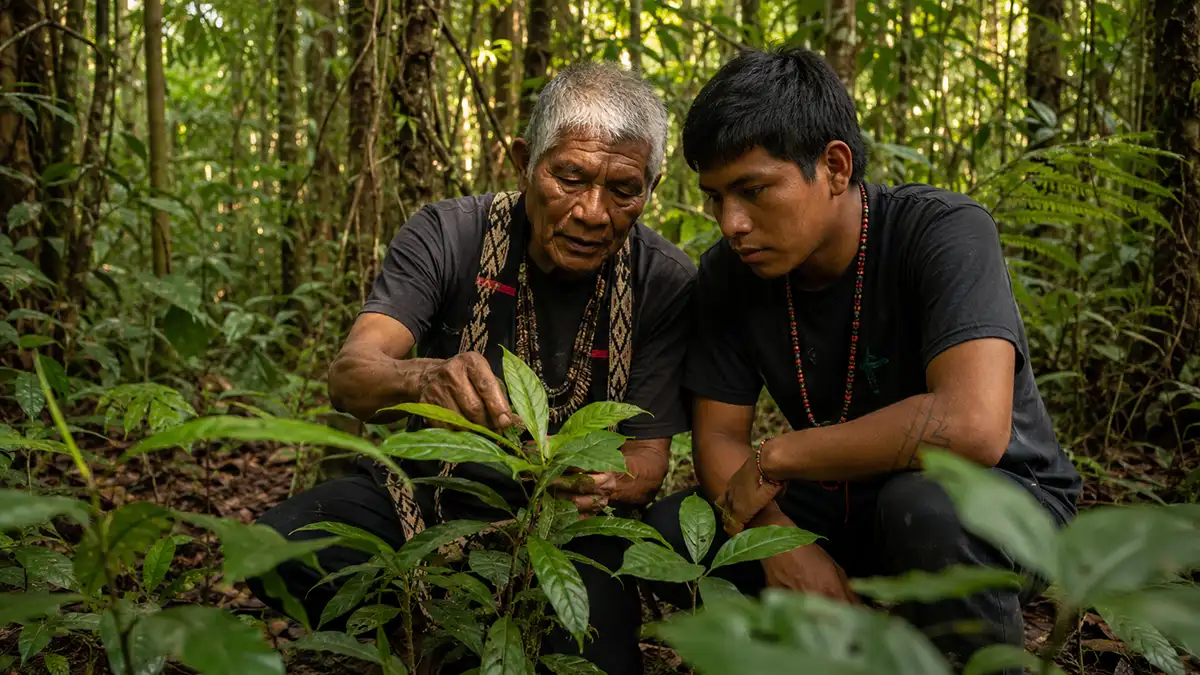
In forest communities, knowledge of a tree may include practical observation developed over generations:
- Where it grows most successfully;
- How it responds to flooding;
- When its bark changes;
- What animals interact with it;
- How its wood behaves;
- Which preparations are traditionally made;
- How harvesting affects the individual tree;
- What stories or meanings surround it.
Such knowledge should not be described vaguely as belonging to a single, universal “Amazonian tribe.” The Amazon contains many Indigenous peoples, river communities, languages and local healing traditions.
Specific cultural claims should identify their source when reliable attribution and permission are available.
A Symbol of Renewal
Even without making a medical claim, mulateiro offers a powerful natural image.
Its bark shows that renewal is not the absence of age. The mature tree does not become young again. It continues growing while its surface changes.
This can be understood as a lesson in:
- Adaptation;
- Resilience;
- Releasing old layers;
- Making room for continued growth;
- Allowing transformation to remain visible.
Symbolic reflection should be presented as reflection, not as an Indigenous teaching unless it comes from a clearly identified and authorized source.
Sustainability and Responsible Mulateiro Harvesting
Growing international interest in Amazonian botanicals creates both opportunities and risks.
Ethical trade can generate income, reward traditional expertise and encourage the standing forest to remain economically valuable. Poorly managed trade can damage trees, exploit communities and remove resources without fair compensation.
Bark Harvesting Requires Care
Bark protects a tree. Removing too much material, cutting deeply or repeatedly harvesting the same area can expose the trunk to stress, insects and pathogens.
The fact that mulateiro naturally sheds outer bark does not mean any amount of commercial bark removal is harmless.
Responsible sourcing should consider:
- Correct botanical identification;
- The location of harvest;
- Whether collection is legal;
- Which plant part is removed;
- How much material is taken;
- Whether the tree remains healthy;
- How frequently the same area is harvested;
- Whether natural regeneration is supported;
- Whether local communities benefit fairly;
- Whether the supply chain is transparent.
Fair Compensation and Cultural Credit
Amazonian plants often become globally profitable only after local or Indigenous knowledge draws attention to them.
Ethical businesses should not use community names, stories or traditional knowledge solely to add value to a product. Relationships should include consent, accurate attribution and fair economic participation.
Protecting the Forest Protects the Knowledge
The future of traditional plant knowledge depends on the future of the ecosystems and communities that sustain it.
When forests are degraded, more is lost than individual trees. Languages, practices, habitats, seed networks, food systems and accumulated ecological knowledge can also be affected.
Protecting Amazonian biodiversity is therefore inseparable from respecting land rights, community autonomy and living cultural traditions.
How to Interpret Mulateiro Claims Responsibly
When you encounter an article or product describing mulateiro benefits, consider the language being used.
Traditional Use
A traditional-use statement explains how a plant has been used within a community or regional practice. It should not be rewritten as a guarantee that the plant treats a disease.
Laboratory Evidence
A laboratory result describes what happened to cells, microorganisms, chemical reactions or biological models under controlled conditions.
Personal Testimony
A testimony describes one person’s experience. It may be sincere and meaningful but cannot establish how everyone will respond.
Clinical Evidence
A clinical claim requires appropriately designed research involving people, safety evaluation and results that can withstand scientific review.
Marketing Language
Words such as ancient, sacred, detoxifying, rejuvenating and miraculous may be used to create emotional value without providing scientific information.
Responsible questions include:
- Is the scientific species identified?
- Which part of the plant is used?
- Is the complete ingredient list available?
- Is the evidence from humans or only laboratory models?
- Does the seller promise to cure a condition?
- Is the source community identified accurately?
- Is harvesting described transparently?
- Are risks and limitations acknowledged?
- Is “Tree of Youth” presented as a nickname or a literal promise?
Mulateiro in Contemporary Rapé Traditions
The name Mulateiro is also found among contemporary rapé blends. Depending on the producer and tradition, the name may refer to the inclusion of mulateiro ash or another relationship with the tree.
Blend names do not guarantee identical formulas. Preparations made by different communities or producers may vary in tobacco, ash, plant materials, strength and cultural meaning.
Many rapé preparations contain tobacco and nicotine. They should not be described as harmless or as treatments for health conditions.
Anyone learning about a Mulateiro rapé blend should consider:
- Who prepared it;
- Which community or tradition it comes from;
- Whether the ingredients are disclosed;
- Whether the Indigenous name is used with permission;
- Whether health risks are communicated honestly;
- Whether the producers receive fair compensation.
The presence of an Amazonian plant name should invite deeper education, not assumptions about guaranteed effects.
Conclusion: What Is Mulateiro?
What is mulateiro? It is a remarkable Amazonian tree scientifically known as Calycophyllum spruceanum, recognized for its tall trunk and smooth, continually changing bark.
Its nickname, the “Tree of Youth,” reflects several overlapping stories: the visual renewal of its bark, traditional skin-related uses, modern cosmetic interest and preliminary scientific research into antioxidant activity and biological stress resistance.
None of these elements proves that mulateiro reverses aging or extends human life.
The tree’s real importance does not need exaggeration. It is already significant as:
- A distinctive species of the Amazonian forest;
- A source of regional botanical knowledge;
- A subject of developing scientific research;
- A tree with practical and cultural uses;
- A symbol of renewal and adaptation;
- A reminder of the extraordinary diversity held within tropical forests.
Learning about mulateiro also invites responsibility. The growing popularity of Amazonian plants should support conservation, transparent sourcing, respectful cultural attribution and fair relationships with the people who protect forest knowledge.
Perhaps the most valuable lesson of the Tree of Youth is not the promise of remaining unchanged. The mulateiro shows another possibility: continuing to grow, releasing old layers and allowing renewal to emerge through time.
Frequently Asked Questions About Mulateiro
What is mulateiro?
Mulateiro is a tropical South American tree scientifically known as Calycophyllum spruceanum. It is native to parts of western South America and Brazil and is especially associated with the Amazon region.
Why is mulateiro called the Tree of Youth?
The nickname comes from the tree’s naturally renewing smooth bark, traditional skin-related uses and preliminary research into antioxidant activity. It should be understood as a popular name rather than proof that the tree reverses human aging.
What is the scientific name of mulateiro?
The accepted scientific name is Calycophyllum spruceanum (Benth.) Hook.f. ex K.Schum. The species belongs to the Rubiaceae botanical family.
Is mulateiro the same as pau-mulato?
Mulateiro and pau-mulato are common names frequently used for Calycophyllum spruceanum. Common names vary by region, so scientific identification remains important.
Where does the mulateiro tree grow?
Mulateiro grows in tropical South America, including parts of Brazil, Peru, Bolivia, Colombia and Ecuador. It is found primarily in wet tropical environments and may occur in Amazonian floodplain and terra-firme forests.
What are the traditional uses of mulateiro?
Ethnobotanical literature describes traditional applications associated with skin care, cleansing, marks, minor wounds, vitality and other regional concerns. These reports document traditional knowledge but do not establish clinically proven treatments.
Does mulateiro reverse aging?
There is no reliable clinical evidence that mulateiro reverses human aging. Laboratory findings involving antioxidant activity and a study using a small roundworm are scientifically interesting but cannot be treated as proof of human anti-aging effects.
Can mulateiro remove wrinkles or dark spots?
Traditional and commercial descriptions associate mulateiro with skin appearance, but strong human clinical evidence showing that it removes wrinkles or dark spots is lacking.
Is mulateiro safe for the skin?
Safety depends on the preparation, concentration, formulation and individual sensitivity. Natural ingredients can cause irritation or allergic reactions, and raw or homemade preparations should not automatically be considered safe.
What did the mulateiro longevity study find?
A study found that a mulateiro bark extract extended lifespan and improved stress resistance in the laboratory roundworm Caenorhabditis elegans. This does not demonstrate the same effect in humans.
Is mulateiro used in rapé?
The name Mulateiro appears among some contemporary rapé blends, potentially referring to ash or another material associated with the tree. Formulas vary, and many rapé preparations contain tobacco and nicotine.
Why does responsible mulateiro sourcing matter?
Responsible sourcing helps protect trees, forest ecosystems and local communities. It includes correct identification, sustainable harvesting, legal collection, transparent supply chains, fair compensation and respect for traditional knowledge.
Sources and Further Reading
- Royal Botanic Gardens, Kew — Plants of the World Online entry for Calycophyllum spruceanum.
- Embrapa — ecological and management information concerning pau-mulato.
- Peixoto and colleagues — study of mulateiro bark extract, longevity and stress resistance in Caenorhabditis elegans.
- Brazilian Journal of Medicinal Plants — review of the botany, ethnopharmacology and chemistry of Calycophyllum spruceanum.
- World Flora Online — accepted botanical classification of Calycophyllum spruceanum.
Continue Exploring the Medicines of the Forest
Discover more educational stories about Amazonian trees, traditional plant knowledge, forest ecology and the relationships connecting human well-being with rainforest conservation.
At Queen of the Forest, our purpose is not only to introduce forest traditions but also to encourage deeper understanding, cultural respect, responsible sourcing and reciprocity with the communities and ecosystems that keep this knowledge alive.