
The Four Directions: North, South, East & West — Spiritual Meaning & Symbolism

The four directions — North, South, East, and West — are more than points on a compass. In many indigenous traditions, they are powerful spiritual guides, each representing different energies, elements, and stages of life.
Understanding the meaning of the four directions offers a deeper way to connect with nature, yourself, and the path you walk.
The Four Directions spiritual meaning is one of the most powerful teachings found across many Indigenous traditions. East, South, West, and North are not only points on a map. They are sacred gateways, living symbols, elemental forces, and spiritual teachers that help human beings remember their relationship with the Earth, the seasons, the ancestors, and the great mystery of life.
Across Indigenous cultures of the Americas and beyond, the sacred circle of the Four Directions has been used in prayer, ceremony, healing, storytelling, and daily reflection. Each direction carries its own medicine: an element, a season, a color, an animal guide, and a spiritual lesson. Together, they form a wheel of balance, a map of transformation, and a reminder that life moves in cycles.
At Queen of the Forest, we honor these ancient teachings with deep respect for the wisdom of the Earth and the peoples who have preserved sacred knowledge through generations. This article explores the Four Directions as a spiritual compass for modern life, ceremony, and inner alignment.
Returning to the Sacred Circle
In many Indigenous worldviews, life is not understood as a straight line. It is a circle. The sun rises and sets. The moon grows and disappears. The seasons turn. The body is born, matures, releases, and returns to the Earth. The sacred circle teaches that nothing is separate and nothing is without meaning.
The Four Directions invite us to see life as a living mandala. Each direction offers guidance for a different stage of the journey. The East calls us into vision and new beginnings. The South awakens passion, emotion, and growth. The West teaches release, introspection, and transformation. The North brings wisdom, stillness, and ancestral remembrance.
When we return to the sacred circle, we return to orientation. We remember where we are. We remember what season of life we are walking through. We remember that every challenge, ending, dream, and prayer has a place within the wheel.
The Four Directions in Indigenous Traditions
The specific meanings of the Four Directions vary among different Indigenous nations, lineages, and ceremonial traditions. The Lakota, Diné, Hopi, Quechua, Huni Kuin, Yawanawá, and many other peoples carry their own sacred interpretations, colors, prayers, and cosmologies. For this reason, it is important to approach the Four Directions with humility, not as something to appropriate, but as a doorway into respect, reflection, and deeper listening.
The medicine wheel, sacred circle, or mandala of directions is often used to create sacred space. In ceremony, people may call upon the directions before prayer, song, meditation, or healing work. This invocation is a way of remembering that human beings are held by larger forces: the sky above, the Earth below, the ancestors behind us, and the mystery within us.
The Four Directions are not merely symbolic. They are living energies. To work with them is to align ourselves with natural rhythm, elemental wisdom, and the spiritual intelligence of the Earth.
East: The Rising Sun, Vision, and New Beginnings
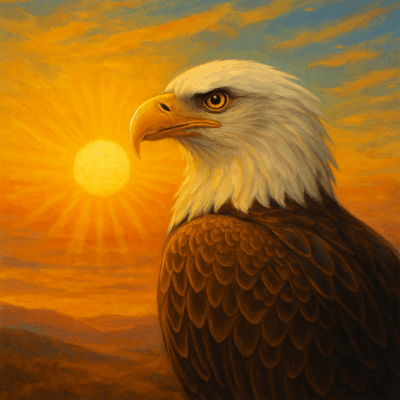
Element: Air
Animal Totem: Eagle or Condor
Color: Yellow or Red
Season: Spring
Key Energy: Illumination, birth, vision, possibility
The East is the place of the rising sun. It is the first light, the breath of morning, and the beginning of every new cycle. Spiritually, the East represents awakening, inspiration, clarity, and vision. It is the direction we turn toward when we are ready to begin again.
In the East, we receive the medicine of dawn. This is the energy of new ideas, new paths, and new prayers. It is the place where dreams begin to take form, where confusion starts to lift, and where the soul remembers that every day offers another opportunity to walk with intention.
The element of the East is Air. Air represents breath, thought, prayer, and the unseen currents that move through life. It reminds us that what cannot be seen can still be deeply felt. Breath connects body and spirit. Wind carries messages. A quiet mind can receive guidance.
The eagle or condor is often associated with this direction because these birds fly high above the Earth, seeing the larger pattern. Their medicine teaches perspective. When we are lost in small worries, the East invites us to rise above confusion and ask: what is the higher vision?
Practices to Honor the East
- Begin your day with a simple prayer facing the sunrise.
- Take a few moments of conscious breathing before checking your phone or beginning work.
- Light natural incense or place a feather on your altar to honor the air element.
- Set intentions during spring, at sunrise, or at the beginning of a new project.
- Ask yourself: What wants to be born in me? What vision am I ready to receive?
If you are creating a sacred morning practice, you may also enjoy our guide on morning rituals with rapéh, as well as our full Rapéh Guide for deeper ceremonial context.
South: The Fire Within, Emotion, and Growth
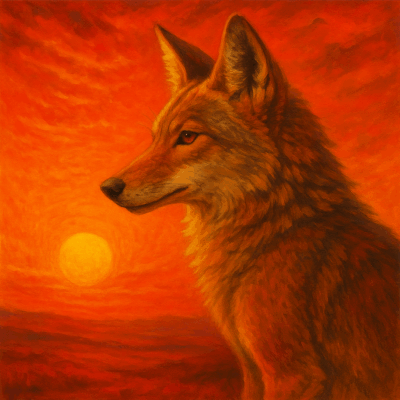
Element: Fire
Animal Totem: Coyote, Mouse, or Jaguar
Color: Red
Season: Summer
Key Energy: Growth, passion, action, heart
The South is the direction of fire, warmth, youth, emotion, and movement. It is the place of the inner child, the growing heart, and the living flame within us. If the East gives us vision, the South gives us the courage and energy to act.
In the South, life becomes vivid. We feel more deeply. We learn through relationship, creativity, play, mistake, and experience. This direction reminds us that spiritual growth is not only about silence and contemplation. It is also about dancing, laughing, crying, creating, and allowing ourselves to be fully alive.
Fire is the element of transformation. It warms, purifies, activates, and reveals. In many ceremonial settings, fire is treated as a living presence, a witness, and a sacred purifier. Fire teaches that emotion itself can be medicine when held with awareness.
The Coyote, Mouse, and Jaguar each bring different teachings to the South. Coyote may appear as the trickster-teacher, showing us the wisdom hidden inside mistakes. Mouse teaches attention to detail and humility. Jaguar brings courage, instinct, protection, and the power of the living forest.
Practices to Honor the South
- Light a candle with a clear intention and sit quietly with the flame.
- Use drums, rattles, song, or movement to awaken your energy.
- Connect with your inner child through art, laughter, or spontaneous creativity.
- Reflect on your emotional truth without judgment.
- Ask yourself: What burns in my heart? What am I passionate about right now?
For those who feel called to ceremonial expression through clothing, sacred objects, and beauty, explore our Apparel for Medicine People and our reflections on living with the spirit of Forever the Forest.
West: The Setting Sun, Release, and Transformation

Element: Water
Animal Totem: Bear or Snake
Color: Black or Blue
Season: Autumn
Key Energy: Release, death, intuition, shadow
The West is the place of the setting sun. It is the direction of endings, mystery, dreams, grief, release, and inner transformation. As daylight fades, the West invites us to turn inward and listen to what silence is trying to teach.
This is not always the easiest direction to face. The West asks us to let go of what no longer belongs to us. It asks us to honor endings rather than resist them. It teaches that release is not failure. It is part of the sacred rhythm of life.
Water is the element of the West. Water carries memory, emotion, cleansing, and intuition. It moves around obstacles. It softens what is hard. It teaches surrender without losing strength. In spiritual practice, water may be used as a symbol of purification, emotional healing, and renewal.
The Bear is often connected with the West because of its medicine of retreat, hibernation, and inner work. The Snake may also appear here, shedding its skin as a symbol of death and rebirth. Both remind us that transformation often happens in hidden places before it becomes visible in the world.
Practices to Honor the West
- Sit in silence at sunset and reflect on what the day taught you.
- Use water symbolically in prayer, cleansing, or release rituals.
- Write in a journal about what you are ready to forgive or let go.
- Pay attention to dreams, recurring symbols, and intuitive messages.
- Ask yourself: What am I ready to release? What is transforming within me?
If you are exploring deeper inner vision and energetic cleansing, you may also want to read about Sananga and visit our Sananga eye drops page.
North Symbolism: Elder Wisdom, Stillness, and Ancestral Knowledge
Element: Earth
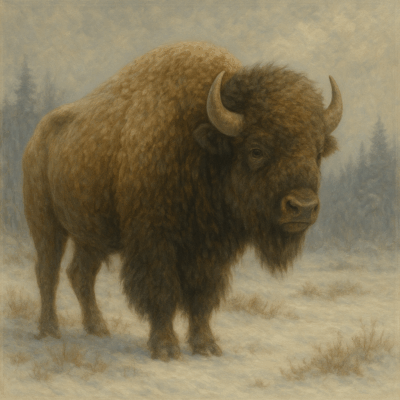
Animal Totem: Buffalo, Deer, or Owl
Color: White
Season: Winter
Key Energy: Wisdom, stability, reflection, ancestral knowledge
The North is the direction of the elder, the winter, the mountain, and the quiet voice of wisdom. It is where we pause, reflect, integrate, and remember. After the vision of the East, the passion of the South, and the release of the West, the North teaches stillness.
In modern life, stillness is often undervalued. Yet in the sacred circle, stillness is not emptiness. It is the place where knowledge settles into wisdom. It is where experience becomes understanding. It is where the soul can hear what the noise of the world has covered.
Earth is the element of the North. Earth gives structure, roots, patience, nourishment, and stability. It reminds us that spiritual growth must be grounded. A vision must have roots. A prayer must be walked. A ceremony must become a way of life.
The Buffalo, Owl, and Deer each carry teachings of the North. Buffalo brings gratitude, provision, and sacred endurance. Owl sees through darkness and illusion. Deer teaches gentleness, sensitivity, and grace. Together, they remind us that wisdom does not need to shout.
Practices to Honor the North
- Sit quietly on the Earth and listen without needing to receive an immediate answer.
- Create a simple altar for your ancestors, elders, or spiritual teachers.
- Practice gratitude for the lessons you have already received.
- Slow down and give yourself time to integrate before beginning something new.
- Ask yourself: What wisdom have I gained? What does my soul need to remember now?
For grounding and ceremonial presence, you may explore our sacred tools such as kuripes, tepis, and our collection of sacred rapéh blends.
The Center: The Heart of the Wheel
Many traditions also honor a fifth direction: the Center. The Center is the heart of the wheel, the place where all directions meet. It is the present moment. It is the breath inside the body. It is the sacred space within.
The Center reminds us that spiritual orientation is not only about looking outward. It is also about coming home to ourselves. The directions can guide us, but the heart must listen. Ceremony can open the door, but presence is what allows us to enter.
To honor the Center is to honor yourself as part of the sacred circle. You are not separate from the Earth. You are not outside the wheel. You are one expression of its living intelligence.
How to Align Your Life with the Four Directions
The Four Directions spiritual meaning becomes most powerful when it is applied to everyday life. You do not need to be in a formal ceremony to listen to the wheel. You can use it as a simple compass for reflection, decision-making, prayer, and personal growth.
You might ask yourself:
- Am I in the East, opening to a new vision?
- Am I in the South, learning through emotion, passion, and action?
- Am I in the West, releasing something old and entering transformation?
- Am I in the North, integrating wisdom and returning to stillness?
- Am I being called back to the Center, where everything can be held with love?
This practice can help you understand where you are in a cycle rather than judging yourself for not being somewhere else. Sometimes we need to begin. Sometimes we need to act. Sometimes we need to let go. Sometimes we need to rest.
Building a Personal Medicine Wheel
You can create a simple personal medicine wheel in your home, garden, altar space, or meditation area. This should be done with respect, humility, and gratitude, not as a performance or imitation, but as a personal reminder of your relationship with the Earth.
- Choose a quiet space. This may be indoors or outdoors, as long as it feels peaceful and intentional.
- Mark the Center. Place a stone, candle, flower, or meaningful object in the middle.
- Honor the four directions. Use stones, colors, natural objects, or symbols to represent East, South, West, and North.
- Include the elements. Air may be represented by a feather, Fire by a candle, Water by a small bowl, and Earth by soil, stone, or wood.
- Use it for reflection. Sit with the wheel when you need guidance, clarity, release, or grounding.
You may also include sacred objects that connect you with your path, such as a prayer cloth, crystal, shell, feather, ceremonial garment, or handcrafted tool. The important thing is not how elaborate it looks, but how sincerely it is approached.
Modern Applications of the Four Directions
In today’s world, many people feel disconnected from nature, overwhelmed by information, and spiritually unanchored. The Four Directions offer a simple but profound way to restore orientation.
In decision-making, the directions can help you ask whether the moment calls for vision, action, release, or patience.
In emotional healing, they can help you recognize which part of the wheel you may be resisting.
In relationships, they can remind you to bring clarity from the East, warmth from the South, forgiveness from the West, and maturity from the North.
In spiritual practice, they can help you create sacred space before prayer, meditation, journaling, or ceremony.
In daily life, they can remind you that even ordinary moments are part of a sacred pattern.
Many spiritual practices today integrate tools such as rapéh to deepen connection with the directions and inner awareness.
Walking with Air, Fire, Water, and Earth
To walk with the Four Directions is to walk with Air, Fire, Water, and Earth. It is to remember that the elements are not abstract ideas. They are the living foundations of existence. We breathe Air. We are warmed by Fire. We are carried by Water. We are held by Earth.
The East reminds us to dream. The South reminds us to feel. The West reminds us to release. The North reminds us to remember. And the Center reminds us that all of these teachings live inside the heart.
When we honor the Four Directions, we begin to see life differently. We stop treating challenges as random obstacles and begin to recognize them as part of a sacred cycle. We become more patient with our own transformation. We learn to listen before acting. We learn to release before beginning again.
Continue Your Journey with Queen of the Forest
At Queen of the Forest, our mission is to honor the wisdom of the rainforest, support Indigenous communities, and share sacred goods with reverence, care, and integrity. If this article spoke to your heart, we invite you to continue exploring our educational guides and ceremonial collections.
- Read the Complete Rapéh Guide
- Learn What Rapéh Is
- Explore Ceremonial Context for Rapéh
- Browse Sacred Rapéh Blends
- Discover Apparel for Medicine People
- Help Support the Rainforest
To walk the sacred wheel is not only to move through space. It is to move through life with reverence, awareness, humility, and gratitude. When you walk with the directions, you never walk alone.
Frequently Asked Questions About the Four Directions Spiritual Meaning
What is the spiritual meaning of the Four Directions?
The Four Directions spiritually represent East, South, West, and North as sacred forces connected to elements, seasons, life stages, colors, animals, and teachings. Together, they form a symbolic wheel of balance, transformation, and connection with nature.
What does the East direction symbolize?
The East is commonly associated with sunrise, air, new beginnings, vision, inspiration, and spiritual awakening. It is the direction of birth, clarity, and fresh possibility.
What does the South direction symbolize?
The South is often connected with fire, passion, emotion, youth, creativity, and growth. It teaches movement, courage, play, and the wisdom of the heart.
What does the West direction symbolize?
The West is associated with sunset, water, release, introspection, dreams, shadow work, and transformation. It teaches the importance of letting go and honoring life’s endings.
What does the North direction symbolize?
The North is connected with earth, winter, stillness, elder wisdom, reflection, and ancestral knowledge. It teaches patience, grounding, gratitude, and integration.
What is the Center in the medicine wheel?
The Center represents the heart of the wheel, the present moment, and the place where all directions meet. It symbolizes unity, balance, spirit, and the sacred space within each person.
Can I create my own medicine wheel at home?
Yes, you can create a simple personal medicine wheel as a respectful altar or meditation space using natural objects, stones, colors, and symbols for the Four Directions. The most important part is to approach it with humility, gratitude, and sincere intention.
Why are the four directions important?
They provide a symbolic framework for understanding balance, growth, and connection to the natural world.
How are the four directions used in ceremonies?
They are often honored in rituals to create balance, set intention, and connect with different aspects of existence.
Do different cultures interpret them differently?
Yes, each tradition has its own meanings, but the idea of balance and connection is universal.
Continue exploring
All stories
The medicines of the forest