Climate Change Impacts Even Pristine Amazon Areas
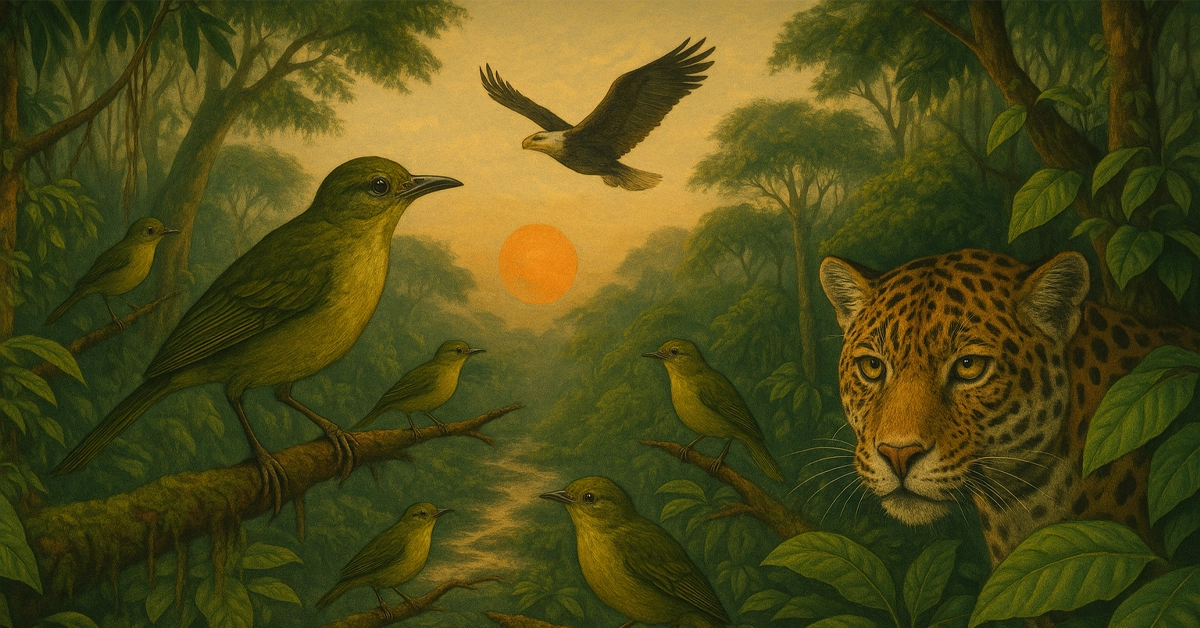
The Silent Warning from the Heart of the Rainforest
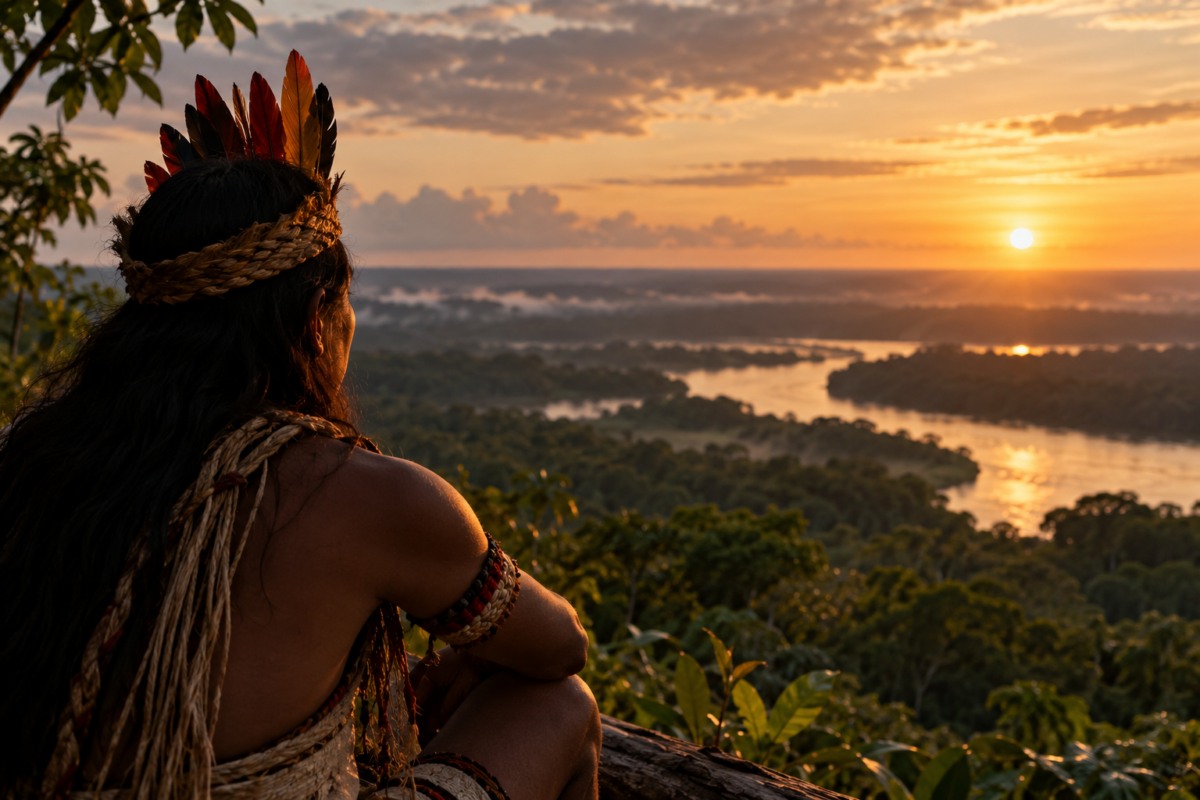
Deep within the emerald labyrinth of the Amazon Rainforest — far from roads, machines, and human settlements — a profound shift is underway. Here, where vines tangle like veins of the Earth and the dawn chorus of birds still greets the rising sun, something is changing. Not because of chainsaws. Not because of fire. But because the planet itself is warming, and even the most untouched corners of the forest are no longer immune.
A recent study published by Mongabay has revealed unsettling data: insect-eating birds in pristine parts of the Amazon are exhibiting signs of stress and altered behavior. These are not regions ravaged by development or agriculture — they are among the last sanctuaries of true wilderness on Earth. And yet, the impacts of climate change have found their way even here, like an invisible tide rising silently under the roots of ancient trees.
The Disappearance of Forest Voices
Birds are among the most sensitive indicators of environmental health. In the Amazon, where biodiversity pulses with every rustle of a leaf, insectivorous birds play vital ecological roles — controlling insect populations, spreading seeds, and contributing to the intricate symphony of the jungle’s daily life.
The new research shows that these birds are not simply relocating. Many are vanishing altogether, or becoming more elusive, less vocal, their populations dwindling. Observers have documented a decline in sightings, an eerie quiet where once there was abundant sound.
This phenomenon is not random. It is directly linked to rising temperatures, changes in rainfall patterns, and the shifting availability of insects — all symptoms of a global climate crisis. These changes throw off the delicate timing that underpins life in the forest. Insects hatch at the wrong time. Flowers bloom too early. Nesting cycles are disrupted. What was once a perfectly tuned system begins to unravel.
Climate Change: The Silent Colonizer
We often think of deforestation as the primary threat to the Amazon, and rightly so — it is a visible, violent force. But climate change is a subtler invader. It does not leave scorched earth or clear-cut paths in its wake. Instead, it shifts wind patterns, raises average temperatures, and brings unpredictable rains and droughts.
And because these changes don’t always leave a physical scar, they are often underestimated. Yet, they are no less devastating.
The areas observed in the study were considered “untouched,” meaning they had not been significantly disturbed by humans for centuries. That even these sacred spaces are suffering tells us one simple, terrifying truth: there are no more safe zones on Earth.
The Web Begins to Tremble
The Amazon is not just a collection of trees — it is a living network. Every leaf, every bird, every insect is part of a finely woven web of life. When one thread begins to fray, the entire tapestry starts to unravel.
A drop in insectivorous bird populations is not just a bird problem. It indicates that insects — their primary food source — may be emerging at different times or in different places. This could affect pollination patterns, plant reproduction, and predator-prey relationships across the food chain.
Worse still, if birds begin to decline, the forest’s regenerative processes may slow down. Seeds that would have been dispersed by wings remain grounded. Insects once kept in check multiply unchecked. Plants miss their reproductive windows. Over time, the forest could begin to lose its vibrancy — not from the outside in, but from the inside out.
A Global Consequence
Why should the world care if birds in the middle of the Amazon are disappearing?
Because the Amazon is one of Earth’s most vital organs. It absorbs vast quantities of carbon dioxide, helping regulate global temperatures. It creates rainfall not only for South America, but for distant regions through atmospheric rivers. It harbors over 10% of the world’s known species and stores untold medicinal and spiritual knowledge.
If the Amazon falters — even in its most remote parts — the entire planet feels it. The loss of biodiversity weakens ecological resilience. Carbon absorption diminishes. Droughts and floods intensify. Food systems are affected. And the planetary climate spiral accelerates.
We must understand that the disappearance of a bird from a nameless branch in Acre or Roraima is not a local tragedy. It is a global alarm bell.
Science Meets Spirit
What is striking about this moment is not just what the scientists are saying — but how closely their findings echo the observations of Indigenous peoples.
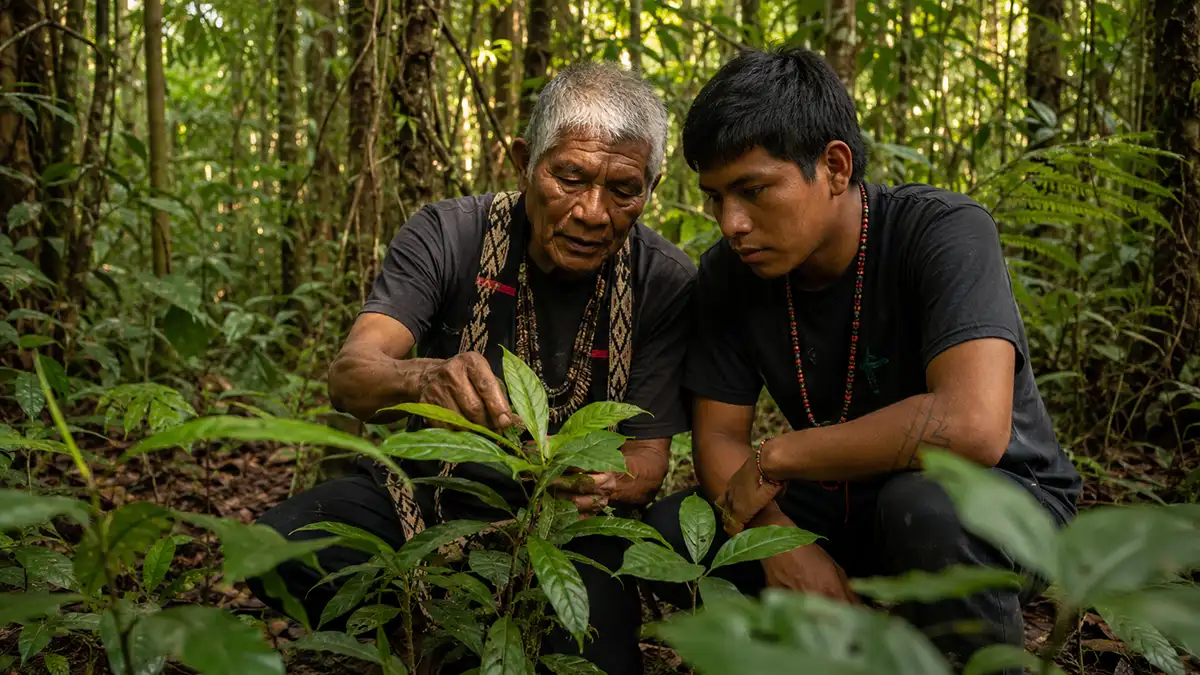
For generations, forest-dwelling tribes have spoken of the forest as a being — alive, breathing, and communicating. They know the rhythms of the rains, the calls of the animals, the precise moment when a plant is ready to be harvested. And they have long warned that something is off.
“The forest is tired,” one elder said. “The birds are forgetting their songs. The sky does not listen like it used to.”
These are not metaphors. They are field data, spoken in another language. What the modern study shows in numbers and graphs, the forest guardians have been saying in stories, ceremonies, and songs.
When science and ancestral wisdom align, we should listen closely.
️ The Spiritual Dimension
The birds of the forest are more than biological entities — they are messengers, symbols, spirit animals. Many Indigenous cultures believe that birds carry the prayers of the people to the heavens. They are seen in dreams. They arrive at moments of deep insight. They are woven into myths of creation and prophecy.
When the birds grow quiet, it is not only an ecological warning — it is a spiritual one.
It means that our relationship with the Earth is out of balance. That we have taken more than we’ve given. That we’ve become deaf to the language of the wild.
And yet, this is not a message of doom — it is an invitation. A call to return. To remember. To realign.
What Can Be Done?
While the situation is serious, it is not hopeless. Action is still possible — and urgently needed.
On a global scale:
-
Reduce greenhouse gas emissions by transitioning to renewable energy.
-
Protect large tracts of forest not only from logging but from indirect threats like infrastructure development and agriculture.
-
Invest in research and monitoring of biodiversity trends across the Amazon to detect early warning signs.
On a regional level:
-
Support Indigenous land rights. Indigenous-managed lands have been shown to preserve biodiversity better than many government-protected areas.
-
Promote climate-smart agriculture in Amazon-bordering regions to reduce pressure on pristine zones.
-
Regenerate degraded areas to help relieve ecological pressure from preserved lands.
On an individual level:
-
Consume mindfully. Products like palm oil, beef, and soy often drive Amazon deforestation.
-
Support brands and organizations that work in ethical partnership with Indigenous communities.
-
Educate others. Share information, amplify Indigenous voices, and help spread awareness about the invisible effects of climate change in untouched ecosystems.
Our Role at Queen of the Forest
At Queen of the Forest, we are not just merchants of sacred goods — we are messengers of Earth’s wisdom.
We partner with tribes, protect the medicines of the forest, and honor the spirit of the Amazon with every product we offer. But more than that, we are listeners. When the forest speaks, we pay attention. When it shows signs of distress, we act with love and purpose.
This study is yet another affirmation that the time to act is now. That our work — your support, our partnerships, your prayers — all matter deeply. Not just to us, not just to Indigenous families, but to the fabric of life on Earth.
Final Reflections: A Forest in Our Hearts
Close your eyes for a moment and imagine the Amazon not as a place far away, but as something within you. The river is your blood. The trees are your lungs. The songs of the birds are your breath.
Now imagine those birds falling silent. The air growing still. The rhythm out of sync.
Wouldn’t you want to do everything in your power to heal that forest — that you?
That is where we are. The Earth is not separate from us. Climate change is not happening “somewhere else.” The spirit of the forest lives in all of us, and its future depends on what we choose, right now, to become.
Let us choose to be guardians. Let us answer the call.
Continue exploring
All stories
The medicines of the forest