Body, Culture, and Ancestrality:
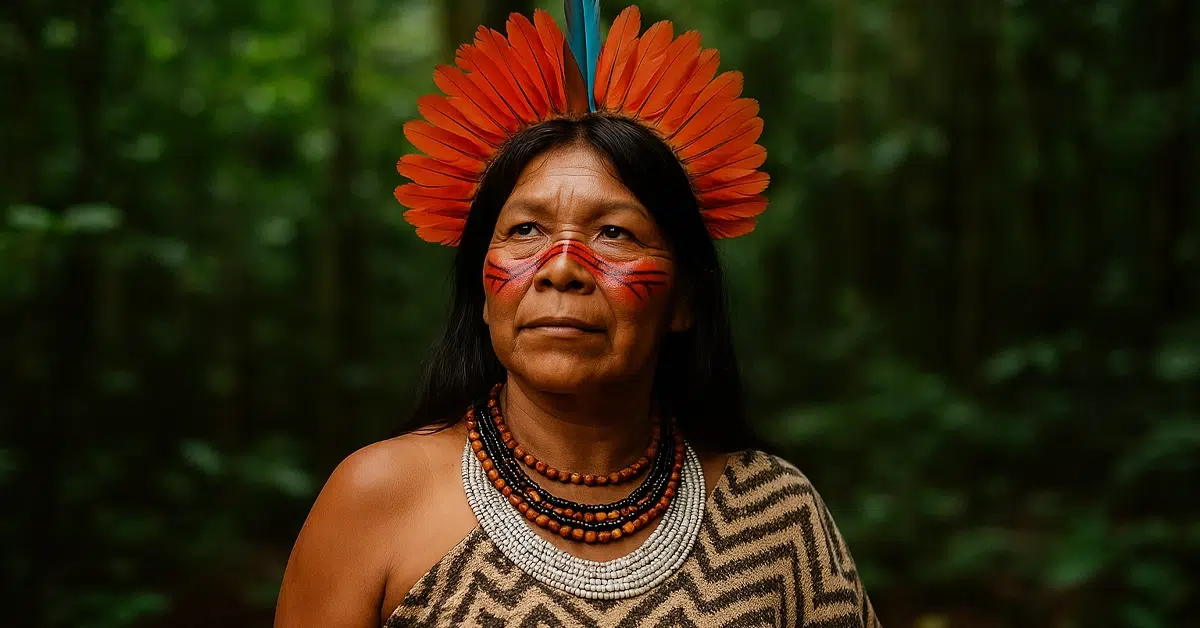
The Living Wisdom of the Indigenous Peoples of the Amazon
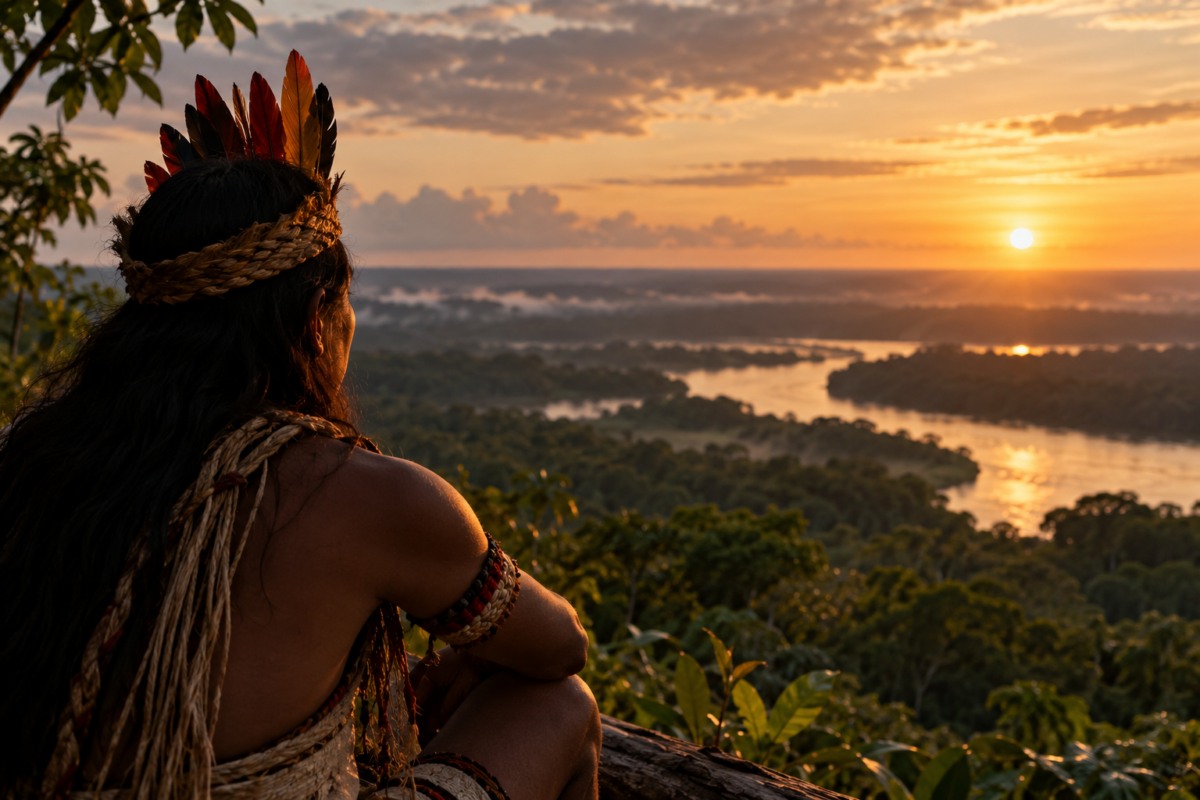
When we speak of ancestrality, we are not merely evoking the past. We are speaking of presence, of a river of memory that continues to flow through the bodies, songs, gestures, and knowledge of the Indigenous peoples still living in the Amazon. Every movement, every painting, every prayer and medicine carries a living story that pulses in the forest, in the villages, and in the hearts of those who protect the jungle with their very bodies.
Body as Earth, Body as Memory
For the Indigenous peoples of the Amazon, the body is much more than a biological machine. It is sacred ground where spirit dwells. It is an extension of the land. It is an instrument of communication with the ancestors, with the enchanted ones, with the cycles of nature.
Body painting, for example, is a living language. It is not mere aesthetics; it is identity, spiritual protection, a sign of belonging. The painted body is a body aware of its connection to the cosmos.
The body is also where knowledge is inscribed. The way one hunts, plants, dances, raises children, prepares rapéh, uses a kuripe, blows the medicine—all of this is knowledge passed from body to body, from generation to generation.
Culture That Breathes in the Forest
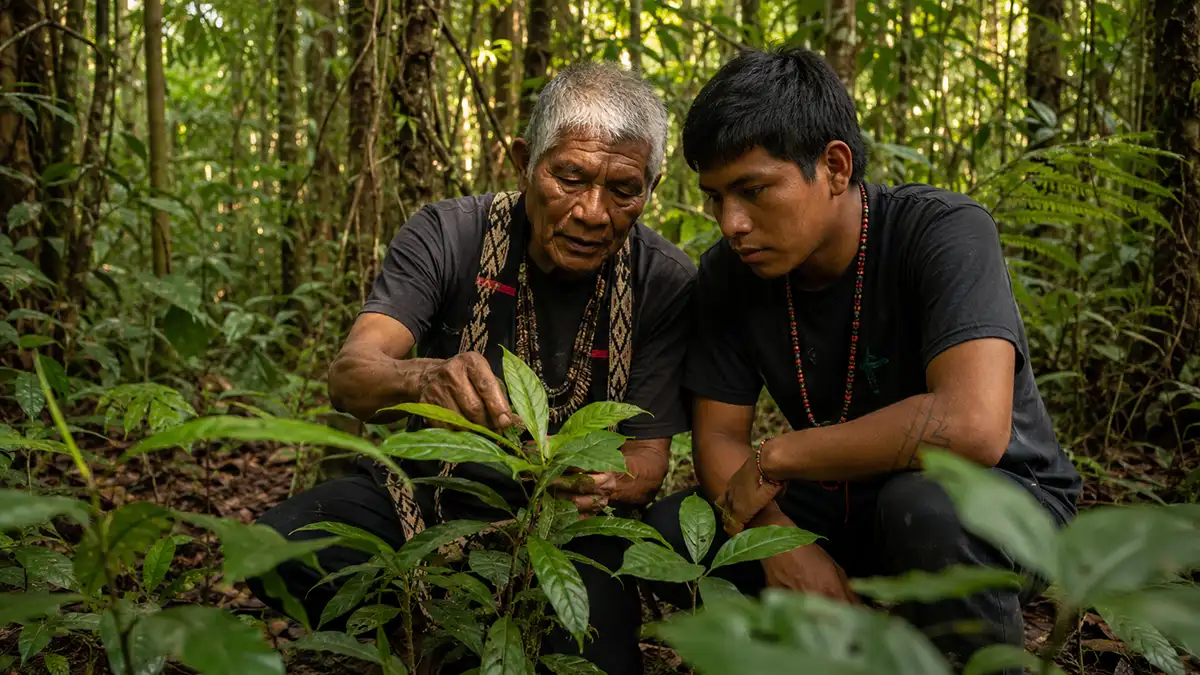
The culture of the Indigenous peoples of the Amazon is deeply rooted in the observation of nature. Every plant has a name, a use, a story. Every animal has a spirit. Every song is a way of aligning the visible and invisible worlds.
Language itself is medicine. Many Indigenous languages express ideas that don’t exist in other tongues. There are words that blend time, space, emotion, and spirituality into a single sound. There are chants that heal, enchant, awaken.
The way of living is collective, circular, cooperative. Indigenous culture is built through relationship—with one another, with elders, with animals, with rivers, with dreams. It is a culture where the human being does not place themselves above nature, but as part of it.
Wisdom You Don’t Learn from Books
The ancestral wisdom of the forest peoples is not found in books, but in bodies, rituals, practices, and shared silences. It is in the eyes of a grandmother who sings to the plants. It is in the hands of a pajé who prepares rapéh with prayers. It is in the child who learns from an early age to listen to the animals and respect the cycles.
This wisdom is not cumulative, it is experiential. It manifests through coexistence, listening, experience, presence. That is why respecting Indigenous peoples also means recognizing other ways of knowing that go far beyond Western science.
Knowledge as Care
Indigenous knowledge is practical, spiritual, and communal. It is a knowledge that cares. Care for the body, the community, the forest, the rivers, the spirits. Care for the word, for time, for the relationship with the ancestors.
This care is manifested in the forest medicines, such as rapéh, ayahuasca, sananga, and kambô. But also in everyday simplicity: in food prepared with intention, in a hammock strung with love, in silence that respects the forest’s time.
By recognizing the ancestral knowledge of the peoples of the Amazon, we open space for another way of living: more connected, more intuitive, more respectful of life in all its forms.
Living Ancestrality
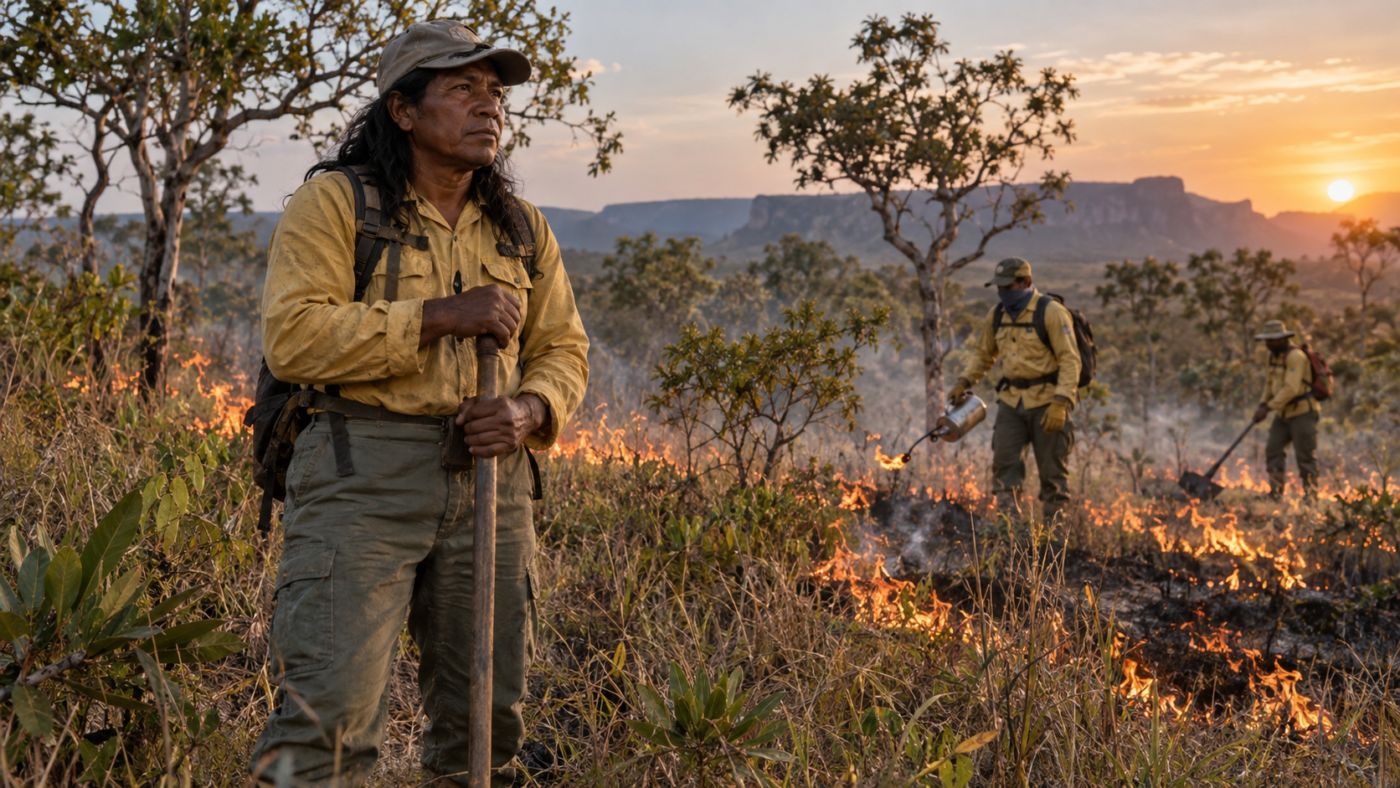
Ancestrality is not the past. It is sacred presence. The Indigenous peoples of the Amazon are not “remnants” of an ancient era, but masters of the now. Their presence is a reminder that it is possible to live in harmony with the Earth, in relationship with the spirits, in respect for the cycles.
Each time we connect with a forest medicine, with a song, with a piece of art, with a painting, we are touching this living ancestry. And it touches us back, reminding us of who we are.
Listen with the Body, Honor with the Heart
This is an invitation to listen. To listen with the body. To honor with the heart. The ancestry of the Indigenous peoples of the Amazon is not distant from us—it pulses in every leaf, in every medicine, in every act of care.
May we learn from this living wisdom. May we approach with respect, with gratitude, and with willingness to change. Because to care for Indigenous culture is to care for life. And caring for life is the most urgent task of our time.
Axé, listening, and resistance,
Continue exploring
All stories
The medicines of the forest