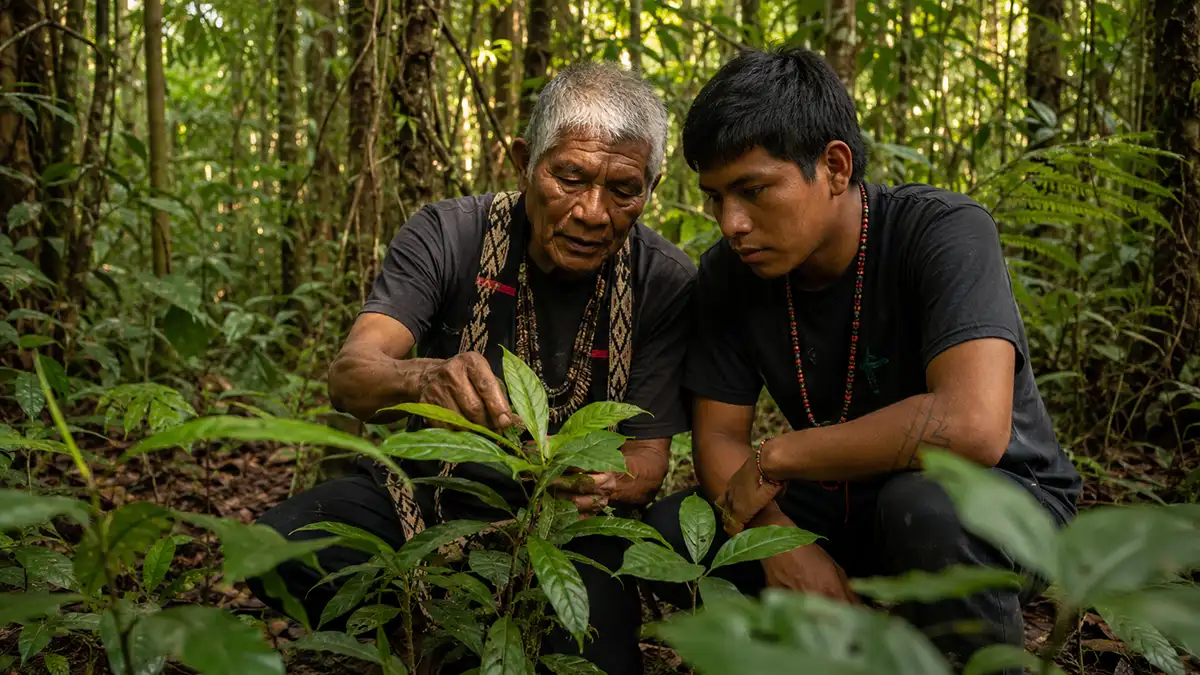

Amazon Rainforest Breathing: The Invisible Pulse of the Forest
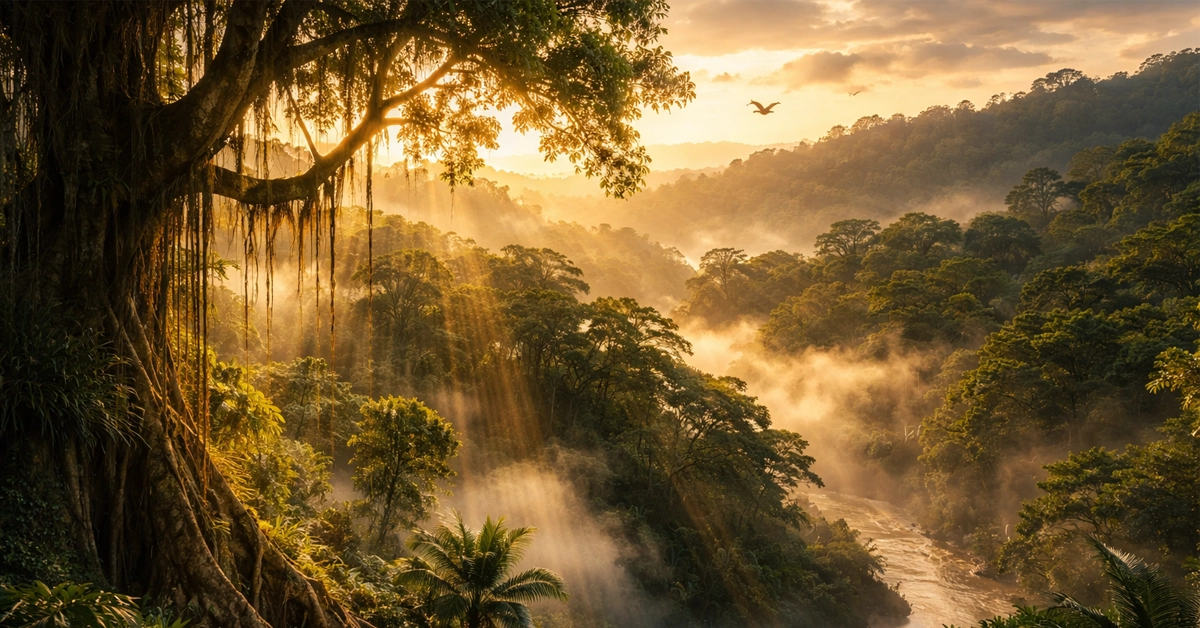
The Amazon rainforest breathing is one of the most fascinating and essential processes sustaining life on Earth. Beneath the dense canopy, beyond what the eye can see, the forest moves, exchanges, and breathes in a continuous rhythm that connects soil, plants, water, air, and atmosphere.
Although often described in poetic terms, the idea of the forest breathing is grounded in real ecological processes. The Amazon rainforest regulates climate, cycles oxygen and carbon dioxide, and maintains balance across vast ecosystems. Understanding Amazon rainforest breathing invites us to recognize the forest not as a static landscape, but as a living system in constant motion.
What Is Amazon Rainforest Breathing?
Amazon rainforest breathing refers to the exchange of gases, moisture, and energy that occurs within the forest ecosystem. Through photosynthesis, plants absorb carbon dioxide and release oxygen. Through respiration, both plants and soil organisms release carbon dioxide back into the atmosphere.
This dynamic cycle creates a continuous flow that supports life not only in the forest, but across the planet. The Amazon acts as a regulator of global climate patterns, influencing rainfall, temperature, and atmospheric balance.
How the Amazon Forest Breathes
The breathing of the Amazon rainforest happens through a combination of processes including photosynthesis, plant respiration, and soil activity. Trees release water vapor through transpiration, contributing to cloud formation and rainfall cycles.
This movement of water and air is a key part of Amazon rainforest breathing. It creates what scientists describe as a “flying river,” where moisture travels through the atmosphere and influences weather far beyond the forest itself.
The Role of the Amazon in the Global Climate
The Amazon rainforest plays a critical role in regulating the Earth’s climate. It stores vast amounts of carbon, helps stabilize global temperatures, and contributes to the water cycle across continents.
The Amazon rainforest breathing process is central to this function. When the forest is healthy, it absorbs carbon dioxide and helps balance greenhouse gases. When it is damaged, this balance is disrupted, contributing to climate instability.
Forest Respiration and Ecosystem Balance
Respiration in the forest is not limited to trees. Microorganisms in the soil, fungi, insects, and animals all contribute to the exchange of gases. This creates a complex and interdependent system where life supports life.
Understanding Amazon rainforest breathing helps us see that every layer of the ecosystem matters. From the tallest trees to the smallest organisms, each plays a role in maintaining the balance of nature.
The Invisible Pulse of the Forest
Beyond the scientific explanation, many people experience the forest as having a pulse — a rhythm that can be felt when one becomes still and attentive. The air feels alive, the silence feels full, and the environment seems to move with a quiet intelligence.
This perception aligns with the idea of Amazon rainforest breathing as more than a biological process. It becomes an experiential reality, where the forest is sensed as a living presence rather than an inert environment.
If this resonates, you may also enjoy reading the invisible language of the forest and the forest as a mirror.
Why the Amazon’s Breathing Matters
The Amazon rainforest breathing is essential for maintaining life on Earth. It influences rainfall patterns, supports biodiversity, and regulates atmospheric balance. Disruptions to this system can have far-reaching consequences.
Deforestation, climate change, and environmental degradation threaten the delicate processes that allow the forest to function. Protecting the Amazon means protecting one of the planet’s most important life-support systems.
Human Connection to the Living Forest
When people spend time in the forest, they often report feeling calmer, more grounded, and more connected. This may be partly due to the biological effects of the environment, but it may also reflect a deeper connection to the rhythms of life.
The experience of Amazon rainforest breathing can be felt not only as a scientific reality, but as a shift in awareness. It reminds us that human beings are part of a larger system, one that operates through balance, relationship, and flow.
Conclusion
The Amazon rainforest breathing reveals a profound truth about life on Earth: everything is connected through cycles of exchange, movement, and balance. The forest is not silent or static. It is alive, dynamic, and essential.
Understanding this invisible pulse invites us to develop a deeper respect for the natural world. It reminds us that protecting the forest is not only an environmental responsibility, but a necessity for the continuation of life itself.
What does it mean that the Amazon rainforest breathes?
It refers to the exchange of gases, moisture, and energy through processes like photosynthesis and respiration.
Does the Amazon produce oxygen?
Yes, but it also consumes oxygen through respiration, making it part of a balanced cycle.
Why is the Amazon important for the climate?
It regulates carbon, rainfall, and temperature, playing a key role in global climate stability.
What happens if the Amazon is destroyed?
Disruptions in its breathing cycle can lead to climate imbalance, loss of biodiversity, and environmental instability.
Related Reading
Explore more in our Rapéh Guide or browse our sacred rapéh collection.
For scientific context, read this overview of the Amazon rainforest.
Continue exploring
All stories
The medicines of the forest