Eu Vi um Caboclo na Mata: Song of the Forest Spirit, Words and Meaning
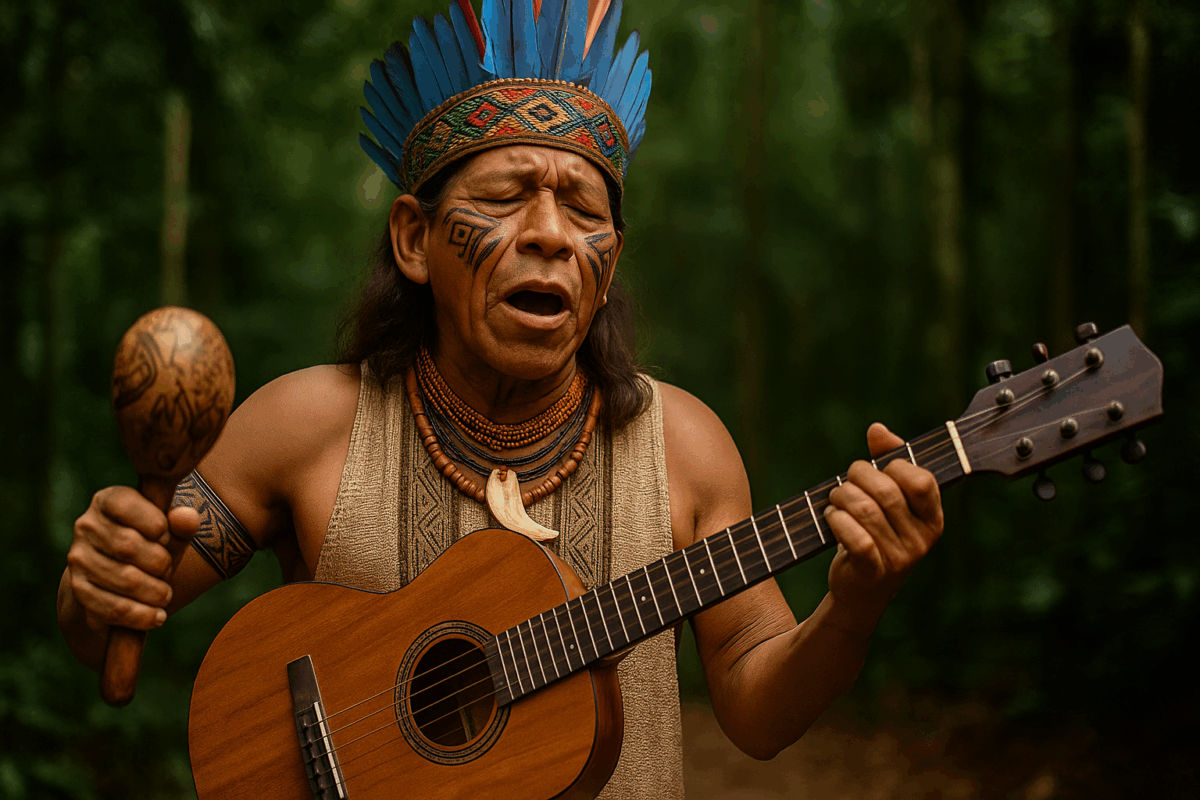
“Eu vi um caboclo na mata” (I saw a caboclo in the forest) is a traditional Brazilian song that honours the first peoples of the land and the spirit of the forest. It began as a ponto, a sung prayer of Umbanda, and it travelled into the circles where hapé and other forest medicines are shared. There, the people named in its second line often change, to honour the Huni Kuin of the Amazon.
Our recording
Recorded by the Pachamama Circle of Light. This recording has been played more than 220,000 times on our SoundCloud, more than any other song we have shared.
Where the song comes from
In Brazilian spiritual traditions, a caboclo is the spirit of an Indigenous ancestor: a guide who carries the wisdom, the strength and the healing of the forest. In Umbanda, the caboclos are called in with their own songs, the pontos, and “Eu vi um caboclo na mata” is one of the best known.
In its most common form, the song names the Tupinambá. The Caboclo Tupinambá is one of the most respected caboclos, and he honours the Indigenous peoples of Brazil’s Atlantic coast, in the lands that are now Rio de Janeiro and Bahia.
As the song moved into the circles of forest medicine, people began to sing the names of Amazonian peoples in its place, most often the Huni Kuin (Kaxinawá). The song stays the same. It is still a song of recognition: of seeing the ancestors in the forest and honouring them.
The words
Eu vi um caboclo na mata,
Um índio Tupinambá,
Com sua maraca na mão,
Batendo com os pés no chão.
I saw a caboclo in the forest,
a man of the Tupinambá people,
with his maraca in his hand,
stamping his feet on the ground.
A maraca é de cabaça,
Toda cheia de pedrinhas,
Com umas penas bem vermelhas,
E outras bem amarelinhas.
The maraca is made from a gourd,
all full of little stones,
with feathers of bright red
and others of bright yellow.
In versions sung in hapé circles, the second line becomes “Um índio Huni Kuin”.
How to listen
This is a song for arriving. Play it before you sit with hapé, and let the maraca and the stamping feet bring you into your body and down onto the ground. Sing along with the first verse. It repeats, and it is easy to learn.
Continue
Continue exploring
All stories
The medicines of the forest