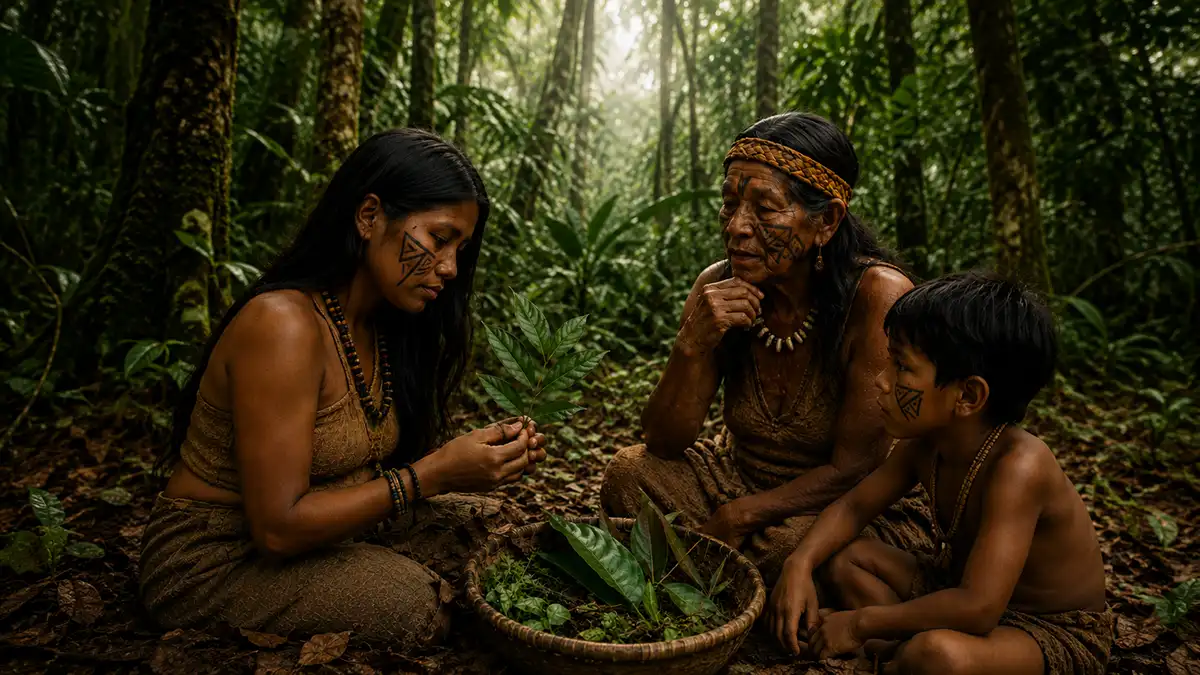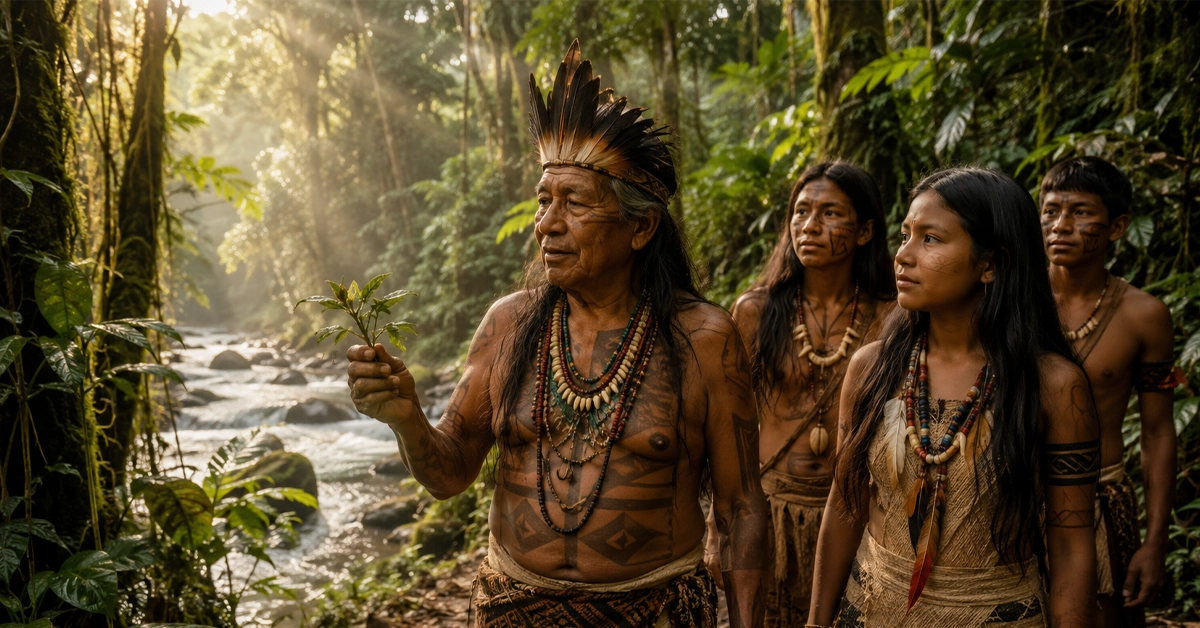
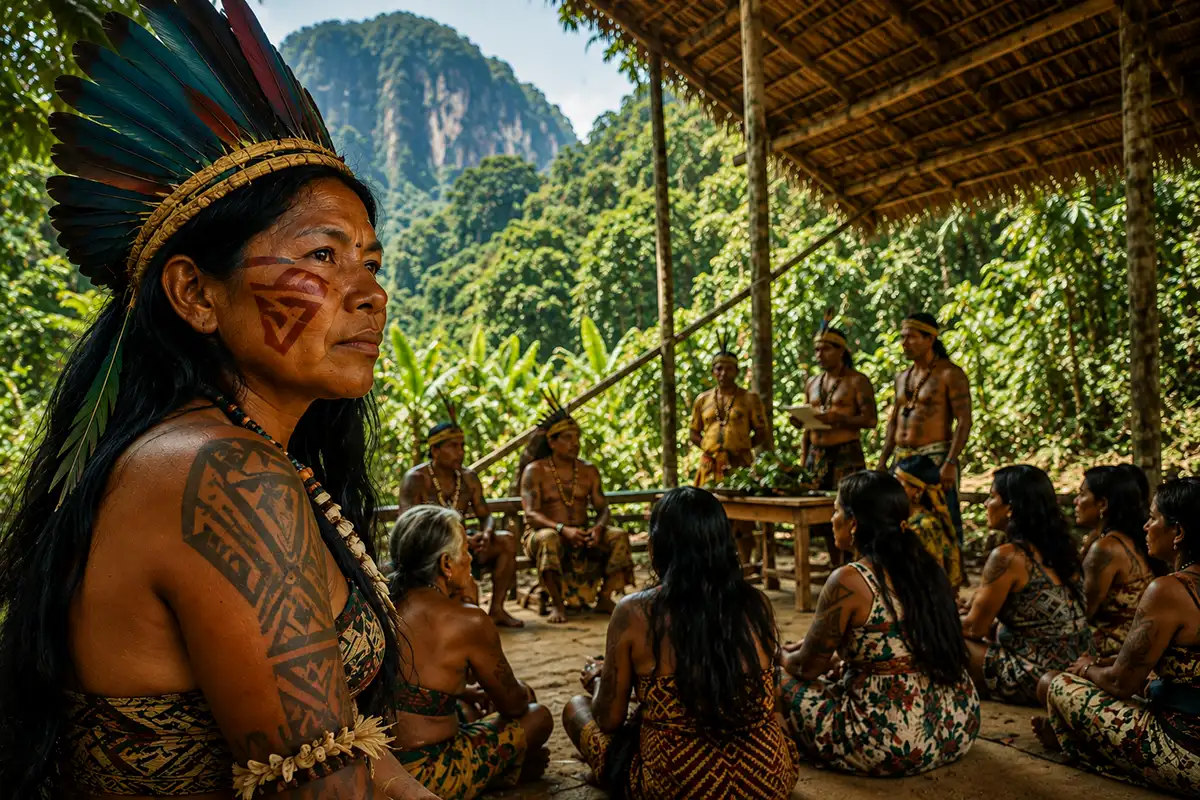
Indigenous medicine in Brazil has entered a significant new moment. In April 2026, the Brazilian Ministry of Health formally recognized specialists of Indigenous medicines within the country’s Indigenous healthcare policy and the Indigenous Health Care Subsystem of the Unified Health System.
The measure explicitly recognizes pajés, shamans, Indigenous midwives, root specialists and other specialists known by names belonging to each Indigenous people.
This recognition matters because Indigenous systems of care have existed for generations while frequently being marginalized, misunderstood or treated as secondary to Western medicine.
Yet recognition also creates responsibility.
Indigenous medicine cannot be reduced to a collection of plants, rituals or techniques that institutions and businesses are free to extract. It is connected with distinct peoples, languages, territories, spiritual relationships, community structures and systems of knowledge.
A meaningful new era must therefore involve more than symbolic praise. It must protect Indigenous authority, support specialists within their communities, respect cultural boundaries and create genuine intercultural dialogue without forcing one medical system to disappear inside another.
This article examines what the new recognition means, what it does not mean and why Brazil now faces an important opportunity to build a more respectful relationship between public healthcare and Indigenous systems of knowledge.
What Is Indigenous Medicine in Brazil?
Indigenous medicine in Brazil refers not to one standardized practice but to many systems of knowledge developed and maintained by distinct Indigenous peoples.
These systems may involve relationships among:
- Physical health and emotional well-being;
- Family and community;
- Plants, animals, water and territory;
- Ancestors and spiritual beings;
- Food, movement and daily work;
- Pregnancy, birth and childhood;
- Collective memory and oral teaching;
- Prevention, diagnosis and restoration of balance.
Western medicine often separates health into specialties, organs, diagnoses and procedures. Some Indigenous systems may understand illness through broader relationships involving the person, family, community, environment and spiritual world.
This does not mean that every Indigenous people holds the same beliefs. It also does not mean that Indigenous communities reject hospitals, vaccination, surgery, antibiotics or other forms of biomedical care.
People may move through different therapeutic pathways depending on the problem, available services, family guidance and community knowledge.
A person might seek an Indigenous specialist, an Indigenous health agent, a nurse, a doctor or several forms of care at different moments. Understanding these pathways is essential to respectful healthcare.
Indigenous medicine is not simply an alternative product. It is part of a living system of relationships, knowledge and responsibility.
What Changed for Indigenous Medicine in Brazil in April 2026?
On April 2, 2026, the Brazilian Ministry of Health issued Ordinance GM/MS No. 10,676.
The measure formally recognized specialists of Indigenous medicines within the National Policy for the Health Care of Indigenous Peoples and the Indigenous Health Care Subsystem of Brazil’s Unified Health System.
The recognition includes pajés, shamans, Indigenous midwives, root specialists and other specialists identified according to the language and organization of each Indigenous people.
This language is important. Rather than creating one government-approved title for every specialist, it acknowledges that different peoples have their own names, roles, forms of teaching and systems of recognition.
The measure represents a shift away from treating Indigenous specialists as informal cultural participants who remain outside healthcare policy.
It recognizes that they already perform essential roles within their communities and possess technologies of care developed through their own systems of knowledge.
Official recognition, however, is only the beginning. Its importance will depend on how it is implemented in territories, hospitals, schools, health units, public budgets and professional relationships.
Who Are the Recognized Indigenous Medicine Specialists?
The specialists named in the 2026 measure include several categories familiar to the Brazilian public. Their exact roles can differ considerably among peoples and territories.
Pajés
The Portuguese word pajé is used broadly, but it should not be assumed to describe one identical role across Brazil.
Depending on the people and context, a pajé may work with prayer, song, spiritual relationships, diagnosis, plants, protection, community guidance or other forms of care.
Some peoples use entirely different names for their specialists. Their own terms should be preferred whenever they are known and appropriate to share.
Shamans
“Shaman” is an international term frequently applied to Indigenous spiritual and healing specialists. It is not originally a universal Amazonian title.
For that reason, it should not replace the specific term used by a community. Generic language can hide important differences in training, responsibility and authority.
Indigenous Midwives
Indigenous midwives may accompany pregnancy, birth, postpartum recovery and newborn care through knowledge transmitted within families and communities.
Their work can include observation, positioning, massage, plant knowledge, emotional support, food guidance and culturally specific forms of protection.
Recognizing midwives is especially important because childbirth care can become unsafe or traumatic when health services ignore language, family presence, cultural practices and the wishes of Indigenous women.
Root and Plant Specialists
Specialists sometimes described in Portuguese as raizeiros may hold extensive knowledge of roots, bark, leaves, oils, resins and other forest materials.
Their knowledge includes more than knowing which plant is associated with a complaint. It may also involve identification, habitat, harvesting seasons, preparation, combinations, restrictions and relationships with the territory.
Other Community-Specific Specialists
One of the most important aspects of the policy is its recognition of other denominations belonging to each Indigenous people.
This leaves room for specialists whose roles cannot be accurately translated into pajé, shaman, midwife or plant healer.
Public policy must adapt to Indigenous diversity rather than forcing every system of knowledge into a short list of Portuguese categories.
Why Does Official Recognition Matter?
Official recognition matters because public institutions determine whose knowledge is visible, whose labor is valued and who is invited to participate in decisions.
It Makes Existing Work Visible
Indigenous specialists did not begin caring for their communities in 2026. Their knowledge and work existed long before the creation of the Brazilian state or the Unified Health System.
Recognition acknowledges an existing reality rather than inventing a new profession.
It Can Improve Communication with Health Teams
When Indigenous specialists are treated as legitimate participants in care, doctors, nurses and multidisciplinary teams may be better able to understand the therapeutic pathways followed by patients.
This can reduce conflict, improve communication and help prevent situations in which families feel forced to choose between community knowledge and hospital care.
It Can Strengthen Cultural Continuity
Recognition can encourage younger generations to see Indigenous knowledge as valuable rather than outdated or shameful.
Cultural continuity depends on opportunities for elders and specialists to teach in their own languages and according to community protocols.
It Challenges Epistemic Inequality
Epistemic inequality occurs when one system of knowledge is automatically treated as rational and legitimate while another is dismissed before it is understood.
Respecting Indigenous systems does not require abandoning scientific evaluation. It requires recognizing that Western institutions do not possess the only possible understanding of health, territory, relationship and care.
It Can Support More Appropriate Public Policy
Health programs are more likely to work when they are designed with the people who understand local language, geography, family relationships, food systems and patterns of illness.
Indigenous participation should therefore begin during planning—not after institutions have already decided what communities need.
What the New Recognition Does Not Mean
The recognition of Indigenous medicine in Brazil should not be exaggerated or misinterpreted.
It Does Not Create One Universal Indigenous Medical System
Brazil contains hundreds of Indigenous peoples and languages. Their systems of health and healing are not interchangeable.
It Does Not Turn Indigenous Specialists into Conventional Doctors
Recognition within Indigenous health policy does not mean that pajés, midwives or plant specialists have become physicians under the conventional licensing system.
Their authority arises from distinct community systems of knowledge and recognition.
It Does Not Authorize Outsiders to Claim Indigenous Titles
A non-Indigenous person does not become a pajé or representative of an Indigenous medical tradition simply by attending a retreat, buying a product or completing a short course.
It Does Not Make Every Traditional Practice Clinically Proven
Official cultural and institutional recognition is not the same as scientific confirmation of every health claim.
Traditional knowledge and clinical research are different forms of knowledge. Responsible dialogue requires clarity about what each can establish.
It Does Not Make Indigenous Knowledge Public Property
Recognition does not give companies, researchers or content creators permission to publish restricted teachings, patent community knowledge or sell products using Indigenous names without consent.
It Does Not Remove the Need for Biomedical Care
Indigenous health systems and biomedical services can work in complementary ways. Emergencies, infections, injuries, complicated births and chronic diseases may require professional diagnosis and hospital treatment.
Intercultural care should expand possibilities rather than create false choices.
How Does Indigenous Healthcare Work in Brazil?
Indigenous healthcare in Brazil is organized through the Indigenous Health Care Subsystem, known as SasiSUS, within the Unified Health System.
The Secretariat of Indigenous Health, known as SESAI, coordinates the National Policy for the Health Care of Indigenous Peoples and manages the subsystem.
Care is organized territorially through Special Indigenous Health Districts, commonly called DSEIs.
Multidisciplinary Indigenous Health Teams may include:
- Doctors;
- Nurses;
- Dentists;
- Nutritionists;
- Psychologists;
- Pharmacists;
- Social workers;
- Nursing technicians;
- Indigenous health agents;
- Indigenous sanitation agents;
- Other health professionals.
The 2026 recognition strengthens the possibility that Indigenous medicine specialists can be included more visibly in this network.
The challenge is to ensure that inclusion does not mean subordination.
Indigenous specialists should not be invited only to decorate institutional events or validate decisions made without them. They must have meaningful participation, appropriate support and authority over matters involving their knowledge.
What Is Intercultural Healthcare?
Intercultural healthcare involves dialogue and cooperation among different systems of knowledge without assuming that one must completely erase the other.
In practice, it may involve:
- Listening to how a patient and family understand an illness;
- Allowing culturally important forms of support when medically safe;
- Working with interpreters or Indigenous health agents;
- Respecting prayer, song or family presence;
- Coordinating biomedical treatment with community care;
- Discussing possible interactions involving plants and medications;
- Adapting hospital routines when possible;
- Recognizing Indigenous specialists as participants in care;
- Respecting a patient’s informed decisions.
Intercultural Care Is Not Uncritical Acceptance
Respect does not mean that health professionals must accept every claim without discussion. Safety, consent and evidence remain important.
The same standard should apply in both directions. Biomedical institutions should also be open to examination, especially when their routines create cultural harm, communication failures or unnecessary separation from families and territories.
Dialogue Requires Equal Dignity
Dialogue becomes impossible when Indigenous specialists are treated as symbolic guests while biomedical professionals retain all decision-making power.
Equal dignity does not mean that every participant performs the same role. It means that each person is heard respectfully and that Indigenous knowledge is not automatically dismissed.
Why Territory Is Part of Indigenous Health
Discussions of Indigenous medicine in Brazil cannot be separated from territory.
Health depends on access to:
- Clean water;
- Nutritious traditional foods;
- Medicinal plants;
- Safe housing;
- Rivers and fishing grounds;
- Hunting and gathering areas;
- Community relationships;
- Sacred and culturally important places.
Illegal mining, deforestation, fires, pesticides, polluted rivers and land invasion directly affect health.
They can increase exposure to mercury, infectious disease, malnutrition, violence and psychological distress. They may also make medicinal plants and traditional foods inaccessible.
A healthcare system that provides medicine while ignoring the destruction of territory addresses only part of the problem.
For many Indigenous peoples, protecting territory is not separate from healthcare. It is one of the conditions that makes health possible.
Recognition of Indigenous specialists must therefore be accompanied by protection of the ecosystems in which their systems of knowledge remain alive.
Indigenous Women, Midwives and Community Care
The recognition of Indigenous midwives deserves particular attention.
Pregnancy and childbirth are not only medical events. They are also family, cultural, emotional and spiritual experiences.
Indigenous women may face long journeys away from their communities to reach maternity services. They may encounter language barriers, restrictions on family presence and routines that do not respect traditional birth practices.
Indigenous midwives can contribute knowledge about:
- The history of the pregnant person;
- Community relationships;
- Culturally appropriate support;
- Comfort and positioning;
- Food and postpartum care;
- Warning signs recognized through experience;
- The needs of the newborn and family.
Cooperation between midwives and biomedical teams can strengthen care when it is based on mutual respect, clear referral pathways and the wishes of the pregnant person.
Recognition should not be used to transfer responsibility to Indigenous midwives without providing transportation, supplies, communication systems and access to emergency services.
Valuing traditional work means supporting the people who perform it—not merely praising them.
Medicinal Plants and the Protection of Indigenous Knowledge
Brazil holds extraordinary biological diversity, and Indigenous peoples have developed detailed relationships with plants across generations.
This knowledge can include:
- Plant identification;
- Habitat and seasonality;
- Harvesting techniques;
- Preparation methods;
- Combinations and restrictions;
- Symbolic or spiritual relationships;
- Environmental indicators;
- Methods of teaching and transmission.
Pharmaceutical, cosmetic and wellness markets often become interested in plants after traditional knowledge has revealed their importance.
Problems arise when a company removes the plant or idea from its cultural context, creates a profitable product and returns little or nothing to the knowledge holders.
This is sometimes described as biopiracy or extractive commercialization.
Knowledge Is Not Automatically Free to Use
The fact that information has been shared publicly does not mean a company has ethical permission to reproduce ceremonies, use a community’s name or claim ownership over a traditional formula.
Ethical use may require:
- Free, prior and informed consent;
- Community participation in decisions;
- Agreements about attribution;
- Fair benefit sharing;
- Protection of confidential knowledge;
- Long-term relationships rather than one-time purchases;
- Respect for a community’s right to say no.
Research, Consent and Benefit Sharing
Research involving Indigenous peoples and knowledge requires special care because the risks are not limited to an individual research participant.
A study may affect:
- An entire community’s reputation;
- Control over traditional knowledge;
- Commercial interest in a plant;
- Access to genetic resources;
- Relationships among communities;
- Future legal claims;
- The privacy of sacred or restricted information.
Individual consent may therefore be insufficient when knowledge belongs collectively or when research affects community rights.
Responsible research should involve Indigenous participation from the beginning. Communities should help define the questions, methods, information that can be published and the ways results will return to the territory.
Research Should Not Become Extraction
Extractive research occurs when academics collect knowledge, build careers and publish results while communities receive little benefit or even lose control over what was shared.
Better models can include:
- Indigenous researchers as leaders and authors;
- Community-controlled data;
- Materials returned in accessible languages and formats;
- Training and infrastructure for the territory;
- Agreements governing future commercial applications;
- Respect for knowledge that should remain unpublished.
Recognition and the Risks of Commercialization
Greater public recognition can generate interest in Indigenous medicines, retreats, plant products and ceremonies.
That attention can support communities when relationships are transparent and community-led. It can also create a new wave of appropriation.
Common Warning Signs
Commercial communication deserves scrutiny when it:
- Uses the phrase “Indigenous medicine” without naming a specific people;
- Claims that a ceremony is ancient without evidence;
- Uses stereotypical images to create authenticity;
- Presents an outsider as a pajé after minimal training;
- Guarantees healing or spiritual transformation;
- Uses community names without explaining the relationship;
- Provides no information about producer compensation;
- Turns sacred or restricted knowledge into promotional content;
- Treats official recognition as government approval of a commercial product.
Recognition Is Not a Marketing Certification
The 2026 measure concerns Indigenous medicine specialists within Indigenous health policy.
It should not be presented as evidence that the Ministry of Health has approved every retreat, practitioner, product or health claim connected with the words Indigenous, Amazonian or ancestral.
Businesses have a responsibility to communicate this distinction clearly.
What Responsibility Looks Like in This New Moment
The new recognition creates responsibilities for government, healthcare professionals, researchers, businesses, media organizations and consumers.
Responsibilities of Government
- Include Indigenous specialists in policy design and implementation;
- Provide adequate and transparent funding;
- Support community-defined training and transmission;
- Protect Indigenous data and restricted knowledge;
- Create appropriate pathways for participation in healthcare services;
- Strengthen transportation and emergency referrals;
- Protect territories and environmental health;
- Evaluate implementation with Indigenous leadership.
Responsibilities of Healthcare Professionals
- Listen without ridicule or automatic dismissal;
- Ask respectfully about other forms of care being used;
- Explain treatments in accessible language;
- Discuss possible interactions without humiliating the patient;
- Work with Indigenous health agents and interpreters;
- Respect cultural and spiritual support when safely possible;
- Recognize the patient’s right to informed choice.
Responsibilities of Researchers
- Obtain appropriate individual and collective consent;
- Include Indigenous leadership in research governance;
- Avoid publishing restricted knowledge;
- Share authorship and benefits fairly;
- Return results to communities;
- Protect biological and cultural data;
- Be transparent about commercial possibilities.
Responsibilities of Businesses
- Build direct and transparent relationships with producers;
- Use community names only with permission;
- Pay fairly and consistently;
- Avoid unsupported medical claims;
- Identify sources and ingredients accurately;
- Protect confidential knowledge;
- Support community priorities beyond product purchases;
- Use respectful imagery and language.
Responsibilities of Consumers
- Ask who made a product and where it came from;
- Question vague claims of authenticity;
- Avoid treating Indigenous identity as a spiritual accessory;
- Support Indigenous-led organizations and creators;
- Learn about the territorial struggles behind forest products;
- Recognize that purchasing a product does not purchase a tradition.
What Should Happen Next?
Official recognition will become meaningful only through implementation.
Indigenous Leadership Must Remain Central
Programs should be designed with Indigenous specialists, organizations, women, youth, elders and health professionals from different territories.
Consultation should not be limited to approving a finished proposal.
Different Peoples Need Different Approaches
A national framework must leave space for local decisions. What works in one territory may be inappropriate in another.
Specialists Need Material Support
Recognition without transportation, space, communication, supplies or financial support may place more demands on specialists without strengthening their work.
Hospitals Need Intercultural Protocols
Hospitals serving Indigenous populations should establish clear procedures for interpreters, family presence, traditional specialists and culturally important practices.
Knowledge Protection Must Advance with Recognition
As visibility increases, so does the risk of extraction. Policies must protect collective rights, consent and control over information.
Results Must Be Evaluated by Indigenous Communities
Success should not be measured only through institutional reports. Communities should be able to assess whether services became more respectful, accessible and effective.
Recognition Must Reach Future Generations
Language preservation, community schools, apprenticeships and opportunities for young Indigenous researchers are essential for keeping medical knowledge alive.
The Broader Lesson for Brazil and the World
The recognition of Indigenous medicine in Brazil carries a lesson beyond the healthcare system.
Modern societies often treat forests as collections of resources and traditional knowledge as information waiting to be extracted.
Indigenous systems remind us that knowledge is created through relationships.
A medicinal plant is connected with soil, water, language, observation, family teaching and territorial responsibility. Removing one element from that network can change its meaning.
Recognition should therefore not mean absorbing Indigenous knowledge into dominant institutions until its origins disappear.
It should mean creating the conditions for distinct systems to remain alive, autonomous and capable of entering dialogue on fair terms.
The goal is not to romanticize Indigenous medicine or treat it as free from complexity. The goal is to overcome a history in which Indigenous people were expected to abandon their own knowledge in order to receive public services.
Conclusion: A New Chapter for Indigenous Medicine in Brazil
Indigenous medicine in Brazil has reached an important institutional milestone.
The official recognition of pajés, shamans, Indigenous midwives, root specialists and other community-defined specialists acknowledges that Indigenous systems of care are living, organized and essential to the health of many peoples.
Yet recognition alone cannot repair centuries of marginalization.
This new moment must be followed by:
- Indigenous leadership in implementation;
- Protection of traditional knowledge;
- Respect for differences among peoples;
- Fair funding and material support;
- Intercultural hospital and healthcare practices;
- Territorial and environmental protection;
- Ethical research and benefit sharing;
- Responsible communication and commerce.
Indigenous medicine should not have to become a copy of Western medicine in order to deserve respect.
Nor should recognition be used to turn community knowledge into a new commercial trend.
The deeper opportunity is to create a healthcare system capable of listening across differences while protecting the autonomy of the peoples whose knowledge has survived despite colonization, displacement and discrimination.
Recognition opens the door. Responsibility determines what happens after we enter.
Frequently Asked Questions About Indigenous Medicine in Brazil
What is Indigenous medicine in Brazil?
Indigenous medicine in Brazil refers to the diverse systems of health, prevention, healing and community care developed by different Indigenous peoples. These systems may involve plants, prayer, food, territory, spiritual relationships, midwifery and other community-specific practices.
What changed for Indigenous medicine in Brazil in 2026?
In April 2026, the Brazilian Ministry of Health formally recognized specialists of Indigenous medicines within the National Policy for the Health Care of Indigenous Peoples and the Indigenous Health Care Subsystem.
Which Indigenous medicine specialists were recognized?
The measure recognizes pajés, shamans, Indigenous midwives, root specialists and other specialists identified by the terms and structures belonging to each Indigenous people.
Does Brazil now recognize Indigenous medicine as part of the SUS?
The specialists were formally recognized within Brazil’s Indigenous healthcare policy and the Indigenous Health Care Subsystem of the SUS. Implementation will determine how their participation is organized in different territories and services.
Does the measure make pajés equivalent to physicians?
No. The measure recognizes Indigenous specialists within their own systems of knowledge and Indigenous healthcare policy. It does not convert them into conventional physicians or erase the differences between professional systems.
Is there one Indigenous medicine shared throughout Brazil?
No. Brazil is home to many Indigenous peoples with distinct languages, territories, specialists and systems of care. Practices belonging to one people should not be generalized to all Indigenous communities.
What is intercultural healthcare?
Intercultural healthcare creates respectful dialogue between different systems of knowledge. It may allow Indigenous specialists, families and biomedical teams to coordinate care while respecting cultural differences and patient safety.
Why is territory important to Indigenous health?
Territory provides water, food, medicinal plants, community relationships and culturally important places. Pollution, deforestation, mining and land invasion can directly harm physical, emotional, cultural and spiritual health.
Can anyone become an Indigenous medicine specialist?
No. Authority is generally connected with community recognition, cultural responsibility, ancestry, training and relationships specific to an Indigenous people. A workshop or commercial course does not automatically grant an Indigenous title.
Does official recognition prove that every traditional treatment works?
No. Institutional recognition acknowledges Indigenous specialists and systems of knowledge. It is not clinical proof for every treatment or commercial health claim.
How can businesses work responsibly with Indigenous knowledge?
Responsible businesses should obtain consent, create transparent relationships, compensate communities fairly, protect restricted knowledge, avoid unsupported claims and use Indigenous names or imagery only with authorization.
What is the main challenge after official recognition?
The principal challenge is implementation. Recognition must result in Indigenous leadership, material support, appropriate participation in healthcare, knowledge protection and respect for the autonomy of different peoples.
Sources and Further Reading
- Brazilian Ministry of Health — Ordinance GM/MS No. 10,676 of April 2, 2026.
- Brazilian Ministry of Health — official announcement recognizing Indigenous medicine specialists.
- Secretariat of Indigenous Health — National Policy for the Health Care of Indigenous Peoples and SasiSUS.
- Joint Technical Note No. 210/2026 — interculturality, Indigenous medicines and Indigenous health specialists.
- SESAI Ordinance No. 252 of May 6, 2025 — Working Group on Indigenous Medicines.
- National Health Council Resolution No. 726 — articulation between biomedicine and traditional Indigenous medicine.
- Brazilian legislation on ethics in research involving human participants and traditional knowledge.
Continue Learning from the Living Forest
Explore more educational articles about Indigenous knowledge, Amazonian plants, forest health, cultural responsibility and the relationships that connect communities with their territories.
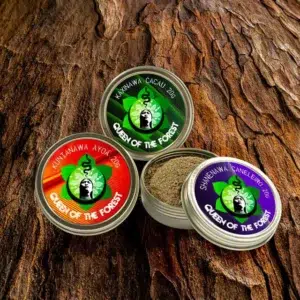
At Queen of the Forest, we believe that appreciation must be accompanied by attribution, transparency, reciprocity and respect for the authority of Indigenous peoples over their own knowledge.