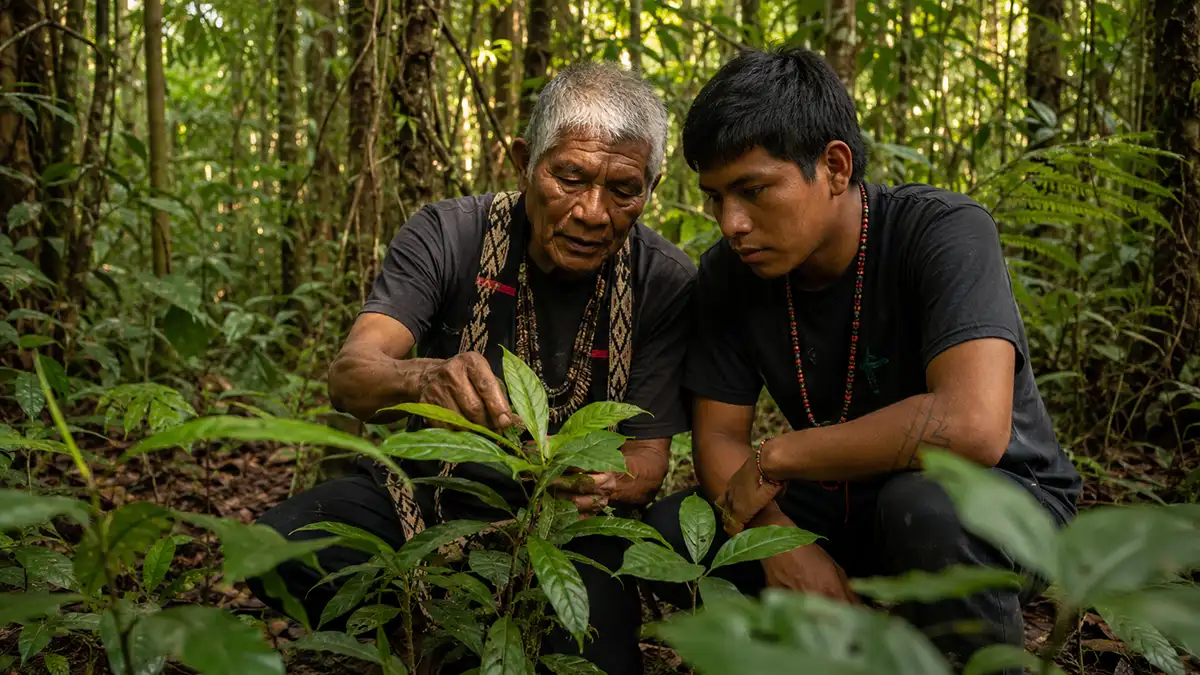

The Dreams of the Pink Dolphin: Love and Mystery in the Waters of the Amazon
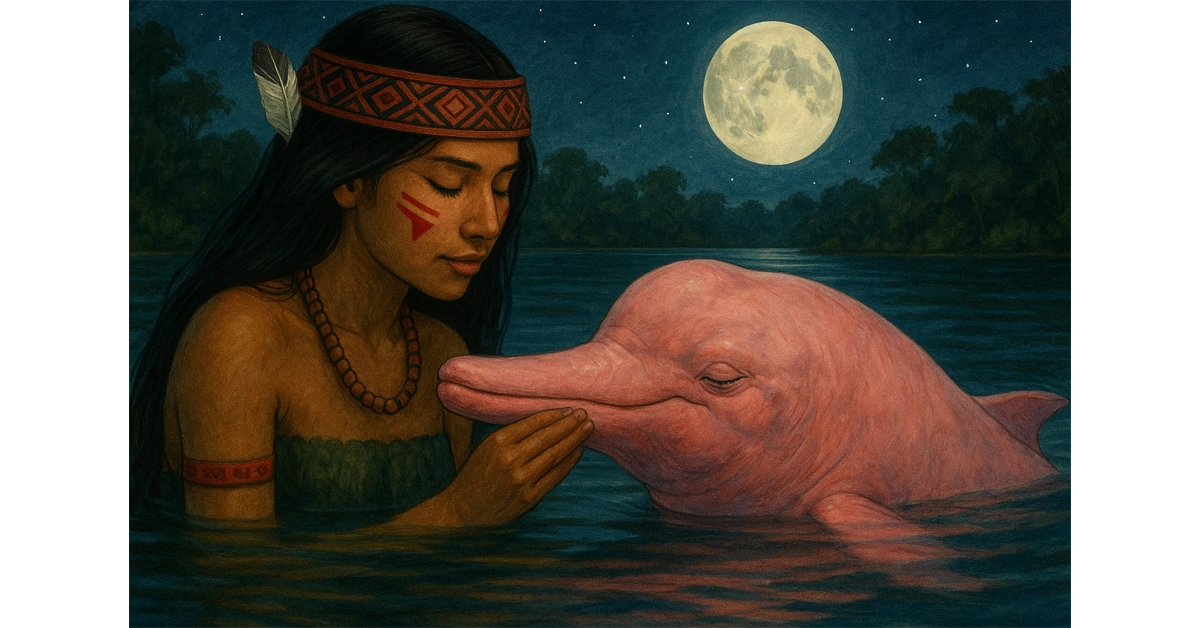
When the River Dreams
In the heart of the Amazon, where the rivers breathe like serpents of silver and mist rises from the surface like incense from the Earth, a story has been whispered for centuries.
It is told around fires, in hammocks at dusk, and in songs that float through the water like memories: the story of the boto cor-de-rosa — the Pink River Dolphin.
To the outsider, it is a charming curiosity: a rare freshwater dolphin with a blush-colored skin.
But to those who live by the river, the boto is not just an animal. It is a spirit, a shapeshifter, a guardian, and sometimes — a lover.
The myth of the Pink Dolphin is one of the most beautiful and mysterious in all of South America.
It is a story that swims between worlds — the human and the spiritual, the visible and the unseen, the waking and the dreaming.
And in its depths lies a teaching about love, illusion, and the vast intelligence of the waters that hold us all.
The Legend: The Visitor from the Depths
According to Amazonian tradition, the boto is a being that can take human form.
During the nights of the full moon — especially during the great festivals by the river — the dolphin emerges from the water, transforms into a handsome young man dressed in white, and walks among the people.
He wears a hat to hide the small hole at the top of his head — the mark of his aquatic origin.
He dances gracefully, speaks with kindness, and seduces women with a gentleness that seems otherworldly.
By dawn, he disappears, returning to the depths of the river, leaving only perfume, mystery, and longing behind.
Many women from riverine communities have claimed to dream of the boto visiting them.
Some even bear children said to be his — beings marked by special beauty or intuition, known as filhos do boto, the children of the dolphin.
But beneath the surface of this sensual story lies a deeper symbolism: a teaching about the soul’s longing for union, and the danger of confusing illusion for love.
The Symbolism of the Waters
In the cosmology of the forest peoples, the river is more than a geographical feature — it is a living consciousness, an ancestor, a mother.
Water is memory, emotion, fertility, and transformation.
To enter the water is to cross into another dimension — a world where thoughts are felt, and feelings are seen.
The boto, as a creature of these depths, represents the intelligence of emotion — the wisdom that flows beneath reason.
It moves through the unseen currents of the human psyche, carrying messages from the subconscious to the surface.
When it appears in dreams or visions, it is often calling the dreamer to reconcile with their own emotions, desires, or unhealed loves.
Thus, the boto is not only a seducer — it is a mirror.
It reflects the state of our own heart and the stories we tell ourselves about love.
Its pink hue reminds us of the color of skin, of flesh, of vulnerability — the softness that makes us human.
Between Worlds: The Shapeshifter Archetype
Across many cultures, shapeshifters are beings who blur the lines between forms — gods, spirits, or animals who teach humanity that identity is fluid and existence is a dance of transformation.
In the Amazon, the boto embodies this archetype through water: he becomes what the moment requires — dolphin, man, lover, dream, or ghost.
This quality of fluidity speaks to a spiritual truth: we, too, are shapeshifters.
Our emotions change like tides; our spirits expand and contract like rivers after the rain.
To live wisely is to honor this flow, to stop clinging to fixed forms — of who we think we are, who we think others should be, or what love should look like.
The boto reminds us that the heart is not a stone temple, but a river — and rivers cannot be possessed.
They must be met in freedom, in respect, in rhythm with their movement.
The Boto as Guardian and Trickster
Every spirit of the forest holds dual nature — benevolent and mischievous, light and shadow.
The boto is no different.
He is both protector and tempter, healer and illusion-maker.
In some villages, he is honored as a guardian of women and children, bringing fertility and joy.
In others, he is feared as a deceiver who leads those with weak hearts astray.
This ambiguity is essential, for it mirrors the duality of desire itself.
Love can heal or wound, depending on the consciousness with which it is embraced.
The boto teaches that we must learn to love without losing ourselves — to recognize the difference between connection and possession, between divine union and emotional entrapment.
When the boto seduces the heart, it is not always for harm; sometimes, it is to awaken it.
For many shamans, the encounter with the boto in dreams marks the beginning of initiation — a calling from the waters to dive deeper into the mysteries of feeling and intuition.
The Feminine and the Waters of Desire
There is an ancient relationship between the feminine principle and water.
In both Indigenous and mystical traditions, water symbolizes the womb, the emotional realm, and the cycles of creation.
It receives, nurtures, reflects, and remembers.
The myth of the boto often revolves around women — because women, in these traditions, are the guardians of the emotional world.
When the dolphin emerges from the river to approach them, it is the spirit of the waters seeking communion with the spirit of the flesh — the eternal dance of creation.
Yet the story also carries a warning: that desire without awareness can lead to loss.
The women who fall in love with the boto may awaken to find themselves alone, changed, or dreaming of a love that cannot live on land.
It is a metaphor for all relationships that come to awaken us rather than to last — loves that descend like rain, cleanse the soul, and then return to the sky.
Dreams of the Dolphin: The Language of the Unconscious
In dreams, the boto is a powerful archetype.
Its appearance often announces a time of emotional awakening or the return of forgotten desires.
The dreamer may be invited to explore their relationship with intimacy, to heal wounds of trust, or to surrender to the flow of life.
The boto’s invitation is subtle: “Will you dive deeper?”
It asks whether we are willing to descend into our own emotional depths—to face what we have repressed, to love what we have denied, to embrace the mystery within.
To dream of the boto, then, is not just a romantic omen—it is a spiritual initiation.
It calls us to unite the conscious and unconscious, the human and the divine.
It reminds us that true love is not found by chasing illusions, but by meeting the infinite inside ourselves.
The Sacred Masculine in the Form of the Boto
At a deeper level, the boto also represents the healing of the masculine principle.
Unlike the aggressive or dominating archetypes of manhood often seen in modern culture, the boto is gentle, sensual, playful, and respectful.
He seduces not through power, but through presence.
For many women (and men) who have suffered from distorted expressions of masculinity, the boto appears as a symbol of reconciliation — a reminder that the masculine can be tender, poetic, and fluid.
He is the divine lover, not the conqueror; the spirit that celebrates union, not possession.
This is why in shamanic ceremonies, the energy of the boto is often invoked to restore harmony between the masculine and feminine within the soul.
In those moments, the dance of the river becomes the dance of balance — yin and yang reunited in sacred play.
The Song of the River: Music as Memory
In the evenings after rain, the Amazon often hums with a symphony of frogs, insects, and distant dolphin calls echoing beneath the surface.
The elders say that these sounds are not random — they are the songs of the river spirits communicating with one another.
When a pajé (shaman) enters trance, he may receive melodies from the boto — haunting, slow songs that resemble the sound of breath underwater.
These icaros or medicine songs are said to carry the vibration of love and forgiveness.
They remind the listener that water remembers — that emotion, once purified, can become prayer.
For those who have felt heartbreak or loss, listening to the rain or the sound of flowing water can become a ceremony in itself — a way to harmonize with the rhythm of the Earth’s own healing heart.
The boto’s song is not only for lovers; it is for all who have known longing.
The Spiritual Teaching: Love That Cannot Be Owned
Every myth of the forest contains a lesson, and the boto’s is clear: love is not possession.
It is a tide.
It comes, it blesses, it transforms — and then it must return to the river.
The pain of the villagers who lose their mysterious lovers is symbolic of our own pain when we try to hold what was meant to move.
Love’s true nature is fluid, not fixed.
It teaches surrender, not control.
The boto invites us to approach love as ceremony — as a meeting of souls that purifies, not imprisons.
When we learn to love in this way, we no longer fear loss, for we understand that every encounter leaves a blessing, even if it ends.
This is the spiritual maturity that the river asks of us: to love like water—deeply, freely, and without clinging.
The Ecological Message: Protecting the Spirit of the Waters
Beyond myth, the Pink Dolphin is a very real and endangered being.
Pollution, overfishing, and deforestation are threatening its existence, just as human greed threatens all sacred life.
In this sense, the disappearance of the boto from the rivers mirrors the fading of reverence from the human heart.
To protect the boto is to protect the emotional intelligence of the Earth itself.
It is to remember that the waters are not resources, but relatives.
When we honor the river, we honor the flow of life that sustains us.
Many Indigenous activists now use the image of the boto as a symbol of the sacred feminine waters — urging humanity to defend the rivers as temples of planetary consciousness.
For the forest peoples, saving the boto is not just environmental work—it is spiritual work.
It is keeping the dream alive.
Rituals of the Water and the Heart
Inspired by the teachings of the boto, many modern spiritual practitioners are creating rituals of water and forgiveness:
- River Offerings: Placing flowers, fruits, or prayers in the water with gratitude, asking for emotional purification.
- Water Blessings: Collecting rainwater under the full moon to cleanse the heart or anoint sacred objects.
- Dream Ceremonies: Meditating before sleep, asking the boto to guide the dreams toward healing and love.
These acts are not superstition—they are gestures of remembrance.
They remind us that we belong to a living planet whose waters carry the same pulse as our veins.
Every drop that falls, every tear that is shed, participates in the same ocean of consciousness.
The River Inside Us
The myth of the Pink Dolphin is not merely a legend of the Amazon—it is a mirror for all who have loved and lost, dreamed and awakened.
It teaches that love, like the river, cannot be contained.
It must be felt, honored, and released.
Perhaps the boto still swims beneath the moonlit waters, visiting those who remember.
Or perhaps he has always lived within us, as the pulse of tenderness that rises when we close our eyes and listen to the rhythm of our own hearts.
The next time you hear the rain fall or the water move, listen closely.
You might hear him breathe.
You might feel a shimmer in your chest, like something ancient returning.
That is the river dreaming through you —
and that dream is love itself.
Continue exploring
All stories
The medicines of the forest