The Heart of the Earth: Why Spirituality Is the Future of Sustainability
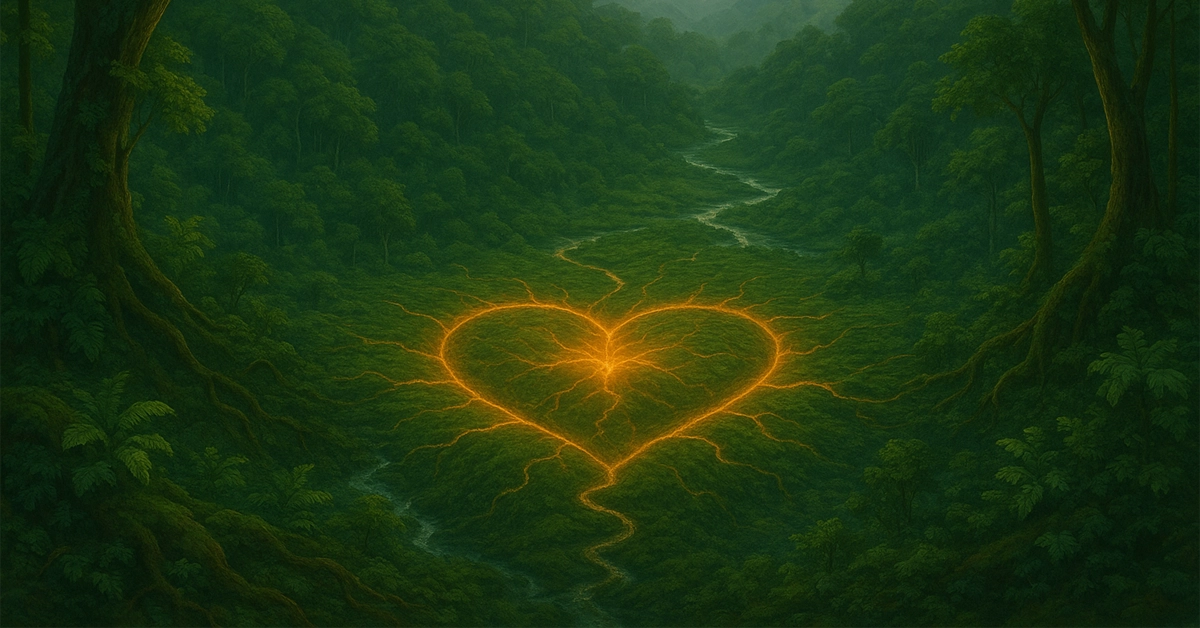
The Pulse Beneath Our Feet
If you place your ear to the ground, you might hear it — a low, ancient rhythm echoing through stone and root, wave and wind.
It is the pulse of the planet, the heartbeat of Gaia, alive beneath the silence of civilization.
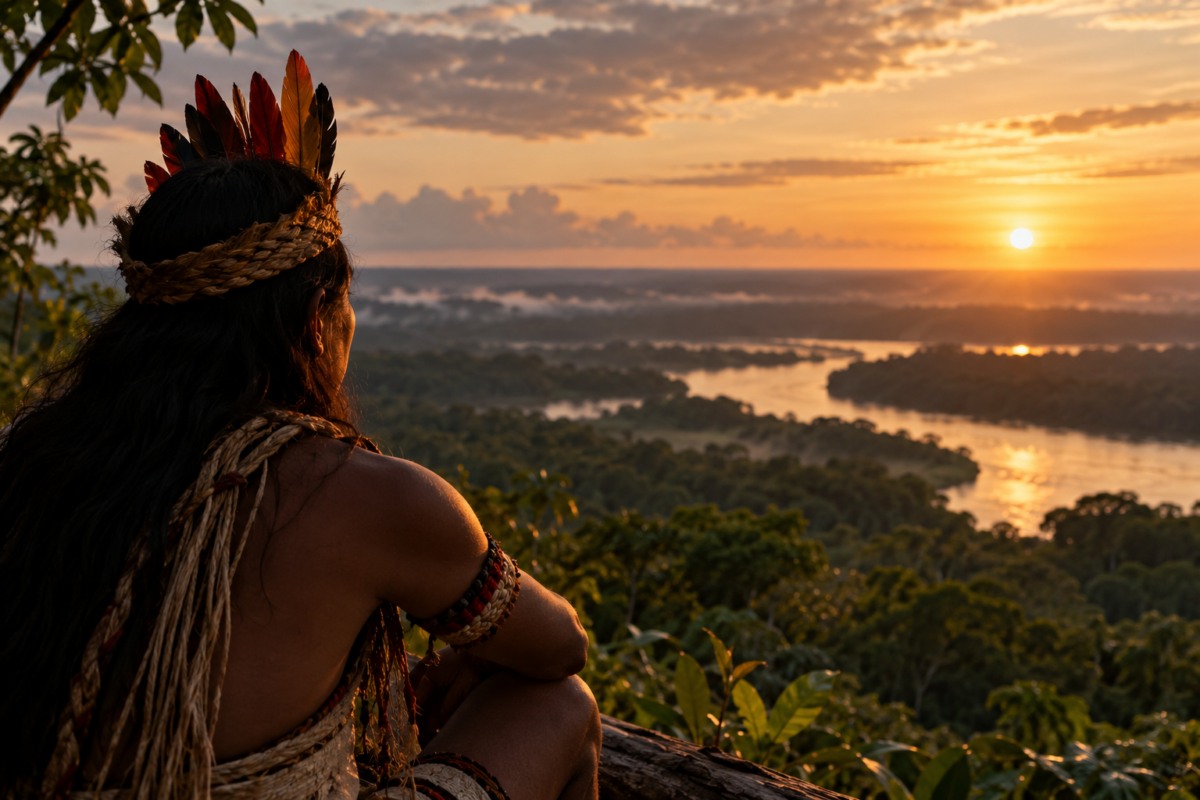
For thousands of years, Indigenous peoples have known that the Earth is not an object but a being.
They have listened to her breath through the rivers, felt her moods in the clouds, and spoken with her through prayer and song.
Today, as modern society faces ecological collapse and existential despair, this wisdom is rising again — not as nostalgia, but as necessity.
We have tried to build sustainability with science alone.
We have measured carbon, counted trees, and drafted policies. Yet something vital has been missing: the spirit.
For without a transformation of consciousness, sustainability remains a strategy, not a relationship.
The future of the Earth depends not only on what we do — but on how we see.
And the new sustainability begins in the heart.
The Disconnection: When the Sacred Became a Resource
Somewhere along the way, humanity stopped listening.
We turned the living Earth into a collection of commodities — forests became timber, rivers became utilities, mountains became mines.
We learned to take without ceremony, to consume without gratitude, to live without reverence.
The result is the world we see now: forests burning, oceans suffocating, species vanishing, hearts growing numb.
We are facing not just an environmental crisis, but a spiritual one.
Because when the sacred dimension of life is forgotten, the web of life unravels.
The Indigenous elders say that this disconnection began the moment humans stopped seeing themselves as part of the Earth and began seeing themselves as its masters.
The word “sustainability” means little if it does not restore this original relationship.
True sustainability is not the art of managing the planet — it is the art of living in communion with her.
From Ecology to Spiritual Ecology
Modern ecology studies the relationships between living beings and their environment.
Spiritual ecology goes further: it recognizes that these relationships are not just biological — they are sacred.
When we speak of the “spirit” of the forest, we are not being poetic. We are describing a reality that the ancestors have known all along: that consciousness pervades everything.
Every tree, every river, every stone is a vessel of awareness.
To harm them is to harm ourselves.
This worldview does not contradict science; it completes it.
Science tells us how the Earth lives. Spirituality tells us why she lives.
Together, they can form a new paradigm — one that unites knowledge with reverence, reason with ritual, technology with tenderness.
This is the bridge humanity must now cross.
The Language of the Heart
The heart is not merely an organ — it is a compass.
It feels what the intellect cannot calculate. It senses when life is out of balance, when something sacred has been forgotten.
In Indigenous cosmologies, the heart is the seat of truth.
To act from the heart is to act in harmony with the whole.
When we listen deeply — through silence, prayer, or the sound of rain — we begin to feel that the planet’s heartbeat and our own are the same rhythm.
From that awareness arises a natural ethic, one that no law can enforce: the ethic of belonging.
When you love something, you protect it — not because you have to, but because it is you.
This is why spirituality is not an escape from the world’s problems, but the foundation for solving them.
It reawakens empathy — not only for humans, but for all beings.
It reminds us that to save the Earth, we must first feel her again.
The Forgotten Teachers: Indigenous Wisdom and the Living Earth
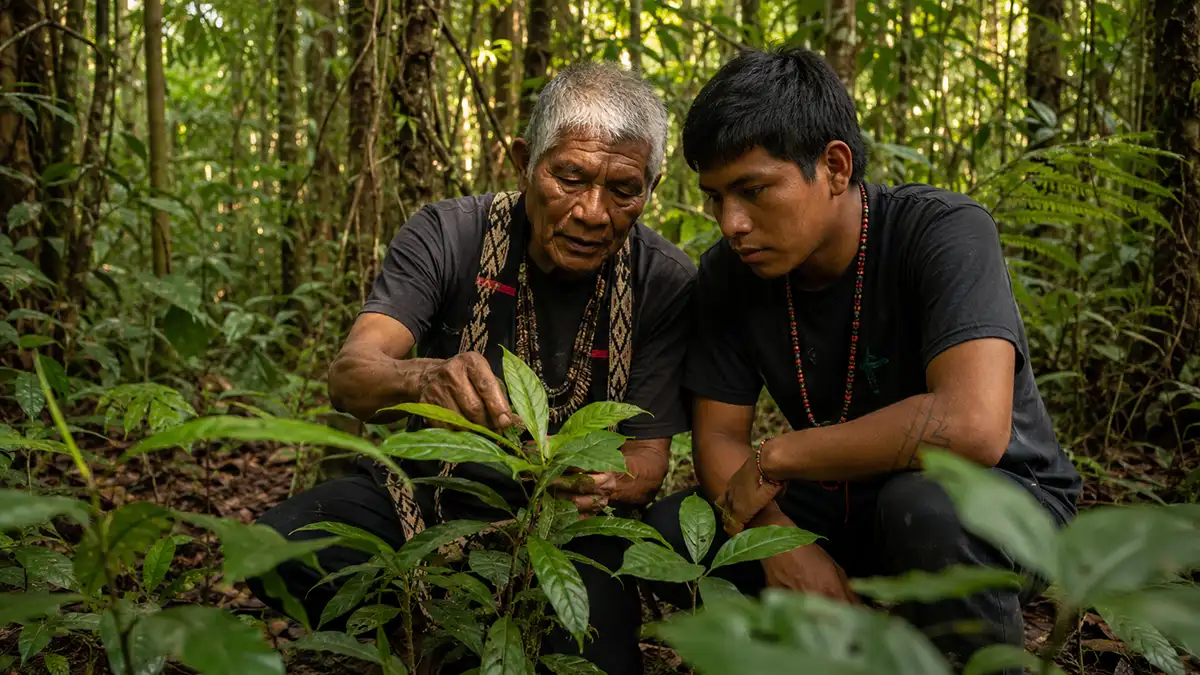
Long before the word “sustainability” existed, Indigenous cultures were living it.
Their science was observation, their religion was relationship, and their economy was reciprocity.
Among the Huni Kuin, Yawanawá, Shipibo, and countless other tribes of the Amazon, the forest is seen as a great cathedral of spirits — each plant, each animal, each river holding a song and a story.
To hunt, they first pray. To harvest, they first sing. To heal, they first listen.
This way of life is not primitive; it is profoundly advanced.
It understands that every act of taking must be balanced by an act of giving.
The circle must remain whole.
The modern world has inherited enormous technological power but lost this sense of sacred balance.
To find our way forward, we must look backward — not to copy Indigenous cultures, but to learn from their consciousness.
They do not see the Earth as a “thing to be saved.”
They see her as a mother to be remembered.
The Disease of Separation
At the root of all ecological destruction lies one illusion: separation.
We believe we are separate from nature, from each other, from Spirit.
This belief justifies domination, exploitation, and greed.
But separation is an illusion of the mind.
In truth, every breath we take is a gift of the trees. Every drop of blood in our veins was once ocean.
Every heartbeat echoes the rhythm of the planet.
When we realize this, the idea of “saving the Earth” dissolves.
We are the Earth saving herself through us.
This recognition transforms sustainability from an external mission into an inner awakening.
It becomes not about fixing the world, but about remembering our place in it.
The New Activism: Sacred Action
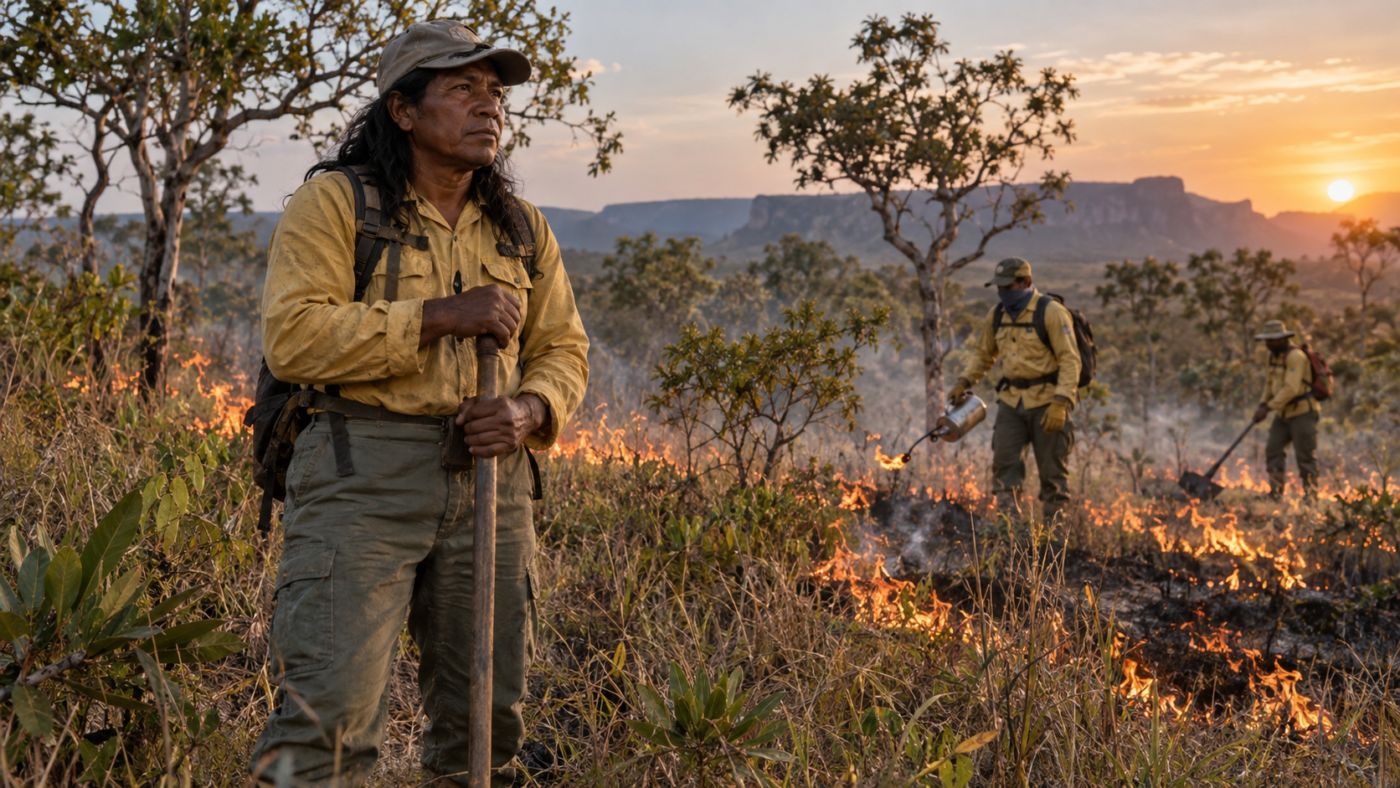
For decades, environmental movements have focused on policies, protests, and preservation.
While these are vital, they often overlook a deeper dimension — the inner work that sustains outer change.
A tree planted without prayer may grow, but a tree planted with reverence nourishes the soul as well as the soil.
The new activism must integrate both: outer service and inner devotion.
This is what we might call sacred action.
It is activism born from love, not fear; from hope, not guilt.
It is the act of embodying the change, rather than fighting the old.
When activism becomes a form of prayer, it no longer burns out.
It becomes regenerative, joyful, creative — like the Earth herself.
Technology and the Return of Spirit
It may seem paradoxical, but even technology can serve the sacred.
When guided by consciousness, it can reconnect rather than alienate — illuminating the hidden harmony of life.
Digital storytelling, for instance, can share Indigenous voices across continents.
Satellites can monitor deforestation, drones can replant trees, and AI can help restore ecosystems.
But none of these tools can replace the simple, ancient act of reverence.
Technology must serve life, not replace it.
The question is not whether we can invent more machines, but whether we can remember the meaning of what we are creating them for.
When spirit leads science, progress becomes prayer.
From Economy to Ecology of the Soul
Our current economic system treats nature as capital and growth as virtue.
But infinite growth on a finite planet is the logic of disease.
The next evolution is not a new economy but a new ecology of the soul — a recognition that well-being cannot exist without balance.
That wealth is measured not in possessions but in harmony.
Imagine an economy where gratitude replaces greed, where companies give back to the ecosystems that sustain them, where success is defined by regeneration.
This is not fantasy; it is the inevitable direction of an awakening humanity.
When consciousness rises, so does compassion — and with it, the desire to live in beauty rather than domination.
Ceremony as a Model for Sustainability
Every Indigenous ceremony begins with gratitude, proceeds with intention, and ends with offering.
It is a perfect ecological model: nothing is wasted, everything is reciprocal.
The ceremony teaches that life is not linear — it is circular.
When we act with awareness, what we take returns transformed.
When we act unconsciously, imbalance grows.
Sustainability, in this sense, is ceremony lived on a planetary scale.
Every act — eating, building, creating, healing — can be done ceremonially, with presence and gratitude.
This is the essence of the Life as Ceremony philosophy: living every moment as an offering to the web of life.
If the modern world could re-learn the art of ceremony, balance would follow naturally.
The Feminine Return: The Earth as a Living Being
The rising movement of ecological spirituality is also the return of the Divine Feminine — the reawakening of the understanding that Earth is a living mother, not a machine.
For centuries, the patriarchal mindset sought to control and exploit her body.
Now, her spirit is returning through the language of intuition, empathy, and care.
This feminine consciousness is not limited to women; it is a quality of the soul — the capacity to nurture, to listen, to protect.
It is this energy that the Earth now calls forth from all of us, urging humanity to evolve from dominance to partnership, from conquest to compassion.
The healing of the planet depends on the healing of the feminine — within the Earth and within ourselves.
Spiritual Practices for a Sustainable Heart
Spirituality is not abstract; it begins with simple, daily acts of reconnection.
Here are a few practices that help align the inner and outer worlds:
- Morning Gratitude to the Earth
Begin the day by acknowledging the ground beneath your feet, the water you drink, and the breath you share with the trees. - Listening Walks
Walk in silence, without headphones or distractions. Let the sounds of nature speak — birds, wind, even city rain — they are all part of the same song. - Plant or Tend to a Living Being
Care for a plant as you would a child. Observe its needs, its moods, its growth. Learn patience through tending. - Conscious Consumption
Before buying or eating, pause. Ask: “Does this choice honor life?” This small question can change everything. - Water Blessings
Every time you drink, whisper “thank you.” Remember that this water has traveled through mountains, clouds, and veins — returning now to you.
These are not rituals of belief, but of belonging. They restore the spiritual intimacy that industrial life has forgotten.
The Forest as Teacher
The forest does not preach, but it teaches.
It shows us that balance is achieved through diversity, that death feeds life, that silence is fertile.
It demonstrates sustainability without ever using the word.
When you sit beneath a tree long enough, you begin to feel that every rustle of leaves is a heartbeat, every shadow a breath.
You understand that the same intelligence that guides the forest also lives within you.
To live sustainably, then, is not to imitate the forest, but to remember that we are part of it.
The Future: Regeneration of the Spirit
The future of sustainability will not be decided only in conferences or by data.
It will be decided in the invisible realms — in the renewal of reverence, the re-enchantment of perception, and the reawakening of the sacred.
Spirituality, far from being an escape from reality, is the most radical form of realism.
It sees the full picture: not only matter, but meaning; not only survival, but soul.
As long as humans see themselves as separate, the crisis will continue.
But when we begin to feel again — when we remember that the Earth’s pain is our own — then a new world will begin to rise.
Not from ideology, but from love.
Listening to the Heartbeat
The Earth does not need our pity; she needs our partnership.
She does not demand our guilt; she invites our gratitude.
And she does not ask us to save her; she asks us to remember her.
Sustainability, in its truest form, is not a plan — it is a prayer.
It is the daily act of aligning with the living intelligence that animates all things.
It is the shift from domination to devotion, from consumption to communion.
If humanity can make this inner leap — from the mind to the heart — we will rediscover what the forest has known all along:
That the future is not something to fear, but something to co-create with love.
The heart of the Earth beats within us.
When we listen, we remember who we are —
and when we remember, we heal.
Continue exploring
All stories
The medicines of the forest