The Sacred Hapé (Rapeh) Ceremony: Tradition, Ritual & Healing
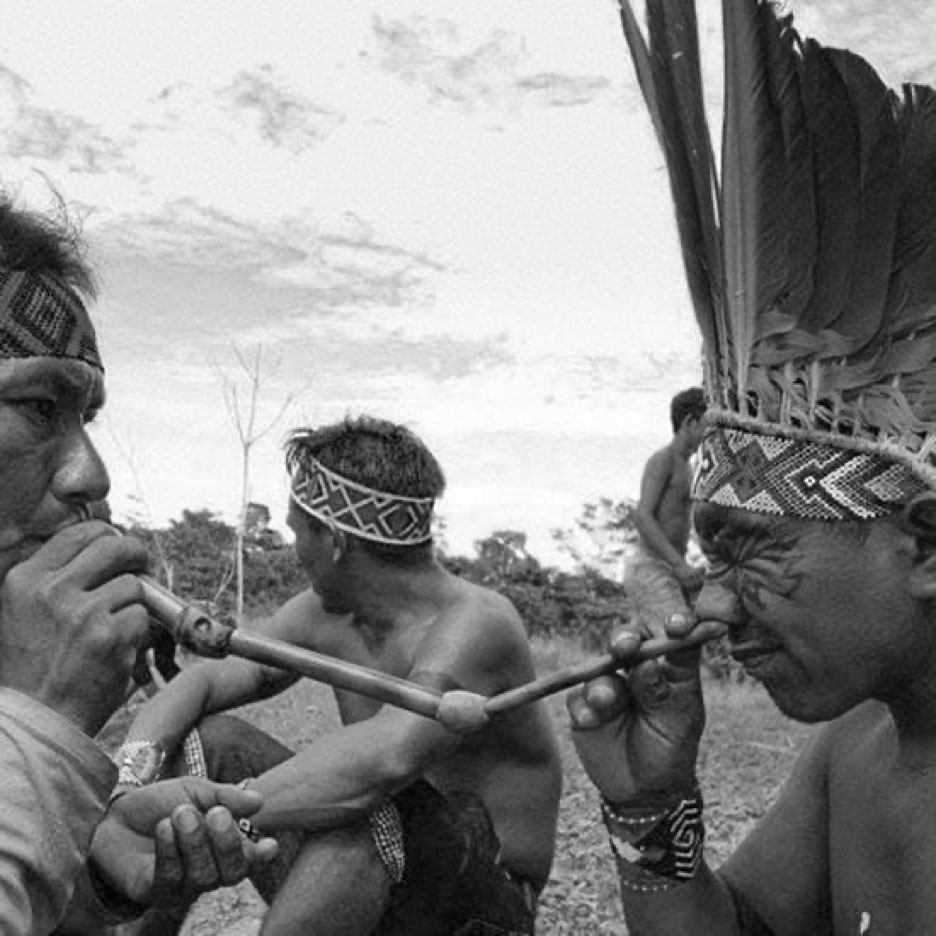
Origins, Tribal Wisdom, and Global Journey
The rapeh ceremony (also written as hapeh, rapé, or rhape) is a traditional Amazonian healing ritual used by indigenous tribes for spiritual purification, grounding, and connection. Rapeh itself is more than a powdered snuff—it is a sacred medicine with millennia of history, deeply embedded in the spiritual, cultural, and medicinal practices of the Amazon rainforest’s indigenous tribes. Passed down through generations via oral traditions, it embodies the wisdom of nature, the teachings of the ancestors, and the spiritual connection between humans and the natural world.
This sacred snuff holds profound significance in spiritual ceremonies, healing practices, and the preservation of tribal identities. Beyond its origins, Rapeh has embarked on a fascinating journey, influencing the Old World during the 15th and 16th centuries and re-emerging in the modern era as a tool for spiritual seekers globally.
In this expanded exploration, we delve into the origins of Rapeh, its cultural and ceremonial roles, what happens step by step in a hapeh ceremony, its journey to Europe, and its present-day renaissance.
The Sacred Origins of Rapeh
A Divine Gift to Humanity
Among the Amazon’s indigenous peoples, Rapeh is considered a sacred gift bestowed by the spirits of the forest. Tribal lore often links its discovery to moments of divine revelation or guidance from powerful forest beings. The Yawanawá, for instance, tell of how the spirit of Tsunu, one of the trees used in making Rapeh, appeared to an elder in a dream, teaching him the sacred preparation and its purpose: to bring harmony and balance to the community.
Similarly, the Katukina believe Rapeh was revealed by their ancestors to help cleanse the body and spirit, ensuring their people could walk a pure path in alignment with the forest’s energies.
Preparation as a Ritual
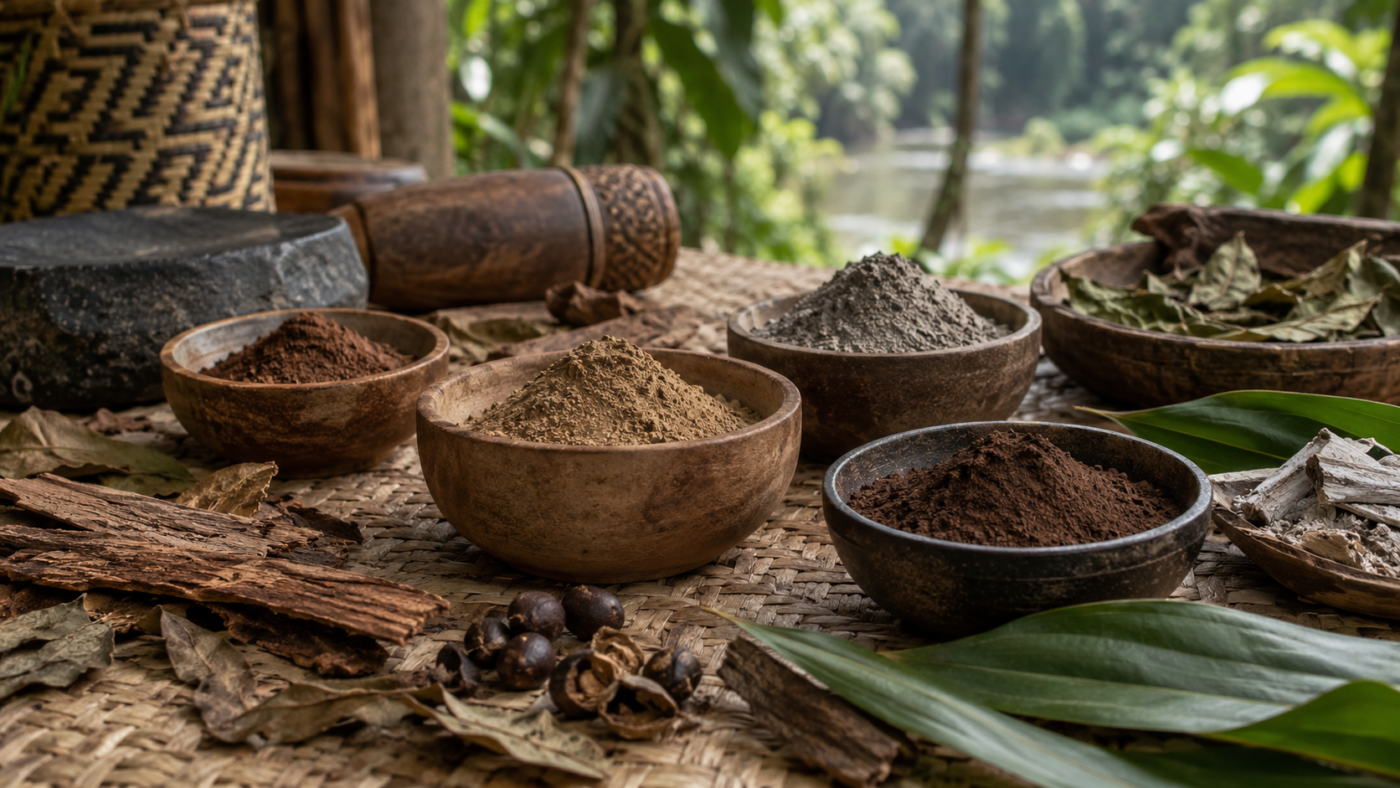
Creating Rapeh is far more than a technical process; it is a sacred act filled with prayers, songs, and ceremonial intent. The ingredients—often mapacho tobacco, ashes of sacred plants, seeds, or tree bark—are chosen with care, as each component carries unique spiritual and medicinal properties.
The process typically involves grinding the ingredients into a fine powder, a task that may take days of focused effort. As one Huni Kuin elder explains:
“Every step matters—what you sing, what you think, what you feel—it all becomes part of the medicine.”
Each tribe’s blend reflects their spiritual lineage and environment. For example:
- Yawanawá Rapeh is known for its cleansing and grounding effects, often used to clear energy.
- Huni Kuin Rapeh may include medicinal herbs to aid in vision quests or deepen spiritual insight.
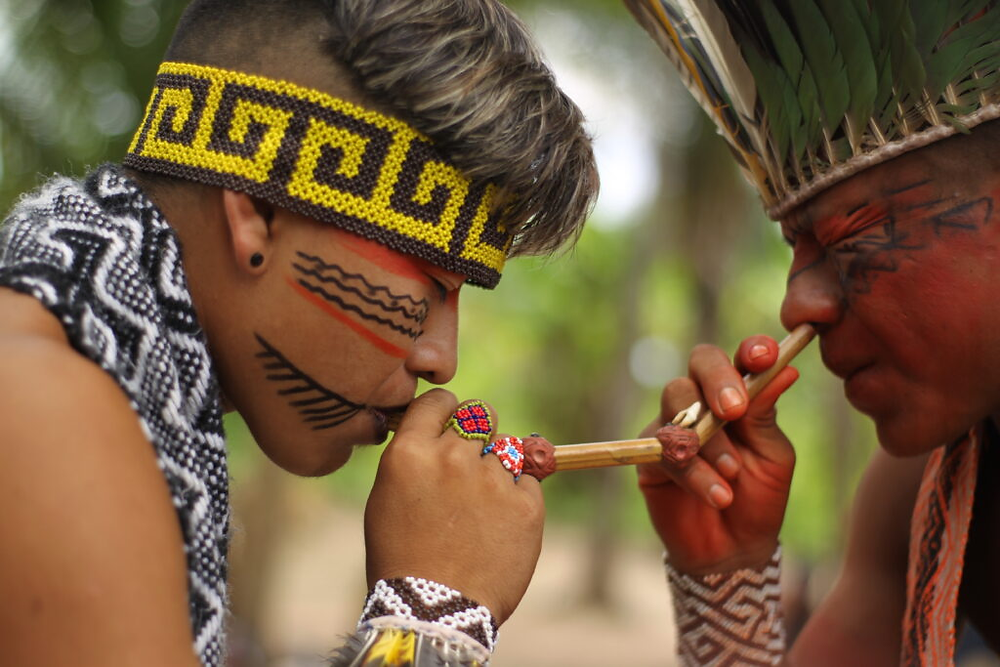
What Is a Hapeh Ceremony? Step by Step
A hapeh ceremony — whether held in a village maloca or a quiet room at home — follows a rhythm that indigenous practitioners have refined over generations. While each tradition has its own songs and protocols, most rapeh ceremonies share these essential steps:
- Setting the space and intention. The ceremony begins by creating a calm, respectful environment — participants sit quietly, often with a candle or natural elements present, and set a clear intention for the medicine.
- Choosing the blend. Different blends carry different energies — grounding, heart-opening, or visionary. Learning how to choose the right rapeh for your intention is part of the practice itself.
- Administering the medicine. Rapeh is delivered through the nostrils using a kuripe (self-application) or tepi (served by another). The breath that delivers it is itself considered part of the prayer.
- Sitting in silence. After receiving the medicine, participants remain still — eyes closed, breathing slowly — allowing the initial intensity to settle into clarity and presence. This silent integration usually lasts ten to twenty minutes.
- Closing with gratitude. The ceremony ends with thanks — to the medicine, the tribes who prepared it, and the forest it came from.
If you are new to this practice, our guide on how to use rapeh walks through technique, amounts, and preparation in detail.
Rapeh in Indigenous Communities
Cultural and Spiritual Roles
For tribes in the Amazon, Rapeh serves as a vital tool for spiritual alignment and healing. It is often administered during communal rituals, where its effects are amplified by collective prayers and songs. Elders teach that Rapeh clears the mind, expels negative energies, and opens pathways to receive guidance from the spirit world.
One elder from the Yawanawá tribe shares:
“Rapeh cleanses the door of your mind. It brings focus and removes distractions, helping you see what truly matters.”
Healing and Protection
Beyond its spiritual functions, Rapeh has long been used as a natural remedy in tribal tradition. It is believed to purify the body, clearing nasal passages and improving overall energy flow. Some tribes even consider it a protective medicine, creating a spiritual shield against harmful energies.
A Shamanic Ally
For shamans, Rapeh is a bridge between the physical and spiritual realms. It aids in achieving altered states of consciousness, enhancing intuition, and receiving ancestral wisdom. During ceremonies with Ayahuasca, Rapeh is often used to center participants, aligning their energies and grounding their experiences. Rapeh is also frequently paired with sananga — the sacred Amazonian eye medicine — applied before or after the snuff to deepen clarity, presence, and inner vision.
The Journey of Rapeh to Europe
Discovery by the Old World
When European explorers arrived in the Americas during the late 15th century, they marveled at the indigenous peoples’ knowledge of plants and medicines. Tobacco, central to many tribal rituals, caught their attention, with powdered preparations like Rapeh being among the first forms documented.
Portuguese and Spanish chroniclers noted the use of snuff-like substances in healing ceremonies. These early observations sparked curiosity and facilitated the transfer of indigenous knowledge to Europe. By the early 16th century, Rapeh had been introduced to European courts, though in a diluted form adapted to Western tastes.
The Role of Tobacco Ambassadors
Jean Nicot, a French diplomat in Portugal, played a pivotal role in bringing powdered tobacco (inspired by Rapeh) to Europe. He introduced it to Catherine de’ Medici as a remedy for her migraines, earning tobacco-based snuffs a place among the aristocracy. Snuff quickly gained popularity as a fashionable and medicinal product.
While the spiritual aspects of Rapeh were largely lost in translation, the practice of using snuff laid the groundwork for future exchanges between indigenous traditions and European customs. You can explore this deeper lineage in our history of rapeh guide.
Rapeh’s Modern Renaissance
Reconnecting with Ancestral Wisdom
In recent decades, there has been a growing global interest in indigenous spiritual practices, including Ayahuasca and Rapeh. Western seekers have rediscovered Rapeh as a tool for mindfulness, grounding, and energetic cleansing.
Today, it is used in meditation circles, plant medicine ceremonies, and wellness practices, bridging ancient traditions with contemporary spirituality. However, many indigenous leaders emphasize the importance of respecting Rapeh’s origins and using it with proper intent.
As one Yawanawá elder explains:
“Rapeh is not a game or a toy. It is a prayer, a calling to the spirits. You must approach it with respect, or it will not work for you.”
Economic Opportunities and Challenges
The rising demand for Rapeh has provided new economic opportunities for indigenous communities, enabling them to preserve their traditions and protect their lands. However, it has also brought challenges, including concerns about cultural appropriation and unsustainable practices. Advocates are working to ensure fair trade models that honor indigenous contributions while fostering ethical use of this sacred medicine — a commitment at the heart of our mission.
The Wisdom of Elders: Protecting Rapeh’s Spirit
Elders across the Amazon stress the importance of preserving Rapeh’s spiritual essence in the face of global commercialization. For tribes like the Yawanawá and Huni Kuin, Rapeh is more than a product—it is a sacred connection to their ancestors, their environment, and the divine.
A Katukina leader shares:
“When we share Rapeh with the world, we are sharing our soul. It is our hope that people who use it will remember where it comes from and why it exists.”
Lessons from Rapeh’s Journey
The story of Rapeh offers profound lessons about the interconnectedness of humanity, nature, and spirit. From its origins in the Amazon to its introduction in Europe and its modern-day resurgence, Rapeh’s journey reflects a universal search for healing, connection, and balance.
As Rapeh continues to touch lives across the globe, it calls us to honor its roots, respect its traditions, and support the communities that have preserved its wisdom.
Rapeh is far more than a ceremonial snuff; it is a bridge between worlds—a tool for healing, transformation, and connection. Its story, told through the voices of indigenous elders and the records of history, reminds us of the enduring power of sacred traditions.
In embracing Rapeh, let us carry forward its spirit with reverence, ensuring that its use benefits not only those who seek its healing but also the tribes and forests that birthed it. By doing so, we honor a tradition that has transcended time, offering wisdom and medicine to a world in need.
Expanding the Practice Globally
As Rapeh’s influence spreads, its usage is evolving in various cultural contexts. Meditation teachers, holistic healers, and even modern therapists are integrating Rapeh into their practices, recognizing its potential to:
- Enhance mindfulness: Clearing mental clutter allows for deeper meditation experiences.
- Support emotional healing: By releasing negative energies, Rapeh aids in processing past traumas.
- Strengthen community bonds: Shared Rapeh ceremonies foster connection and mutual understanding.

Bridging Ancient Wisdom and Modern Needs
In a fast-paced world often disconnected from nature and spirit, Rapeh offers a grounding force. It reminds us of our shared humanity and the timeless wisdom embedded in Indigenous practices. By respecting its origins and applying its teachings, modern practitioners can create meaningful bridges between the ancient and contemporary worlds.
Ready to begin your own rapeh ceremony practice? Shop Rapé Snuff — Explore Our Ceremonial Blends →
[ux_products ids=”170566,10613,11590,157867″]
Rapeh Ceremony FAQs
What is a rapeh ceremony?
A rapeh ceremony (also written hapeh or rapé ceremony) is a traditional Amazonian healing ritual in which sacred plant snuff is administered through the nostrils for spiritual purification, grounding, and clarity. It can be held communally with a practitioner or practiced alone with intention and respect.
What happens during a hapeh ceremony?
A hapeh ceremony typically involves setting a sacred space and intention, choosing a blend, receiving the medicine through a kuripe or tepi, sitting in silence while the effects settle, and closing with gratitude. The silent integration period usually lasts ten to twenty minutes.
Can I do a rapeh ceremony alone?
Yes — solo practice using a kuripe (self-applicator) is one of the most common forms of rapeh ceremony today. Many practitioners hold a personal ceremony in the morning or before meditation, following the same steps of intention, administration, and silent integration.
Which rapeh blends are used in ceremony?
Different blends serve different ceremonial intentions: Tsunu for grounding and clarity, Cacau for heart-opening, and Jurema for visionary depth. Traditional tribes each prepare their own ceremonial blends reflecting their spiritual lineage.
Continue exploring
All stories
The medicines of the forest