The Language of Scents: Smell as a Spiritual Channel in Ceremonies
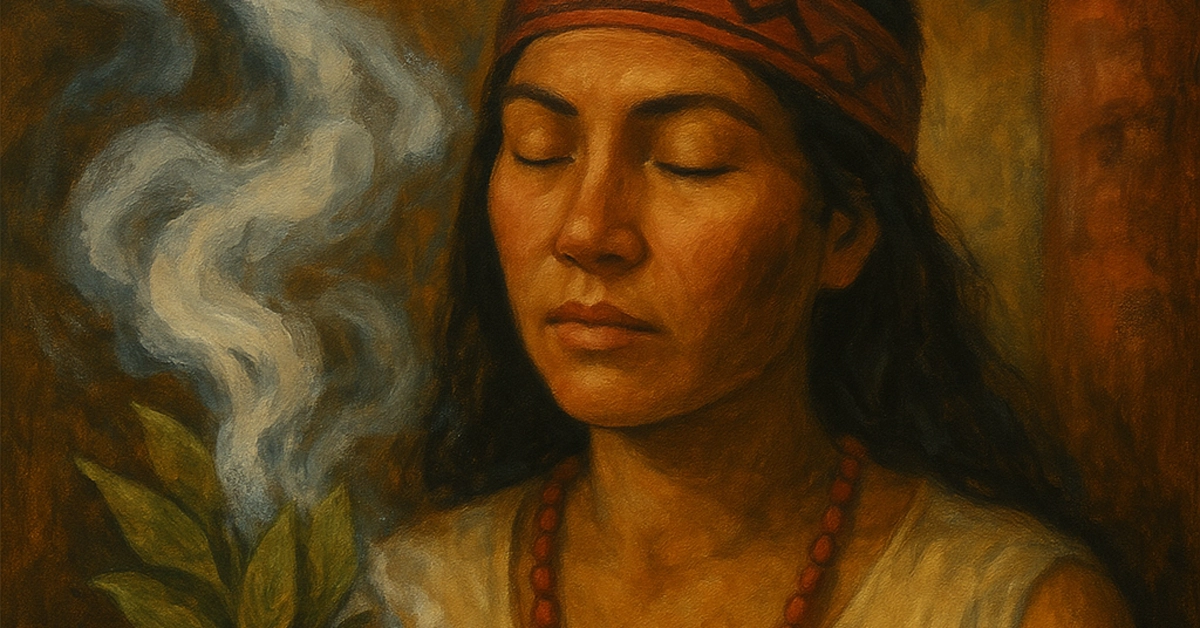
How Sacred Aromas Awaken Memory, Altered States, and the Invisible Dialogue with Spirit
The Forgotten Sense
Close your eyes. Inhale deeply. What comes first—a thought, or a feeling? A memory, perhaps?
Smell is the oldest sense. Before we spoke, before we wrote, we smelled.
And yet, in the modern world, smell is often the most overlooked sense in our spiritual practices. Sight takes precedence. Sound gets reverence. But scent? It lingers in the background—unseen, untamed, and often unspoken.
But not in the forest.
In the Indigenous world, aroma is prayer.
The smoke of a resin. The pungency of a leaf. The earthy smell of rapéh. The fragrant oil pressed from a sacred seed. These are not accessories to ritual—they are living channels of spirit, memory, and transformation.
This article explores the spiritual dimension of smell—how aromas awaken altered states, trigger ancestral memory, guide intuition, and open portals of presence that words and images cannot touch.
The Nose Knows: Scent and the Soul
Smell bypasses language.
While sight and sound must be interpreted by the rational mind, scent goes straight to the limbic brain—the emotional and instinctual center of who we are. This is why a single whiff can unlock memories decades old, or stir emotions we didn’t know were still inside us.
In many spiritual traditions, this is not seen as accidental. It is believed that spirit rides on scent.
Aroma becomes a messenger. An initiator. A subtle guide into the unseen.
“The nose is the flute of the soul,” say some elders. “It breathes what the spirit wants to say.”
Resins and Smoke: Carriers of Prayers
In sacred ceremonies around the world, resins are burned as offerings and gateways. When lit, they release not just fragrance—but frequency. The smoke becomes a bridge, rising to the heavens, swirling around bodies, carrying intentions to the spirit world.
Among the most revered:
Copal
Used in Mesoamerican ceremonies, copal is considered food for the gods. It clears space, purifies energy, and invites divine presence.
Breu Branco (White Breu)
Native to the Amazon, this resin carries a grounding yet uplifting scent. It is burned to open visionary states, calm the nervous system, and invoke the spirit of the forest.
Frankincense and Myrrh
Used across African and Middle Eastern traditions, these ancient resins represent purification, protection, and communion with higher consciousness.
In each case, the scent is not just pleasant—it is potent. It activates spiritual memory, inviting the soul to remember why it came.
Leaves, Barks, and the Breath of the Forest
The forest doesn’t speak in words—it speaks in scents.
Crush a leaf of guayusa or mapacho in your hands and inhale. Burn the bark of pau santo (palo santo) and feel the atmosphere shift. Place fresh herbs on hot stones and the steam carries spirit into the lungs.
Each plant has its own aroma. Each aroma has its own medicine.
In Amazonian ceremonies, many plants are not consumed—but smelled. This is no accident. Some teachings say the breath is how we drink the essence of a plant without harming its body.
Smelling a plant is like having a conversation with its soul.
Examples include:
Mentolado (Mentholated leaves): Opens the airways, awakens clarity
Eucalyptus: Clears spiritual congestion
Cinnamon bark: Warms the heart, invites sweetness
Rosemary: Invokes remembrance and energetic protection
Lavender: Calms the spirit and softens grief
In each case, the olfactory pathway is a door, not a detail.
Rapéh and the Smell of Earthly Spirit
Rapéh is usually spoken of in terms of its grounding effects, the presence it brings, the clarity it offers. But let us pause and honor its aroma.
There is something about the moment just before application—the way the scent rises from the blend. It is raw, earthy, pungent. Sometimes spicy. Sometimes sweet. Always alive.
To Indigenous peoples, the smell of rapéh is not separate from its spirit.
It is how the medicine announces itself.
Each blend carries its own olfactory fingerprint:
Tsunu: Smoky, grounding, like ancient wood
Canela de Velho: Spiced, wise, nostalgic
Paricá: Piercing, activating, full of sky
Jurema Preta: Mysterious, potent, visionary
For some, smelling the rapéh is already a form of communion. It invites the nervous system to settle. It signals to the soul: “We are entering sacred space.”
Oils and Plant Essences: Anointing the Senses
Essential oils and aromatic plant extracts have long been used in spiritual contexts—not only for anointing the body but for awakening deeper intuition.
An oil placed on the third eye, rubbed into the wrists, or offered to the pulse points can shift a person’s entire energetic state.
Some spiritual uses of oils include:
Sandalwood: For grounding and meditation
Rose: For opening the heart
Ylang Ylang: For sensuality and surrender
Basil: For mental clarity and protection
Spikenard: Used in ancient rites of death and rebirth
When oils are used in ceremony, they do not merely “smell good”—they become portals of presence.
Aroma is energy made subtle. Oil is prayer made touchable.
The Memory of the Ancestors
There are smells that carry memory not just from this life, but from those before.
In many Indigenous traditions, it is believed that certain scents awaken ancestral remembrance. You may smell a resin or flower and feel like you’ve smelled it in a dream—or in a life not your own.
This is not poetic exaggeration. It is a real and common experience in ceremony.
The scent of tobacco, for example, may trigger the memory of being at a fire long ago.
The aroma of copal may feel like a homecoming.
The breath of sage smoke may stir tears without any story.
Why? Because the spirit remembers what the mind forgets. And scent, more than any other sense, goes straight to the vault of the spirit.
Olfactory Trance: Scent as Inducer of Altered States
In many shamanic traditions, scent is used not only to bless or cleanse—but to alter consciousness.
Repeated exposure to a sacred aroma can induce trance. This is why many icaros (sacred songs) are sung while resins are burned. The scent works in tandem with sound to transport the participant.
For example:
In Brazilian Umbanda and Santo Daime rituals, perfumes are used to open energy channels and call specific entities.
In Native North American lodges, sweetgrass and sage are burned to bring clarity and induce receptive states.
In Egyptian temples, incense was used as a stairway between dimensions—each scent corresponding to a different god or energy.
When combined with breath, intention, and silence, smell becomes a ladder between worlds.
Scent and the Feminine Mystery
There is something deeply feminine about smell—perhaps because it is cyclical, invisible, and tied to both intuition and memory.
In many cultures, women are the keepers of aromatic wisdom. They are the ones who tend to the smudges, mix the oils, prepare the sacred perfumes for ceremony. Not because men can’t—but because the feminine knows how to listen through the senses.
The olfactory pathway is deeply linked to the womb, to dreams, to the moon.
Scent, in this way, is part of the feminine path to spiritual awakening—soft, subtle, but undeniably powerful.
The Unseen Conversation
There is an ancient teaching that says: “Spirit speaks in scent.”
This is why animals smell each other to understand mood. Why plants release aroma to attract or repel. Why shamans use scent to diagnose, treat, and open channels.
In ceremony, every scent has purpose:
The initial smudge with sage or breu creates a clean container.
The perfume sprayed before prayer marks the transition into sacred time.
The scent of rapéh opens the body to presence.
The burning resin elevates intention into vibration.
The oil applied on the crown seals the prayer into the body.
This is an olfactory ritual, a choreography of aroma designed to move spirit.
We may not see it. But we feel it.
Scent is the language of the invisible.
Living with Scent as Ceremony
You don’t need to be in a jungle or ritual circle to practice this wisdom.
In everyday life, you can begin to live in dialogue with scent:
Burn a single leaf or resin when you need clarity.
Rub an oil into your feet with a whispered prayer before sleep.
Smell a flower before answering a difficult question.
Keep a bundle of herbs near your desk or altar and breathe them when you’re tired.
Let scent mark your transitions—morning, dusk, meditation, letting go.
In this way, smell becomes a sacred thread woven through your days.
It’s not about intensity—it’s about intention.
Conclusion: The Breath That Remembers
The nose does not lie. It doesn’t reason, argue, or judge.
It simply remembers.
When we bring scent into ceremony, we bring back a forgotten language—one that bypasses intellect and speaks directly to the soul.
Aroma doesn’t need explanation. It is felt. It is known. It is trusted.
So next time you sit in ritual, or walk through the forest, or light a bit of resin on your altar, pause. Inhale with reverence.
Let the scent enter you—not just through the nose, but through the spirit.
Let it awaken what words cannot.
Let it guide you back to yourself.
For in that breath,
Spirit is speaking.
And through scent,
you are listening.
Continue exploring
All stories
The medicines of the forest