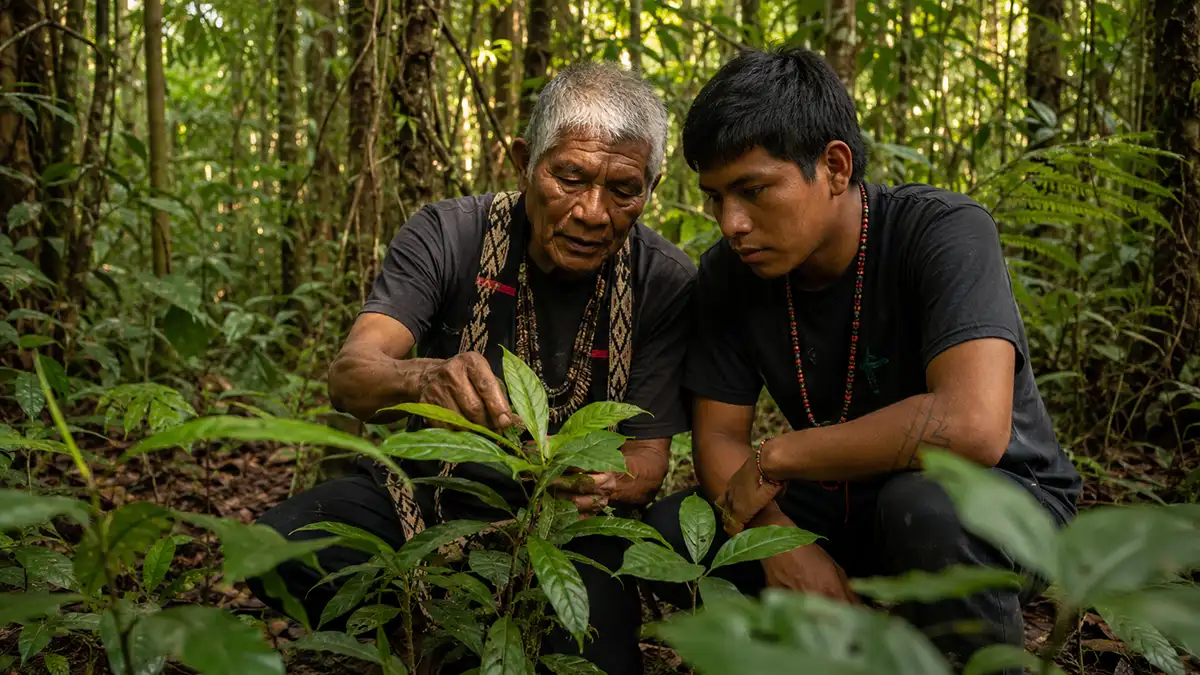

Rapéh and the Moon: How Lunar Cycles Enhance the Use of Sacred Medicines
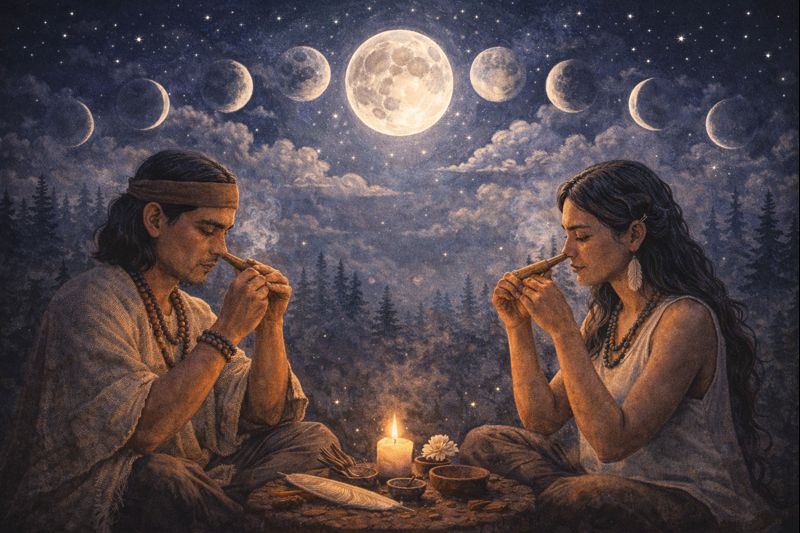
A Sacred Dialogue Between Earth and Sky
Since the dawn of time, humanity has lifted its gaze toward the moon, that luminous companion who follows us through the night. For Indigenous peoples, the moon is more than a celestial body—it is a teacher, a healer, and a mirror of our inner cycles. Its phases govern the tides, influence fertility, and shape the rhythms of ceremony.
Rapéh, the sacred snuff of the forest, shares this intimate dialogue with the moon. Prepared with sacred tobacco and the ashes of medicinal trees, it is a medicine of grounding and clarity. When aligned with the moon’s cycles, rapéh becomes more than a practice of presence; it becomes a ceremony of cosmic harmony, linking human breath with the pulse of the heavens.
This article explores how the phases of the moon can potentiate the use of rapéh, bringing us deeper into connection with the feminine energy of the cosmos and the wisdom of the forest.
The Moon in Indigenous Cosmologies
In Amazonian cosmovision, the moon is often seen as the grandmother—guardian of cycles, fertility, and dreams. Stories tell of her luminous body guiding hunters, healers, and lovers. Her waxing and waning reflect the eternal rhythm of birth, growth, death, and renewal.
For women, the moon is intimately linked to menstruation and fertility, known in many cultures as the moon time. For men and women alike, the moon symbolizes intuition, receptivity, and the unseen. To align with her phases is to remember that life itself is cyclical, never linear.
Rapéh, used with intention during these lunar transitions, becomes a bridge between earth and sky, body and spirit, masculine and feminine.
The Phases of the Moon and Their Medicines
New Moon: Seeds of Intention
The new moon is the dark womb of the sky, a time when no light is visible, and everything is hidden beneath the veil of potential. It is the moment of planting intentions, of inner silence, of preparing the ground for growth.
Using rapéh during the new moon can be a powerful practice of grounding. The medicine clears the mind of distractions, opening space for seeds of prayer and vision to be planted. A ritual of rapéh at this time might include sitting in silence, connecting with the breath, and asking: What do I wish to cultivate in the coming cycle?
In feminine energy, the new moon corresponds to menstruation—a time of release, rest, and renewal. Rapéh can support the clearing of heavy energies and the return to center.
Waxing Moon: Growth and Expansion
As the moon begins to grow in light, so too does our energy expand. The waxing moon is a time of action, movement, and nourishment of intentions.
Rapéh during this phase enhances focus and clarity. It can be used in meditation to strengthen the vision planted in the new moon, to clear doubts, and to align with determination. For those working on projects, studies, or healing journeys, rapéh supports discipline and the steady growth of energy.
The waxing moon embodies the maiden archetype—the young feminine energy of vitality, curiosity, and movement. To sit with rapéh under a waxing moon is to remember our capacity to grow and to pursue the light of our own becoming.
Full Moon: Illumination and Ceremony
The full moon is the great mother of light, radiant and powerful. In Indigenous traditions, this is a time of ceremony, gathering, and prayer. The full moon amplifies everything—our joy, our sorrow, our clarity, and our confusion. It is a mirror of the soul.
Rapéh under the full moon can be profoundly transformative. The medicine helps to anchor the expansive energies, bringing balance and clarity amidst the flood of illumination. It can be used before or during ceremonies to focus intention, protect against dispersal, and open the heart to communion.
For women, the full moon is often linked with ovulation—a time of fertility, creativity, and radiant energy. Rapéh here can be a channel to honor the creative power of the feminine.
The full moon also symbolizes collective energy. To sit in circle, sharing rapéh under the moonlight, is to align with the ancient rhythm of community and prayer.
Waning Moon: Release and Reflection
As the moon begins to wane, energy turns inward. This is the phase of letting go, of cleansing, of preparing for closure. Just as leaves fall from trees, so too must we release what no longer serves.
Rapéh in the waning moon is a medicine of purification. It helps us to clear dense energies, to reflect on the lessons of the cycle, and to surrender. During this time, rapéh can be accompanied by prayers of release—writing down what is ready to be let go, offering it to the fire, the river, or the earth.
The waning moon corresponds to the wise woman, the crone archetype, carrying the energy of maturity, wisdom, and endings. Rapéh becomes a support for deep reflection and the courage to embrace transitions.
Rapéh and Feminine Energy
Though rapéh is used by men and women alike, its connection to the moon reveals its resonance with the feminine principle. The medicine teaches receptivity: rather than forcing, it invites surrender. Rather than distraction, it offers presence. Rather than dominance, it teaches balance.
To use rapéh in alignment with the moon is to awaken the feminine qualities within all of us: intuition, listening, patience, and cyclical wisdom. It reminds us that healing and transformation do not happen in straight lines but in spirals.
Indigenous women often prepare blends with plants associated with feminine energy—such as white roses, cacao, or gentle barks—bringing balance and softness. These blends, used under specific lunar phases, are said to harmonize the heart and womb.
Ceremonial Practices: Creating Lunar Rituals with Rapéh
- New Moon Ceremony:
- Sit in darkness or by candlelight.
- Apply rapéh with the prayer of planting intentions.
- Write down what you wish to cultivate and bury it in the earth.
- Sit in darkness or by candlelight.
- Waxing Moon Ritual:
- Use rapéh before meditation or study.
- Focus on clarity and perseverance.
- Offer a song or prayer to the growing moon.
- Use rapéh before meditation or study.
- Full Moon Circle:
- Gather in community.
- Share rapéh in sacred space.
- Dance, sing, or meditate under moonlight, asking for illumination and blessings.
- Gather in community.
- Waning Moon Release:
- Use rapéh in silence.
- Reflect on what needs to be released.
- Burn or release prayers into water as an act of surrender.
- Use rapéh in silence.
The Moon, Rapéh, and Modern Life
In modern society, we often live disconnected from lunar rhythms. Artificial light and constant schedules blur the natural cycles of rest and renewal. Yet the body and spirit still respond to the moon—whether we notice it or not.
Integrating rapéh with lunar cycles is a way of reclaiming this lost connection. It is a reminder that we are part of a cosmic dance, influenced by the same forces that move the tides. To pause and align medicine with the moon is to remember that healing is not separate from nature—it is nature itself.
Breathing with the Moon
Rapéh and the moon together weave a tapestry of earth and sky. One anchors, the other illuminates. One clears, the other reflects. Together they teach us how to live in rhythm with the cycles of life.
To receive rapéh under the guidance of the moon is to breathe with the cosmos, to embody the feminine wisdom of cycles, and to step into ceremony not as an event but as a way of being.
As the moon waxes and wanes, so too do we. And just as dawn flowers awaken with mist, our souls bloom when we align with the greater rhythm. Rapéh, in the presence of the moon, becomes not only medicine of the forest but also medicine of the stars.
Continue exploring
All stories
The medicines of the forest