Hidden Treasures of the Amazon: Sacred Uses of Little-Known Plants

Exploring the Mystical Powers of Nature’s Quiet Guardians
When we think of the Amazon rainforest, the mind often leaps to towering trees, colorful birds, and the mighty Ayahuasca vine. But hidden beneath the green canopy lies an even richer world — a secret garden of lesser-known plants, each carrying ancient wisdom, healing powers, and sacred meaning.
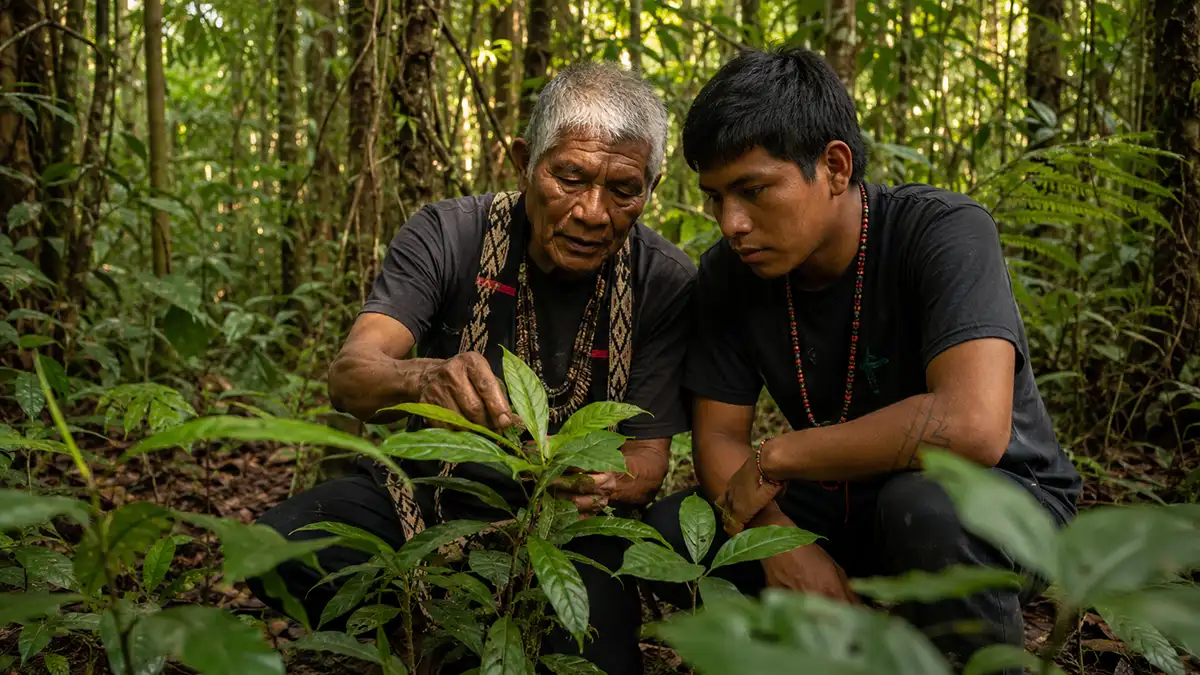
In the deep heart of the forest, far from modern maps and minds, indigenous peoples have built a relationship with plants so intimate that each leaf, root, and flower carries a story. These are not mere resources — they are teachers, protectors, and allies.
Today, we invite you on a journey to meet some of these hidden treasures. These are the quiet guardians of the rainforest — plants you may have never heard of, but whose spirits still whisper through the trees, offering gifts to those willing to listen.
Jatobá: The Tree of Vitality
Sturdy, ancient, and full of life, the Jatobá tree (Hymenaea courbaril) stands as a symbol of endurance. Indigenous communities see it as a source of strength and protection.
Its bark and fruit are revered for their energizing properties. A tea made from Jatobá bark is traditionally used to fortify the body, strengthen the immune system, and restore vitality after illness or exhaustion. It is considered a sacred gift for warriors — not to provoke aggression, but to restore the courage to live fully.
Sacred Lesson: In times of fatigue, seek not quick fixes but deep renewal from the heart of the Earth.
Breu Branco: The Sacred Smoke
Imagine walking through the forest and encountering a sweet, resinous scent hanging in the air. You have likely found Breu Branco (Protium heptaphyllum).
Breu Branco resin is gathered with care and reverence. When burned, it releases a white smoke said to clear negative energies, harmonize spaces, and connect the physical with the spiritual world. For many tribes, it is essential during ceremonies — a bridge between humans and spirits.
Today, Breu Branco remains a potent tool for cleansing, prayer, and anchoring positive energies.
Sacred Lesson: Purify your path, not by force, but by offering sweet smoke to the winds of life.
Cumaru: The Seed of Dreams
Known as the “Brazilian Tonka Bean,” Cumaru (Dipteryx odorata) carries a strong vanilla-like fragrance that seems to linger not just in the air, but in the memory.
In the Amazon, Cumaru seeds are considered powerful amulets. They are carried for protection, to attract love, and to sweeten one’s path. Their enchanting aroma is believed to open pathways to deeper dreams and spiritual visions.
Some indigenous groups create perfumes and ritual oils using Cumaru, invoking joy and heart-centered clarity.
Sacred Lesson: Sometimes the door to new possibilities is not broken down — it is sweetly opened.
Mulungu: The Tree of Calm Waters
In the ever-shifting currents of life, sometimes what we need most is stillness. Mulungu (Erythrina mulungu) is the plant that offers exactly that.
Used traditionally as a calming agent, Mulungu bark is brewed into teas to ease anxiety, promote restful sleep, and quiet the mind before ceremonial work. It is not seen merely as a sedative, but as a gentle guide back to the center of one’s being.
For healers, Mulungu is the song of the river when the storm has passed.
Sacred Lesson: True peace is not found outside you; it grows from the silence within.
Pau Pereira: The Warrior’s Shield
Bitter and powerful, Pau Pereira (Platycyamus regnellii) is another hidden gem used for strength and protection. In traditional medicine, its bark is prepared to fight infections and boost the body’s defenses.
Spiritually, Pau Pereira is called upon as a shield — strengthening not just the body, but the spirit. Warriors and healers alike have relied on its properties to maintain clarity and resilience amid challenges.
Sacred Lesson: Protection comes not from walls, but from the strength rooted deep within your being.
Andiroba: The Healing Oil of the Ancestors
The thick, golden oil of the Andiroba tree (Carapa guianensis) has long been used as a sacred salve for the body and soul. Indigenous peoples apply it to heal wounds, repel insects, and soothe inflammation.
But Andiroba is more than a physical remedy. In some traditions, it is massaged into the skin before rituals, sealing and strengthening the energy field, preparing the individual for spiritual work.
It is a plant that reminds us that healing is both seen and unseen.
Sacred Lesson: Healing is not merely the mending of flesh, but the anointing of spirit.
Murici: The Guardian of Health
Small and unassuming, the Murici tree (Byrsonima crassifolia) holds immense power. Its leaves and bark are used to treat infections and strengthen immunity.
In sacred traditions, Murici is valued for “clearing the path” — helping the body, mind, and soul release what no longer serves. It is often included in the preparation of sacred Rapéh snuff, sharpening the senses and anchoring presence.
Sacred Lesson: Before you can be filled with new life, you must first be willing to empty your hands.
Kambô and the Frog’s Song
Though technically not a plant, no list of Amazonian sacred remedies would be complete without mentioning the spirit of the Kambô frog (Phyllomedusa bicolor).
Indigenous groups apply the frog’s secretions in ritual ceremonies designed to purge physical toxins and spiritual heaviness. It is seen as a powerful reset — a clearing of the body’s energetic channels.
The forest teaches that healing often requires courage — the willingness to face discomfort for the sake of true renewal.
Sacred Lesson: Transformation is not always gentle, but it always leads you home.
Why These Plants Remain Hidden
You might wonder: if these plants are so powerful, why aren’t they world-famous like Ayahuasca or Guaraná?
Perhaps the answer lies in their very nature. They are humble. They work quietly, subtly, teaching patience, presence, and respect. They remind us that not every healing needs fireworks — some healings are like soft rains, changing the world one drop at a time.
In indigenous cultures, these plants are not commodities. They are relatives. They are approached with songs, prayers, and offerings. To truly work with them is to enter a relationship, not to take, but to receive with gratitude.
How to Honor These Sacred Plants Today
Even if you live far from the Amazon, you can honor the spirit of these sacred allies:
- Respect: Learn about plants with humility, not entitlement.
- Sustainability: Support ethical and regenerative harvest practices.
- Gratitude: Offer thanks — even silently — whenever you use nature’s gifts.
- Presence: Slow down enough to listen. Healing often speaks softly.
By walking this path, you honor not just the plants, but the wisdom of the ancestors who have protected them for millennia.
Walking the Forest’s Hidden Paths
The Amazon’s loudest teachers are sometimes its quietest.
Not every medicine shouts.
Some whisper.
Some hum ancient songs beneath the leaves.
Some wait patiently for you to notice.
As you move through your days, may you remember:
Healing is not only found in famous remedies or grand ceremonies.
It is also found in the unseen, the small, the humble —
In the hidden treasures of the Earth that, like you, are sacred beyond measure.
May your path be blessed with the soft power of these plants,
And may your life blossom like the hidden gardens of the rainforest.
Continue exploring
All stories
The medicines of the forest