Forest Wisdom
Ancient Teachings for the Climate Crisis
How the Heart of the Amazon Can Guide Humanity Toward Regeneration
As the world heats up, glaciers melt, and forests fall, many wonder: Can we still change course?
The answers we desperately seek — for healing, for balance, for survival — may not be found in technology alone. They may be found in the deepest roots of human memory, where we once lived not against nature, but with it.
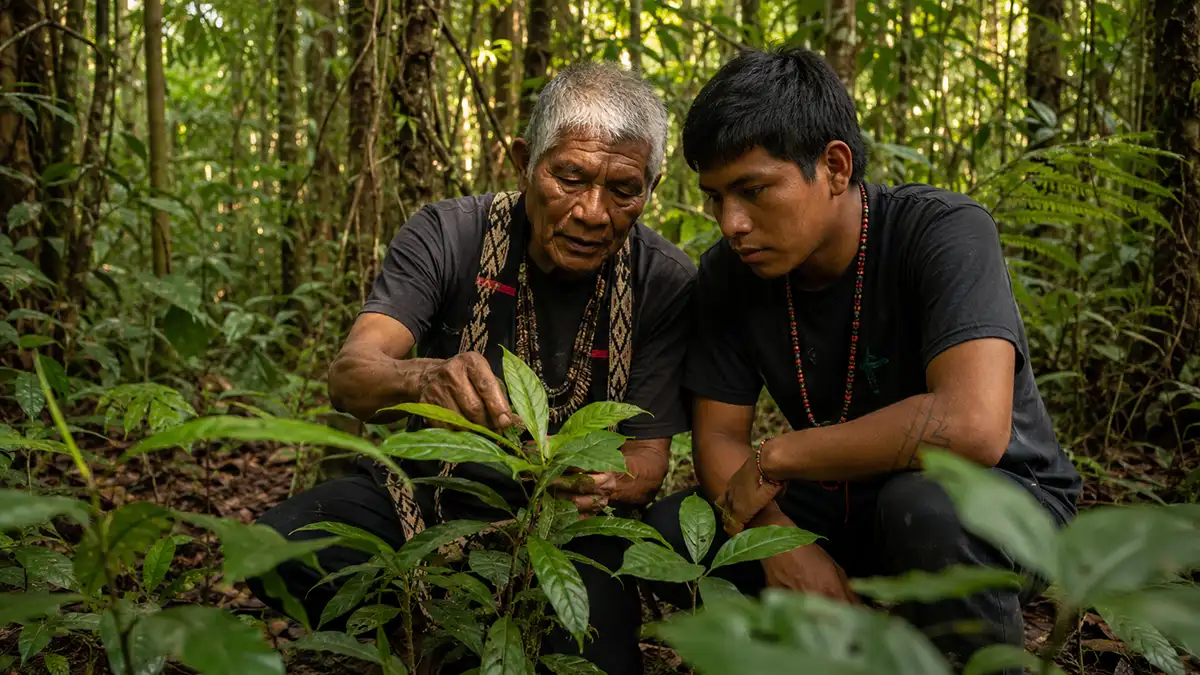
In the green cathedral of the Amazon rainforest, a different kind of knowledge still breathes. It is a wisdom older than civilization, carried in the songs of the rivers, the rhythms of the seasons, and the quiet teachings of the trees.
Today, we open our hearts to this ancient intelligence. Not to imitate the past, but to weave it into a new future — one that honors life, embraces connection, and dares to dream beyond survival toward thriving.
The Climate Crisis: A Crisis of Relationship
At its core, the environmental crisis is not just about carbon emissions or resource extraction — it is about relationship.
Somewhere along the path of history, humanity forgot its place within the web of life. We began to see ourselves as separate from nature, masters instead of kin.
This illusion of separation birthed exploitation, and exploitation birthed collapse.
Indigenous traditions of the Amazon never forgot the truth:
We are the forest. We are the river. We are the sky.
Healing the Earth requires healing our relationship with her. And for that, the wisdom of the forest is not optional — it is essential.
Lesson 1: Everything Is Connected
In the Amazonian worldview, nothing exists in isolation.
The river feeds the trees, the trees feed the animals, the animals feed the Earth — and the Earth feeds us all.
This interconnectedness mirrors what modern science now confirms: the health of the forest affects rainfall patterns across continents, stabilizes the climate, and supports the very breath we take.
But beyond ecology, the forest teaches that every action carries consequences — seen and unseen. Cutting down a tree is not just removing wood; it is disrupting a family of relationships.
Climate Solution: Adopt systems thinking. Recognize that social, ecological, and economic issues are interwoven — and must be healed together.
Lesson 2: Reciprocity, Not Extraction
In Amazonian cultures, taking from nature without giving back is unthinkable. Harvesting a plant, hunting an animal, even using fire — all are done with prayer, offering, and gratitude.
Contrast this with modern economies built on endless extraction — taking without limit, without balance, without acknowledgment.
The forest shows us a different path: reciprocity.
Take only what is needed.
Give thanks.
Restore what has been given.
Climate Solution: Redefine prosperity. Shift from economies of endless growth to economies of regeneration, gratitude, and stewardship.
Lesson 3: Diversity Is Strength
The Amazon is the most biodiverse place on Earth, home to millions of species — many still unknown to science.
This diversity is not random. It is resilience. It is what allows the forest to adapt, evolve, and survive through millennia of change.
In monocultures — whether of crops, economies, or ideas — vulnerability grows. In diversity, life thrives.
Climate Solution: Protect biodiversity at all levels — ecological, cultural, and even ideological. Celebrate multiplicity, for it is the engine of survival.
Lesson 4: Listen to the Land
For thousands of years, indigenous peoples have lived by listening — not commanding — the land.
The migration of birds, the flowering of plants, the changing winds — all offer guidance.
Today, we rely heavily on data models and satellite images. But the forest reminds us that the land itself is alive, communicating in ways beyond numbers.
Listening requires humility, patience, and presence — qualities sorely missing from much of modern environmental management.
Climate Solution: Integrate indigenous ecological knowledge into climate policy. Treat traditional knowledge as sacred science.
Lesson 5: The Sacredness of All Life
Perhaps the deepest lesson the forest offers is this: life is sacred.
Not just human life, but all life — visible and invisible, grand and humble.
When you walk through an untouched part of the Amazon, there is a palpable sense of reverence, as if stepping into a living temple. Every leaf, every insect, every drop of water matters.
Treating life as sacred transforms how we act. It moves environmentalism from obligation to devotion.
Climate Solution: Reawaken reverence. Inspire a cultural shift where caring for the Earth is not a duty, but a sacred privilege.
The Forest as a Model for Human Systems
The forest is not just a teacher; it is a living model of sustainable design.
Imagine if our cities, economies, and communities mirrored the intelligence of the rainforest:
- Circular economies where waste becomes nourishment.
- Social systems based on cooperation rather than competition.
- Architectures that breathe and grow in harmony with the seasons.
- Energy systems fueled by the sun, water, and life itself.
The future is not about escaping nature through technology.
It is about co-evolving with nature, inspired by her deepest patterns.
Indigenous Leadership: The True Climate Leaders
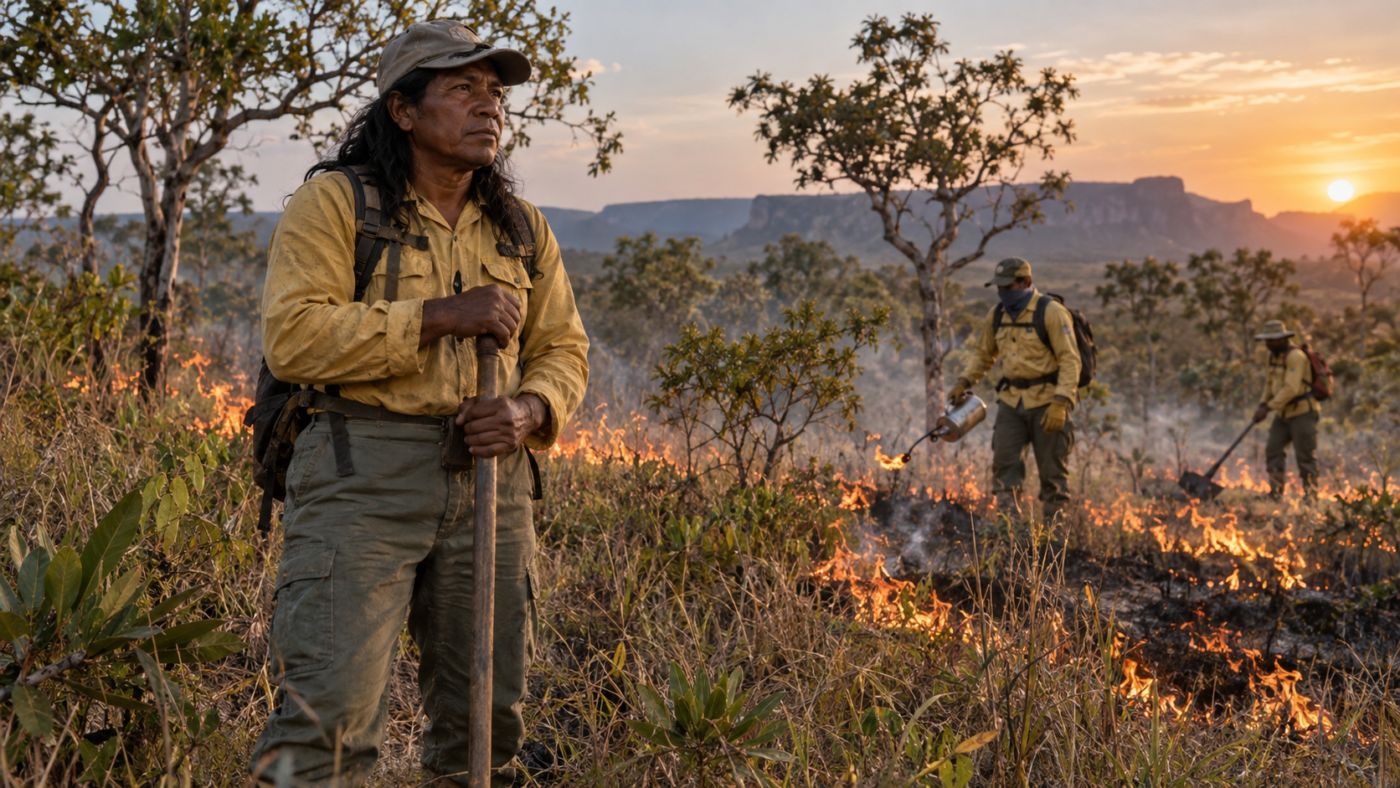
Across the Amazon, indigenous communities continue to protect the rainforest at great personal risk.
Studies show that territories managed by indigenous peoples have lower rates of deforestation and greater biodiversity than protected areas managed by governments.
These communities are not relics of the past. They are pioneers of the future — living examples of how humans can exist in balance with the planet.
Supporting indigenous rights, voices, and knowledge is not charity; it is survival wisdom for us all.
What We Can Do, Starting Now
You don’t have to live in the Amazon to honor its wisdom. You can:
- Support organizations led by indigenous peoples.
- Educate yourself and others about traditional ecological knowledge.
- Transform your consumption patterns toward sustainability and reciprocity.
- Advocate for policies that protect biodiversity and indigenous land rights.
- Rewild your own life — seek deeper connection with local nature, no matter where you live.
Every action, every choice, every prayer counts.
In the web of life, there are no small acts.
A New Dream Rooted in Old Wisdom
In the heart of the Amazon, the trees dream.
They dream of rivers flowing free, of jaguars roaming wild, of a world where humanity remembers.
The climate crisis is not just a call to innovate.
It is a call to remember — to root ourselves once again in the ancient wisdom that life is sacred, that everything is connected, and that we are here not to dominate, but to belong.
As we face this critical threshold, may we walk forward with the memory of the forest in our hearts.
May we become not the destroyers of Earth, but her guardians.
May we, like the trees, rise toward the light — together.
The answers are not out of reach.
They are beneath our feet, written in leaf and river and root.
Waiting for us to remember.
Waiting for us to begin again.
Continue exploring
All stories
The medicines of the forest