Children and the New Earth: The Role of Plant Medicines in the Education of the Future
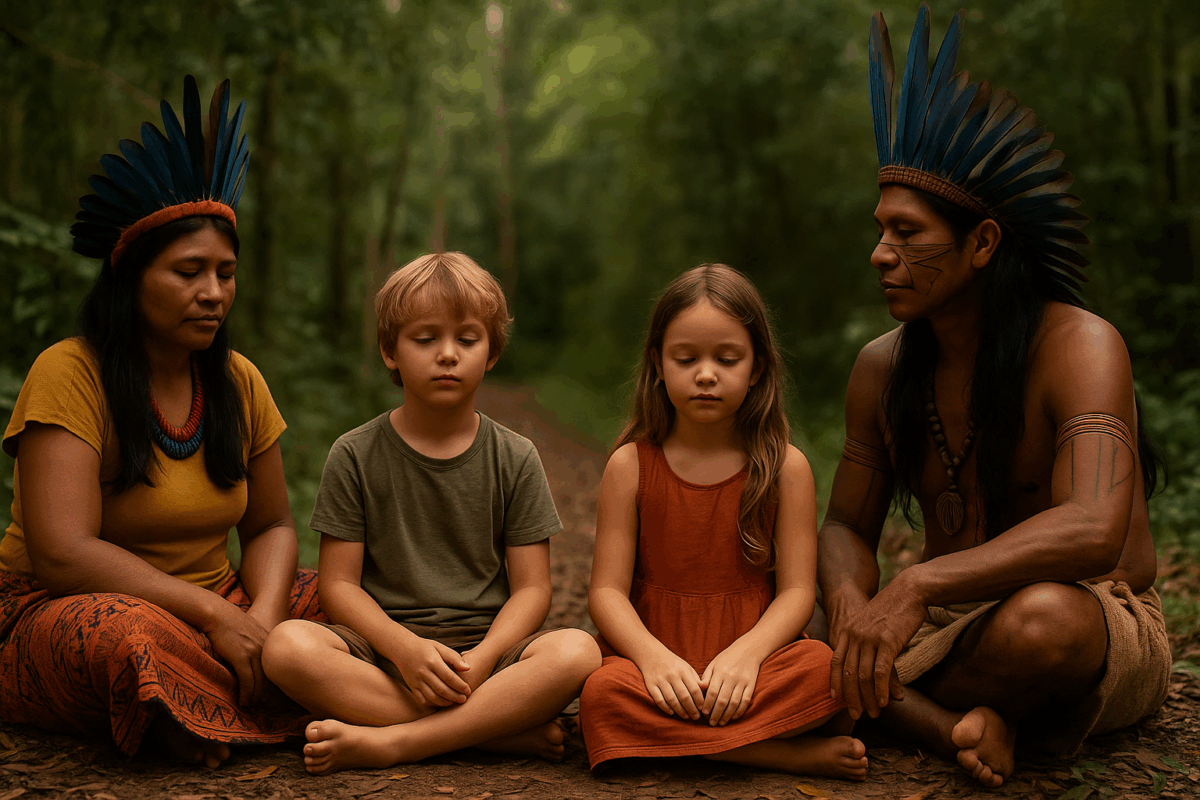
What the forest peoples can teach us about parenting, sensitivity, and wisdom from early childhood
Who Is Preparing the Future?
We are living through a time of deep transformation. Environmental instability, political uncertainty, and spiritual confusion mark an era of endings—but also of beginnings. Amid this global transition, a new kind of human is emerging: more sensitive, more intuitive, and more connected to nature and the spiritual world. These are often called the children of the new age—the ones being born to help dream a new Earth into being.
But this raises an urgent question: Who is educating these children? And perhaps more importantly: How are we educating them?
While modern educational systems continue to emphasize memorization, performance, and competition, Indigenous traditions offer another path—one that centers on connection, respect for the spirit, and learning through nature, ritual, and example. Within this approach, plant medicines are not seen as substances, but as teachers—and their role in the spiritual formation of future generations is profound.
The Indigenous View of Childhood
Among Indigenous forest communities, children are not considered “blank slates” or incomplete beings. They are spiritually whole, arriving with gifts and inner wisdom. The role of the community is not to mold them but to protect their essence and support their unfolding.
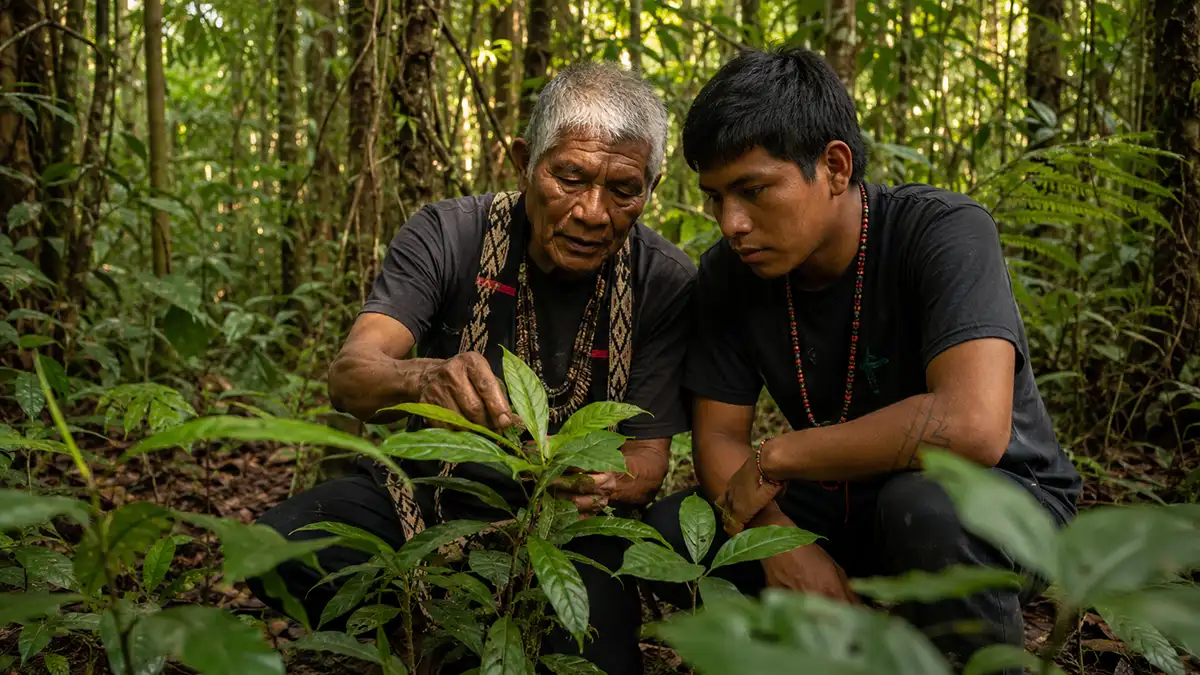
Rather than being treated as passive receivers of knowledge, children are engaged as active participants in life. They observe rituals, sit in circles, listen to the stories of elders, and experience nature directly—not through books or screens, but through their own feet, hands, eyes, and heart.
Education, in this worldview, is not something that happens to the child. It is something that happens with them, in relationship.
Learning by Living: The Sacred Curriculum of the Forest
In forest-based cultures, there is no separation between learning and living. Life itself is the school. From early childhood, children learn:
- The names and songs of plants
- How to walk gently through the forest
- How to listen to the wind, the animals, and the silence
- The importance of respect for elders and spirits
- The rhythms of the moon and the rain
- The meaning of dreams
These lessons are not taught through lectures or tests. They are transmitted energetically, emotionally, and spiritually—through presence, repetition, and example.
This form of education emphasizes connection over control, intuition over instruction, and balance over performance. It prepares the child not just for adulthood, but for a life in harmony with the Earth.
The Role of Plant Medicines in Indigenous Childhood
In some forest cultures, children are gently introduced to sacred medicines in small, guided doses—not as recreational experiences, but as rites of connection.
Medicines like Rapéh, Sananga, and even diluted forms of Ayahuasca are used in rituals to help clear energy, strengthen the spirit, and deepen the child’s relationship with the spiritual world.
This is done with the utmost care, guided by experienced pajés (shamans) or spiritual elders, and only when the child is ready. These practices are not imposed—they are offered as part of the child’s spiritual path.
Rather than fearing these substances, Indigenous communities revere them as allies in the journey of growth and awakening. The plants are considered sacred beings—guardians, teachers, and healers.
Why This Matters Now
Modern education often separates children from their natural instincts. Creativity is standardized. Intuition is dismissed. Spirituality is excluded. The result? Many children grow up disconnected from their bodies, their emotions, and the Earth.
They become anxious, overstimulated, and uncertain of who they are.
In this context, the wisdom of Indigenous education—and the careful, ceremonial use of plant medicines—offers a powerful alternative. Not as something to be copied superficially, but as something to inspire us to remember what true education really is: the art of awakening the soul.
We are not advocating giving medicines to all children—but we are inviting a deeper reflection on how to raise a generation that is connected, conscious, and whole.
Children of the New Earth: What Makes Them Different?
Many spiritual communities speak of a new generation of children who are arriving with unique sensitivities. These children are often:
- Highly intuitive or empathic
- Sensitive to noise, conflict, and artificial environments
- Deeply drawn to animals, plants, and the natural world
- Creative, expressive, and emotionally aware
- Questioning of authority and traditional systems
- Spiritually curious from a young age
These traits are not “problems” to be corrected—they are clues to a new human consciousness.
And yet, these children often struggle in systems that do not understand or support them. Schools may label them as hyperactive, shy, distracted, or defiant, when in reality they are simply reacting to environments that do not match their energetic frequency.
Educating the Soul, Not Just the Mind
To raise the children of the new Earth, we need a new educational paradigm. One that includes:
- Sacred time in nature as a core part of learning
- Rituals of gratitude and intention woven into the day
- Listening circles where every voice is honored
- Arts and storytelling as tools for emotional integration
- Energetic hygiene—like smudging, silence, or breathing practices
- Learning through doing—gardening, cooking, building, and exploring
Most importantly, we must raise children not to fit into the old world, but to dream a better one into being.
Parents and Educators as Guides, Not Authorities
In Indigenous communities, adults are not seen as superior to children. They are simply further along on the spiral of life. Their role is not to dominate, but to guide with humility.
This principle invites modern parents and educators to shift from controlling to accompanying.
Instead of asking, “How do I make my child succeed?”
We can ask, “What is this child here to bring?”
Instead of thinking, “I need to shape their future,”
We can reflect, “How can I help them remember who they already are?”
This approach fosters trust, respect, and spiritual freedom—qualities that are desperately needed in the new Earth we hope to create.
Plant Medicines as Mirrors for Parents and Educators
Interestingly, plant medicines are not only tools for children. They are often more urgently needed by the adults raising them.
When parents or teachers work with sacred plants like Ayahuasca, Rapéh, or Sananga in respectful ceremonial settings, they often confront their own childhood wounds, unconscious fears, and outdated patterns.
This healing allows them to relate to children from a place of presence rather than projection.
By facing their own shadows, they stop passing them on. They become clearer mirrors in which the child can see themselves safely.
Ethics, Consent, and Cultural Integrity
It’s important to emphasize that the ceremonial use of plant medicines with children should never be imposed, romanticized, or commercialized. These practices belong to specific cultural and spiritual contexts, and must be approached with the utmost respect.
No child should ever be given plant medicines without full understanding, consent, and the guidance of a qualified spiritual leader.
That said, the spirit of these practices—connection with nature, reverence for the sacred, holistic healing—can inspire all of us to rethink how we raise and educate our young.
A Future Rooted in Wisdom
The crisis of modern education is not only about outdated methods—it’s about a loss of purpose. Why are we educating children? To perform in a machine? Or to awaken their gifts?
If we truly want to build a New Earth, we must start with those who will inherit it.
That means educating not just their minds, but their hearts, their intuition, and their spirits. It means creating space for sensitivity, vision, silence, and soul.
And in this journey, the ancestral knowledge of the forest—including the sacred use of plant medicines—offers a compass. Not to copy blindly, but to listen humbly.
Teaching with the Earth, Not Against It
The children of today carry the seeds of tomorrow. They are not here to continue the old systems—they are here to regenerate them.
Our role is to provide soil that nourishes those seeds. Soil rich in truth, presence, nature, and love.
We may not all live in the forest—but the spirit of the forest can live in us. In how we speak. In how we listen. In how we guide.
Let the teachings of the plants remind us: healing is possible. Vision is possible. A new way is possible—if we are willing to learn again, with the humility of a child.
At Queen of the Forest, we honor the wisdom of Indigenous peoples and offer sacred medicines ethically and respectfully to those who walk the path of healing and remembrance.
Continue exploring
All stories
The medicines of the forest