Sacred Ashes: Why Many Rapé Blends Contain Tree Ash
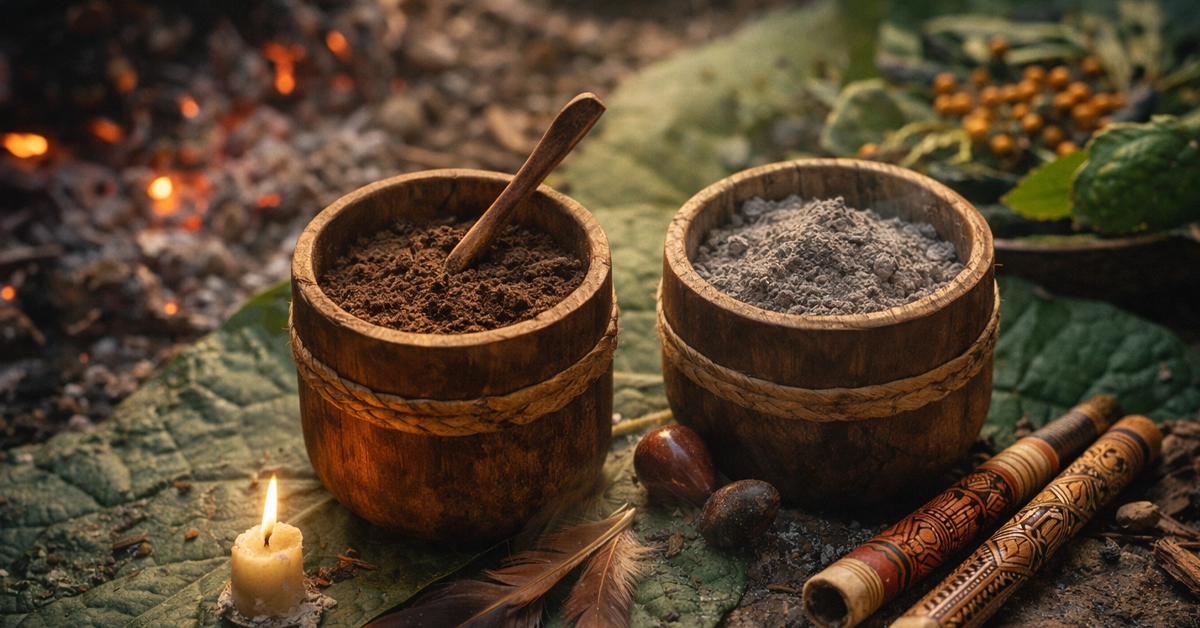
Understanding the ancestral role of sacred tree ashes in the preparation and spiritual power of Amazonian rapeh
Among the many mysteries surrounding the sacred medicines of the forest, one of the most intriguing for newcomers is the presence of ashes in rapé blends. At first glance, the idea may seem unusual. Modern cultures tend to associate ash with something that has been burned away, something finished or discarded. Yet within Indigenous traditions of the Amazon, ash holds a profoundly different meaning. It represents transformation, purification, and the distillation of the spirit of the forest. Far from being a mere additive, sacred ash is one of the defining elements that give rapé its unique energetic, physical, and ceremonial character.
To understand why tree ashes are included in rapé, one must begin by recognizing that rapé is not simply a powdered tobacco product. It is a carefully prepared medicine that emerges from centuries of relationship between Indigenous peoples and the living intelligence of the rainforest. Each blend reflects the knowledge of particular tribes, families, and healers who have learned how plants interact with the body, the mind, and the subtle energetic layers that traditional cosmologies describe. Within this knowledge system, every ingredient serves a purpose.
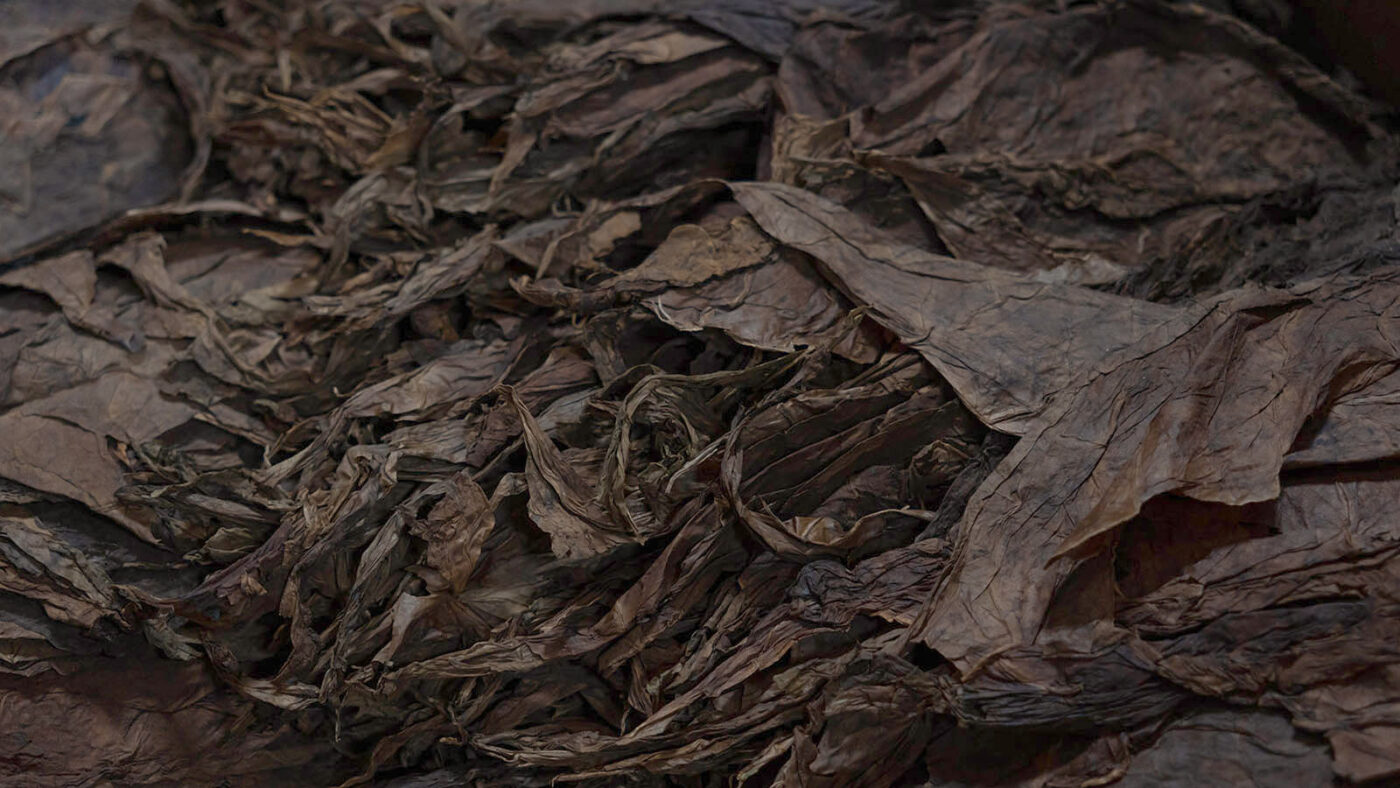
Sacred tobacco itself forms the foundation of most rapé blends. Known in many parts of the Amazon as mapacho, this powerful plant has long been revered as a teacher and protector. Unlike commercial tobacco, which is cultivated primarily for nicotine extraction and industrial consumption, sacred tobacco is treated as a spiritual ally. Its leaves are harvested with intention, cured slowly, and often prepared within ritual contexts that include prayer, chanting, and blessings. When transformed into rapé, tobacco becomes a tool for grounding the mind, sharpening awareness, and clearing energetic stagnation.
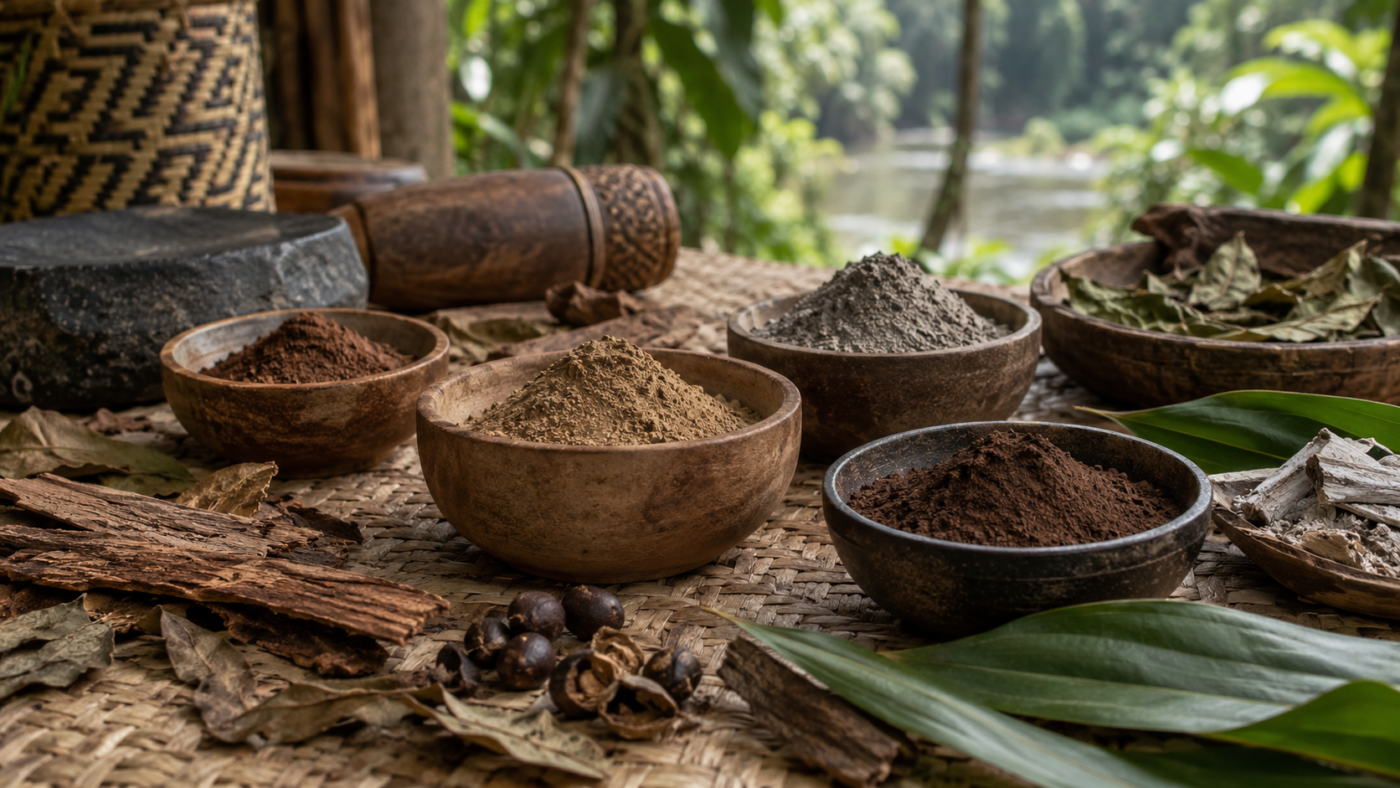
Yet tobacco alone does not create rapé. The inclusion of tree ash is what activates the full potential of the medicine. Indigenous knowledge recognizes that certain ashes possess properties capable of enhancing the way tobacco interacts with the body. These ashes are produced by carefully burning specific tree barks or woods that have been selected for their unique qualities. Once the wood is reduced to ash, it is finely sifted to create an extremely delicate powder that blends seamlessly with the powdered tobacco leaves.
From a practical perspective, ash alters the chemical environment of the blend. Tobacco naturally contains alkaloids that become more readily absorbed when combined with alkaline substances. Tree ash, being alkaline, changes the pH of the mixture in a way that facilitates the rapid absorption of these compounds through the nasal membranes when rapé is administered. This process allows the medicine to enter the bloodstream quickly, creating the characteristic clarity, grounding, and energetic shift that experienced users recognize.
However, reducing the role of ash to chemistry alone would overlook the deeper dimensions understood by the tribes who developed these preparations. For many Indigenous healers, the ashes of particular trees carry the spirit of those trees. Fire, in this context, is not simply destruction but transformation. When a tree is burned with intention, its physical form dissolves while its essence remains in the ash. The resulting powder becomes a concentrated expression of the tree’s energetic signature.
Different trees produce ashes with distinct qualities, and many rapé blends are known by the names of the trees whose ashes they contain. Tsunu, Murici, Cumaru, Pau Pereira, and the towering Samaúma, the Queen of the Forest, are commonly referenced in Amazonian traditions. Each of these trees is associated with particular attributes. Some are believed to strengthen the body, others to calm the mind, and still others to enhance spiritual protection or clarity. When their ashes are combined with sacred tobacco, the resulting blend reflects a dialogue between plant spirits.
The preparation of these ashes is itself a ritual process. The wood must often be harvested in a respectful manner, sometimes accompanied by prayers or offerings. It is then burned slowly until it becomes fine, pale ash. In many cases the ash is passed through cloth or fine mesh repeatedly until it reaches a consistency softer than flour. Only then is it considered suitable for blending with tobacco. This meticulous attention to detail reflects the understanding that the quality of the ash influences the entire medicine.
In the worldview of many Amazonian peoples, fire acts as a purifier that liberates the subtle essence of plants. When wood becomes ash, it is believed that the spirit of the tree becomes more accessible. The ash no longer carries the dense physical structure of bark and fibers; instead, it represents the refined energy of the plant after it has passed through the transformative element of fire. Incorporating this ash into rapé allows the user to receive that refined energy directly.
Another dimension of ash relates to balance. Sacred tobacco is a powerful plant that can stimulate the nervous system and awaken the mind. Tree ash helps moderate and harmonize this intensity. The combination creates a medicine that grounds as much as it stimulates. Users often describe the experience as a sudden clearing of mental fog, followed by a deep settling of awareness into the body. The ash plays a subtle but essential role in achieving this equilibrium.
Ash also carries symbolic significance within many Indigenous cosmologies. Fire, earth, air, and water are seen as fundamental elements that shape existence. Ash represents the meeting point of fire and earth. It is matter that has passed through flame and returned to the ground in purified form. In this sense, ash embodies the cycle of transformation that lies at the heart of natural processes. Including ash in rapé reminds participants that healing often involves the burning away of what is no longer needed so that clarity can emerge.
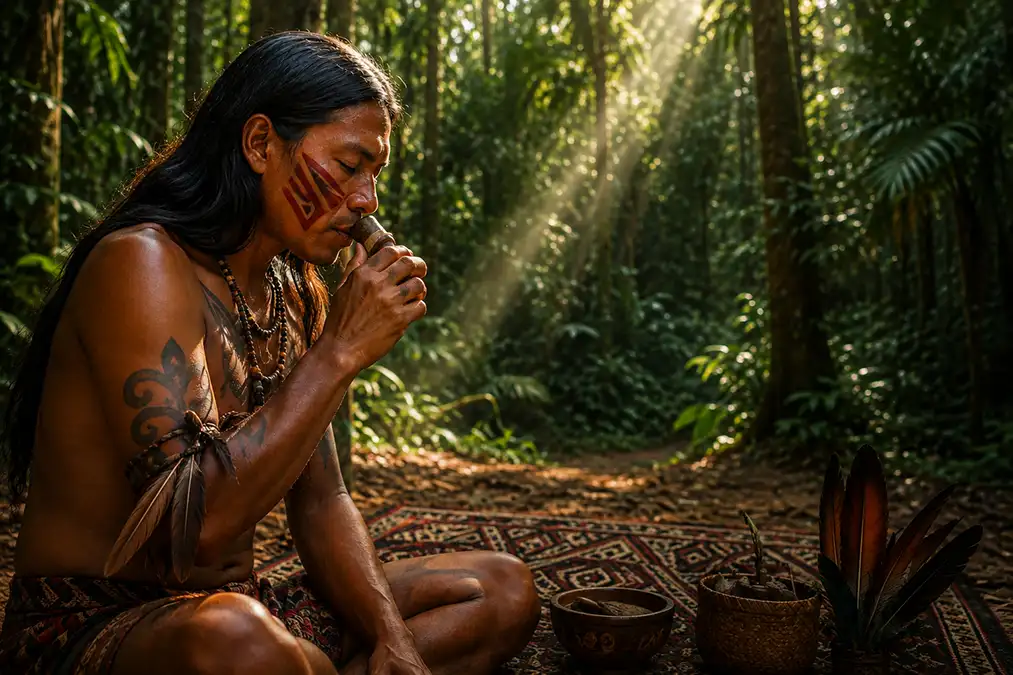
The act of administering rapé itself reflects this transformative symbolism. When the medicine is blown into the nostrils using a kuripe or tepi applicator, it enters the body with sudden force. The sensation can be intense, often bringing tears to the eyes and a rush of heat through the head. Yet within moments this intensity gives way to a feeling of alignment and calm. Many practitioners interpret this as a cleansing of stagnant energies or distracting thoughts. The ashes in the blend support this process by helping the medicine penetrate deeply and evenly.
For the tribes who maintain these traditions, rapé is rarely used casually. It is often part of prayer, meditation, healing work, or communal gatherings where participants seek clarity and connection. The ashes in the blend are therefore understood as carriers of ancestral knowledge. They represent the forest itself participating in the ceremony, offering its strength and wisdom through the plants that compose the medicine.
The diversity of ash types also contributes to the remarkable variety of rapé blends found throughout the Amazon. Each tribe or family may favor particular trees based on generations of observation and experience. Some blends are known for their grounding qualities, others for their ability to quiet mental chatter, and others for their capacity to deepen introspection. The choice of ash is one of the factors that shapes these differences.
Beyond the physical and energetic roles of ash lies a more subtle message embedded within the tradition. Ash reminds us that transformation is an essential part of life. Just as wood must pass through fire to become ash, human beings must sometimes pass through challenges or discomfort to discover deeper clarity. The medicine mirrors this principle. Its initial intensity often gives way to profound stillness, suggesting that purification and peace are two sides of the same process.
Modern interest in rapé has grown rapidly in recent years as people around the world search for practices that reconnect them with nature and ancestral wisdom. Yet this growing curiosity also carries responsibility. Understanding the role of sacred ash helps cultivate respect for the knowledge systems that developed these medicines. These traditions are not random combinations of ingredients but carefully refined practices rooted in centuries of observation and spiritual relationship with the forest.
The trees whose ashes appear in rapé blends are themselves part of the rainforest’s living community. Protecting these forests therefore becomes inseparable from protecting the traditions associated with them. When people approach rapé with reverence, they are also acknowledging the intricate ecological web that makes such medicines possible.
Seen in this light, the presence of ash in rapé is not a minor detail but a reminder of the deeper philosophy behind Indigenous plant medicines. Every ingredient reflects a relationship between humans, plants, and the elements. Fire transforms wood into ash, ash activates tobacco, and tobacco carries intention into the body and mind. The result is a medicine that embodies the cooperation of earth, fire, air, and human consciousness.
Sacred ash, therefore, is not simply a functional component of rapé. It is a symbol of transformation, a bridge between plant spirits and human awareness, and a testament to the profound knowledge held by the cultures of the rainforest. Through the quiet presence of this fine powder, the forest speaks in a language older than written history.
In every breath of rapé, a fragment of the forest’s wisdom travels inward, reminding us that even what appears to be the end of something—like wood turned to ash—can become the beginning of clarity, balance, and renewal.
Continue exploring
All stories
The medicines of the forest