Endangered Species: The Silence Growing in the Forest
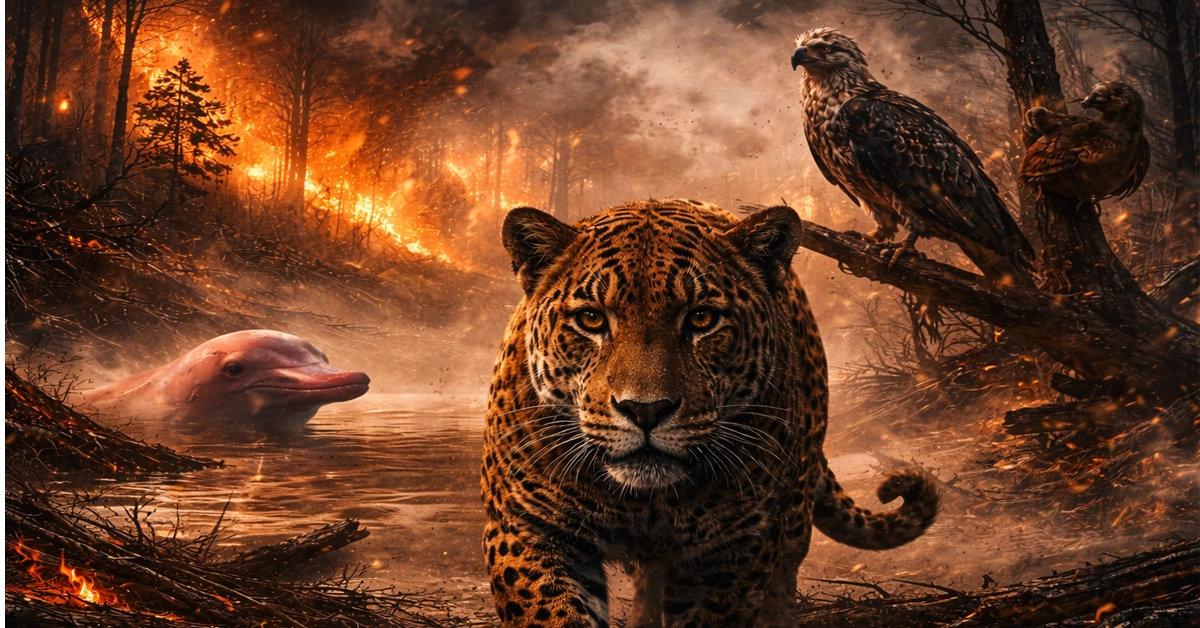
Endangered Species Forest: The Silent Crisis Threatening the Amazon
The endangered species forest is not something we immediately see — but it is something we can feel.
In many parts of the Amazon, the silence is growing. Where there were once calls, movements, and life, there are now spaces where something is missing.
This is not natural silence. It is absence.
The endangered species forest is a reflection of life slowly disappearing.
What Is an Endangered Species Forest?
The term endangered species forest refers to ecosystems where many animal and plant species are at risk of extinction.
In the Amazon rainforest, this includes mammals, birds, amphibians, and countless other forms of life.
When species begin to disappear, the entire ecosystem is affected. Each being plays a role. When one is lost, balance begins to shift.
Scientific studies confirm that biodiversity loss is one of the most critical environmental challenges today (source: Endangered species).
Why Species Are Disappearing in the Forest
There are multiple reasons why the endangered species forest is becoming a reality.
Deforestation removes habitats. Climate change alters ecosystems. Human expansion disrupts natural cycles.
These changes happen gradually, but their effects accumulate over time.
The result is a forest that still stands, but is no longer as alive as it once was.
The Silent Impact of Biodiversity Loss
One of the most striking effects of the endangered species forest is silence.
Fewer birds sing. Fewer animals move through the undergrowth. The soundscape of the forest changes.
This silence is not peaceful. It is a signal.
It tells us that something essential is being lost.
The Role of Animals in the Amazon Ecosystem
Every species in the forest contributes to the ecosystem.
Some disperse seeds. Others regulate populations. Some shape the landscape through their movement.
In an endangered species forest, these roles begin to disappear.
This creates imbalance, affecting not only wildlife but also plants, soil, and climate.
The Emotional and Spiritual Impact
Beyond ecological consequences, the loss of species carries a deeper weight.
The forest is not only a biological system. It is a living presence.
When animals disappear, something intangible is also lost — a connection, a memory, a relationship.
The endangered species forest is felt not only in numbers, but in presence.
Why This Matters Now
The changes happening in the Amazon are not distant or abstract.
They are happening now.
The endangered species forest is a warning that ecosystems are reaching critical thresholds.
What is lost cannot always be restored.
What Can Be Done to Protect the Forest
Protecting the forest requires awareness, responsibility, and action.
Supporting sustainable practices, respecting Indigenous knowledge, and reducing environmental impact all contribute to preserving biodiversity.
The forest does not need to be saved by force. It needs to be respected.
Connection and Awareness
Many people begin to understand the importance of nature through direct experience.
To walk in the forest, to listen, to observe — these experiences create awareness.
For those exploring deeper connection, our Rapéh Guide offers insights into traditional approaches to presence and respect.
You can also explore rapéh benefits to understand how awareness practices are approached responsibly.
Experience the Living Forest
The forest is still alive. But it needs attention.
Queen of the Forest supports Indigenous communities and offers sacred tools for adult practitioners, including our rapéh collection and handcrafted kuripe applicators.
These tools should always be approached with respect and awareness.
Conclusion: The Silence Is a Message
The endangered species forest is not empty.
It is changing.
The silence growing in the forest is not natural.
It is a message.
And it is asking to be heard.
FAQ About Endangered Species Forest
What is an endangered species forest?
It refers to forests where many species are at risk of extinction due to environmental changes.
Why are species disappearing in the Amazon?
Deforestation, climate change, and human activity are major causes.
Why is biodiversity important?
Biodiversity maintains balance and supports the health of ecosystems.
Can endangered species be protected?
Yes, through conservation efforts, sustainable practices, and respect for natural ecosystems.
Continue exploring
All stories
The medicines of the forest