Forest Medicines Are Not the Same Because We Are Not the Same
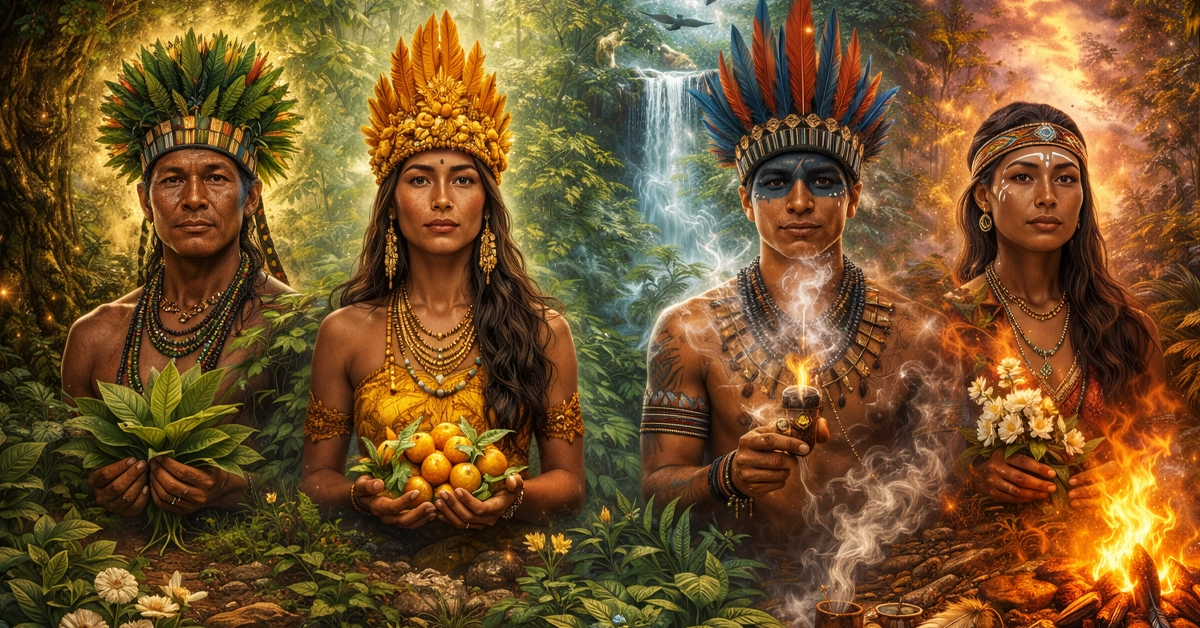
Diversity as the intelligence of the forest
One of the greatest misunderstandings carried into the modern relationship with sacred plants is the belief that healing should be uniform. That there is one medicine that works for everyone. One blend that is “stronger,” therefore better. One path that should be followed, repeated, standardized.
But the forest does not work this way.
The forest is not built on sameness. It is built on diversity. And that diversity is not accidental — it is intelligence.
Every leaf, every root, every tree, every medicine exists because it fulfills a specific role within a living system. Nothing is redundant. Nothing is generic. Nothing is meant to serve all functions at once.
And human beings are no different.
Each person carries a unique body, a unique nervous system, a unique emotional history, and a unique moment in time. To assume that one medicine should meet all of these differences equally is not only unrealistic — it is fundamentally unaligned with how nature operates.
Forest medicines are diverse because we are diverse. And this diversity is not a challenge to healing. It is the very mechanism that makes healing possible.
The Forest Does Not Repeat Itself
Spend enough time in the Amazon rainforest and one truth becomes unavoidable: repetition does not exist.
Two leaves from the same tree are never identical.
Two rivers never move with the same rhythm.
Two medicines prepared with the same plants never carry exactly the same energy.
This is not imperfection. This is life.
Indigenous wisdom has always recognized that the forest communicates through variation. Diversity is how the ecosystem adapts, survives, and responds to change. Uniformity would be fragile. Diversity is resilient.
Sacred forest medicines follow this same principle. They are not manufactured to eliminate difference. They are cultivated to honor it.
Each Plant Has a Personality
In Western frameworks, plants are often reduced to their chemical properties. Alkaloids, active compounds, measurable effects. While these aspects exist, they are only part of the story.
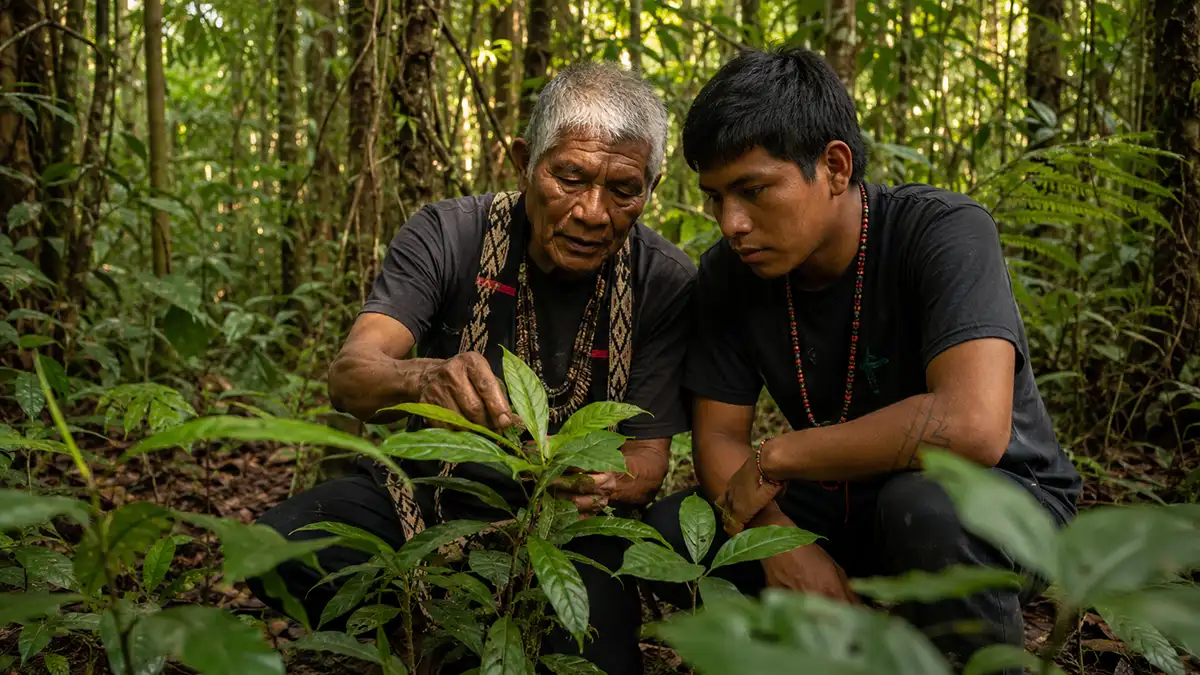
In indigenous Amazonian traditions, plants are understood as beings with personality.
Some are grounding and quiet.
Some are sharp and clarifying.
Some are gentle, emotional, maternal.
Some are direct, fiery, protective.
Some are subtle, expansive, almost invisible in their action.
These personalities are not metaphors. They are experiential realities passed down through generations of observation, ceremony, and relationship.
This is why two forest medicines made from different plants — even when used for similar purposes — feel entirely different in the body. One may bring stillness. Another may bring clarity. Another may bring emotional release. Another may bring silence.
The forest does not offer “better” or “worse” medicines. It offers different ones.
Each Person Is a Living Moment
Just as no two plants are the same, no two people are the same — and even the same person is not the same from one day to the next.
A person is not a fixed identity. A person is a moving moment.
Mood changes.
Energy shifts.
Life circumstances evolve.
The nervous system adapts.
The heart opens and closes in cycles.
What feels supportive today may feel excessive tomorrow. What felt subtle last month may feel profound now. What once felt overwhelming may later feel grounding.
Forest medicines respond to who you are now, not who you were yesterday.
This is why indigenous healing traditions emphasize listening over routine. The question is never “What medicine do you always use?” but “What medicine is appropriate now?”
Why the Forest Rejects Standardization
Modern systems thrive on standardization. It makes distribution efficient. It makes instruction simple. It makes outcomes predictable.
But healing is not an industrial process.
The forest does not seek predictability. It seeks balance.
Standardization flattens nuance. It assumes sameness where difference exists. And when applied to sacred plant medicines, it risks disconnecting the medicine from the context that gives it meaning.
In Amazonian cultures, medicines are not separated from the people who prepare them, the land they come from, or the intention behind their use. A medicine is not just a substance — it is a relationship.
To treat all medicines as interchangeable is to ignore this relationship entirely.
Rapé (Hapé): A Clear Example of Diversity
Rapé — also known as hapé — is often spoken about as if it were one thing. But anyone with real experience knows this is far from the truth.
Rapé is not a single medicine. It is a category of medicines.
Different tribes prepare rapé differently.
Different ashes carry different qualities.
Different plants introduce different energies.
Different intentions shape different outcomes.
Some rapé blends are deeply grounding.
Some are clarifying and mental.
Some are emotional and heart-centered.
Some are protective and strong.
Some are subtle and introspective.
To ask which rapé is “the best” is to misunderstand the medicine entirely. The correct question is: best for what, and for whom, and when?
Diversity Is Not Confusion — It Is Precision
From the outside, diversity can look chaotic. Too many options. Too many paths. Too many differences.
But inside a living system, diversity creates precision.
Because there are many medicines, the forest can respond accurately to many states of being. Because there are many plants, there are many forms of support. Because there are many expressions, there is room for adaptation.
If the forest offered only one medicine, it would fail most of the time.
Instead, it offers many — and teaches humans to choose with care.
The Role of Discernment in Sacred Plant Use
Discernment is the quiet skill at the heart of indigenous medicine traditions.
It is not about knowing more.
It is about listening better.
Discernment asks:
- What is my body asking for?
- What is my emotional state?
- What kind of support feels appropriate, not dramatic?
- Am I seeking balance, or escape?
Forest medicines respond best to discernment, not urgency.
When people seek the strongest medicine instead of the most appropriate one, imbalance often follows. Not because the medicine is wrong — but because it was chosen without listening.
The Forest as a Teacher of Difference
The forest does not teach through instruction manuals. It teaches through observation.
It shows that:
- No tree grows alone.
- No plant dominates the ecosystem.
- No species exists without relationship.
In this way, diversity is not just biological — it is philosophical.
The forest teaches that harmony does not come from sameness, but from coexistence. That balance is achieved not by eliminating difference, but by honoring it.
This teaching extends naturally to how medicines are used.
Moving Away from Hierarchies of “Strong” and “Weak”
One of the most damaging ideas imported into modern plant medicine culture is the hierarchy of strength.
Strong medicine.
Weak medicine.
Beginner medicine.
Advanced medicine.
The forest does not recognize these categories.
A grounding medicine may feel “weak” to someone seeking stimulation — yet be exactly what another person needs to stabilize their nervous system. A subtle medicine may feel insignificant to someone chasing intensity — yet open profound inner space for someone else.
Strength is contextual. Power is relational.
A medicine is not strong because it overwhelms. It is strong because it is appropriate.
Diversity as Protection Against Misuse
Another often-overlooked aspect of diversity is protection.
When medicines are diverse, misuse becomes more difficult. It forces people to pay attention. To slow down. To learn. To respect nuance.
Uniform systems invite careless use. Diverse systems require responsibility.
The forest, in its intelligence, has designed medicines that resist simplification. This is not an obstacle — it is a safeguard.
Returning to a Mature Relationship with Forest Medicines
A mature relationship with forest medicines does not seek certainty. It accepts complexity.
It understands that:
- There is no universal solution.
- There is no single correct path.
- There is no permanent answer.
Instead, there is an ongoing conversation between body, plant, and moment.
This conversation changes. And that change is the medicine.
The Forest Does Not Ask Us to Be the Same
Perhaps the most radical teaching of all is this: the forest does not ask us to be the same.
It does not ask us to heal in the same way.
It does not ask us to walk identical paths.
It does not ask us to use identical medicines.
It asks us to be attentive.
It asks us to be respectful.
It asks us to be present.
Forest medicines are not the same because we are not the same.
And that difference is not a flaw — it is the intelligence of life expressing itself.
Final Reflection
When diversity is understood as intelligence, choice becomes responsibility rather than confusion.
The forest does not overwhelm us with options. It offers us precision through variety.
And when we learn to meet that variety with listening rather than expectation, medicine becomes what it was always meant to be:
A relationship — not a rule.
Continue exploring
All stories
The medicines of the forest