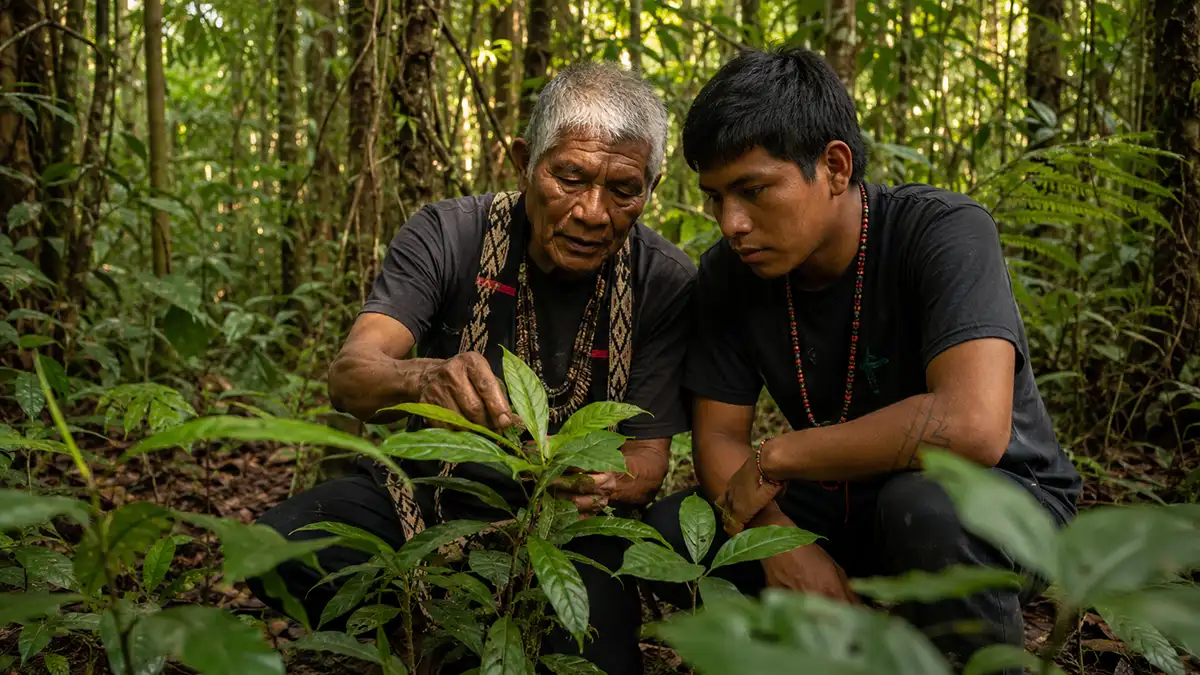

Seeds of Eternity: The Spiritual Role of Amazonian Fruits
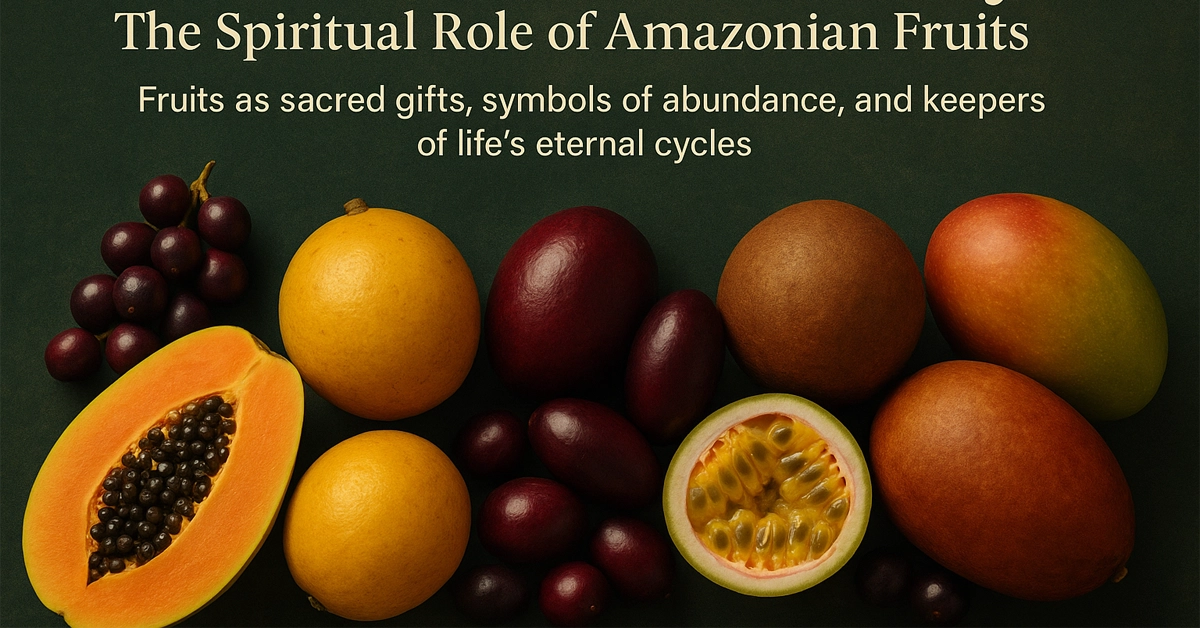
Fruits as sacred gifts, symbols of abundance, and keepers of life’s eternal cycles
More Than Food
In the heart of the Amazon rainforest, life bursts forth in endless diversity. Rivers flow like serpents, trees rise as pillars of green cathedrals, and flowers bloom with colors too vivid for the human eye to fully capture. But among all these wonders, the fruits of the Amazon stand out as sacred treasures — sweet, nourishing, and deeply symbolic.
To the peoples of the forest, fruits are not only food. They are signs of abundance, gifts from the spirits, and teachers of life’s eternal cycles. Each seed hidden within a fruit is a promise of continuity, a reminder that creation does not end but begins again and again.
In this article, we will explore the spiritual role of Amazonian fruits — how they are woven into myths, rituals, and daily life, and what they can teach us about abundance, fertility, and eternity.
Fruits as Symbols of Abundance
The Amazon is often described as a paradise of endless plenty. Walking through the forest, one might encounter clusters of açaí berries hanging like purple jewels, the heavy roundness of cupuaçu, or the golden brightness of bacaba.
For Indigenous peoples, the arrival of fruit seasons is not just a practical blessing but also a spiritual one. Fruits embody the generosity of the Earth — the reminder that nature feeds without asking for anything in return, as long as humans live in reciprocity.
Abundance is not about accumulation but about rhythm: the mango ripens in its time, the Brazil nut falls when ready, the cacao pod bursts when the forest calls. Fruits teach that abundance is a cycle of giving and receiving, not a stockpile.
Seeds as Eternal Memory
Inside every fruit lies its hidden treasure: the seed. For Indigenous cosmologies, seeds are not inert matter but living memory. They are the Earth’s way of ensuring continuity, carrying within them the essence of life.
Some myths tell that humans themselves were once seeds planted by the gods. Others say that the souls of the dead travel into seeds, waiting to be reborn as new life. To hold a seed in one’s hand is to hold eternity — the cycle of death, transformation, and rebirth.
The Brazil nut tree (Bertholletia excelsa) offers one of the clearest metaphors. Its fruits are heavy, woody capsules filled with many seeds. The nut must fall, crack, and decay before new life can emerge. So too must humans face their own endings for new beginnings to arise.
Fertility and the Feminine
Fruits are intimately tied to fertility. Their roundness, sweetness, and hidden seeds make them natural symbols of the womb, of gestation, of feminine mystery.
In some Amazonian traditions, young women are given specific fruits during initiation ceremonies to symbolize their flowering into womanhood. The bursting of a fruit mirrors the bursting forth of life, while the nurturing flesh is seen as an expression of maternal care.
Cacao, in particular, is revered as a fruit of the heart and fertility. In ceremonies, cacao is consumed not only for its taste but for its capacity to open the heart, inspire love, and honor the feminine spirit of creation.
Fruits in Myth and Story
The Origin of Açaí
A well-known myth tells of a great famine in a village. The chief prayed for abundance, and his daughter Iaca dreamed of a palm tree bearing small purple fruits. When the people followed her vision, they discovered the açaí palm, whose berries nourished the tribe. From then on, açaí became a symbol of renewal and gratitude.
The Lovers of Cupuaçu
In some stories, cupuaçu is linked with love. Its sweet flesh is said to have been born from the union of two young lovers who defied the will of their families. Their spirits merged into a single fruit, forever offering sweetness to those who taste it.
The Brazil Nut and the Thunder Spirits
Some peoples say that Brazil nut trees are protected by thunder spirits. The booming sound of nuts falling is a reminder of the sky’s power and the Earth’s fertility combined. Gathering these nuts requires respect and prayer, acknowledging the spirits who guard them.
The Ritual Use of Fruits
Fruits are not just eaten casually. They play roles in rituals of gratitude, fertility, and healing.
- Offerings: Fruits are placed on altars or given to rivers as gifts to the spirits.
- Festivals: Seasonal fruit harvests are celebrated with dances, songs, and community gatherings.
- Healing: Certain fruits and their juices are used medicinally, not only for the body but to restore spiritual balance.
For example, the bacaba fruit is prepared into a thick drink used in communal celebrations, symbolizing unity and abundance. Sharing fruit drink from a single bowl is an act of harmony — all partake of the same life force.
The Spiritual Lessons of Fruits
From the perspective of the forest, fruits are teachers. Here are some of their lessons:
- Generosity: A fruit does not hoard; it ripens, opens, and gives itself freely.
- Patience: Fruits ripen in their own time, teaching us the rhythm of nature.
- Reciprocity: When we eat the flesh and plant the seed, we complete the cycle of giving and receiving.
- Impermanence: Fruits spoil quickly, reminding us that life is precious and must be savored in the moment.
- Eternity: Within each seed lies continuity — proof that endings are only beginnings in disguise.
Fruits as Bridges Between Worlds
In Amazonian spirituality, fruits often serve as bridges between the human and the divine. To eat fruit with awareness is to partake in a sacrament, to consume not only flesh but spirit.
Some shamans say that each fruit has its own song. When eaten with reverence, the eater can hear the voice of the plant, a melody that connects the body to the spirit of the forest.
Thus, fruits are not just nourishment but communication. They allow humans to taste the sweetness of the divine, to hold in their mouths the abundance of the Earth, and to carry seeds of eternity within.
Relevance for the Modern World
In a world obsessed with endless consumption, Amazonian fruits remind us of a different kind of abundance — one based on cycles, respect, and gratitude. They invite us to see food not just as fuel but as a spiritual relationship.
Every apple, mango, or berry we eat can be a ritual if we choose to honor its source, its journey, and the life contained in its seed. The Amazonian perspective is universal: fruits are teachers available to all, whispering lessons of generosity and eternity.
Seeds of Eternity
The fruits of the Amazon are more than exotic flavors or economic exports. They are sacred messengers, each carrying a seed of eternity, each reminding us of the cycles of life, death, and rebirth.
To eat fruit consciously is to participate in a sacred exchange with the Earth. To plant a seed is to affirm faith in the future. To honor fruits as symbols is to honor life itself.
As long as fruits ripen, seeds fall, and new trees grow, the song of eternity continues. The Amazon’s fruits stand as guardians of this eternal rhythm — sweet, generous, and ever-renewing.
Continue exploring
All stories
The medicines of the forest