Echoes of the Anaconda: The Serpent in Hidden Myths
The river’s teacher, guardian of fertility, and keeper of ancient knowledge
The Shadow in the Water
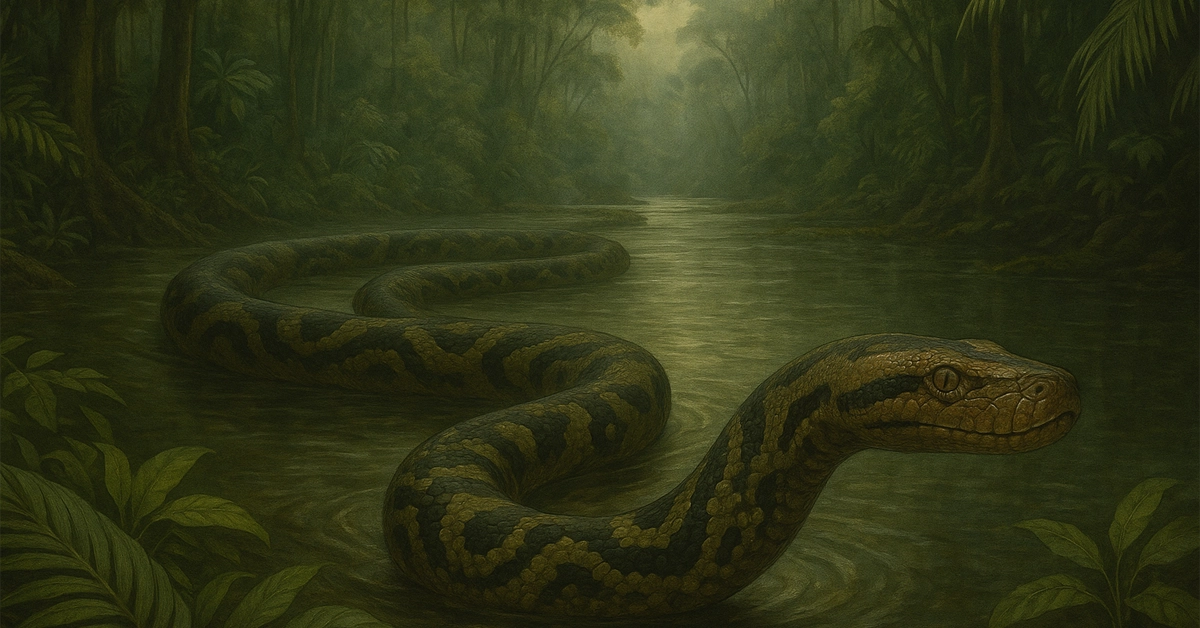
In the dense stillness of the Amazon, where rivers stretch like silver serpents across the green expanse, there lives a being whose presence is both feared and revered — the anaconda. Known in many Indigenous traditions as a master spirit, the anaconda is not merely an animal of flesh and scale. She is the embodiment of the river itself, a guardian of fertility, and a keeper of secrets as old as time.
Unlike the more well-known figures of ayahuasca or the jaguar, the anaconda often dwells in the shadows of myths, spoken of in whispers, in hidden chants, in stories passed only from elder to apprentice. Yet, her presence is everywhere — in the flowing of the waters, in the spirals of visionary art, and in the collective memory of those who live by the rivers.
This article dives into the hidden myths of the anaconda: how she teaches, what she protects, and the echoes of her wisdom that continue to ripple through both Indigenous cultures and the human soul.
The Serpent as Teacher of the River
The Amazon is often called the “river sea,” and the anaconda is its most intimate teacher. For many tribes, the anaconda is not separate from the river — she is the river. Her movements mirror the currents, her coils the endless bends of water through the jungle.
In stories told by the Huni Kuin and the Yawanawá, the anaconda emerges as a guide who teaches humans how to listen to the flow of life. Just as the river nourishes, cleanses, and carries, so does the serpent remind us that wisdom is not rigid but flowing, not fixed but ever-changing.
Elders say that those who dream of the anaconda are being called to pay attention to their own inner currents — emotions, intuition, and the unseen forces that guide life. To walk with the serpent is to walk with the river inside oneself.
Guardian of Fertility and Creation
Across the Amazon, myths describe the anaconda as the mother of waters. Some traditions say that when she moves, new streams are born, and when she coils, lakes and lagoons appear. Fertility — of land, animals, and humans — is tied to her presence.
Among the Shipibo-Conibo, stories tell of giant serpents whose songs fertilize the Earth, ensuring that crops grow and that life continues in balance. Women sometimes pray to the spirit of the anaconda for healthy childbirth, as she is seen as a motherly figure, vast, protective, and nourishing.
Her body itself is symbolic: long, circular, spiral. The spiral, in Amazonian cosmology, is not just a pattern but a map of creation. It represents cycles, births and rebirths, the eternal dance of beginnings. The anaconda embodies this spiral — a reminder that life is not linear but a sacred cycle of return.
Keeper of Hidden Knowledge
While the jaguar is often seen as the guardian of power and courage, the anaconda is the guardian of wisdom — but not wisdom freely given. Her knowledge lies deep, submerged, waiting for those who dare to descend into the waters.
Shamans speak of visions where the anaconda appears as a colossal spirit, offering teachings about the cosmos, the body, and the unseen worlds. Her medicine is not for the unprepared; she tests with fear, with darkness, with the weight of the unknown.
Those who pass her trials emerge transformed, carrying pieces of forgotten knowledge: how to heal with water, how to call rain, how to navigate the currents of energy within the human body. In this sense, the anaconda is not only a serpent but a living library, a bridge between the human and the divine.
Myths of Encounter
The Birth of the Tribes
Some origin myths tell that the first peoples of the Amazon were born from the belly of a great anaconda. She carried them down the river and released them onto the shores, each group given its own land and song. To this day, some tribes trace their lineage back to this primordial mother.
The Serpent Bride
In certain river stories, a man falls in love with a mysterious woman who later reveals herself as an anaconda in disguise. These tales serve as warnings and lessons: the river spirits are powerful, and to unite with them requires respect, humility, and sacrifice.
The Forbidden Waters
Fishermen often speak of places where no one dares to swim — deep pools said to be the resting places of giant serpents. Entering these waters without permission is seen as dangerous, for the anaconda guards the thresholds between the human world and the spirit realms.
Symbolism of the Anaconda in Visionary Traditions
In visionary art, particularly among the Shipibo, the serpent appears in intricate geometric patterns. The kené designs, which map spiritual realities, often include spirals and serpent forms — echoes of the anaconda’s body.
During ceremonies with sacred plants, participants sometimes report visions of being swallowed by a giant serpent. Though terrifying at first, this act symbolizes initiation: being digested by the wisdom of the serpent, stripped of ego, and reborn with new understanding.
The serpent here is not a monster but a teacher, dissolving illusions and opening the path to deeper truth.
Fear and Reverence
It is important to acknowledge that the anaconda is also feared. She is massive, unpredictable, and can kill. For villagers who depend on rivers for survival, her presence is a reminder of vulnerability.
Yet in Indigenous cosmology, fear is not the opposite of reverence — it is part of it. To fear the anaconda is to respect her power, to understand that not all spirits are gentle, and that true knowledge requires courage.
This duality — fear and reverence — mirrors the duality of the forest itself: nurturing and dangerous, generous and demanding, life-giving and death-holding.
The Anaconda and the Feminine
The serpent is often linked to feminine energy — not only as mother of waters but as an expression of sexuality, fertility, and intuition. Her coiling body resembles the cycles of menstruation, the spirals of creation, and the rhythms of the moon.
In some myths, women are the keepers of the anaconda’s songs. They are the ones who know the chants that call her, soothe her, or ask for her blessings. This highlights the profound connection between the serpent and the mysteries of the feminine body and spirit.
Lessons for Modern Seekers
For those outside the Amazon, what can the anaconda teach?
- Flow with life: Like the river, life cannot be controlled — only followed, trusted, and respected.
- Honor cycles: Fertility, creativity, healing — all move in spirals, not straight lines.
- Face the unknown: Wisdom lies in the depths, but we must have the courage to dive into waters that scare us.
- Respect boundaries: Just as fishermen avoid sacred pools, we must learn when not to intrude, when to listen, when to bow.
- Integrate fear and reverence: True respect comes when we embrace both awe and humility.
The Echoes Continue
The anaconda may not be as widely celebrated as Ayahuasca or as visually iconic as the jaguar, but her echoes run deep. She is the silent teacher of rivers, the mother of fertility, the guardian of hidden knowledge.
Her myths remind us that wisdom is not always loud, and that the greatest teachers may dwell in the shadows, waiting for those who dare to listen.
To honor the anaconda is to honor the river, the cycles of life, the mysteries of the feminine, and the courage required to face the unknown.
And as the rivers of the Amazon continue to wind their way across the Earth, the serpent swims on — vast, coiled, and eternal — whispering her secrets to those willing to hear the echoes of the anaconda.
[ux_products cat=”3720″]
Continue exploring
All stories
The medicines of the forest