The Breath of Healing: Rapéh as Sacred Respiration
Beyond Technique, a Transmission of Vital Force, Intention, and Blessing
When Breath Becomes Prayer
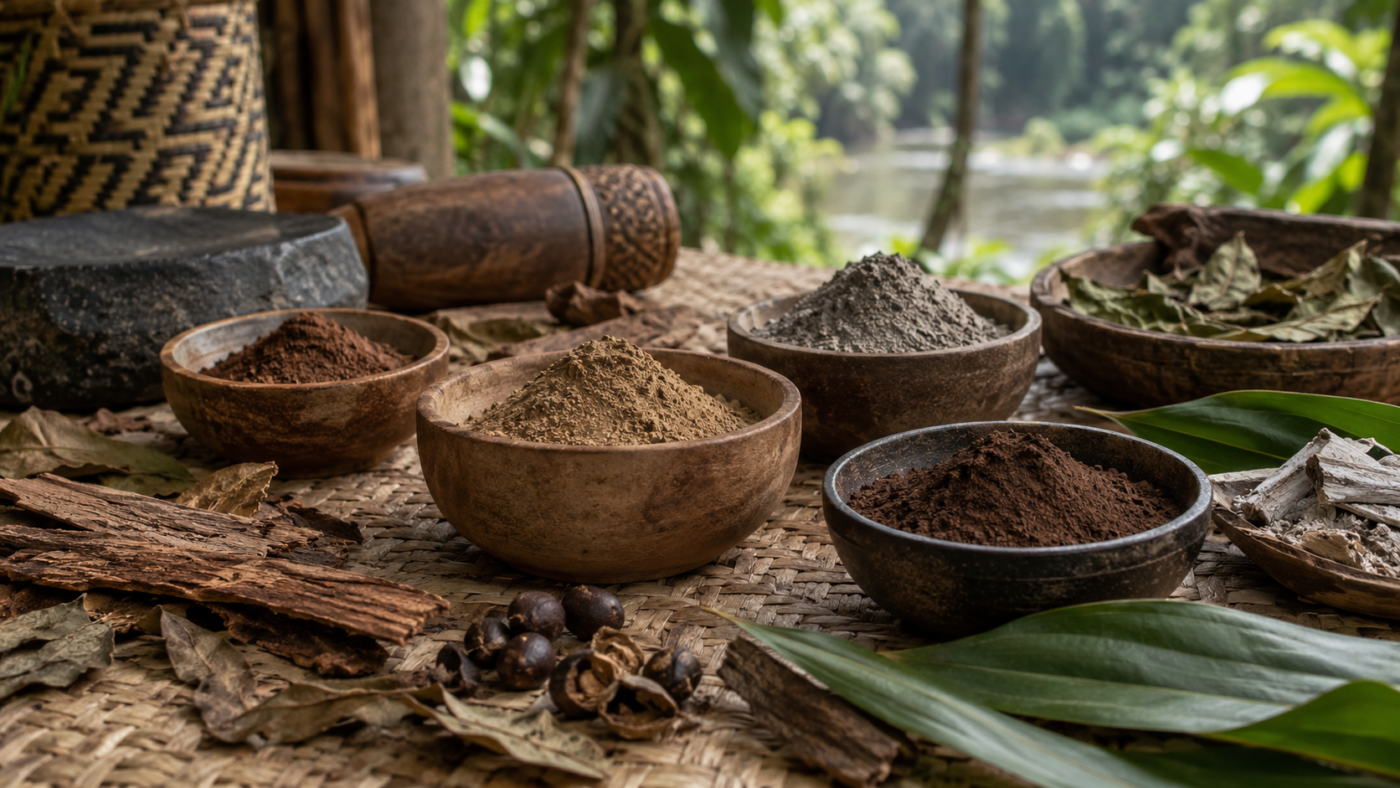
There are moments in life when the simplest acts—walking, sitting, breathing—reveal their deeper essence. To breathe is not only to survive; it is to participate in the invisible rhythm that sustains all creation. Among the Indigenous peoples of the Amazon, one ritual magnifies this truth: the act of receiving or administering rapéh, the sacred snuff made from ashes, herbs, and tobacco.
While outsiders often focus on the physical technique—the blow of powdered medicine through a kuripe or tepi—those who live within the cosmology of the forest know something greater: the breath that carries rapéh is not merely air, but life force itself. It is the sopro da cura, the breath of healing, infused with intention, spirit, and blessing.
This article explores rapéh as sacred respiration, showing how the act of blowing becomes a bridge between body and spirit, a transfer of vitality, and a gesture of communion with the forest.
Breath as Sacred Force
Breath has always been considered sacred. In countless traditions, it is seen as the essence of life itself:
- In Hebrew, ruach means both breath and spirit.
- In Sanskrit, prana is the vital energy that animates all beings.
- In Indigenous cosmologies of the Amazon, breath is understood as the carrier of spirit—what gives voice to songs, what brings prayers into the world, what transmits medicine.
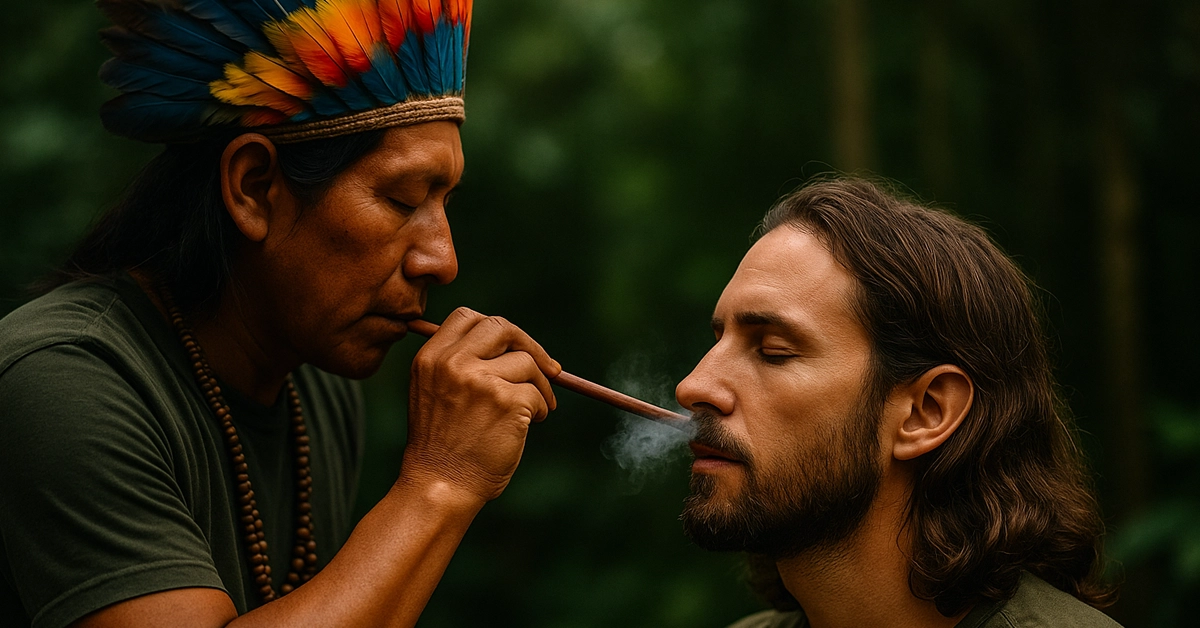
When a healer blows rapéh into another’s nostrils, they are not simply propelling powder. They are transmitting a part of their own vital force, offered with clarity of mind and purity of heart. Breath becomes a vessel of blessing, turning the ritual into an act of profound reciprocity.
Rapéh and the Art of the Blow
The Kuripe and the Tepi
Two instruments are used for administering rapéh:
- Kuripe – a small V-shaped applicator used for self-administration.
- Tepi – a longer pipe used to blow rapéh from one person to another.
In both cases, the medicine moves with the sopro—the blow. But beyond mechanics, the quality of that blow changes everything. A hurried, distracted breath transmits confusion. A centered, intentional breath transmits clarity and healing.
Thus, the blow itself becomes a spiritual art. The healer is taught to align breath with prayer, to let the medicine travel not only as powder but as encoded vibration.
Types of Blows
Many tribes distinguish between different kinds of blows:
- Strong and piercing – for cleansing heavy energies.
- Gentle and steady – for grounding and calming.
- Short bursts – for awakening or energizing.
- Long, continuous – for deep alignment and opening of channels.
Each style reflects not only technique but intention. What matters most is that the blow is infused with prayer—the invisible message carried alongside the powder.
The Symbolism of the Sacred Blow
1. Transmission of Vital Force
To blow rapéh is to share one’s own breath—an intimate act of trust and power. In this sense, the healer lends their life force to another, helping clear blockages and restore flow.
2. Blessing Through Intention
The blow is a vehicle for intention. A prayer whispered silently in the heart is carried into the other’s being. This is why elders emphasize: “Never blow without purpose. The medicine listens.”
3. Union of Elements
Rapéh unites the element of earth (ashes, plants) with air (breath). When applied, it enters through the waterways of the body (mucous membranes) and activates the fire of consciousness. Thus, the blow symbolizes the union of the four elements within the human temple.
Rituals of the Sopro
Blowing for Cleansing
When someone is burdened with heavy energies, the healer may blow rapéh strongly, envisioning the weight being expelled. The person receiving may purge, sneeze, or release tears—signs that the forest is clearing them out.
Blowing for Prayer
In ceremonies, rapéh may be blown softly, accompanied by songs or chants. The blow is not only medicine but prayer in motion, a way of weaving intention into the body.
Blowing for Protection
Before entering the forest or beginning a ritual, rapéh may be blown as a shield. The healer visualizes light surrounding the person, the blow sealing their energy field.
Rapéh as Breath of Reciprocity
The act of blowing is also an act of relationship. The healer gives breath, but the forest gives the medicine. Both are needed—the human and the more-than-human. Without breath, rapéh cannot move; without rapéh, the blow is only air.
Thus, the ritual embodies reciprocity: humans lending breath to carry the plants’ power, the plants lending their wisdom to cleanse the humans. It is a cycle of giving and receiving, mirroring the cycles of the forest itself.
Stories from the Forest
The Ancestral Blow
Elders tell stories of the first blow of rapéh being taught by the spirits themselves. In dreams, the ancestors received visions of how to prepare the medicine and how to blow it correctly—not just with force, but with heart intention.
The Breath That Heals
Among the Katukina, healers describe how their own life energy travels with the blow. If the healer is unwell or carrying negativity, this can be passed on. Thus, one must purify oneself before blowing for another. Breath is both medicine and responsibility.
The Serpent Breath
Some visionaries describe the blow of rapéh as a serpent of air entering the body, winding through the channels, clearing blockages, and leaving behind clarity. The serpent is a universal symbol of transformation, and here it rides on the current of breath.
The Inner Experience of the Blow
When receiving rapéh, the sensation is immediate: a sharp sting, tears welling, the mind forced into presence. But beneath the physical intensity lies something deeper:
- A feeling of being seen—as if the forest itself has entered one’s breath.
- A surge of clarity—mental chatter dissolves into silence.
- A wave of connection—to the body, the earth, and the unseen.
The breath of another becomes a bridge, carrying the forest into one’s being.
Breath as Universal Medicine
Though this article centers on rapéh, the symbolism of breath extends far beyond. Every tradition honors breath as sacred:
- Shamans blow tobacco smoke to cleanse.
- Yogis practice pranayama to channel energy.
- Priests bless with breath, sometimes unseen but always felt.
Rapéh highlights what is always true: breath is the first and last medicine. It enters us at birth and leaves us at death. In between, it is the constant reminder of our connection to spirit.
Modern Applications of the Teaching
Even outside of rapéh, the principle of the sopro da cura can be lived:
- Breath with Intention – Before speaking, pause; let words carry prayer, not haste.
- Breath with Gratitude – Each inhale is a gift of life; each exhale an offering.
- Breath as Blessing – When embracing someone, imagine your breath carrying love.
- Breath in Ritual – Use breath consciously in meditation, song, or healing.
The teaching is simple: what matters is not only that we breathe, but how.
The Responsibility of the Blow
Indigenous elders remind us: blowing rapéh is not casual. It is a sacred duty. Those who blow must keep their mind clear, their heart pure, and their intention aligned. For in that moment, breath becomes a channel of spirit.
The responsibility is great, but so is the gift: to be able to transmit healing not through complex tools but through the most primal force of life itself.
The Forest Breathes Through Us
In the end, rapéh is not only about plants, pipes, or technique. It is about the mystery of breath—the sacred wind that animates life. When we blow rapéh, we participate in something ancient: the forest breathing through us, spirit lending its force to body, and body lending its breath back to spirit.
The sopro da cura is a reminder that healing does not come from outside, but from the breath of life already within us. Rapéh only reveals what is always present: that every breath can be sacred, every exhale a blessing, every inhalation a gift.
To live with this awareness is to walk as if each breath were prayer.
Continue exploring
All stories
The medicines of the forest