The Drum and the Pulse of the Earth: The Spiritual Power of Rhythm
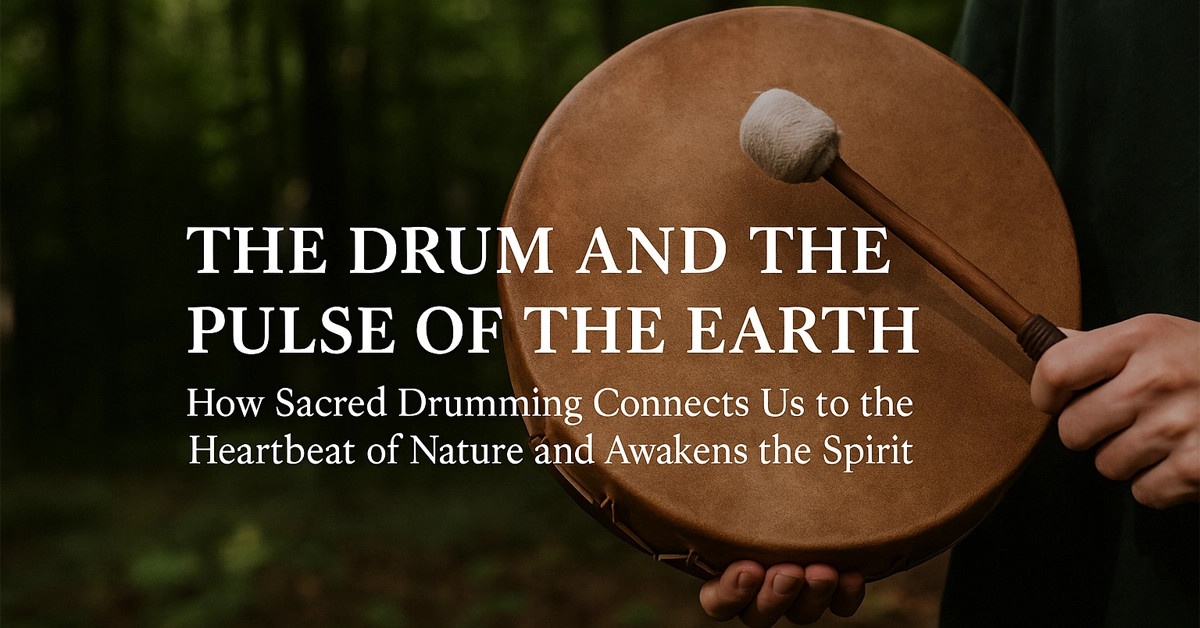
How Sacred Drumming Connects Us to the Heartbeat of Nature and Awakens the Spirit
A Sound Older Than Words
Before there were words, there was rhythm. Before the mind could reason, the body could feel. The first beat a human ever heard was not from the outside world, but from within—the rhythmic pulse of the mother’s heart. This primordial sound remains etched in our being, a memory of safety, unity, and life itself.
In the rainforest, in deserts, on mountains, and across plains, Indigenous peoples have carried this memory forward through the sacred drum. Not merely an instrument, the drum is a spiritual tool, a living presence. In many traditions, it is said that the drum does not produce music—it calls spirit. It does not entertain—it awakens.
In this article, we explore the spiritual power of rhythm, the symbolic and ceremonial role of the drum in Indigenous cultures, and how rhythm acts as a bridge between the human and the divine.
1. The Drum as a Spiritual Being
Among many Native and Indigenous traditions, the drum is treated with great reverence. It is not just made; it is born through ritual. The animal hide, the wood frame, the sinew—all are chosen with intention and blessed with offerings. The making of a drum is a ceremony in itself, where the spirit of the animal and the tree become unified in a new form of life.
For many Amazonian tribes, as well as North American First Nations and African spiritual lineages, the drum is seen as a living being—a carrier of ancestral voices and elemental forces. It is considered the voice of the earth itself.
When the drum sounds, it is not only a vibration through air; it is a spiritual wave that travels through the body and soul. Many say it “opens the portal,” allowing communication with the unseen realms.
2. Rhythm as Medicine
Just as plants can be medicine, so can sound. The beat of the drum has the power to regulate the heart, ground scattered energy, clear dense emotions, and bring coherence to the body and mind. Shamans and healers use rhythm to induce altered states of consciousness, facilitating journeys beyond the material world.
In shamanic drumming, the steady rhythm (often around 4 to 7 beats per second) synchronizes brainwaves to the theta state, the same state reached in deep meditation, REM sleep, and trance. In this state, people report visions, healing encounters, and the retrieval of lost pieces of the soul.
In traditional ceremonies, the drum is often accompanied by chants, rattles, and dances, forming a multisensory experience where healing occurs not only through herbs or prayer, but through rhythmic immersion. This is sound as ceremony. This is rhythm as a sacred technology.
3. The Drum and the Four Elements
Many spiritual teachings link the drum to the four elements:
- Earth – The body of the drum, often made of wood, symbolizes grounding and structure. It is stable and reliable, like the Earth herself.
- Water – The resonance of the drum, especially in lower tones, moves like waves through the body, stirring the emotional waters within.
- Fire – The intensity of fast rhythms can ignite the spirit, awaken courage, and burn away what no longer serves.
- Air – The drumbeat rides the air, penetrating the atmosphere and reaching into unseen spaces, just like prayer and intention.
In this way, drumming becomes an elemental ritual, aligning the human body with natural forces and reweaving the threads between ourselves and the cosmos.
4. The Drum in Amazonian Ceremonies
In Amazonian healing ceremonies, the presence of the drum varies from tribe to tribe. While many tribes such as the Huni Kuin (Kaxinawá) and Yawanawa are known for vocal medicine songs (called “ixpiyawa” or “uni songs”), some also incorporate rhythmic elements through drums, rattles, or percussive instruments made from seeds, bones, or gourds.
Even when the drum is not physically present, the rhythm is there—in the way the songs are sung, in the cadence of the mariri, in the natural sounds of rain and insects. Rhythm is embedded in the jungle’s breath. And when drums are used in ceremonies with Ayahuasca, Rapéh, or Sananga, they are not used to create excitement but to guide, ground, and protect.
These rhythms often mimic the heartbeat of the forest, calling the spirits of the plants, aligning participants with their own inner pulse, and protecting the energetic field from external disturbances.
5. The Universal Heartbeat
A fascinating fact about drums across cultures is the similarity in their base rhythm. Whether in African Djembe traditions, Indigenous powwows, or Amazonian rites, many ceremonial rhythms mirror the resting human heartbeat—approximately 60 to 80 beats per minute.
This is no coincidence. The drum brings us back to the heart. Not just the physical heart, but the heart as center, compass, and sacred drum of the soul.
In moments of fear, anxiety, or disconnection, the drum serves as an anchor, bringing coherence to our inner world. It reminds us that life is rhythm. Day and night. Inhale and exhale. Birth and death. Rhythm is the language of the universe.
6. The Drum as a Guide Between Worlds
In many cultures, drumming accompanies rites of passage—birth, puberty, marriage, death. It is there at thresholds, when one world ends and another begins.
During ceremonies, the drumbeat often marks the transition from the ordinary to the sacred. When the drum starts, something shifts. A liminal space opens. Participants feel it in their bones: we are entering a different realm.
In healing rituals, the drum guides the soul through inner landscapes. In death rituals, it helps the spirit find its path. In visionary journeys, it holds the rhythm so the traveler does not get lost.
This is why the drum is not just background sound—it is a guide, a protector, a bridge between dimensions.
7. Drum Circles and Collective Healing
In the modern world, drum circles have become popular across the globe. Though often informal, these circles tap into something ancient: collective entrainment.
When people drum together, their brainwaves, heart rates, and emotional states begin to sync. Studies show that even strangers can develop a sense of bonding and empathy through shared drumming. The circle becomes a vortex of healing, a field where trauma can dissolve, joy can emerge, and silence can return after the storm.
These community rhythms often echo what Indigenous peoples have always known: healing is not an isolated act. It happens in relation, in rhythm, and in resonance.
8. Personal Practice: Bringing the Drum Into Your Life
You don’t need to be a master drummer or attend a ceremony to connect with the spiritual power of rhythm. Here are simple ways to bring the drum into your spiritual practice:
- Heartbeat Rhythm: Sit quietly and drum a slow, steady beat. Let your body relax. Focus on your breath. Let the sound ground you.
- Prayer and Intention: Before drumming, speak your intention aloud. Use the drum as a vessel for your prayer.
- Morning Alignment: Begin your day with a short rhythm session to align your energy, open your heart, and set your vibration.
- Sound Healing: Drum over your own body or another’s with respect and presence, especially over the heart, solar plexus, and root.
Always treat your drum with reverence. It is more than an object—it is a spiritual ally.
Remembering the Pulse of the Earth
The drum is a reminder. That life is rhythm. That the earth is alive. That the ancestors are near. That healing is possible through vibration. That beneath all noise and distraction, there is a pulse—steady, sacred, and shared.
As we reclaim ancient tools and reconnect with the forest, the medicine of rhythm returns. In every beat, we remember who we are. We remember that the drum is not only heard—it is felt. Deep in the belly. In the soles of our feet. In the roots of the forest.
To drum is to listen. To listen is to remember. And to remember is to heal.
Continue exploring
All stories
The medicines of the forest