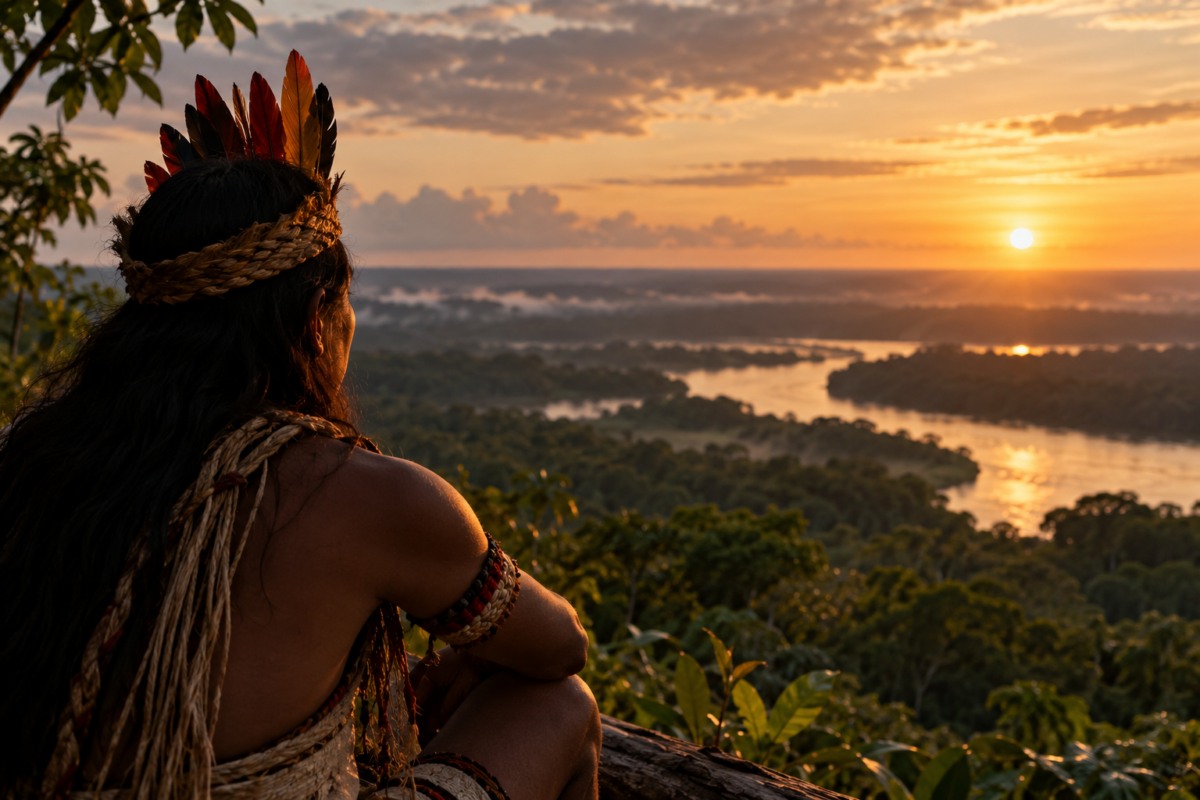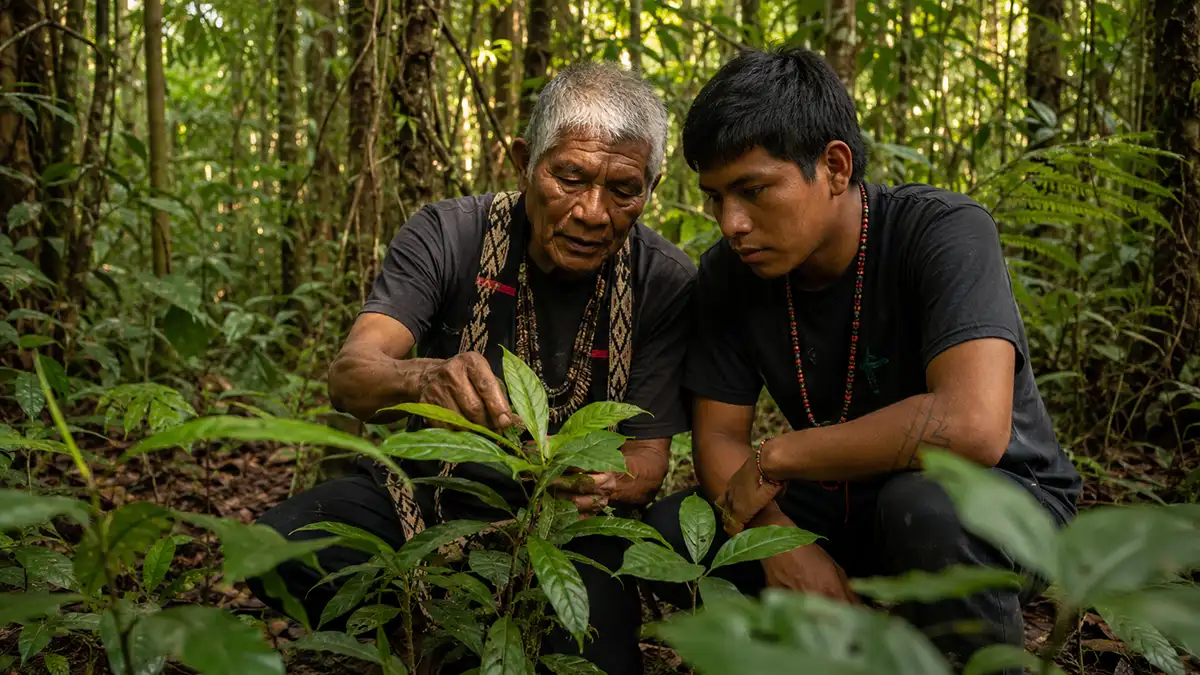
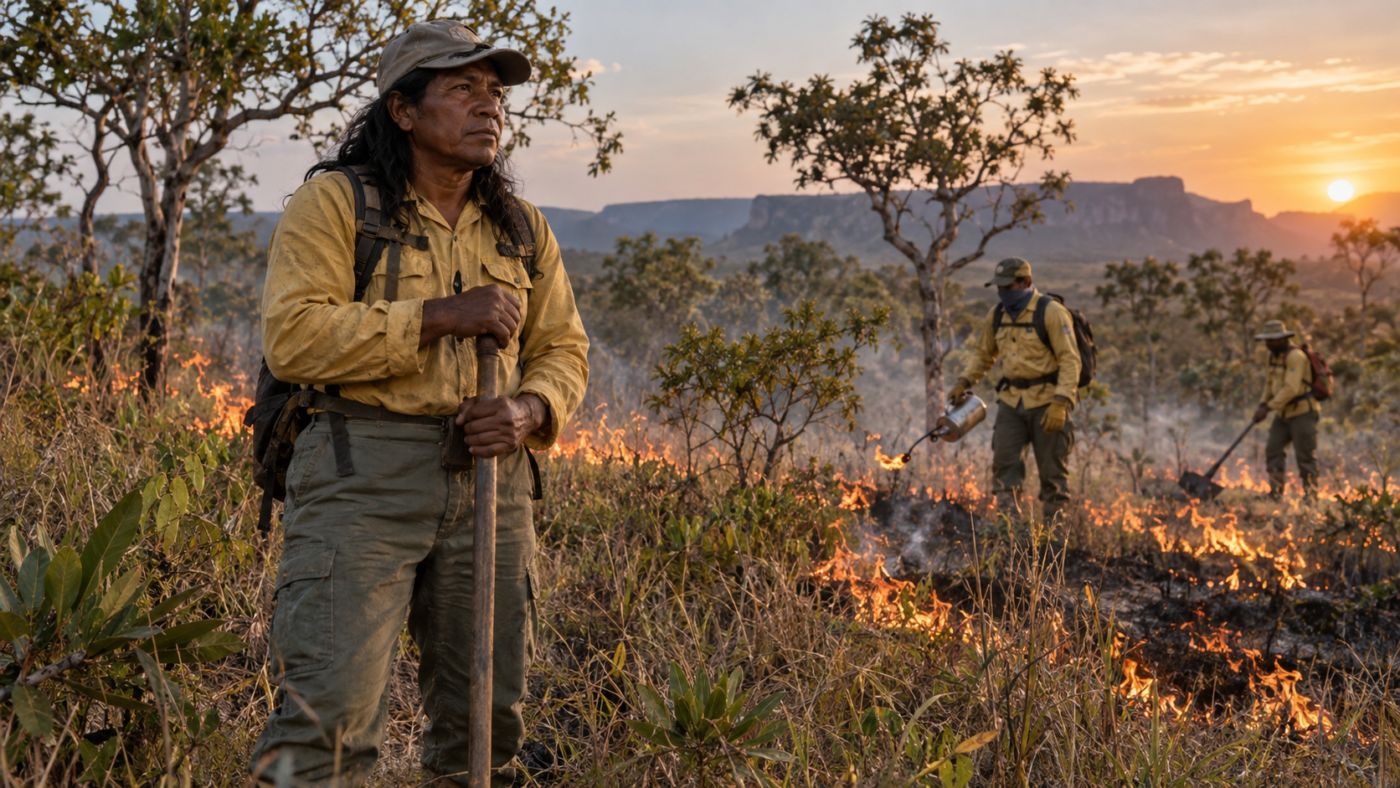
The Spirit of the Amazonian Mountains
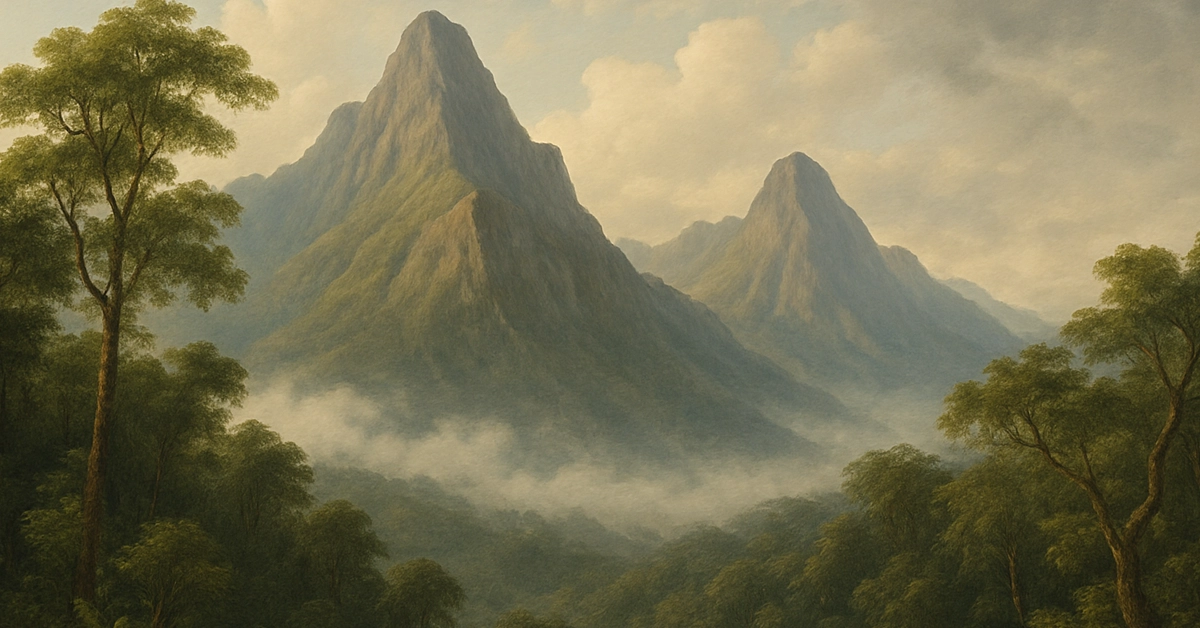
Sacred Peaks, Hidden Myths, and the Energy of the Forest’s Highest Places
Beyond the Green Horizon
When most people imagine the Amazon, they see endless flatlands—rivers winding like silver serpents, low jungle canopies stretching to the horizon. Yet hidden within this vast expanse are mountains, ridges, and plateaus that rise like ancient sentinels above the sea of green. To many Indigenous peoples, these elevated places are not simply geological features. They are living beings, guardians of the forest, and pillars that connect Earth and sky.
These mountains are places of origin, sites where creation stories unfold and where spiritual energy concentrates. To climb them is not just a physical act—it is a journey into the heart of myth and memory.
The Mountains That Watch
From the tepuis of the Guiana Shield to the mysterious Serra do Divisor along the Peru-Brazil border, the Amazon is dotted with highlands that shape both the landscape and the cosmology of the peoples who live nearby. Some are crowned with mist year-round, their slopes covered in rare orchids and ancient trees. Others are bare, rocky, and exposed, holding an austere beauty.
For the Asháninka, certain peaks are seen as the resting places of powerful spirits. Among the Yanomami, the highlands mark boundaries between the human world and the territories of other beings—both benevolent and dangerous. In Huni Kuin stories, mountains sometimes appear as sleeping giants, whose bodies became stone yet whose hearts still beat beneath the earth.
Where Earth Touches Sky
In many traditions, mountains are the axis mundi—the world axis, the place where the material and spiritual realms meet. In the flatlands of the Amazon, their rarity only amplifies this symbolism. A mountain can be a ladder for the soul, a bridge between the rivers below and the constellations above.
Shamans often speak of mountains as teachers. The climb itself becomes a lesson in patience, endurance, and humility. The air thins, the vegetation changes, the sounds of the forest fade into wind and silence. At the summit, one is closer to the stars and to the ancestors, able to see the vastness of the forest in a single sweep of the eyes.
Guardians of Water and Life
The Amazonian mountains are also the source of countless streams and rivers. Springs emerge from their slopes, carrying minerals and vitality down into the lowlands. In Indigenous thought, this makes them the “veins of the Earth,” feeding life far beyond their borders.
For the peoples who live nearby, these waters are sacred. Rituals may be held at their sources to honor the spirit of the mountain and to ask for blessings of abundance, health, and fertility. In some myths, rivers are born from the tears of mountain spirits—tears shed in joy, grief, or sacrifice.
Legends Written in Stone
The stories told about Amazonian mountains are as varied as the peaks themselves. Some speak of lovers turned to stone to escape separation, their forms standing side by side through the ages. Others tell of battles between spirit beings, the mountains marking the places where they fell.
One common theme is transformation: mountains are often described as once being alive—humans, animals, or supernatural beings who chose or were destined to become part of the land. Their presence is a reminder that in Indigenous cosmology, the boundaries between living and non-living are fluid. A rock can listen. A mountain can dream.
Ceremonies at the High Places
For some tribes, certain mountains are visited only during special times—seasonal festivals, rites of passage, or vision quests. The journey is often long and demanding, undertaken in silence or accompanied by sacred songs. Upon arrival, offerings of tobacco, feathers, or food are left for the mountain spirit.
The peak becomes a ceremonial space without walls, where the wind carries prayers in every direction. Those who have experienced such rituals speak of an undeniable presence, a vibration in the stones, and a clarity in the mind that is difficult to describe.
Mountains as Energy Centers
Modern visitors sometimes describe these sites as “power spots,” but for Indigenous peoples, their energy is not a mystical novelty—it is a relationship cultivated over generations. Mountains are seen as reservoirs of life force, holding and radiating energy that can heal, guide, or protect.
The alignment of certain peaks with the sun or stars during solstices and equinoxes adds another layer to their significance. Elders may gather to watch the first light of the solstice crest over a specific ridge, marking the time to plant, harvest, or begin important ceremonies.
The Threats They Face
Like the rest of the Amazon, these sacred mountains are not immune to threats. Mining, logging, and unregulated tourism can damage both the physical environment and the spiritual integrity of the sites. For the communities connected to them, such damage is not merely ecological—it is a wound to their history and identity.
Defending these places is as much a spiritual duty as a political one. To protect a mountain is to protect a library of ancestral knowledge, a temple of natural power, and a home to countless species.
Walking with Reverence
Visiting these mountains requires respect. One must follow the guidance of local elders, move with humility, and understand that entry is a privilege, not a right. The mountain does not belong to the visitor; rather, the visitor enters into a brief relationship with it, one that must be approached with care.
Bringing offerings, observing silence at certain points, and refraining from taking anything away are part of showing honor to the mountain spirit. The experience, when approached in this way, can transform not only one’s perspective of the Amazon but also one’s relationship to the Earth as a whole.
The Living Peaks of the Forest
The Amazon’s mountains are more than elevations on a map—they are living presences, storytellers, and guardians. They hold the memory of ancient times and the dreams of those yet to come. Their slopes are books written in stone, their summits are altars open to the sky, and their waters are blessings flowing into the veins of the Earth.
To know the forest is to know its mountains. To walk among them is to feel the heartbeat of a land that rises not only toward the sky, but also deep into the spirit.
Continue exploring
All stories
The medicines of the forest