Guardians of the Fire: Stories of Healers Who Work with the Sacred Element
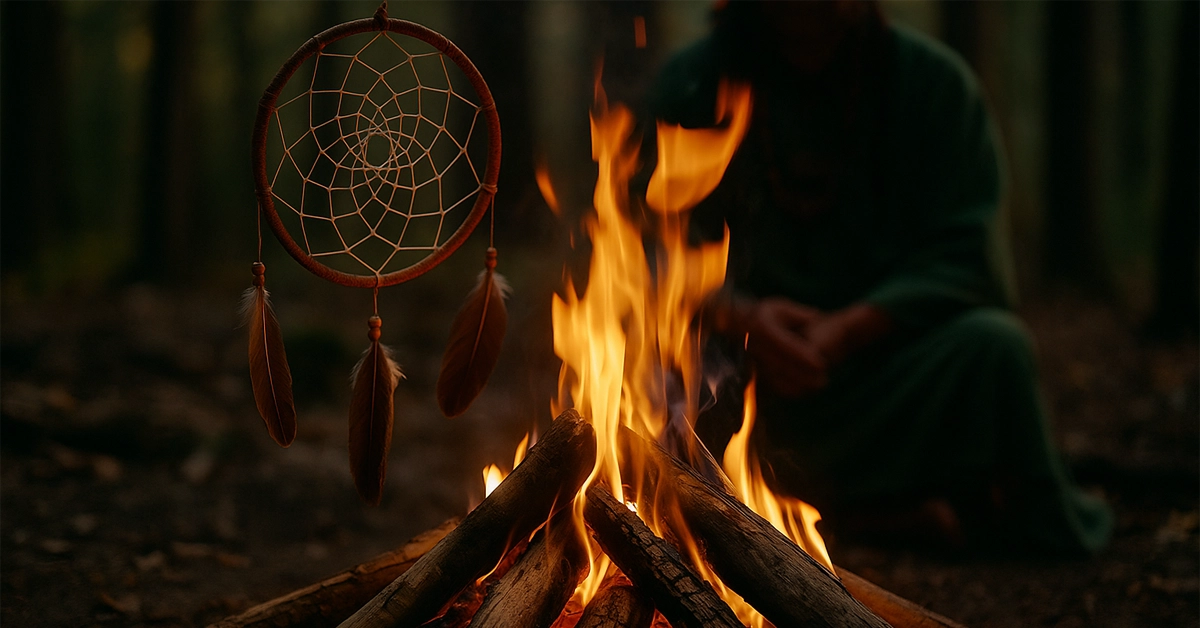
Exploring the Spiritual Power of Fire in Indigenous and Ceremonial Traditions
When Fire Speaks
In the beginning, there was fire. Not just as heat or destruction, but as a sacred force—a living presence that illuminates, transforms, and connects the physical with the spiritual. In the traditions of many Indigenous peoples, fire is not merely an element. It is a being, a teacher, a guardian, and a bridge between worlds. It holds the memory of the ancestors, the voice of the forest, and the rhythm of the cosmos.
This article explores the spiritual and ceremonial role of fire and the healers who work with it. Known by many names—pajés, abuelos, curanderos, fire keepers, or simply guardians—these individuals have a sacred responsibility. They do not just light flames; they invoke spirit, hold space for transformation, and tend to the mysterious balance between light and darkness.
Fire as a Spiritual Being
In Western thought, fire is often reduced to a physical phenomenon: combustion, heat, and energy. But for Indigenous traditions, fire is alive. It sees, listens, and responds. It can be fed, honored, and consulted. Fire is one of the most ancient tools of communication with the invisible world.
Among the Huni Kuin of Brazil, the fire in the center of ceremony is known to carry prayers upward. For the Q’ero of Peru, fire ceremonies are held to release offerings to the Apus (mountain spirits) and Pachamama. In Lakota Inipi (sweat lodge) ceremonies, stones are heated in fire, carrying the spirit of the flame into the lodge where rebirth occurs.
Fire is often considered the heart of ceremony. Without it, many rituals would not be possible. It is the first to arrive and the last to leave, always demanding respect.
The Role of the Fire Keeper
Not everyone is called to be a fire keeper. It is a sacred role, often passed down through vision, initiation, or deep commitment. A fire keeper is someone who:
- Maintains the flame throughout the night in a ceremony
- Offers tobacco, prayers, and other sacred offerings to the fire
- Understands the spiritual timing of when to speak, add wood, or remain still
- Communicates with the fire and listens to its messages
The fire keeper is not always the one leading the ceremony, but they hold just as much spiritual authority. They work in silence, attentiveness, and communion.
In some traditions, fire keepers undergo years of training. They may be required to undergo fasts, vision quests, or dietas to learn how to hear and speak the language of fire.
Sacred Stories: When Fire Became a Teacher
In many Indigenous mythologies, fire has a story of origin. Some examples:
- The Yawanawá say fire was gifted by a celestial being who descended during a time of darkness. It was not stolen, but earned through prayer and humility.
- The Shipibo-Conibo honor fire as one of the first spirits to come into being after the primordial serpent dreamed the world into existence.
- The Arawak peoples of the Amazon speak of a jaguar who once carried fire in his tail, guarding it until a wise elder learned how to create it through friction and prayer.
These stories are more than legends. They are maps of consciousness, showing us that fire is something we enter into relationship with—not control.
Fire and Transformation: The Inner Alchemy
Healers who work with fire often describe it as a mirror. When one sits with fire, especially in silence, it reveals. Old emotions, forgotten memories, deep truths surface in its presence.
In ayahuasca ceremonies, fire often becomes a point of focus, especially when intense visions arise. The flame is said to stabilize the experience, reminding participants of their body and breath. In kambo circles, fire may be used to burn the skin in small dots, allowing the frog medicine to enter—a direct and physical initiation through flame.
Ceremonial fire, especially in tobacco or rapé rituals, is a purifier. Just as it turns wood to ash, it turns confusion to clarity, fear to presence. It teaches the wisdom of letting go, of offering what no longer serves.
The Four Stages of Sacred Fire
Many fire-keepers speak of four distinct phases in the life of a ceremonial fire. Each phase mirrors a human process:
- Ignition (Birth): The spark of creation. Prayers and intention are placed into the first flame.
- Rising Flame (Growth): The energy is building. Songs and offerings feed the fire. This is a time of connection and gratitude.
- Steady Burn (Maturity): The fire is balanced, clear, and luminous. Messages from spirit often arrive here.
- Embers (Death and Rebirth): The fire is dying. Reflections deepen. This is a moment of stillness, integration, and silence.
Understanding these phases allows the healer to work in harmony with the rhythm of fire, aligning ceremony and intention with nature’s own cycles.
Offerings to Fire: Feeding the Spirit
In almost all traditions, fire is fed with offerings. These are not symbolic gestures; they are energetic transactions. Offerings might include:
- Tobacco: A sacred plant that carries prayers with smoke.
- Mapacho: Strong jungle tobacco used to protect and purify.
- Copal or Resin: Used to call in divine presence.
- Food or Drink: Given to honor the spirits and express gratitude.
- Hair or Personal Items: As acts of surrender or transformation.
Some elders say that fire consumes what we cannot digest emotionally. It metabolizes the unspeakable, the unresolved, the hidden. In this way, it becomes an ally in healing trauma.
Fire and the Feminine: The Womb of Light
While fire is often perceived as masculine energy, in many cultures it is also connected to the feminine womb: the cauldron of creation. In ceremonies led by women, fire is sometimes called “the Mother Flame,” representing the fire of birth, love, and fierce protection.
In moon ceremonies and feminine circles, small hearth fires are lit to call in ancestral grandmothers. The flames represent inner light, intuition, and the wisdom of cycles.
Thus, fire is not one thing or another. It is a shapeshifter, holding all elements within its flicker.
Modern-Day Fire Keepers: Holding the Ancient Flame
Today, as Indigenous knowledge resurfaces and sacred ceremonies spread around the world, the role of fire keeper is finding new forms. People from many walks of life are remembering the sacred role of fire:
- Ceremony leaders who light the fire before sharing rapé or sananga.
- Retreat facilitators who gather guests around the flame for storytelling, silence, and prayer.
- Home altar builders who light a daily candle as a connection to spirit.
The fire does not demand perfection. Only presence. When we sit with fire, we enter into ancestral time. We reconnect with something primal, pure, and essential.
Becoming a Flame
To walk with fire is to walk with courage. Fire shows us what is ready to die and what is ready to be born. It teaches us to be tender and fierce, patient and wild.
In every ceremony where fire is present, we are being called into remembrance: that we are not separate from the elements, that we are both ash and spark, wood and wind.
As you light your next candle, tend your hearth, or sit around a sacred flame, remember: you are sitting with an elder, a teacher, a spirit. And somewhere, in the depths of your soul, a fire remembers how to speak.
Continue exploring
All stories
The medicines of the forest