The River as Teacher: Spiritual Wisdom of Flowing Waters

How sacred rivers guide Indigenous wisdom through movement, surrender, transformation, and purity
Listening to the River’s Voice
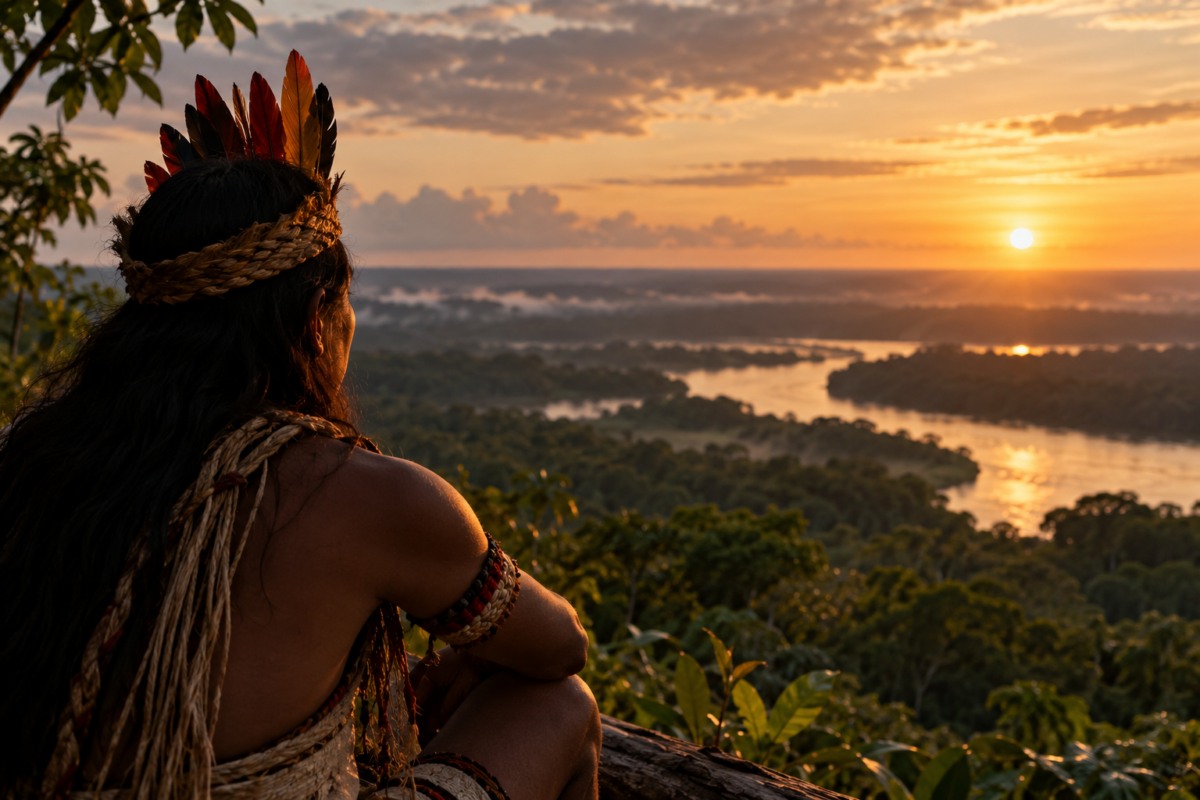
In the rainforest, rivers are not just bodies of water—they are elders. They are storytellers, healers, and sacred pathways that hold the memory of the Earth. Their currents speak an ancient language that Indigenous peoples have listened to for generations. For many forest communities, the river is not an object of use but a living being—a spiritual force that mirrors the rhythms of life and the soul.
To sit by a river is to enter into conversation with the unseen. To bathe in it is to be cleansed not only physically but energetically. And to journey along its currents is to be guided by a deeper intelligence—one that flows with trust, wisdom, and grace.
This article explores how Indigenous traditions perceive and relate to rivers as spiritual teachers, and what we, as modern seekers, can learn from these flowing masters of transformation.
The River as a Living Being
In Indigenous cosmologies throughout South America and other parts of the world, rivers are not “things”—they are persons. They have names, spirits, and personalities. Some rivers are male, strong and thunderous; others are female, gentle and nurturing. They are seen as part of a greater spiritual ecology, interacting with the forest, the wind, the stars, and the people.
Many tribes believe that each river has a guardian spirit, sometimes referred to as Encantado or Yara. These beings may appear in dreams or visions, guiding healers, warning of danger, or offering teachings about the land. Offerings are often made at the river’s edge—tobacco smoke, flowers, songs, prayers—inviting balance and protection.
The relationship is reciprocal: the river gives life, and the people give respect. This sacred exchange forms the foundation of countless spiritual practices.
Rivers and the Cycle of Life
Rivers are mirrors of life. They are born from hidden springs, flow through many landscapes, and eventually return to the great ocean—just as we come from spirit, journey through many experiences, and return to Source.
This symbolism is woven into countless rituals:
- Birth ceremonies may include bathing the newborn in the river to bless their path.
- Coming-of-age rites often involve a solo moment with the river, marking the individual’s readiness to listen to life’s flow.
- Grief and mourning rituals include washing away tears in the current, releasing sorrow into the water.
The river teaches that nothing stays the same. Life moves. What we hold must one day be released. And in that letting go, there is purification.
Flow: The Wisdom of Movement and Change
One of the river’s greatest teachings is its constant motion. It never resists the landscape—it adapts, curves, slows down, speeds up. It flows over rocks, under trees, through valleys, always responding to the path before it.
For Indigenous peoples, this is not just nature—it is instruction. The river shows how to live:
- Don’t cling to the past. Like stagnant water, what does not flow may rot.
- Respond to obstacles with grace. Flow around them. Soften. Adapt.
- Keep moving. Even when unsure of the destination, trust the current.
This flowing nature is not aimless—it is guided by the intelligence of the Earth. The river knows where to go. In this way, it teaches us the value of surrender—not as weakness, but as trust in a greater wisdom.
Purity and Cleansing: The Medicine of Water
Many forest cultures see rivers as the great purifiers of the soul. Ritual baths are not just for hygiene—they are spiritual renewals. Healers may guide someone into the river during times of illness, confusion, or emotional heaviness, believing that the water can absorb and transform dense energies.
Some traditions involve:
- Morning baths to start the day in alignment with nature.
- Pre-ceremony cleansings to purify body and mind before sacred work.
- Post-trauma immersions to release grief, fear, or shame.
The idea is simple: water remembers. Water heals. When we enter the river with intention and humility, we are returned to balance.
Some tribes also use river clay or sediment for spiritual masks or anointing, believing that these elements carry the energetic signature of the Earth.
Rivers as Dream Portals
It is common in Amazonian traditions to speak of dreams received from the river. Some shamans report that the river speaks in images, symbols, or songs while they sleep. In these visions, messages may come from the spirits of the water or from the river itself.
Sleeping near rivers is said to enhance intuition. The constant sound of flowing water calms the mind, allowing inner truths to rise. Some initiation rituals involve spending time alone by the river to listen—not with the ears, but with the heart.
In this way, rivers are not only physical spaces—they are portals to the spiritual world.
The Sound of the River: Sonic Medicine
In forest spirituality, sound is medicine. And the river is a master musician. Its sounds shift with the terrain: gentle trickles, thunderous cascades, rhythmic pulses. Each has its own effect on the human spirit.
Some Indigenous groups mimic the river in their songs and chants. The cadence of their voices follows the tempo of moving water. This is especially true in rituals of healing or trance, where the goal is to align the body and spirit with the rhythm of nature.
Even the instruments used in some traditions—rattles, flutes, and water drums—echo the voices of the river, reminding the listener that they are never alone.
Offerings to the River
Gratitude is essential in the relationship with the river. Offerings are made not to “please” the river in a transactional way, but to honor the sacred bond.
Common offerings include:
- Tobacco smoke, carried by the wind as a prayer.
- Flowers, to feed the spirit of the water.
- Small pieces of food, as a gesture of abundance and sharing.
- Songs or chants, sung from the heart, asking nothing in return.
These offerings often accompany specific requests: guidance, healing, permission to travel, or safe passage. But even without a request, offerings are a way of acknowledging the river’s spirit.
River Guardians and Spiritual Beings
As mentioned earlier, rivers are believed to be inhabited by spiritual beings—guardians, protectors, and sometimes tricksters. These entities vary by culture but are often feminine in nature, embodying both beauty and danger.
For example:
- The Yara, a water spirit known in Brazil, is said to appear in dreams or near waterfalls. She tests the sincerity of those who approach her.
- The Encantados, or enchanted ones, are beings who live in the deep river bends and may offer blessings or challenges.
Stories of these beings are passed down through generations, teaching children to respect the river—not just physically, but spiritually.
River as a Path and a Border
In many forest regions, the river is both a road and a line between worlds. It connects villages, but it also separates them. It marks territories and sacred spaces. Some areas of the river are not meant to be crossed, while others are used for ceremony, fishing, or healing.
Crossing a river in certain traditions may represent a transition in life—such as leaving childhood behind or stepping into a new spiritual role. The act of crossing water is symbolic of death and rebirth, purification and initiation.
Even the sound of crossing—paddles in water, the shift in air—can mark a passage from one state of being to another.
What We Can Learn from the River
The teachings of the river are many, but they can be summarized in four core spiritual lessons:
1. Movement is Life
Stagnation leads to suffering. The river teaches us to move, grow, and adapt.
2. Surrender is Strength
By surrendering to the current, we find a deeper wisdom. Resistance only creates struggle.
3. Cleansing is Sacred
Regular purification—of the body, emotions, and thoughts—is necessary for clarity and alignment.
4. Respect Sustains Relationship
The river gives, but it also receives. When we offer gratitude and humility, the relationship deepens.
These are not just poetic ideas—they are practices that have sustained communities for centuries.
Becoming Like the River
To learn from the river is to embrace a different way of being. A softer way. A wiser way. It invites us to walk through life not as conquerors but as listeners. Not as owners of the Earth, but as kin.
In a world that often values speed, control, and domination, the river reminds us of something else: that real power lies in surrender, in rhythm, in trust. That change is not a threat but a teacher. That healing begins when we allow the water to wash away what no longer serves.
The rivers of the forest continue to flow, as they have for thousands of years—carrying messages, memories, and medicine.
And if we are quiet enough to listen, we may just hear their ancient song:
“Flow, and you will find your way.”
Continue exploring
All stories
The medicines of the forest