
The Mirror Effect of Medicines: What They Reveal About Ourselves
How sacred forest medicines reflect our inner world and guide us toward spiritual awakening
When the Medicine Shows You Yourself
There are moments in life when words fail—when the mind, saturated with stories, beliefs, and defenses, cannot see beyond its own walls. It is in these moments that sacred forest medicines often step in, not to give us something new, but to show us what has always been there.
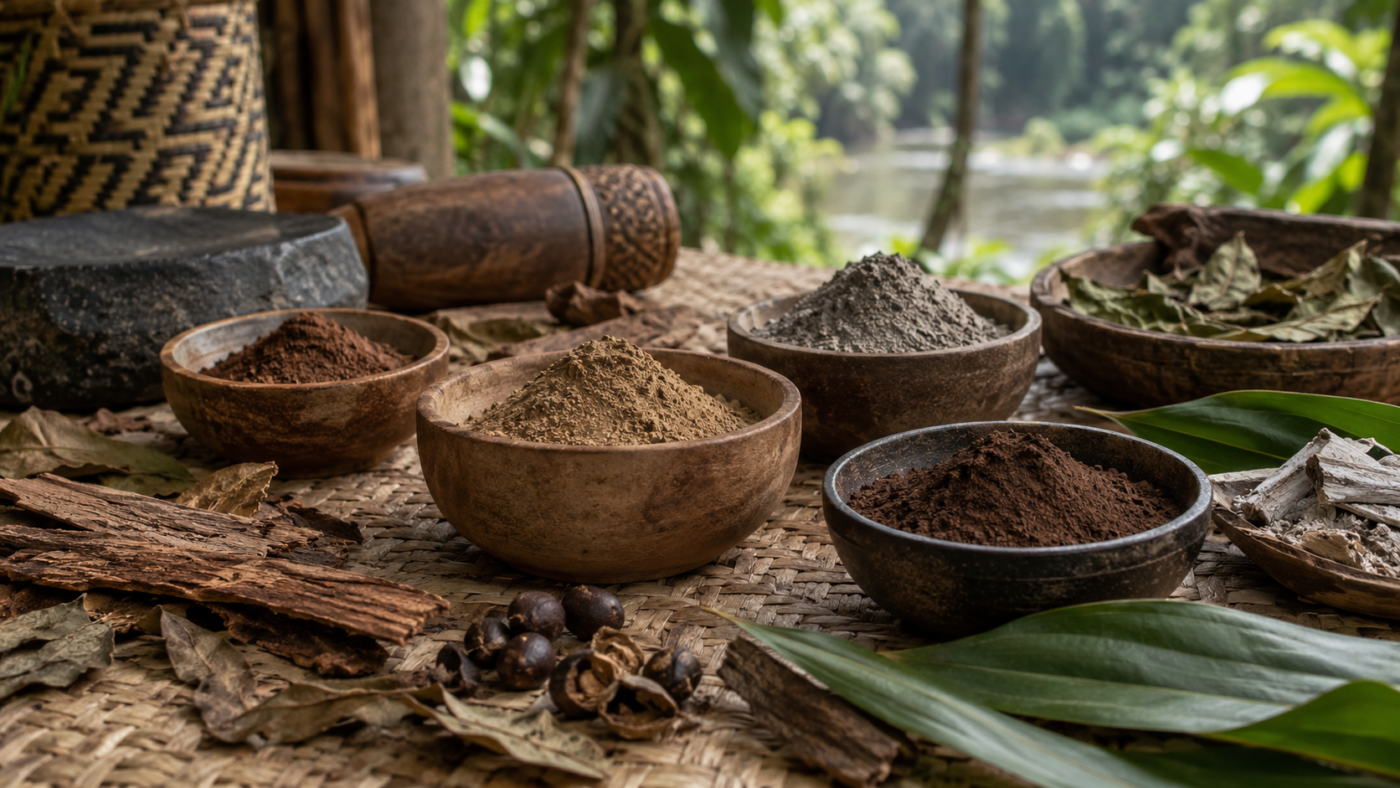
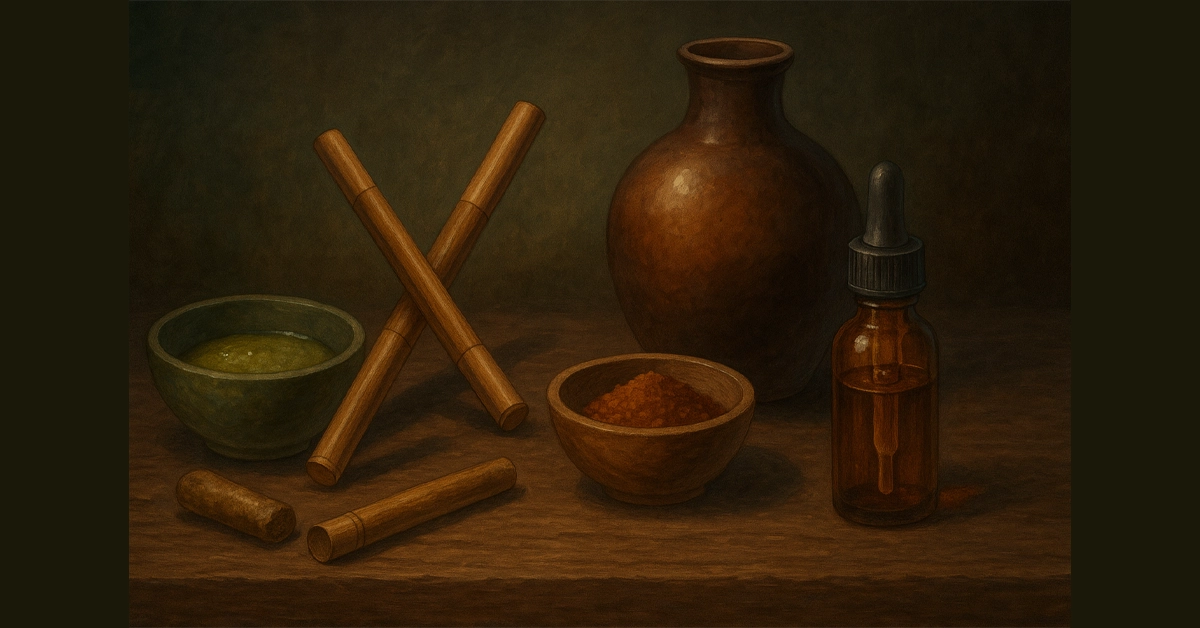
Rapéh, ayahuasca, sananga, and other traditional plant medicines used by Indigenous peoples of the Amazon are more than physical remedies—they are mirrors. Their purpose is not only to heal the body but to reveal the spirit. They help us meet the parts of ourselves we have forgotten, repressed, or misunderstood. They reflect our fears, our wounds, our longings, and our truth. And through this reflection, they offer the possibility of transformation.
This article explores how sacred medicines act as inner mirrors, how they reveal hidden aspects of ourselves, and how we can approach these revelations as tools for growth and awakening.
Medicine as a Mirror: A Sacred Principle
In many Indigenous traditions, the idea that medicine “shows” you something is foundational. It is not that the plants cause visions, emotions, or realizations. Rather, they reflect what is already inside you—bringing the invisible into focus.
Just as a mirror does not change your face, sacred medicine does not change your soul. It simply removes the masks. It clears the fog. It silences the noise so that the deeper truth can be seen, felt, and remembered.
This reflection can be beautiful, painful, humbling, or ecstatic. But always, it is honest.
1. Rapéh: The Grounded Mirror of Presence
Rapéh (or hapeh), a sacred snuff made from tobacco and other forest plants, is often applied through the nose using a kuripe (self-applicator) or tepi (applied by another). At first glance, the experience may seem harsh or intense—but for those who listen, rapéh becomes a teacher of grounding and inner stillness.
What Rapéh Reflects:
- Mental clutter – Racing thoughts often become obvious and uncomfortable.
- Resistance – The urge to avoid or control the sensation shows where we are not surrendered.
- Emotional residue – Rapéh can bring up grief, anger, or sadness that we thought was gone.
And yet, after this process, many people report a deep sense of clarity—like a fog lifting. This is the mirror of rapéh: it shows you how distracted you are from your body, your breath, and your center. Then it brings you back home.
2. Sananga: The Eye of the Spirit
Sananga is a sacred eye drop medicine made from the roots and bark of specific forest plants, often from the Tabernaemontana genus. The drops are applied directly into the eyes and produce a burning sensation that quickly gives way to inner vision and clarity.
At first, sananga may appear to be about the physical eyes. But its real target is the inner sight—the way we perceive reality.
What Sananga Reflects:
- Distortions in perception – Where are we not seeing clearly, within or around us?
- Emotional blocks – Sananga often brings tears, helping release stagnant energy through the eyes.
- Intuitive disconnection – It reconnects the third eye, clearing intuitive “fog.”
The mirror of sananga is direct: it pierces illusion and recalibrates perception. It teaches that clarity sometimes comes through discomfort, and that healing can be as sharp as it is precise.
3. Kambo: The Mirror of Courage and Purification
Kambo is the secretion of the Phyllomedusa bicolor frog and is applied through small burns on the skin. Though not a visionary medicine, it is a powerful physical and energetic purge, often used to release deep toxicity—both literal and emotional.
What Kambo Reflects:
- What we carry – Physical, emotional, and spiritual toxins become visible through purge.
- Where we hold back – The intensity of the experience mirrors our relationship with fear.
- The strength we’ve forgotten – After kambo, many feel a deep reconnection to vitality and resilience.
Kambo’s mirror is one of purification. It does not show us symbols—it shows us the truth of the body and the will to let go.
Why the Mirror Can Be Difficult to Face
Many people come to sacred medicine seeking peace, vision, or expansion. What they don’t expect is confrontation—with themselves.
It can be painful to see the ways we betray our hearts, abandon our truth, or live in masks. It can be humbling to realize how much fear, guilt, or grief we still carry.
And yet, this confrontation is not punishment—it is invitation. The medicine is saying: “Here is what you are ready to face. Here is the next doorway.”
The difficulty lies not in the medicine, but in our resistance to what is being shown.
Integration: Honoring the Mirror
The medicine does not end when the effects wear off. In fact, the real work begins after the ceremony. Integration is the process of reflecting on what was shown, feeling it fully, and applying it to life.
This may involve:
- Journaling dreams or visions
- Speaking with elders, therapists, or integration circles
- Making changes to relationships, habits, or lifestyle
- Returning to nature for continued reflection
If the medicine showed you that you’re disconnected from your purpose—how will you reconnect?
If it showed you a wound—how will you begin to heal it?
The mirror is only useful if we dare to act on what we see.
When the Mirror is Gentle
It’s important to note that not all experiences are difficult. Sometimes, the medicine reflects joy. It shows us our innocence, our laughter, our creativity, our capacity to love.
These moments are just as sacred. They remind us that our essence is not only pain to be healed—but light to be remembered.
One person described her first experience with rapéh this way:
“I thought it would be hard. Instead, I cried tears of gratitude. I saw how much love I’ve been given in this life. The medicine didn’t scold me—it reminded me.”
A Mirror for the Collective
While most reflections feel personal, some medicines show us the collective shadow. We may see visions of the Earth crying, the wounds of humanity, or systems of oppression and disconnection.
These too are mirrors—not just for us as individuals, but for the greater whole. Medicine often calls us not only to heal ourselves, but to be of service. To walk with more integrity, awareness, and heart.
In this sense, the mirror does not end at the edge of the self. It opens into the world.
How to Approach the Mirror with Respect
If you feel called to work with sacred medicines, it’s essential to do so with humility, preparation, and guidance.
Some key reminders:
- Work with trusted facilitators or Indigenous guardians of the medicine traditions.
- Prepare mentally, emotionally, and physically before ceremony.
- Do not chase visions—seek truth.
- Approach the medicine not as a quick fix, but as a teacher.
- Respect the lineage, the land, and the plants themselves.
The mirror of medicine is sacred. It deserves reverence.
: To See Is to Begin Again
We spend so much of life running—from pain, from truth, from silence. Sacred medicines, when held in a safe and respectful container, stop the running. They hold up a mirror and say, “Look.”
And in that gaze—however difficult or beautiful—we begin again. We remember who we are beneath the noise. We feel what has long been buried. We awaken to the work, the path, the essence waiting beneath the masks.
These medicines do not give us something new—they return us to what is already within us. And in that return, we are changed.
To see clearly is not the end of the journey—it is the beginning of true healing.
Continue exploring
All stories
The medicines of the forest