Rites of Passage: How Forest Peoples Celebrate Life’s Sacred Transitions
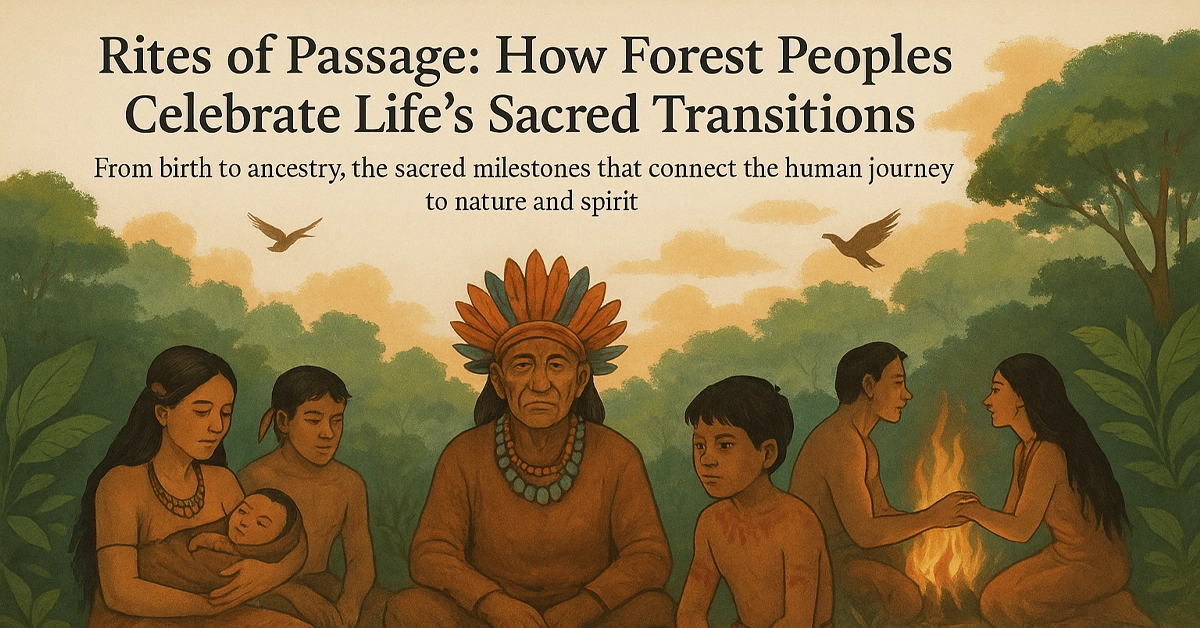
From birth to ancestry, the sacred milestones that connect the human journey to Nature and Spirit
Life as a Sacred Journey
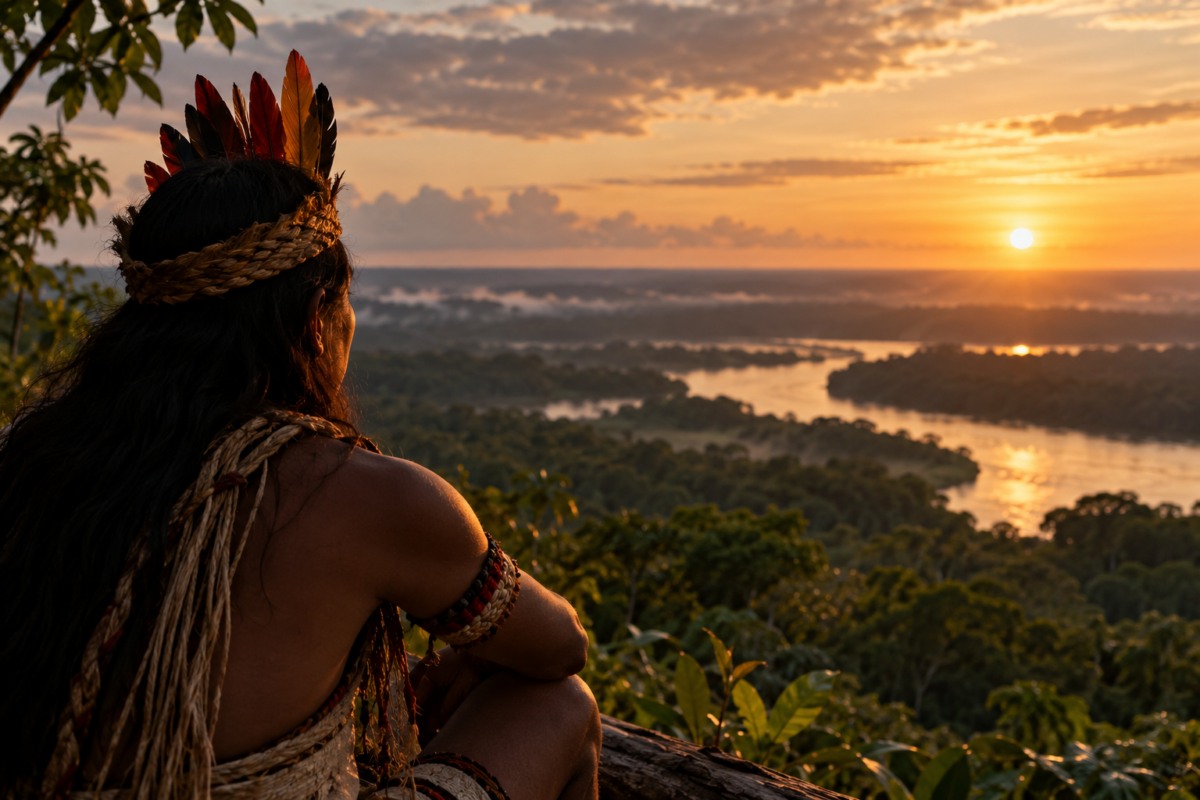
In the heart of the world’s rainforests—where rivers speak, birds carry messages, and the wind is a storyteller—life is not a linear experience. It is a spiral of learning, growing, surrendering, and returning. For the Indigenous peoples of the forest, human life is not seen as separate from the natural world but deeply embedded within it. Each phase—from the first breath to the final exhale—is honored with reverence and sacred rituals that recognize the soul’s transition through the great wheel of existence.
Unlike many modern cultures that neglect or even fear change, the forest peoples embrace transitions as sacred. Birth, puberty, union, motherhood, leadership, elderhood, and death are not just events; they are portals of transformation. These rites of passage serve to realign the individual with the spirit of the Earth, the wisdom of the ancestors, and the purpose of the soul.
The Purpose of Rites of Passage
Rites of passage are spiritual anchors. They offer direction, meaning, and identity. In the Amazon and other Indigenous forest communities, these ceremonies are not merely cultural performances—they are moments where spirit, community, and nature converge. Each rite offers a new understanding of one’s place in the world.
The absence of such rites, elders say, can lead to confusion, disconnection, and even spiritual illness. That’s why every phase of life is celebrated through ritual: to maintain harmony between the self, the community, and the Earth.
1. Birth: The Arrival of a Spirit
In many traditions, life begins long before the physical birth. The soul is believed to choose its parents and often communicates through dreams before conception. Pregnant mothers are treated with deep respect, and certain plants, foods, and behaviors are avoided to protect the spiritual integrity of the unborn child.
When the child is born, it is not only a biological event—it is a spiritual return. Some tribes bury the placenta near sacred trees or rivers, symbolizing the child’s connection to the Earth. Ceremonial songs, called icaro or healing chants, may be sung to welcome the spirit into the body.
The newborn is introduced to the elements—earth, water, fire, and air—so that the spirits of nature may bless their path. The naming of the child may be done by a shaman or elder through visions, dreams, or omens, giving them a spiritual name that reflects their essence.
2. Childhood: The Time of Observation and Play
The early years of life are not rushed. Children are seen as sacred beings, closer to the spirit world than adults. They are allowed to explore freely, learning from nature and observing the ways of the community.
While no formal rites may occur during early childhood, symbolic gestures often accompany milestones such as the first words, first steps, or first swim in the river. A child’s relationship with animals, plants, and the forest is encouraged and observed closely. Their dreams are taken seriously, as they may reveal spiritual gifts or future paths.
3. Puberty: Awakening of Power
This is one of the most significant transitions in many Indigenous cultures.
For Girls:
The onset of menstruation is a time of reverence. A young girl may be placed in seclusion for days or weeks, accompanied by elder women who guide her through the mysteries of her cycle, fertility, and spiritual power. This period of retreat is not about isolation, but about preparation and empowerment.
During this time, she may learn sacred songs, weaving, or healing practices. When she reemerges, a celebration often follows—marking her new identity and inviting the community to witness her transformation.
For Boys:
A boy entering puberty may be initiated through physical and spiritual tests. This could involve fasting, jungle isolation, or learning how to hunt, fish, or prepare medicines. Elders share oral traditions, myths, and responsibilities of manhood.
Ritual body painting, feather adornments, and symbolic tools such as bows or ceremonial staffs may be given as emblems of maturity. From this point, he is considered capable of protecting, contributing, and learning deeper ceremonial knowledge.
4. Union and Sacred Relationships
Marriage is not always a rigid institution in forest cultures, but when a union is recognized spiritually, it is honored in ritual. The bonding of two beings is considered a merging of energies, families, and destinies.
A union ceremony may involve the exchange of handmade gifts, sacred smoke, chants, or offerings to the spirits. It’s common for the couple to sit in nature, under the stars or beside a fire, while elders bless them with words, leaves, or water. Consent and harmony are always emphasized.
Rather than legal contracts, these unions are spiritual agreements held by the community and nature itself.
5. Motherhood and Fatherhood: The Rite of Creation
Becoming a parent is seen as the continuation of life’s sacred river. Mothers are revered as life-bringers, and fathers as protectors and supporters of this sacred flow.
Special ceremonies may be held during pregnancy and after childbirth to bless the new parents. They may receive new names, body paint, or sacred necklaces symbolizing their roles. Elders may offer guidance on how to raise the child in spiritual harmony and connection to the land.
The community often surrounds the new family with songs and gifts, emphasizing that the child belongs not just to two parents—but to the forest and to the people.
6. Leadership and Spiritual Roles
Not everyone becomes a spiritual leader, healer, or elder—but those who do undergo years of learning, initiation, and observation. When someone is recognized as a pajé (healer) or guide, the community often conducts a ceremony to honor this role.
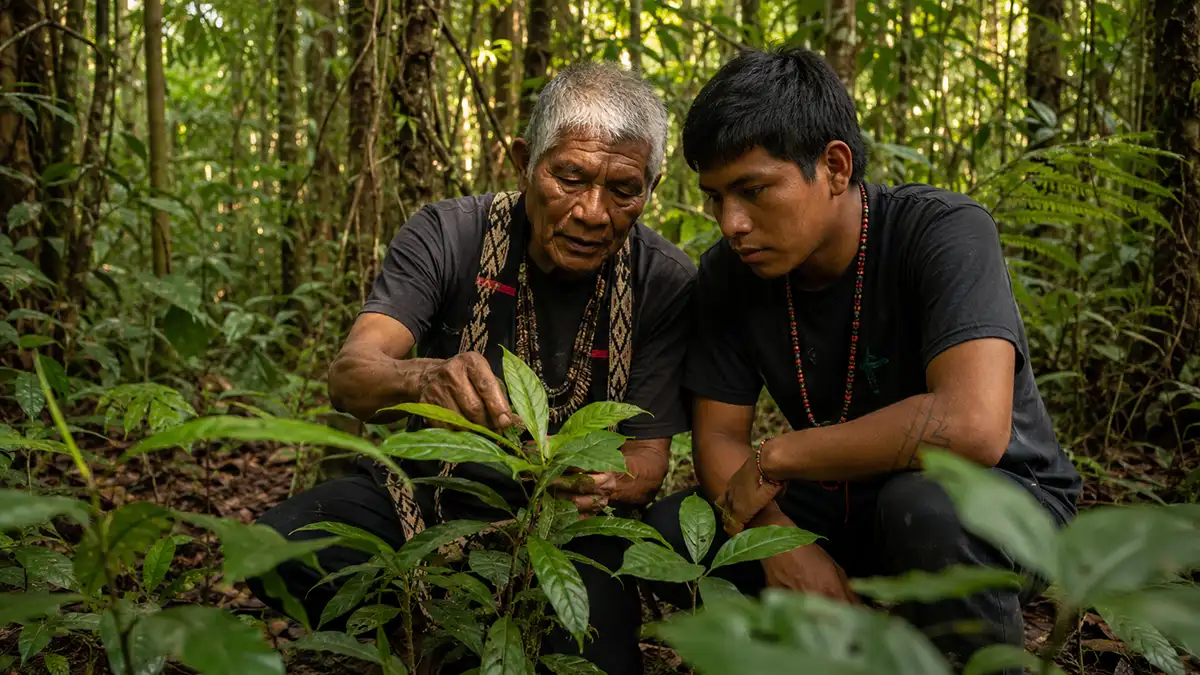
This may involve a rite of silence, plant dietas, fasting, or apprenticeships. The person learns the language of plants, dreams, animals, and the invisible world. Once initiated, they are seen as a bridge between worlds—serving both their people and the spirits.
Their tools—feathers, beads, maracas, kuripes, or ceremonial staffs—are often blessed in fire, water, or tobacco smoke, and treated with great reverence.
7. Elderhood: The Return to Essence
Becoming an elder is not about age alone—it is about the soul’s journey. Elders are the keepers of stories, the memory of the people. When someone reaches this stage with wisdom and grace, it is common to hold a ceremony of recognition.
They may be asked to sit in a central place in gatherings, guide younger generations, and pass down sacred teachings. Some receive new names, representing their connection to the ancestors or spirits of the land.
In some tribes, the entire village may gather to sing, offer gifts, and listen to the elder’s story, ensuring that their wisdom is remembered and honored.
8. Death: The Great Return
Death is not seen as an end—but as a return. It is believed that the spirit leaves the body and returns to the world of the ancestors, or perhaps to another form in nature.
The body is often cleansed with sacred herbs or resins. Feathers may be placed near the heart. Prayers and chants accompany the soul’s journey.
Sometimes, seeds are planted where the body rests. Trees grow from the remains. The cycle is complete. The spirit becomes part of the forest again.
Rather than mourning only, these moments are also celebrated with gratitude for the life lived and the teachings shared. The person becomes an ancestor—a guiding presence for future generations.
A Culture of Connection
What sets Indigenous forest rites apart is their intimate connection to nature, community, and spirit. These rituals are not artificial events—they are deeply woven into daily life. They remind us that we are part of a sacred rhythm: birth, growth, transformation, and return.
In the modern world, where transitions are often rushed or ignored, these ancient practices offer a powerful model. They teach us that every phase of life deserves to be honored. That the Earth is a witness to our becoming. That spiritual meaning is not something we chase—but something we awaken through intentional living.
Perhaps by learning from these traditions, we too can reclaim the sacred in our lives—not by copying the rituals, but by listening to their essence. By creating space for transition, depth, and connection. By walking with more reverence through each portal of life.
Continue exploring
All stories
The medicines of the forest