Hapeh Apurinã: The Breath of the Green Nation

The Green People of the Purus River
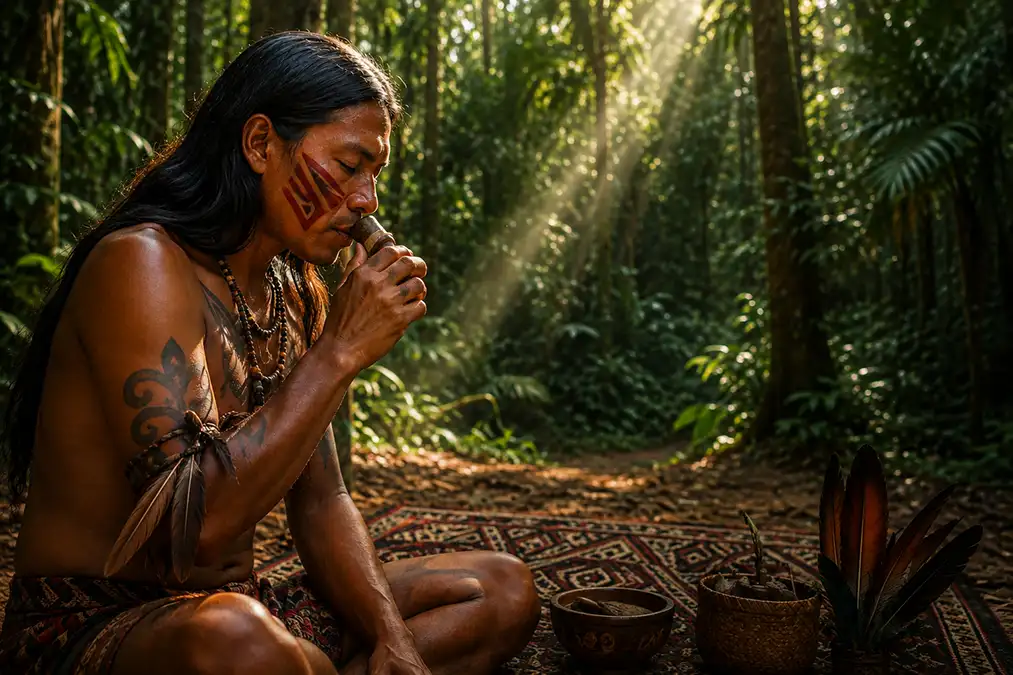
Deep within the heart of the Amazon, where the Purus River bends through endless green, live the Apurinã people — known to their neighbors as the green nation.
Their name itself comes from ipurina, meaning “those who come from the forest,” a title that perfectly describes their relationship with the land.
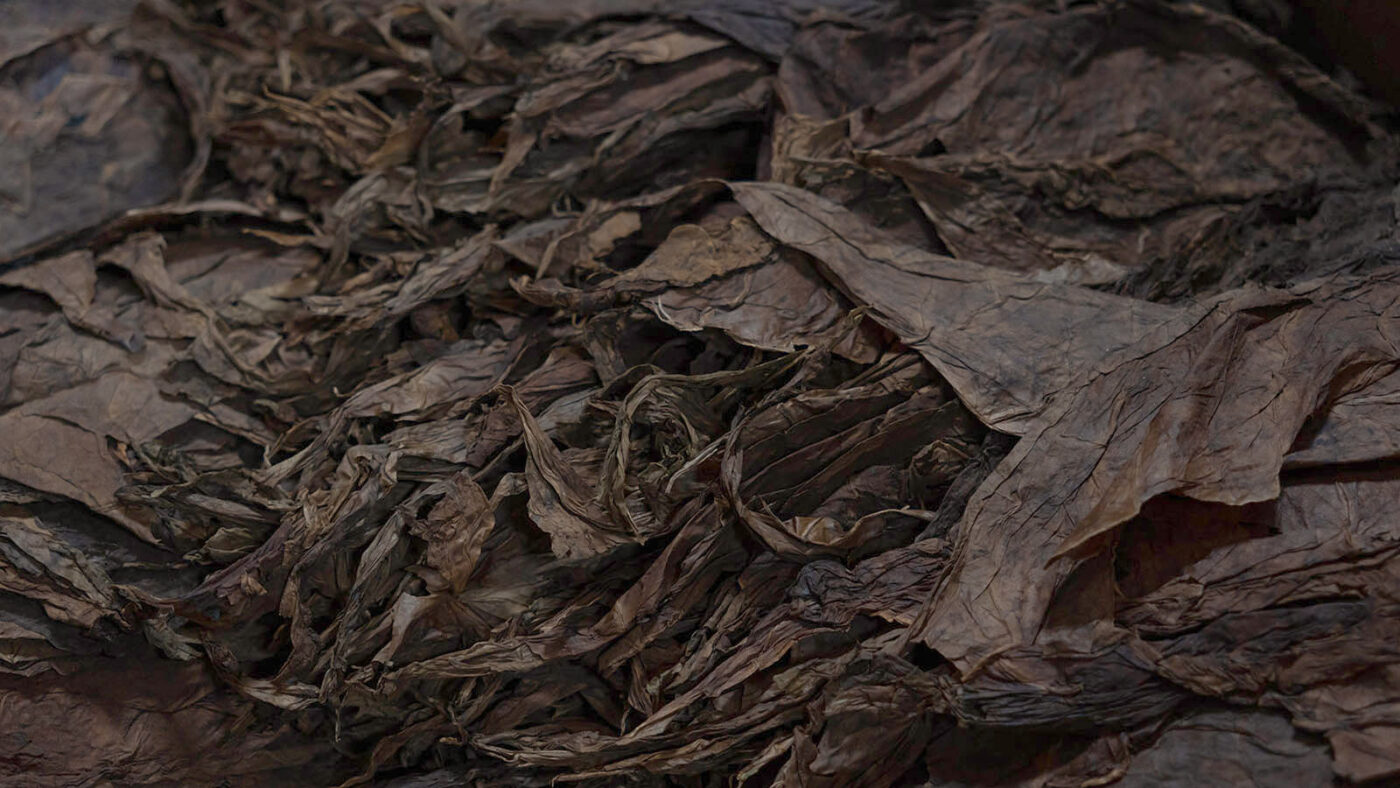
Among the sacred gifts they share with the world, none carries more peace, clarity, and grounding than the Hapé Apurinã — a snuff made from sacred tobacco (mapacho) and the ashes of forest trees, prepared in ritual and prayer.
This medicine is not simply inhaled — it is breathed into being.
It is a dialogue between human breath and the breath of the Earth.
The Apurinã say:
“When you receive the hapé, you receive the voice of the forest.”
A People Between Rivers and Stars
The Apurinã live in the southwestern Amazon, between the states of Acre and Amazonas, along the Purus River and its countless tributaries.
Their territory is vast and fluid — much like the waters they navigate.
They are known for their gentle strength, their deep ecological knowledge, and their exquisite use of color and plant symbolism in art and ritual.
The Apurinã see the forest as a living relative, not a resource.
They believe every tree, plant, and animal has a spirit — and that humans are part of this same web of consciousness.
Their medicine, the Hapé Apurinã, embodies this worldview: balanced, respectful, and deeply connected to the cycles of nature.
The Sacred Composition: Simplicity with Purpose
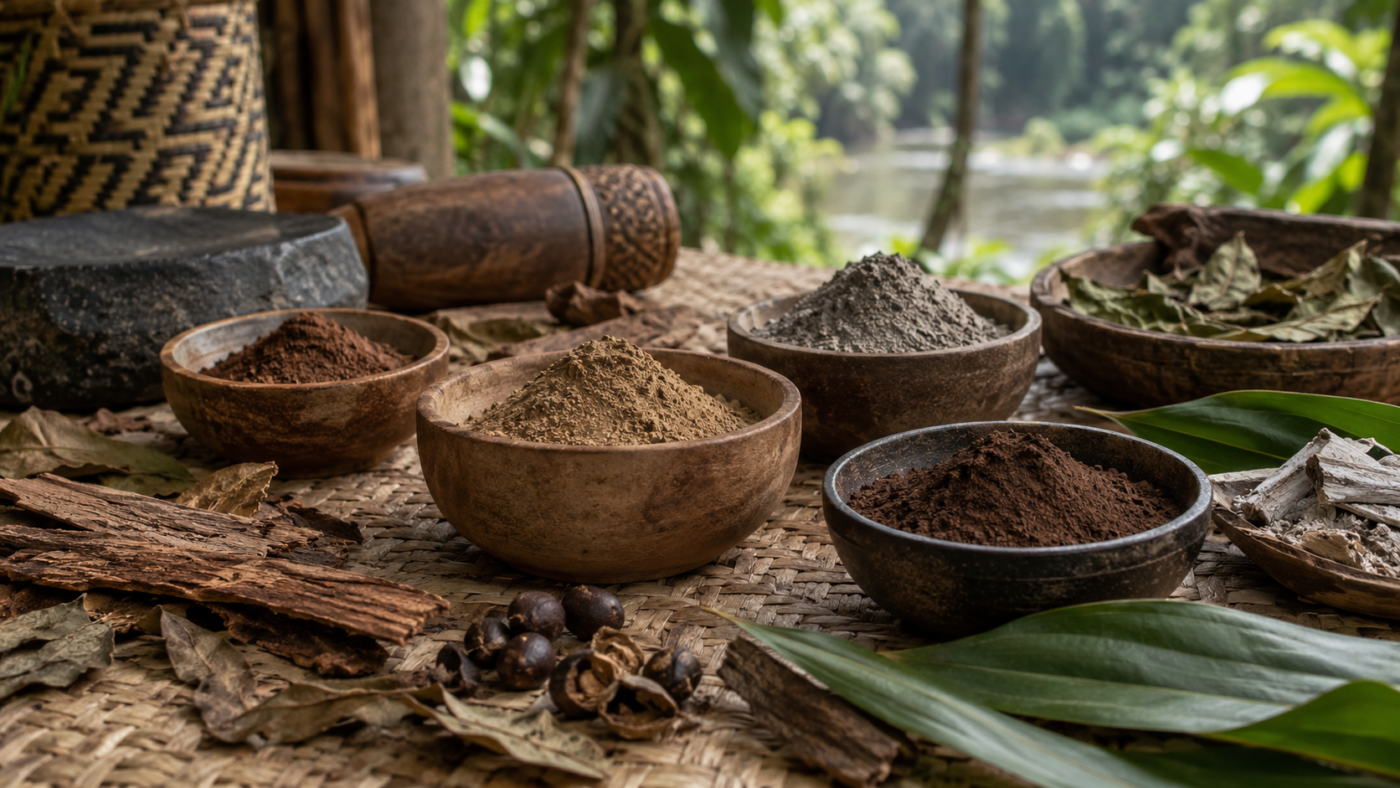
While many hapés use complex blends, the Apurinã formula is elegantly simple — yet spiritually potent.
It traditionally combines:
- Mapacho (Nicotiana rustica) — the sacred tobacco of the forest, used for grounding, protection, and connection.
- Ashes from specific trees — often Tsunu or Murici, known for their purifying and calming properties.
Unlike some blends that awaken or challenge the user, Apurinã hapé has a softer vibration — opening the heart, clearing the mind, and inviting silence.
It is medicine for peace.
Medicine for listening.
Medicine for those who wish to remember without effort.
The Spirit of Calm and Clarity
The experience of the Apurinã hapé is subtle but profound.
As the powder enters the nose, it cleanses the channels of thought — dissolving anxiety and opening space for clarity.
Soon, the breath deepens. The mind quiets.
What remains is presence.
Many describe it as a “green calm” — an energetic stillness that carries the fragrance of the forest itself.
While some hapés ignite fire and transformation, the Apurinã medicine flows like water.
It grounds without heaviness, clears without intensity, and restores harmony without force.
It is the voice of the river, not the thunder.
The whisper of leaves, not the storm.
A Ritual of Reciprocity
To the Apurinã, every preparation of hapé is a ceremony.
Before gathering the plants, they offer prayers to the forest — asking permission, expressing gratitude, and singing to the spirits of the trees.
The ashes are not just burned; they are transmuted.
Through fire, the solid becomes essence.
Through prayer, the material becomes medicine.
Then, the sacred tobacco is ground and blended with care, often during special times of the moon.
The result is a fine, aromatic powder charged with intention.
When the hapé is finally applied, it is not seen as ingestion — but as communion.
The Apurinã say:
“When we blow the hapé, the forest breathes us back.”
The Apurinã Way of the Breath
Breath is sacred.
It is the bridge between body and spirit, between the visible and invisible.
In Apurinã cosmology, the breath carries aweti — the vital energy that connects humans to the cosmos.
When one receives hapé, this flow is cleansed and realigned.
The inhale is human; the exhale is divine.
This is why hapé is traditionally applied through a tepi — a sacred applicator that allows one person to blow the medicine into another’s nostrils.
The act itself is relational — a transfer of prayer, not a transaction.
The giver offers breath with intention; the receiver opens with trust.
In that moment, the boundary between giver and receiver dissolves — only the medicine remains.
The Feminine Energy of the Forest
The Apurinã hapé is often described as carrying a feminine energy — nurturing, soothing, and harmonizing.
This quality reflects the Apurinã’s deep respect for the feminine principle in all life forms.
They see the Earth as the first mother, and every tree as her daughter.
To them, balance comes not from domination, but from cooperation.
When the hapé enters the body, it does not conquer — it embraces.
It teaches through gentleness, reminding us that healing does not always come from intensity, but from subtle alignment.
The Song of the Forest
During ceremonies, Apurinã elders often accompany hapé with songs called kenen — sacred chants that vibrate through the body and awaken the spirit of the medicine.
Each song is a bridge — between elements, emotions, and worlds.
They do not speak about the forest; they speak with the forest.
One of their songs translates roughly as:
“The wind carries the leaf,
The leaf carries the prayer,
The prayer carries the soul,
Back to where it remembers.”
In this way, the Apurinã hapé is not only a tool for inner cleansing but a doorway to ancestral memory.
Physical and Energetic Effects
The Apurinã medicine is unique in its balance between physical and spiritual effects.
Physically, it:
- Clears sinuses and respiratory channels.
- Improves focus and alertness.
- Relieves headaches and energetic blockages.
Energetically, it:
- Grounds the spirit without dulling awareness.
- Opens the heart chakra gently.
- Promotes peaceful reflection and gratitude.
Many users describe feeling “embraced by green” — as if the forest itself were breathing with them.
Hapeh Apurinã and the Art of Listening
One of the greatest lessons of the Apurinã medicine is the art of listening.
Not listening to thoughts, but to silence.
Not listening for answers, but for presence.
When the noise of the mind quiets, the subtle begins to speak — the pulse of the earth, the rhythm of the heart, the memory of ancient trees.
This listening is the true teaching of the medicine.
It reminds us that peace is not something to reach for — it is something to return to.
The Role of the Elders
In Apurinã culture, elders are living libraries — keepers of songs, stories, and the knowledge of plant medicines.
They teach through observation, rhythm, and silence.
Before learning to prepare hapé, one must first learn to walk properly in the forest — to see without taking, to hear without interrupting.
This initiation is slow and relational.
Only those who have learned to move with humility can carry the responsibility of the medicine.
Thus, each batch of hapé is not a product — it is a prayer offered through generations of respect.
Hapeh and the Renewal of Identity
For the Apurinã, hapé is not merely a healing tool; it is a reminder of who they are.
In times when external pressures threaten Indigenous cultures, the act of preparing and sharing hapé becomes an act of resistance — a way of affirming their identity, autonomy, and connection to the sacred.
When they share their medicine with outsiders, it is not for profit, but for peace.
They say the forest wants to speak again — and hapé is its voice carried by breath.
A Bridge Between Worlds
When Apurinã hapé reaches other parts of the world, it carries more than physical properties — it carries relationship.
It invites people far from the Amazon to reconnect with the sacred in their own breath.
It teaches that the forest is not distant; it lives within our lungs.
Each application is an opportunity to remember that life itself is ceremony.
That to breathe consciously is to pray.
That to care for the Earth is to care for the body that breathes her air.
Using Hapeh Apurinã with Intention
To honor this medicine, approach it with presence and respect:
- Create a sacred space. Sit in silence or near nature.
- Set an intention. Ask the forest what you need to learn.
- Receive with humility. Whether self-applied with a kuripe or offered by another with a tepi, inhale with surrender, not control.
- Breathe deeply. Let the medicine move through your body and release what is not needed.
- Rest in stillness. Listen. The forest will speak in her own time.
A Gift of the Green Nation
Every hapé carries the essence of the tribe that prepares it — and the Apurinã medicine carries the frequency of peace.
It is often called the medicine of the heart because it brings one into deep coherence with nature.
It is the hapé of gratitude, presence, and reconciliation.
Where some blends awaken fire or thunder, this one awakens serenity.
Where others open the third eye, this one opens the heart.
Where others cleanse with power, this one heals with tenderness.
It is, truly, the breath of the green nation.
The Breath That Remembers
When we receive Apurinã hapeh, we are not just taking a medicine — we are participating in an ancient exchange between humanity and the Earth.
It reminds us that the breath we exhale is the forest’s inhale.
That peace is not something we find — it is something we remember.
The Apurinã people invite us to return to that memory — to breathe with the Earth, to listen to her voice, and to walk gently upon her soil.
As their elders say:
“We are the forest dreaming itself through us.
When we breathe together, the world heals.”
Continue exploring
All stories
The medicines of the forest