The Return of the Shaman: Why the Modern World Needs Ancestral Wisdom
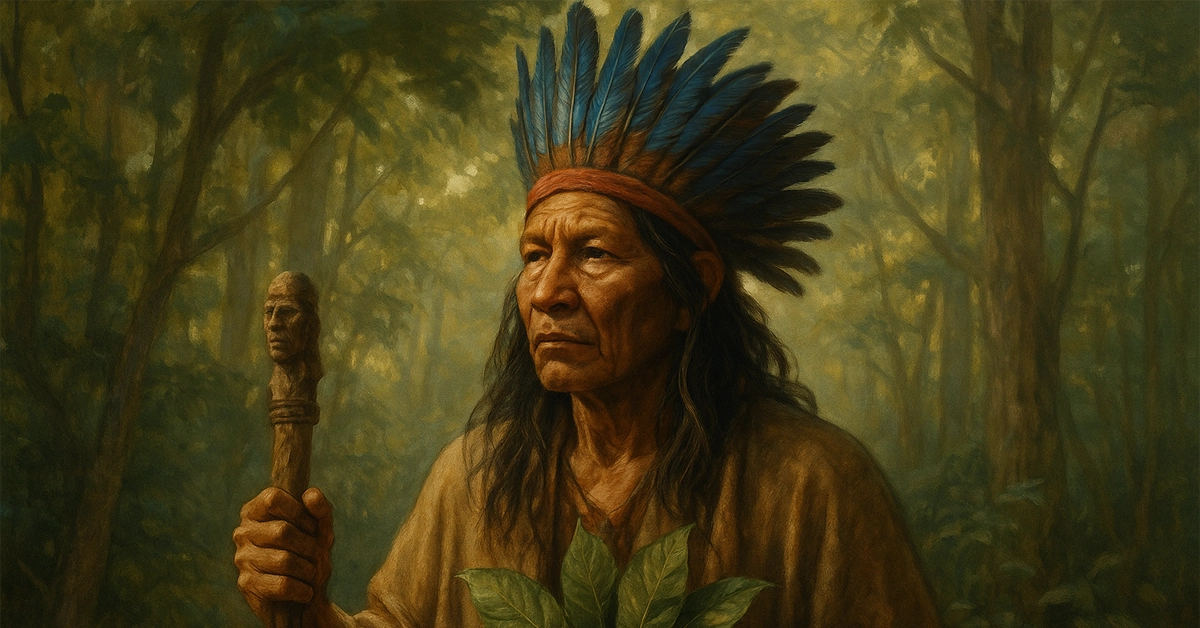
How shamans and healers are being called not only to heal individuals but the spirit of humanity
When the Old Becomes New
We live in an era of astonishing technological advancement—yet behind the glowing screens and global networks, something essential is missing. Despite our hyperconnectivity, many people feel deeply disconnected from themselves, from the Earth, and from one another. Rates of depression, anxiety, burnout, and emotional numbness continue to rise, exposing an invisible wound that modern science struggles to heal.
In this context, the figure of the shaman returns—not as a relic of an ancient past, but as a guide for our collective future.
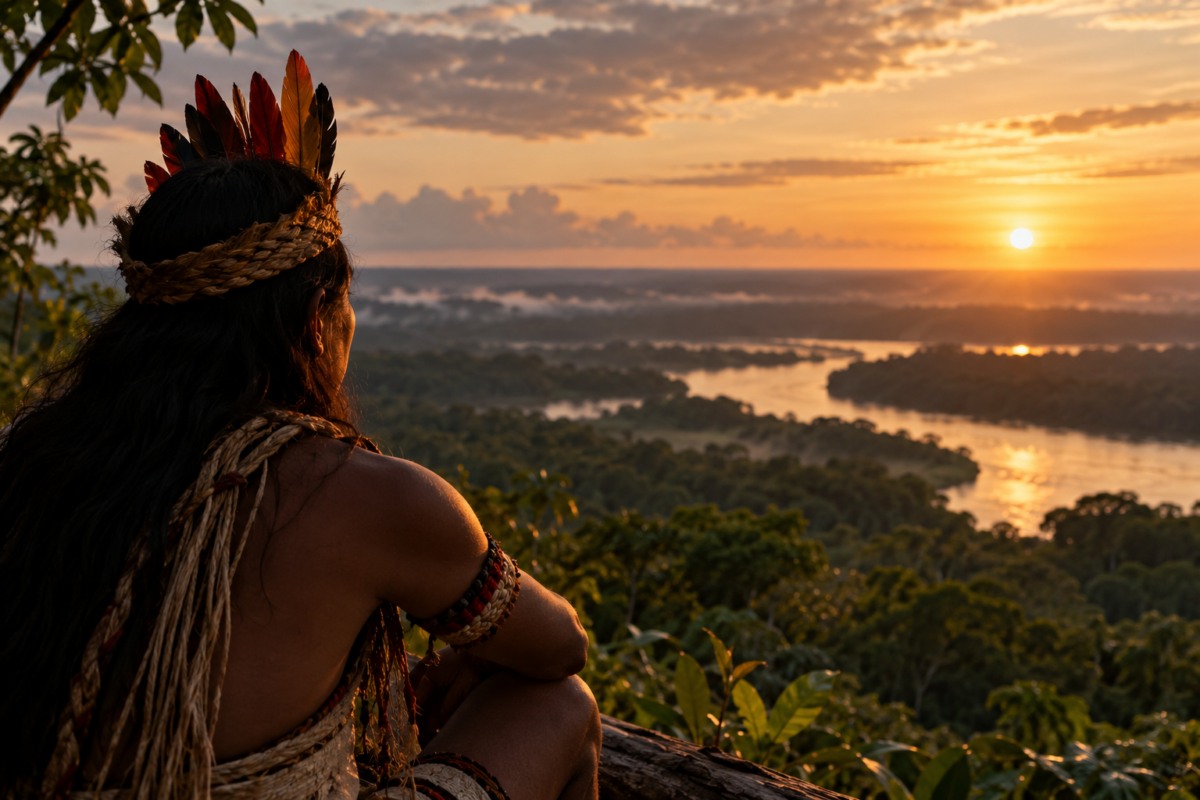
The shaman, or pajé in Brazil, emerges from the mists of ancestral memory to remind us that true healing begins in the soul—and that the Earth itself is a sacred, living being whose language we must learn to hear once again.
The Shaman: Guardian of Sacred Portals
The word “shaman” comes from the Tungusic peoples of Siberia, but the archetype exists in cultures across the world. The shaman is one who walks between worlds—listening to the unseen, dreaming with the spirits, healing with songs, plants, breath, and presence.
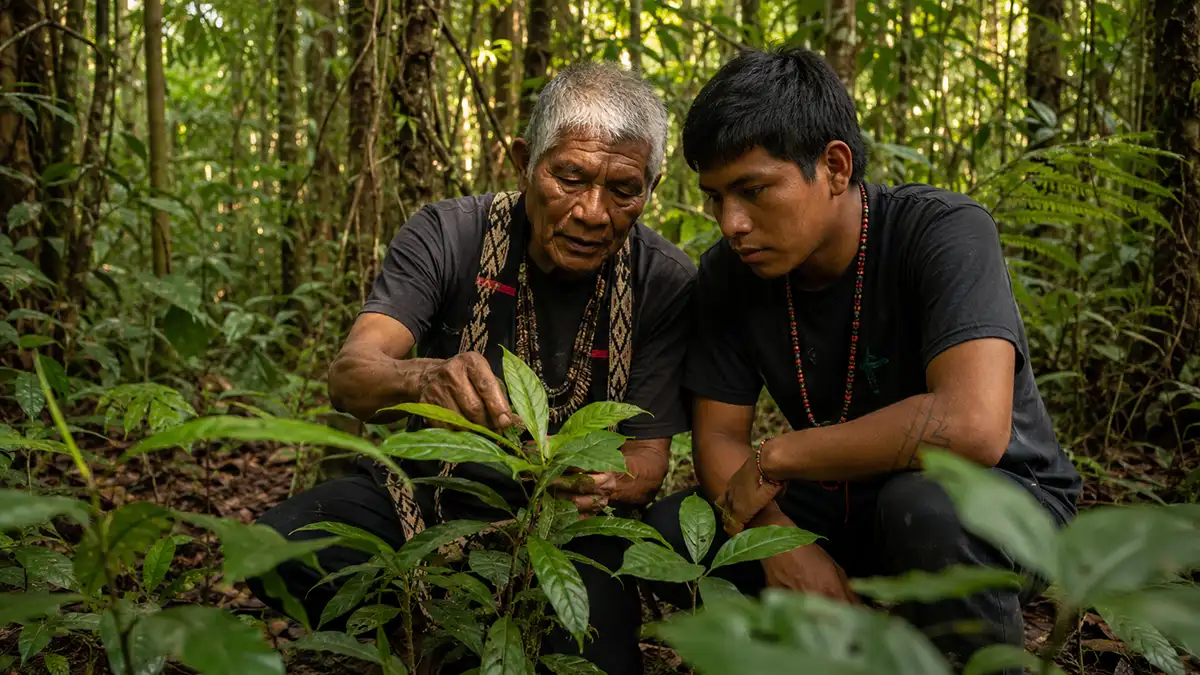
Among Indigenous peoples of the Amazon and throughout South America, the pajé is a spiritual leader, a healer, a storyteller, and a keeper of knowledge passed down through generations.
They do not “treat” symptoms. They restore balance, often by helping individuals remember who they truly are and where they belong—not just in society, but in the vast web of life.
The Spiritual Crisis of the Modern World
Modern medicine can often treat the body, but it struggles with the soul. The modern world praises rationality, progress, and speed—but in doing so, it has silenced the inner voice.
Where are the rituals that give meaning to death and rebirth, to grief and joy? Where is the collective wisdom that teaches us to navigate life’s initiations—not as isolated problems, but as sacred thresholds?
In abandoning ritual, silence, and nature, many have forgotten how to heal their deepest wounds. And in this forgetting, we also forget the Earth herself.
This is why shamanism is not a trend—it is a return. A remembering of something that was never truly lost, only buried under centuries of disconnection.
The Call of the Forest: Plant Teachers as Allies
Among the Indigenous peoples of the Amazon, sacred plants are not drugs—they are teachers. Ayahuasca, Rapéh, Kambo, Sananga, Mapacho, and many others are seen as intelligent beings, allies of the spirit world, each with its own personality, song, and medicine.
In the hands of a trained shaman or pajé, these plants are used ceremonially to cleanse, align, and reveal. They open portals—not only to the spirit world but to the truth within the self.
What we call “psychedelic experiences” are, in Indigenous terms, journeys of remembrance. And through these journeys, many modern seekers are finding a deeper sense of purpose, identity, and connection.
But this must be approached with respect and humility. The plants are sacred. The traditions are alive. And the shaman is not a facilitator—they are a bridge between realities, responsible for the well-being of both the people and the spirits they invoke.
Ancestral Wisdom and Collective Healing
Shamanism is not merely about individual healing. It is about restoring the balance of the collective. The role of the pajé or healer is deeply woven into the life of the community. Their task is not only to treat illness, but to protect the spiritual ecology of the tribe.
In Indigenous cosmologies, disease is not always physical—it can be emotional, energetic, or spiritual. A community out of alignment with nature, with the sacred, or with one another, will eventually manifest this imbalance through suffering.
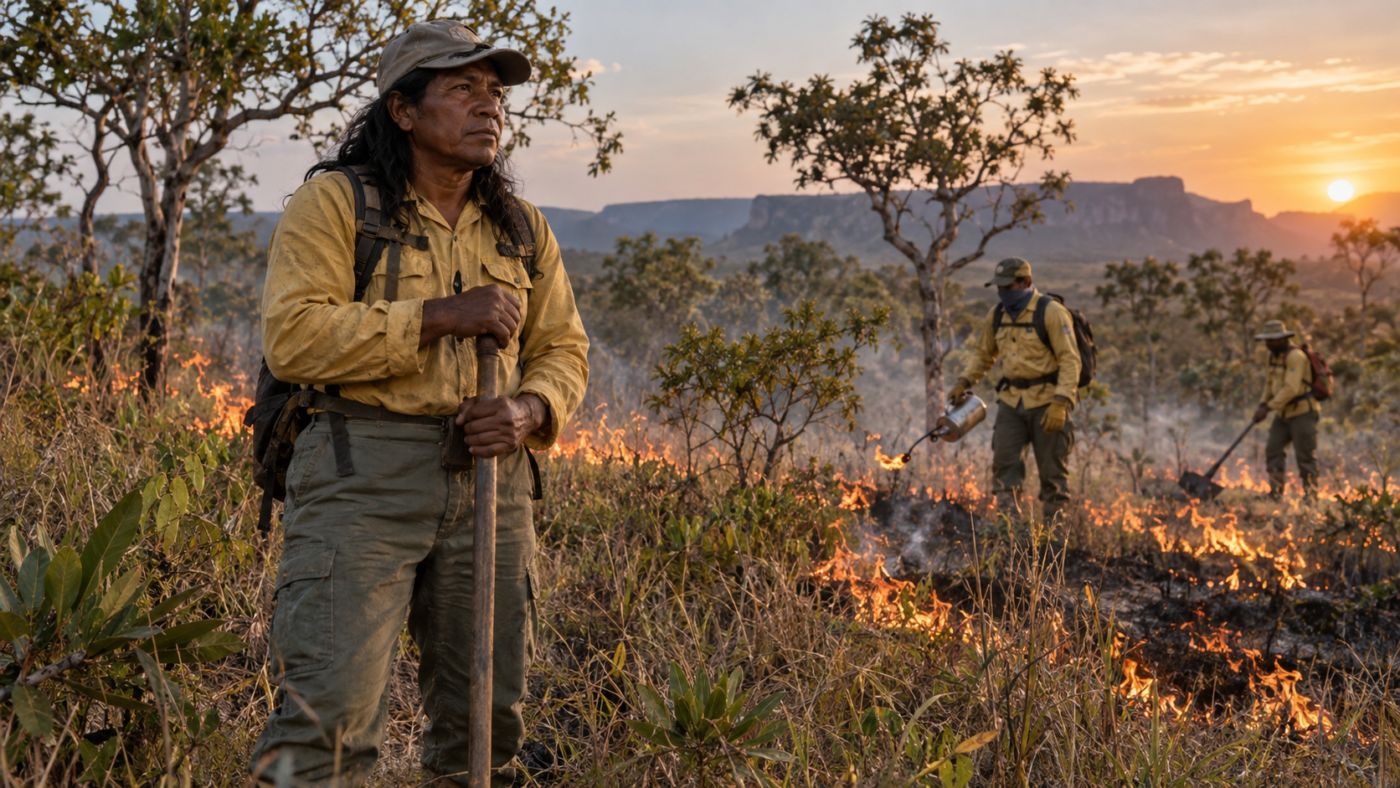
In this way, shamanism holds a powerful message for the modern world: we are not separate from what we destroy. When the forest burns, something inside us burns too. When rivers are poisoned, our own emotional waters stagnate. Healing the Earth is inseparable from healing ourselves.
The New Generation of Medicine People
In today’s global awakening, many individuals—Indigenous and non-Indigenous—are feeling the call to become “medicine people.” They are not claiming to be shamans in the traditional sense, but rather guardians of sacred space, facilitators of remembrance, weavers of ceremony.
These new healers are being initiated not by institutions, but by spirit, silence, suffering, and sacred experience. Many have walked through deep personal darkness before stepping into their roles as light-bearers.
There is also a movement of Indigenous elders traveling the world to share their knowledge—bringing messages from the forest to cities, from the sacred to the secular. Their presence is not just symbolic. It is medicinal.
These bridges are being built carefully, and when done with respect, they allow ancient traditions to adapt without being appropriated—to flourish, not fade.
The Feminine Face of the Shamanic Revival
One of the most beautiful aspects of this global awakening is the rise of feminine wisdom. While many traditional shamans have been men, in numerous Indigenous cultures the feminine has always held equal, if not superior, spiritual authority.
Women are the keepers of birth, of water, of lunar rhythms. Many of today’s most respected medicine carriers are women—pajés, midwives, singers, herbalists, visionaries.
They bring a gentler but no less powerful form of healing. Their role is not to dominate energy but to nurture it back into harmony. They are the mothers of a new planetary consciousness, guiding the return of the sacred to everyday life.
Shamanism in the Urban Jungle
Can one live a shamanic life in the city? Absolutely—if shamanism is understood not as a costume, but as a way of being.
To live shamanically in the modern world is to recognize the spirit behind all things: to see the soul in a child’s cry, the message in a dream, the whisper of a plant, the sacred in the mundane.
It means creating space for ritual—even in small ways. Lighting a candle with intention. Offering a prayer before a meal. Honoring the moon cycles. Listening to nature. Listening to silence.
We don’t need to escape to the jungle to hear the forest. Sometimes the jungle is within us—dense with memory, mystery, and medicine.
Respect, Reciprocity, and the Role of the Seeker
With the rise of ayahuasca tourism and the globalization of sacred medicines, there comes great responsibility. Not all who claim to be shamans are true healers. Not all ceremonies are safe.
The seeker must learn discernment. To approach this path is to walk with reverence—to honor the tribes who have carried these traditions, to give back materially and spiritually, to support Indigenous sovereignty, and to recognize that no healing is separate from the Earth.
Reciprocity is not optional—it is the foundation of real healing.
The Spirit of Humanity Is Calling
The world does not need more gurus. It needs more guardians. People who walk with humility, listen with the heart, and act from a place of sacred responsibility.
The shaman is not here to perform miracles for us. The shaman is here to help us remember that the miracle was always within us.
We are being called—not to imitate, but to reintegrate. To remember that the Earth is not a resource, but a relative. That our soul has roots. That healing is not a product, but a process.
The return of the shaman is the return of the soul to the body of humanity.
If you feel this calling, you are not alone. Explore our sacred tools, retreats, and plant medicines at Queen of the Forest and walk this path with us—guided by the elders, rooted in the forest, and aligned with the spirit of the Earth.
Continue exploring
All stories
The medicines of the forest