The Forgotten Guardians: Lesser-Known Plants of the Amazon
Whispers of hidden medicine, silent flowers, and humble herbs that carry the memory of the forest.
Beyond the Famous Medicines
When most people think of the Amazon rainforest, their minds immediately go to the great and well-known plant medicines: Ayahuasca, Rapéh, Sananga, Kambo. These are indeed powerful allies that have traveled far beyond the forest, becoming symbols of healing and spiritual awakening.
But behind the veil of fame lies another story — a subtler, quieter story. The Amazon is not only the realm of grand medicines but also a living library of countless smaller plants, often overlooked, ignored, or forgotten. These are the herbs used in everyday healing, the flowers picked by elders for a child’s fever, the barks chewed for toothache, the leaves boiled for digestive relief.
They may not be part of global ceremonies or spiritual tourism, yet they are the guardians of daily life in the forest. They are the “forgotten guardians” — lesser-known plants that hold secrets, wisdom, and spiritual presence just as profound as the celebrated vines and toads.
In this article, we will journey through the world of these humble plants: how they are used, the stories they carry, and the spiritual teachings hidden in their smallness.
The Forest as an Infinite Apothecary
The Amazon is home to more than 40,000 plant species. Only a fraction of them has been studied scientifically, and even fewer are known outside the rainforest. For Indigenous peoples, however, the forest is not a mystery — it is a pharmacy, a kitchen, a temple.
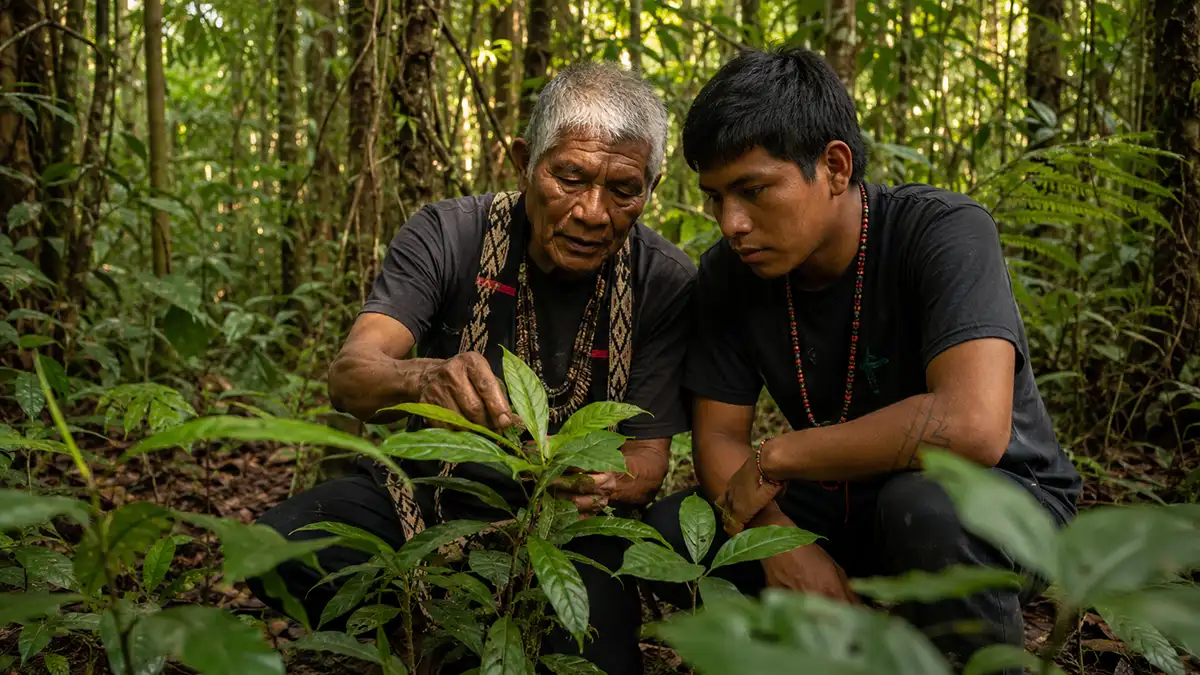
The great shamans may use powerful vines to travel between worlds, but the mothers, grandmothers, and elders use the quiet plants every day. These are the ones who tend to cuts, coughs, stomachaches, and fevers. They are the ones who prepare teas and poultices that keep the community healthy.
In this sense, the forgotten plants are not “lesser” at all. They are essential — the very fabric of everyday survival and wellbeing. And in their subtlety, they also carry deep spiritual messages.
The Humble Healers: Examples of Lesser-Known Plants
Let us look at a few examples — not as an exhaustive list, but as windows into a forgotten world.
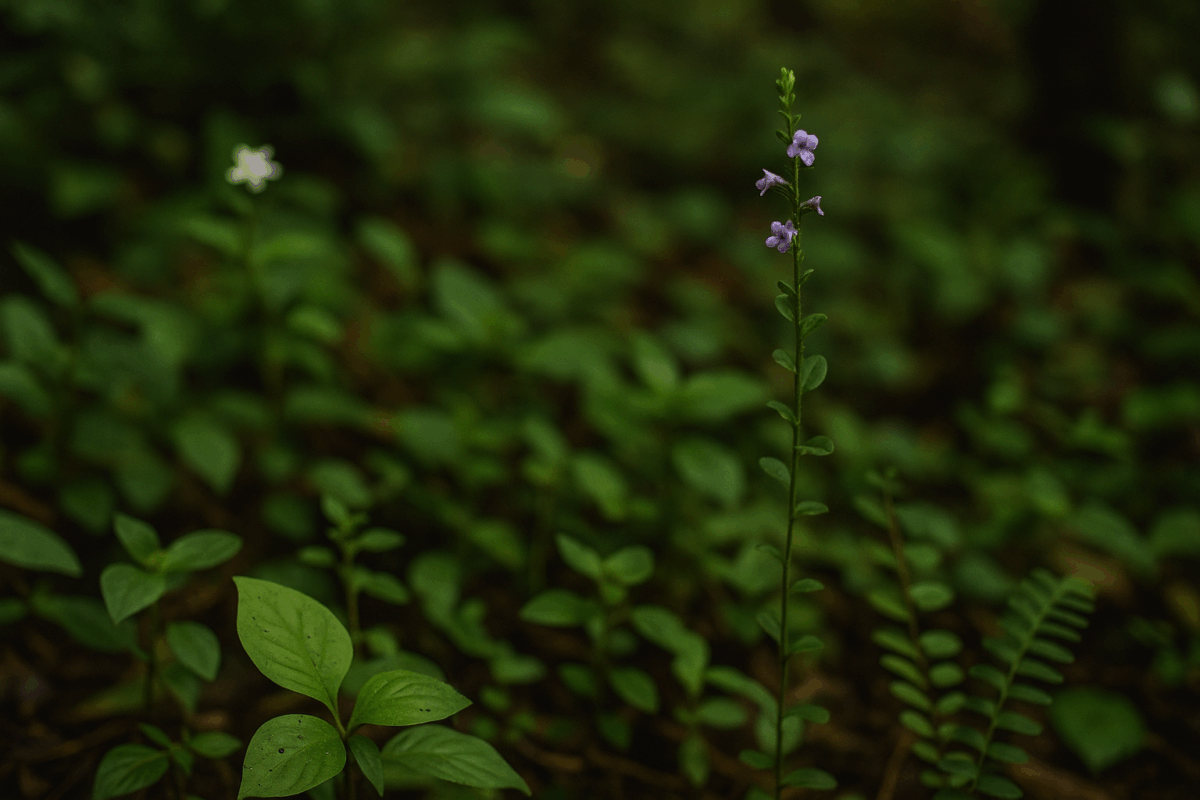
1. Chambá (Justicia pectoralis) – The Plant of Calm Breath
Used traditionally for respiratory problems, Chambá is a small herb with delicate purple flowers. A tea made from its leaves opens the chest, eases coughs, and helps one breathe with peace. Spiritually, it is said to teach calmness and patience, reminding us that breath is life.
2. Saracura-Mirá (Ampelozizyphus amazonicus) – The Invisible Shield
This vine is not as famous as Ayahuasca, but it is widely used as a tonic to strengthen the body’s resistance. Hunters drink it before long journeys, saying it shields them from fatigue and bad luck. Its spiritual message: protection often comes quietly, without anyone noticing.
3. Andiroba (Carapa guianensis) – The Oil of Protection
From the seeds of this tree comes a bitter oil, used as insect repellent and for skin healing. Indigenous people rub it on their bodies before entering the forest, creating a protective layer. Symbolically, it teaches about boundaries and the importance of keeping harmful energies away.
4. Tajá (Caladium bicolor) – The Plant of the Spirits
Recognizable by its striking red and green leaves, Tajá is sometimes planted near homes as spiritual protection. Some shamans say it attracts good spirits while warding off harmful ones. Though not used ceremonially in the same way as Ayahuasca, it is respected as a guardian of thresholds.
5. Cipó-Titica (Heteropsis spp.) – The Vine of Connection
Used more often in weaving than in medicine, this vine provides material for baskets and crafts. Yet spiritually, it represents connection, weaving lives together just as it weaves fibers. It shows that utility and sacredness often walk hand in hand.
Everyday Plants, Everyday Prayers
The forgotten guardians are not just about healing the body. They also heal the spirit by reminding people of the sacredness of daily life.
When a mother boils a leaf to calm her child’s fever, that act is also a prayer. When a grandmother rubs Andiroba oil on her grandson before he goes hunting, that is also a blessing. When someone plants Tajá in front of the house, it is an offering to the spirits of protection.
These actions may seem simple, but they are deeply spiritual. They are ceremonies disguised as routine. They are rituals hidden in the folds of daily existence.
Why Are They Forgotten?
If these plants are so essential, why are they not as widely known as Ayahuasca or Kambo?
The answer lies partly in globalization. The world tends to notice only what is dramatic, powerful, or exotic. A vine that brings visions will travel across continents. A bark that lowers fever will remain invisible.
Another reason is that many of these plants are used locally, in specific regions or families. Their knowledge is oral, passed from grandmother to granddaughter, rather than codified in large ceremonial traditions.
But perhaps the deeper reason is spiritual: the forgotten guardians remind us that healing does not always come through fire and thunder. Sometimes it comes through whisper and shadow. And in our world obsessed with spectacle, whispers are often ignored.
Spiritual Teachings of the Forgotten Guardians
Each plant, no matter how small, carries a teaching. Here are a few spiritual lessons that the forgotten guardians offer:
- Humility: Power is not always loud. True strength can be silent, hidden, humble.
- Patience: Healing often takes time. These plants teach us to wait, to trust the slow unfolding.
- Attention: To find them, one must pay attention — to details, to subtleties, to the almost invisible.
- Reciprocity: They remind us to give back to the forest, to respect even the smallest beings.
- Presence: Everyday acts — boiling water, applying oil, planting a leaf — can be sacred if done with awareness.
Stories from the Forest
In many villages, stories about these plants are woven into daily life. A child remembers how her fever broke after drinking Chambá tea. A hunter recalls how Saracura-Mirá kept him strong during a long journey. A grandmother tells her grandchildren never to disrespect Tajá, because it is alive and listening.
These stories are not written in books. They live in memory, in the way a hand picks a leaf, in the way a seed is crushed, in the way a prayer is whispered. They are part of the living fabric of forest culture.
The Global Relevance
Why should the wider world care about these forgotten plants?
Because they remind us of something we have lost: the intimacy with the small. In modern society, we chase big cures, big spectacles, big solutions. Yet often the most important medicine is a cup of tea, a moment of rest, a simple ritual of care.
In this sense, the forgotten guardians are not only for the forest people. They are teachers for all humanity. They show us how to re-enchant the small moments, how to see medicine in everyday life, how to honor the overlooked.
Toward a Culture of Remembering
To remember these plants is to remember our own forgotten ways. Every culture once had its herbs, its teas, its rituals of protection. Much of that knowledge has been lost in the rush toward modernity.
But the Amazon still carries it, whispering through leaves and roots. If we learn to listen, perhaps we can recover not only forgotten medicines but also forgotten values: humility, patience, reciprocity, presence.
Listening to the Whispers
The famous medicines will continue to inspire visions and global movements, and that is good. But alongside them, let us also honor the quiet ones: the small herbs, the hidden flowers, the everyday guardians.
They are the ones who remind us that life itself is ceremony. That every act of care can be sacred. That medicine is not only in grand rituals but also in the gentle whisper of a leaf boiling in water.
The Amazon is vast, and so is its wisdom. If we listen closely, we may hear not only the roar of jaguars and the chants of shamans, but also the soft voices of the forgotten guardians — the plants that wait patiently to be remembered.
Continue exploring
All stories
The medicines of the forest