Poisonous Plants of the Amazon: Between Danger and Divine Medicine

The Thin Veil Between Life and Death
The Amazon is alive. It breathes in the morning mist, pulses in the veins of its rivers, and whispers ancient secrets through the towering trees. It is a realm of paradoxes, where beauty and danger coexist, where a single leaf can either heal or kill, where the line between life and death is as thin as a spider’s silk glistening in the jungle dawn.
To the Indigenous peoples of the Amazon, every plant is a teacher. Some offer nourishment, others deep visions, and some guard their secrets with lethal potency. Poisonous plants are not mere hazards; they are sacred beings, respected, feared, and, in the right hands, transformed into powerful medicines.
In this dance of survival and wisdom, Indigenous shamans and healers have learned to navigate the jungle’s pharmacopoeia, deciphering which plants to avoid, which to harness, and which demand the utmost reverence.
Join us on a journey through the shadowy side of Amazonian flora—where poison, when understood, becomes a pathway to healing.
The Keepers of Hidden Knowledge
For countless generations, Indigenous tribes have lived in communion with the rainforest, passing down knowledge of its plants through oral tradition, dreams, and direct communication with the spirit world. Unlike the Western perspective, which often sees poisonous plants as threats, Indigenous wisdom understands them as guardians—forces that must be approached with humility and respect.
The curanderos (healers), pajés (shamans), and vegetalistas of the Amazon do not simply categorize plants as “safe” or “dangerous.” Instead, they understand that each plant has a spirit, a purpose, and a role within the intricate web of life. Some poisons are used in hunting, some in healing, and others in rites of passage that strip away illusions and reveal profound truths.
Among the countless species hidden in the dense green expanse, a few stand out for their deadly yet mystical reputation.
The Dark Apothecary: Amazon’s Most Notorious Poisonous Plants
Curare: The Silent Arrow of the Jungle
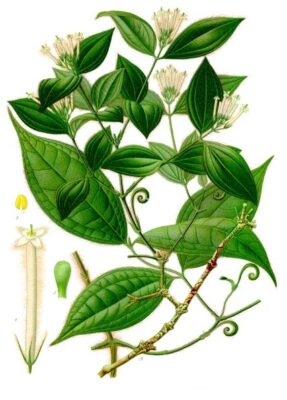
Curare is one of the most well-known Amazonian poisons, feared by early explorers and revered by Indigenous warriors. Extracted from the bark of certain lianas, such as Chondrodendron tomentosum and Strychnos toxifera, it has been traditionally used to coat the tips of blowgun darts, paralyzing prey with precision.
In the hands of a hunter, curare is a gift—it allows for a clean kill without tainting the meat. But in the hands of a shaman, curare is something more. In microdoses, it has been explored for its muscle-relaxing properties, and modern medicine has borrowed its effects for use in anesthesia.
It is a reminder that poison and cure are often the same entity, separated only by the wisdom of the one who administers them.
Brugmansia (Tóé): The Flower of Deep Visions
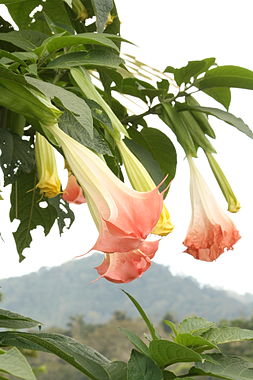
Also known as Angel’s Trumpet, Brugmansia is a breathtakingly beautiful tree that produces large, trumpet-shaped flowers. But its beauty conceals a dangerous nature. The plant contains potent tropane alkaloids—scopolamine, hyoscyamine, and atropine—which can induce intense hallucinations, delirium, and even death.
Among some Amazonian tribes, Tóé is considered a plant of initiation, used in highly controlled shamanic practices to induce visions and contact the spirit world. Those who misuse it, however, often fall victim to its nightmarish effects, losing themselves in the maze of their own minds.
This is not a plant for casual experimentation. It is a portal, but only those with strong guidance should dare to cross its threshold.
Strychnos: The Dual Nature of Fate
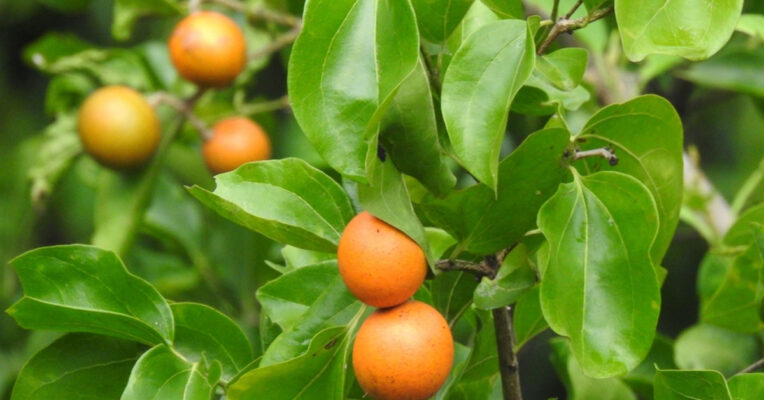
The Strychnos genus includes several deadly species found in the Amazon, including Strychnos nux-vomica and Strychnos toxifera, which contain strychnine—one of the most potent neurotoxins known to man.
While lethal in high doses, Indigenous knowledge has unlocked its potential in controlled amounts, using it in certain ritualistic contexts. The paradox of Strychnos is that it both kills and heals. Western medicine once experimented with it in small doses as a stimulant, while Indigenous traditions sometimes associate it with protective spiritual forces.
Again, we see the recurring theme of balance—poison is not evil, nor is medicine inherently good. It is the intention and wisdom behind its use that defines its role.
Manchineel (Hippomane mancinella): The Tree of Death
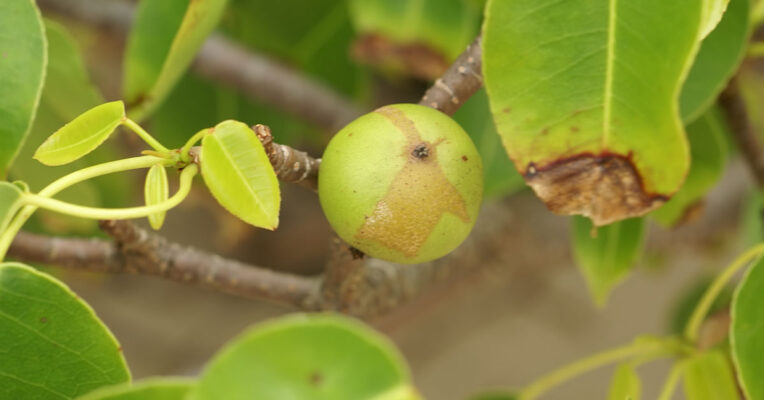
Though more common in coastal areas, this highly toxic tree is sometimes found on the fringes of the Amazon. Every part of it—the sap, leaves, fruit, and bark—is dangerously toxic. Its nickname, the “Tree of Death,” is well earned; even standing beneath it in the rain can cause severe blistering due to its corrosive sap.
Unlike other plants, which Indigenous tribes have incorporated into healing or spiritual practices, Manchineel is a rare case of a plant that is almost purely destructive. It serves as a stark reminder that not everything in nature exists for human consumption—some forces are simply meant to be left undisturbed.
The Shaman’s Path: Finding Medicine in Poison
The Indigenous understanding of poisonous plants is deeply intertwined with their approach to all medicine: there is no absolute distinction between cure and toxin, only dosage and purpose.
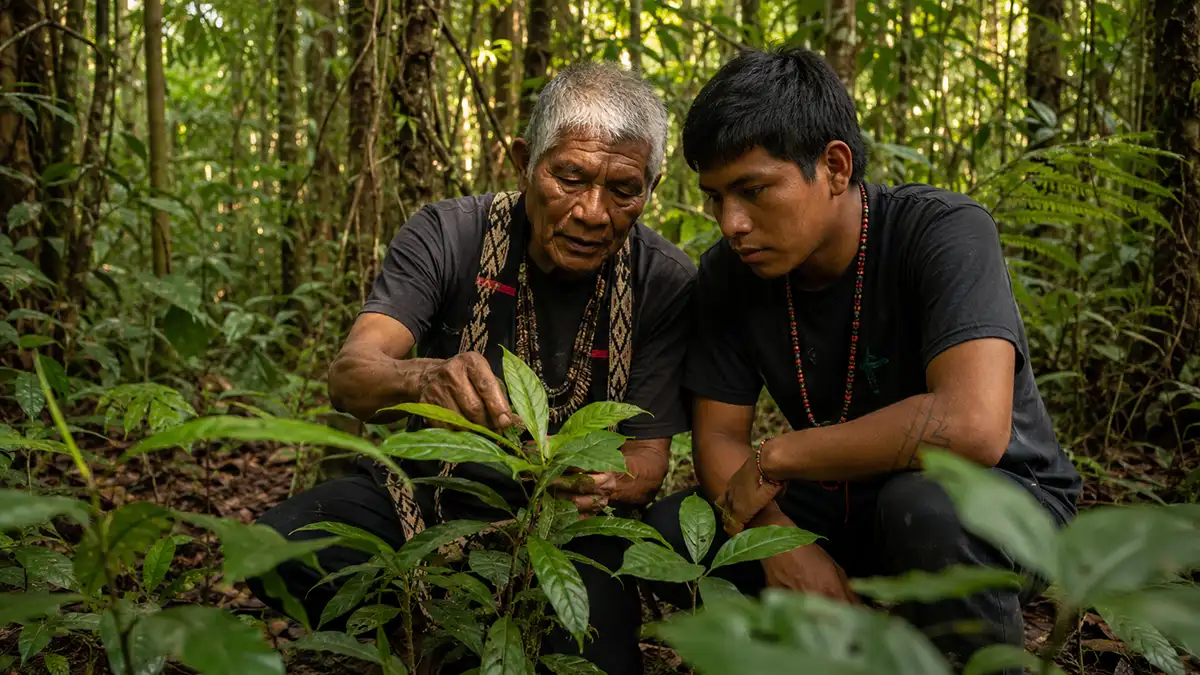
This is why the shamanic path is one of lifelong learning. Before working with powerful plants, an apprentice must go through rigorous training—often in isolation, in communion with the spirits of the jungle, fasting, dreaming, and listening. There are no shortcuts.
Ayahuasca, for instance, is made from two plants—Banisteriopsis caapi and Psychotria viridis—one of which contains MAO inhibitors, while the other contains DMT. Separately, they have little effect; together, they open the gates of perception. This synergy was not discovered by chance—it was revealed through deep communion with the plants themselves.
Just as shamans have learned to use venom for healing, we too must learn to balance our approach to life. Poison is not just a substance; it is also fear, disconnection, and imbalance. And just as the jungle offers antidotes, so too does it offer medicines for the soul.
A Call to Remember
At Queen of the Forest, we honor the delicate wisdom of nature—the light and the shadow, the healing and the lesson. The medicines we share, like Rapé, Sananga, and Kambo, are part of this great lineage of plant intelligence. They are not to be used carelessly, but with intention, reverence, and respect.
The forest is alive, watching, whispering. It does not hide its power, but it does demand respect.
Perhaps you feel the call—the pull toward deeper knowledge, toward a reconnection with the spirits of the Earth. If so, we invite you to walk with us, to explore these ancient paths with humility and openness.
Poison or medicine? The choice is always in the hands of the seeker.
Continue exploring
All stories
The medicines of the forest