
Jenipapo: The Sacred Fruit of the Forest
From body paint to spiritual protection, the ancestral wisdom of a mystical Amazonian plant
The Blue Mark of the Ancestors
In the depths of the Amazon rainforest, where rivers carve ancient paths and the canopy breathes in rhythms older than time, grows a fruit both ordinary and extraordinary: the jenipapo (Genipa americana). Its rough exterior hides a secret that has been cherished by Indigenous peoples for centuries—a pigment of deep indigo-blue, extracted from its unripe fruit, that carries cultural, spiritual, and medicinal significance.
For many tribes, jenipapo is not merely a fruit. It is a living ally, a bridge between the visible and invisible worlds. Its juice stains the skin with intricate designs, symbols of identity, protection, and belonging. When the body is painted with jenipapo, it is not decoration—it is initiation.
Botanical Portrait of Jenipapo
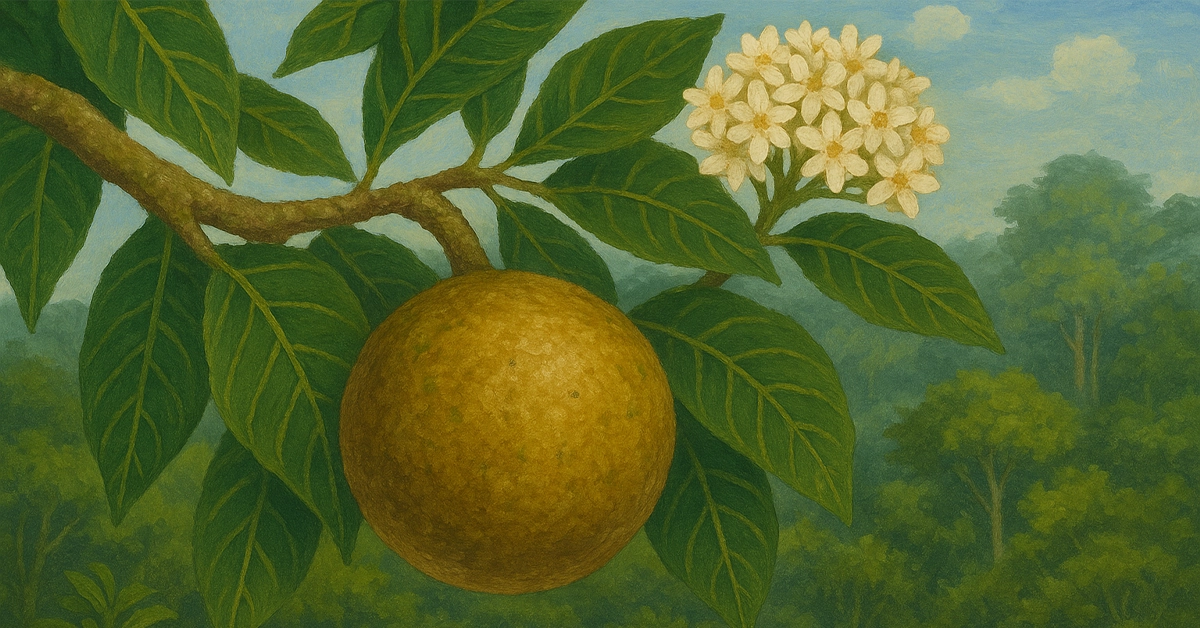
The jenipapo tree can grow up to 15 meters high, thriving in humid soils across the Amazon and tropical regions of South America. Its large, fragrant flowers open in the evening, inviting pollinators, while its fruits resemble small brown gourds. Inside, the pulp is rich and aromatic, used for food, beverages, and medicine.
But it is in its unripe fruit that the plant holds its most magical gift. When the juice is applied to the skin, it oxidizes and turns a dark blue-black, leaving marks that can last for up to two weeks. This transformation is not only chemical but symbolic—the fruit reveals a hidden color, as if reminding us that reality too holds invisible dimensions waiting to be unveiled.
Jenipapo as Body Paint: Marks of Spirit
Across Indigenous cultures of the Amazon, body painting is a sacred art. Designs are not random; they carry meaning, lineage, and intention. Jenipapo’s blue-black pigment is one of the most important natural dyes for this purpose.
- Protection: Painted patterns act as spiritual armor, warding off negative energies.
- Identity: Designs often represent the tribe, family, or personal journey.
- Ceremony: During rituals, the paint transforms the body into a vessel of prayer and presence.
Children are often painted during festivals, hunters before entering the forest, and healers before ceremonies. The body becomes a canvas where cosmology is inscribed. The blue of jenipapo symbolizes connection to the night sky, to mystery, and to the unseen spirits who guide and protect.
Myth and Spiritual Symbolism
For many tribes, the jenipapo tree is seen as a gift of the ancestors. Some legends say that its fruit was given to humans so they could protect themselves against invisible dangers. Others say that the blue paint is the memory of the stars, brought down to earth in the form of fruit.
Symbolically, jenipapo embodies transformation. Just as its juice turns from transparent to dark blue upon contact with skin, so too can the human spirit transform when touched by ceremony and intention. It is a reminder that within apparent ordinariness lies hidden beauty and power.
Medicinal Uses of Jenipapo
Beyond its spiritual and artistic roles, jenipapo has long been valued as medicine:
- Fruit Pulp: Rich in vitamins and minerals, used in juices and fermented drinks that strengthen the body.
- Leaves and Bark: Infusions are employed as remedies for inflammation and digestive issues.
- Spiritual Medicine: The body paint itself is seen as healing, protecting the aura and aligning energy.
In many communities, jenipapo beverages are shared during festivals, bringing vitality and joy. Its medicine is both physical and symbolic, feeding body and spirit alike.
Jenipapo in Ceremony
When shamans paint themselves with jenipapo, they are not “dressing up.” They are preparing their spiritual armor. The designs carry prayers, animal spirits, and elemental forces. The act of painting is itself ritual, often accompanied by song, blessing, and intention.
In ceremonies with rapéh, ayahuasca, or other medicines, jenipapo paint strengthens the energetic field. It reminds the participant that they are entering sacred space, marked as a vessel of spirit.
In this sense, jenipapo is not only an adornment but a sacrament—a way of consecrating the body as part of the ceremony.
The Feminine Energy of Jenipapo
Jenipapo is also deeply linked to the feminine. The act of painting is nurturing, often performed by women for children and men before rituals. The fruit itself, round and womb-like, symbolizes fertility and protection.
In some tribes, women paint themselves during moon ceremonies with jenipapo, marking cycles of renewal and strength. The fruit’s transformation from invisible juice to visible mark echoes the hidden mysteries of the womb and the sacred power of creation.
Modern Rediscovery
Today, jenipapo is being rediscovered beyond the Amazon. Its pigment has drawn attention as a natural dye for textiles, art, and even sustainable cosmetics. Artists explore its deep indigo hues, while healers introduce its symbolism into modern ceremonies.
Yet, with this rediscovery comes responsibility. For Indigenous peoples, jenipapo is not a commodity but a sacred ally. To use it without reverence is to miss its essence. Its power lies not only in its color but in the intention behind its use.
Lessons of Jenipapo
What can we learn from jenipapo in our daily lives?
- Transformation is hidden within. Just as clear juice becomes deep blue, our own potential is revealed when we allow change.
- The body is sacred. Painting ourselves with intention, even symbolically, can remind us to treat the body as a temple.
- Connection matters. Jenipapo designs express belonging—to tribe, to community, to the cosmos. We too are invited to remember our place in the greater design.
- Beauty and strength coexist. The aesthetic aspect of the paint is inseparable from its protective function. True beauty is also medicine.
The Blue Prayer of the Forest
Jenipapo is more than a fruit. It is a blue prayer carried by the forest, a reminder that nature holds mysteries beyond the surface. When its juice touches skin, it marks not only the body but the soul. It whispers that we are never separate from the earth, from the ancestors, or from the rhythms of transformation.
To wear jenipapo is to carry the night sky upon one’s skin, to remember that the forest is alive within us, and to walk with protection and beauty into the mystery of life.
Continue exploring
All stories
The medicines of the forest
