The Mystery of Dawn Plants: Species That Bloom with the Mist

Unveiling the spiritual symbolism of flowers that awaken with the first light
The Silent Awakening of the Forest
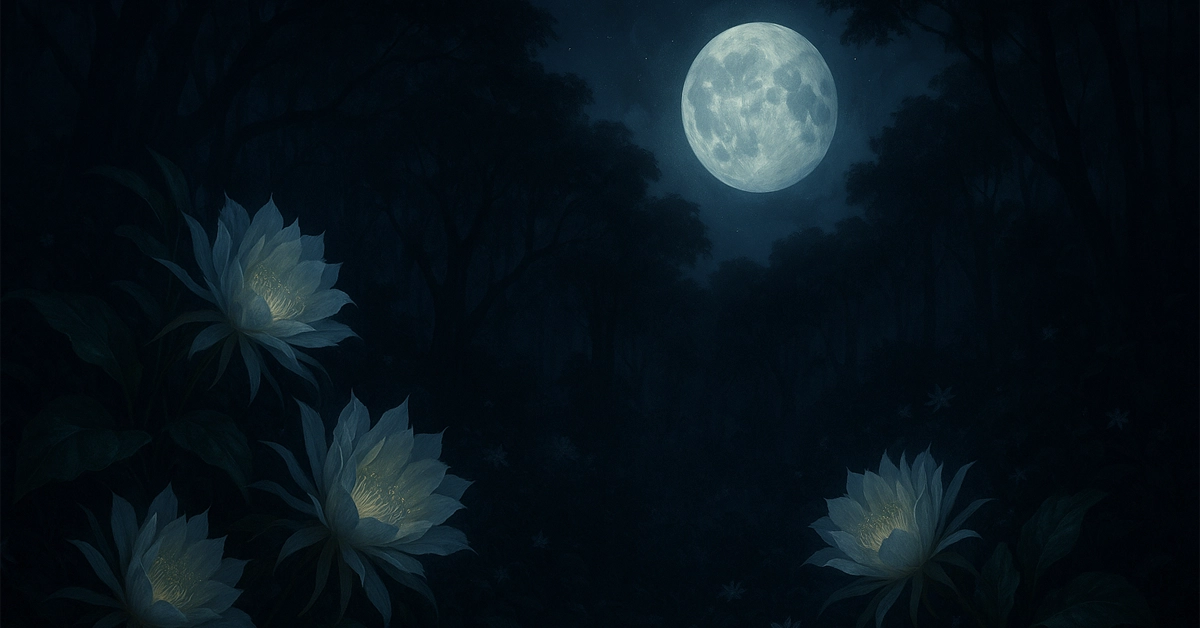
In the stillness before dawn, when the forest holds its breath and the stars begin to retreat into memory, a secret choreography takes place. Hidden beneath layers of mist and shadows, plants prepare for their quiet unveiling. Some flowers open their petals not in the heat of midday nor the embrace of twilight, but precisely at the threshold of dawn—when the air is heavy with dew and the world trembles between night and day.
To witness these blooms is to be initiated into a mystery: the mystery of plants that choose to awaken with the mist. Their timing is not arbitrary; it is an offering, a gesture of alignment with cycles older than humanity. In the language of the forest, they remind us of renewal, humility, and the fragile yet powerful beauty of beginnings.
The Science of Timing and the Poetry of Dawn
From a botanical perspective, many plants open their flowers at dawn to synchronize with pollinators—moths returning from their nightly dance, or early bees that stir with the rising sun. Their petals unfold when humidity is high and temperatures are gentle, protecting delicate structures from harsh winds or heat.
But to reduce this timing to biology alone would be to strip away its wonder. For Indigenous peoples and forest guardians, plants are teachers, each carrying a spiritual lesson. Those that bloom with the mist embody the wisdom of liminality—the in-between. They inhabit the doorway of time where darkness dissolves into light, where silence gives birth to sound. To see them open is to feel that the universe itself is whispering: every ending is a beginning.
Sacred Species of Dawn
1. The Morning Glory (Ipomoea purpurea)
Perhaps the most well-known dawn flower, the morning glory unfurls its blue, purple, or pink trumpet-shaped blooms at first light. Its very name carries the essence of sunrise celebration. In many traditions, morning glory is a symbol of fleeting beauty and the reminder to live fully in each day. Its blossoms wither by afternoon, teaching that impermanence itself is sacred.
2. The Water Lily (Nymphaea amazonica)
In the Amazon, the giant water lily performs one of nature’s most mystical rituals. Its immense leaves float like green rafts across the water, while its flower begins to open at dusk, reaching full splendor by night, only to close again as dawn advances. Some species, however, hold their bloom through early morning, shimmering with dew and light. For forest peoples, water lilies are portals between the world of spirits and humans, symbols of transformation and emergence.
3. The Amazonian Orchids
Certain orchids, delicate and rare, time their flowering with the mist of dawn. Their fragrance is strongest when the air is still moist, calling pollinators that know this secret rhythm. In the Indigenous cosmovision, orchids are seen as spirits of beauty and patience—reminders that sacred gifts often come quietly, requiring presence to be perceived.
4. Night-Blooming Jasmine (Cestrum nocturnum)
Though opening in the night, its fragrance lingers at dawn, carried on misty air. This plant bridges night and day, shadow and light, spirit and body. Its lingering perfume in early morning symbolizes memory—what we carry from the dream world into waking life.
5. The Mysterious Ephemerals
Throughout the tropics and temperate zones, countless “ephemeral” species bloom only in early morning hours, vanishing by noon. Their existence is like a poem written in dew: temporary, delicate, and eternal in meaning.
Dawn as a Spiritual Teacher
For Indigenous shamans and seekers, dawn is not merely a time of day; it is a spiritual threshold. Ceremonies often begin at first light, prayers rising with the mist. The opening of plants at this hour becomes part of the greater symphony of renewal.
To bloom at dawn is to embody trust: trust that the sun will rise, that light will return, that cycles continue. These plants are teachers of surrender, showing that beauty and strength arise not from control but from flowing with the rhythm of existence.
They also remind us of humility. Unlike flowers that flaunt themselves under the midday sun, dawn plants open quietly, often unseen except by the attentive eye. Their message: not all sacredness needs applause. Sometimes the most profound gifts are those offered in silence.
Symbolism of Mist and Bloom
Mist itself holds profound symbolism. It veils and reveals, conceals and discloses. To awaken in mist is to be born into mystery. Flowers that choose this moment embody the paradox of being seen and unseen, known and unknown.
Spiritually, mist is associated with the in-between states—between waking and dreaming, clarity and obscurity. To bloom in mist means to thrive in uncertainty, to embrace ambiguity as part of life’s sacred flow.
These plants tell us: it is possible to open our hearts even when the path ahead is veiled.
Rituals of Dawn Plants
Across cultures, dawn flowers are used in rituals of renewal. Morning glories are woven into garlands to celebrate beginnings. Orchids are offered in ceremonies to honor the spirits of beauty. Water lilies are symbols in myth, often representing the soul rising from darkness into light.
In the Amazon, healers sometimes gather early-blooming plants at first light, believing that their energy is most potent when the veil between worlds is thinnest. To drink tea made from such flowers or to place them on an altar is to invite the energy of new beginnings into one’s life.
Lessons for Modern Life
In our fast-paced modern world, where days blur into one another and mornings are consumed by screens and schedules, the mystery of dawn plants invites us to slow down.
Imagine beginning each day not with haste, but with reverence—stepping outside to witness which flowers have chosen to open, breathing in their fragrance with gratitude. Such practices reconnect us to cycles of time deeper than the clock. They root us in presence.
The lesson is simple yet profound: awaken as the flowers awaken. Align your spirit with the rhythm of light. Allow yourself to open gently, with trust and humility, carrying the fragrance of silence into your actions.
Dawn and the Human Spirit
Just as plants have their hours, so do we. Some of us blossom under midday brilliance; others under twilight. But dawn belongs to everyone. It is the universal hour of possibility, when the soul is closest to its origin.
To contemplate dawn plants is to remember that within us too lives a flower waiting for the mist—a potential that awakens not in noise, but in silence; not in certainty, but in trust.
Carriers of the First Light
The mystery of dawn plants is more than a botanical curiosity. It is a spiritual revelation written in petals and dew. They are carriers of the first light, heralds of renewal, guardians of the in-between.
When we pause to witness them, we step into their teaching: that life is a cycle of opening and closing, seen and unseen, known and unknown. That beauty does not demand recognition but simply unfolds in alignment with the greater rhythm.
And perhaps most importantly, that like the plants that bloom with the mist, we too can choose to awaken each day in trust, in silence, and in communion with the sacred.
Continue exploring
All stories
The medicines of the forest