The Plants of Dawn: The Mystery of Species That Bloom with the Mist

A Journey Through the Spiritual Symbolism of Morning-Blooming Forest Plants
Where the Light First Touches the Earth
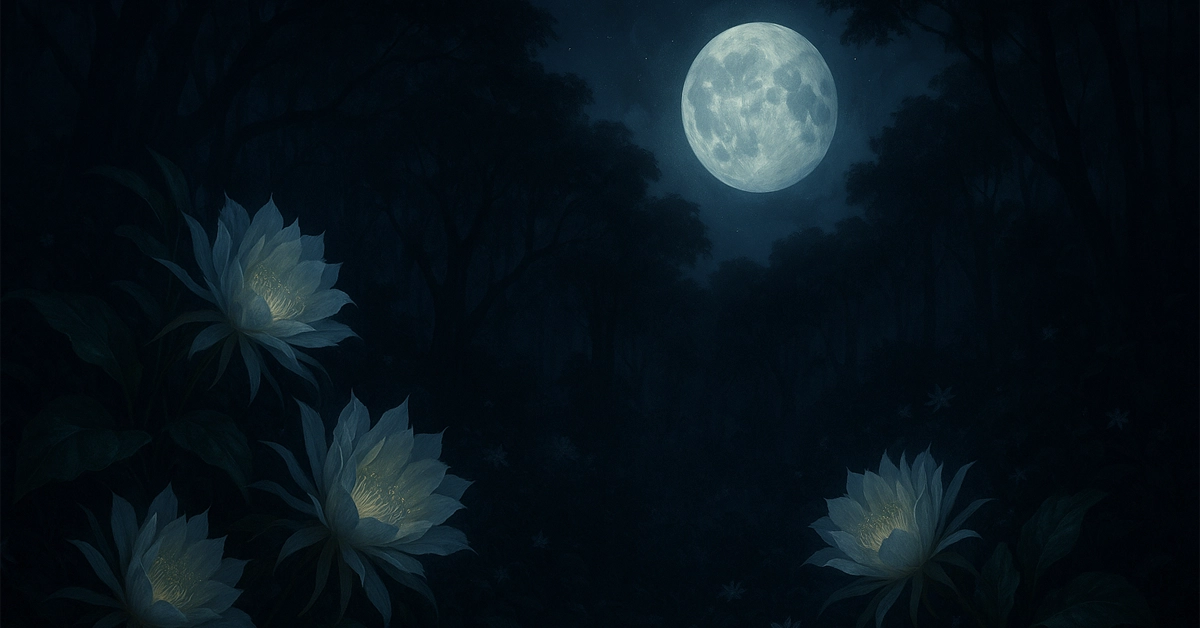
At the break of day, when the world still holds its breath, a secret unfolding begins. Before birds sing, before the sun rises fully, the mist cradles the forest—and in this sacred silence, certain plants begin to bloom. They do not wait for the heat of midday or the clarity of full light. They are born in transition, in liminality, in the thin veil between night and day.
These are the plants of dawn—species that sprout, bloom, or open their petals in the early hours, dancing with the morning fog. To Indigenous peoples, these plants are not just biological wonders; they are spiritual messengers, keepers of transitions, and teachers of subtlety. Their timing holds meaning. Their rhythm whispers codes.
In this article, we journey into the mystical realm of morning-blooming plants, exploring not just their botanical beauty, but the deep spiritual symbolism they carry—and how they guide us toward our own inner awakenings.
1. Dawn as a Spiritual Portal
To understand the significance of dawn-blooming plants, we must first understand dawn itself.
In many spiritual traditions:
- Dawn is a liminal time, a threshold between worlds.
- It is associated with new beginnings, rebirth, and revelation.
- It is the time when dreams fade into memory and intention begins to form.
Shamans often wake at dawn to pray, fast, or make offerings. In Amazonian spirituality, dawn is sacred because it carries the first breath of the new day—a moment when spirits are still near, and the earth is reborn.
Plants that choose this moment to bloom are therefore seen as allies of transition, mediators between the invisible and visible realms.
2. Botanical Wisdom: Why Plants Bloom at Dawn
Scientifically, plants that bloom at dawn do so for various ecological reasons:
- To attract early pollinators such as bees, moths, or bats.
- To conserve water, blooming before the sun’s heat intensifies.
- To align with circadian rhythms and optimize nutrient uptake.
But in spiritual terms, these plants are aligned with natural intelligence—they emerge in sync with stillness, softness, and receptivity. They bloom not in chaos, but in peace. And this behavior speaks to a deeper message.
3. Sacred Plants of the Dawn
Here are a few plants, both known and mythic, that bloom or reveal themselves at dawn—and the meanings they carry:
Morning Glory (Ipomoea spp.)
- Opens fully with the rising sun, then closes by midday.
- Symbolizes fleeting beauty, the transience of life, and living in the present moment.
- In shamanic symbolism, it may represent ephemeral visions—those that appear briefly and then vanish.
Dama da Manhã (Morning Lady – local forest flowers)
- Certain unnamed rainforest species with delicate, mist-sensitive petals.
- Considered by forest tribes as the daughters of the mist, they teach the lesson of gentle emergence, reminding us that not all power is loud.
Awiri Leaves (used in Kaxinawá rituals)
- Gathered at dawn for their fresh, spiritually potent energy.
- Believed to carry the wisdom of the night into the new day.
- Often used to “sweep” the aura or cool the body in early morning ceremonies.
White Lotus (Nelumbo nucifera)
- Though not native to the Amazon, it is revered across global spiritual traditions for blooming with the light.
- Represents spiritual awakening, purity rising from the mud, and light emerging from darkness.
4. The Symbolism of Blooming with the Mist
Morning mist in the forest is a metaphor for mystery. It hides and reveals, wraps and dissolves. Plants that bloom in this mist are fluent in ambiguity. They teach us:
- To emerge with grace.
- To remain soft while opening.
- To honor stillness as strength.
- To move when the world is quietest.
In Indigenous teachings, these plants are medicine for new phases—beginnings, initiations, healing after illness, or spiritual rebirth. They are seen as guides that do not shout, but whisper, gently nudging the soul toward its next unfolding.
5. Human Lessons from Morning-Blooming Plants
What can we learn from plants that bloom at dawn?
️ Timing Matters
Just as these plants bloom when conditions are most aligned, so too must we discern the right timing for our own growth. Not every vision or action is meant for the midday sun.
♀️ Emergence Without Force
The plants of dawn do not rush. They open naturally, with the rhythm of breath. We are invited to stop striving and start listening.
️ Trusting Uncertainty
Mist can obscure the path, but it also softens the world. These plants teach us to trust what we cannot see, and to let clarity come with time.
Cycles Within Cycles
By blooming and closing in rhythm, they remind us that life is cyclical, and every end is a beginning in disguise.
6. Dawn Practices Inspired by the Plants
To attune yourself to the sacred energy of the dawn—and the teachings of these mystical plants—you can try the following rituals:
Dawn Meditation
Wake before sunrise. Sit in silence and observe the sky changing. Breathe deeply. Feel your own petals slowly opening with the light.
Rapéh Ceremony at First Light
Use a gentle, floral rapéh blend during the misty hours. Set intentions of renewal, vision, or grace. Let the forest awaken in you.
Mist Blessing
Collect morning dew or spring water. Infuse with rose or sacred leaves. Use it to anoint your face, heart, and hands in a prayer of emergence.
Dawn Journal
Write only in the early morning hours. Record dreams, insights, and messages received in the silence. Let the pages be your petals.
7. The Feminine Energy of the Morning
Morning is often associated with feminine energy in many Indigenous and mystical systems:
- Soft, receptive, intuitive.
- Ruling over dreams, transitions, and birth.
- Womb-like in its fog, silence, and potential.
Morning-blooming plants are sometimes called “flowers of the goddess”, as they mirror the divine feminine’s nature—subtle, wise, life-giving. Working with these plants helps balance our inner feminine and awaken parts of ourselves that thrive in mystery, rather than clarity.
8. The Role of Morning-Blooming Plants in Ceremony
In forest ceremonies, plants that are harvested or bloom at dawn are considered especially potent:
- Used for smoke baths, floral baths, or cleansing teas.
- Believed to carry the dream energy of the night before.
- Often offered in rituals of gratitude and rebirth, especially after long nights of deep work (such as ayahuasca ceremonies).
Pajés (shamans) may pick these plants barefoot and in silence, listening to their vibration before cutting or collecting. It is said that the spirit of a plant is strongest when it chooses to open—so dawn blooms are seen as voluntary offerings from the forest herself.
9. Dawn as a Spiritual Compass
In traditional cosmologies, East—the direction of the sunrise—is the direction of:
- New life
- Spiritual illumination
- First breath
- The child archetype
- Hope and vision
Morning-blooming plants are allies of the East. They carry this orientation in their DNA. To work with them is to recalibrate your compass toward new beginnings.
To Bloom in the Silence
In a world that demands speed, productivity, and noise, the plants of dawn remind us of a different way. They bloom quietly, in mist and mystery. They choose the moment no one sees. And in doing so, they teach us to honor the invisible, the subtle, the sacred.
To walk with these plants is to remember that you, too, have a rhythm—a natural unfolding that need not be forced. You, too, can choose to open slowly, before the world rushes in. You can bloom with the mist. You can speak with the silence.
May the plants of dawn guide you through every threshold with gentleness, clarity, and grace.
Continue exploring
All stories
The medicines of the forest